Table of Contents
What is Organic Dextrose Powder?
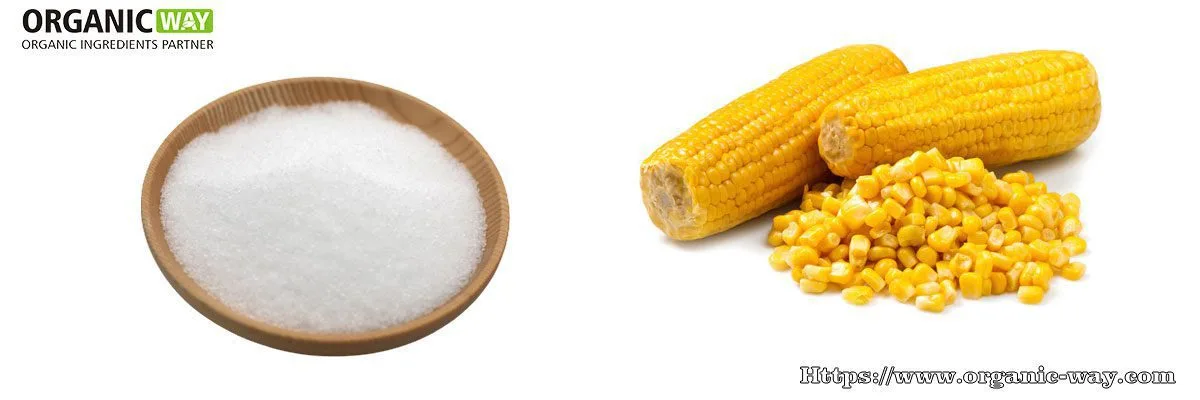
Organic Dextrose Powder is a crystalline monosaccharide — chemically identical to D-glucose — produced from organic corn (Zea mays) through enzymatic starch liquefaction, saccharification, and controlled crystallization. Listed in the Codex Alimentarius and classified as GRAS (Generally Recognized As Safe) by the US FDA under 21 CFR Part 184.1857 for use as a direct human food ingredient.
As a simple six-carbon carbohydrate, organic dextrose is rapidly absorbed in the small intestine without requiring enzymatic breakdown — making it one of the fastest-acting carbohydrate energy sources available.
Two Crystalline Forms
| Property | Organic Dextrose Monohydrate | Organic Dextrose Anhydrous |
|---|---|---|
| CAS Number | 5996-10-1 | 50-99-7 |
| Chemical Formula | C₆H₁₂O₆·H₂O | C₆H₁₂O₆ |
| Water Content | ~9.0% | <0.5% |
| Purity (dry basis) | ≥99.5% | ≥99.7% |
| Melting Point | ~83°C (dehydration occurs above this) | ~146°C |
| Solubility | Rapid; endothermic (cooling sensation) | Very rapid; minimal cooling |
| Primary Applications | Confectionery, RTD drinks, fermented foods | Chocolate, dry mixes, pharma |
Functional Properties
- Energy source: 4 kcal/g; rapid intestinal absorption; GI = 100 (reference standard)
- Sweetening: ~70% the sweetness of sucrose; blends well with high-intensity sweeteners
- Browning and caramelization: Contributes to Maillard reaction in baked goods and coatings
- Crystallization control: Acts as a modifier in confectionery (hard candy, marshmallows, ice cream)
- Fermentation substrate: Preferred carbohydrate source in yogurt, kefir, sourdough, and probiotic cultures
- Humectancy: Lowers water activity (aW) in intermediate moisture foods
- Cooling sensation (monohydrate): Endothermic dissolution creates perceptible cooling — valued in mint and confectionery applications
PHYSICAL & CHEMICAL PROPERTIES
Physical Properties
| Property | Monohydrate | Anhydrous |
|---|---|---|
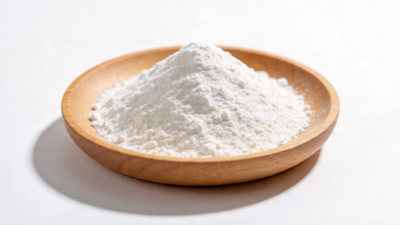
| Appearance | White, odorless crystalline powder | White, odorless crystalline powder |
| Taste | Sweet, clean, characteristic | Sweet, clean, characteristic |
| Molecular Weight | 198.17 g/mol | 180.16 g/mol |
| Optical Rotation [α]D²⁰ | +52.7° to +53.3° | +52.7° to +53.3° |
| Water Solubility (25°C) | ~91 g/100mL | ~91 g/100mL |
| pH (10% solution) | 5.0–7.0 | 5.0–7.0 |
| Bulk Density | 0.60–0.75 g/mL | 0.55–0.70 g/mL |
| Colour (APHA) | ≤5 (pure white) | ≤5 (pure white) |
Chemical Specification
| Parameter | Monohydrate | Anhydrous |
|---|---|---|
| Purity (Dextrose, dry basis) | ≥99.5% | ≥99.7% |
| Water Content | ~9.0% | <0.5% |
| Residue on Ignition (Ash) | ≤0.1% | ≤0.1% |
| Sulfate (SO₄²⁻) | Passes test | Passes test |
| Chloride | ≤0.018% | ≤0.018% |
| Heavy Metals (as Pb) | <5 mg/kg | <5 mg/kg |
| Lead (Pb) | <0.1 mg/kg | <0.1 mg/kg |
| Arsenic (As) | <0.1 mg/kg | <0.1 mg/kg |
| Cadmium (Cd) | <0.1 mg/kg | <0.1 mg/kg |
| Mercury (Hg) | <0.1 mg/kg | <0.1 mg/kg |
| Pesticide Residue | NOP & EU compliant | NOP & EU compliant |
| Non-GMO | Verified | Verified |
| Gluten | <20 ppm | <20 ppm |
| Melamine | Not detected | Not detected |
MICROBIOLOGICAL & CONTAMINANT STANDARDS
Microbiological Specification
| Test | Limit |
|---|---|
| Total Plate Count (TPC) | <10,000 CFU/g |
| Mould & Yeast | <100 CFU/g |
| Coliforms | <100 CFU/g |
| E. coli | Negative / <10 CFU/g |
| Salmonella spp. | Negative / 25g |
| Staphylococcus | Negative |
Contaminant Standards
| Parameter | Limit |
|---|---|
| Aflatoxin B1 | <2 µg/kg |
| Total Aflatoxins | <4 µg/kg |
| Pesticide Residue | NOP & EU standard |
| COA Availability | Per batch |
REGULATORY STATUS & GLYCEMIC PROPERTIES
Global Regulatory Status
| Jurisdiction | Status | Reference |
|---|---|---|
| United States (FDA) | GRAS — 21 CFR 184.1857 | Direct human food ingredient; sweetener and carbohydrate source |
| European Union (EFSA) | Authorized food additive | Sweetener, carrier, glazing agent; quantum satis |
| Codex Alimentarius | Dextrose (glucose) | Listed as food additive; multiple functional uses |
| JECFA (FAO/WHO) | Evaluated; ADI “not specified” | Dextrose monohydrate and anhydrous — no ADI limit required |
| FSANZ (Australia/NZ) | Approved — Dextrose monohydrate | Code 410; no restrictions specified |
| China (GB Standards) | GB/T 20881 | National standard for food-grade dextrose monohydrate |
| Japan (JSFA) | Listed — Dextrose | Food additive; approved for general use |
| FDA GRAS | 21 CFR 184.1857 | Dextrose (d-glucose); affirmed GRAS for direct human food use |
Glycemic & Metabolic Properties
| Metric | Value | Notes |
|---|---|---|
| Glycemic Index (GI) | 100 (glucose reference) | Dextrose = GI reference standard; fastest-absorbing carbohydrate |
| Glycemic Load (per 10g serving) | 10 | Low-GL context when used at ≤10g/serving |
| Sweetness (relative to sucrose) | ~70% | Can be blended with high-intensity sweeteners for clean label formulation |
| Metabolization | Direct intestinal absorption | No enzymatic hydrolysis required |
| Insulin Response | Moderate–High | Monitor in diabetes-specific formulations |
| Caloric Value | 4 kcal/g (16.7 kJ/g) | Consistent with all digestible carbohydrates |
⚠️ FDA “Added Sugars” Labeling Note: Under FDA Nutrition Facts rules (21 CFR 101.9), dextrose is classified as an “Added Sugar” when added during manufacturing — even though dextrose is a naturally occurring carbohydrate in corn. This legally required declaration does not reflect chemical identity. Formulators should accompany nutrition labels with clarifying front-of-pack language such as “Dextrose (organic corn) — naturally derived sugar providing rapid energy.”
CERTIFICATIONS
| Certification | Status | Issuing Body |
|---|---|---|
| USDA Organic (NOP) | Available | USDA-accredited certifier |
| EU Organic | Available | EU-authorized certifier |
| Non-GMO Project Verified | Available | Non-GMO Project |
| Gluten-Free | Available (<20 ppm) | GFCO / AACC |
| Kosher (Pareve) | Available | OU / Star-K / CRC |
| Halal | Available | MUI / IFIC / HFC |
| FSSC 22000 | Available | Accredited certification body |
| GMP (Food Grade) | Available | National authority |
| FDA Food Facility Registration | Available | US FDA |
APPLICATIONS & USAGE GUIDELINES
Recommended Application Matrix
| Application | Recommended Form | Usage Level | Key Functions |
|---|---|---|---|
| RTD Protein / Energy Beverages | Monohydrate | 3–15% w/w | Rapid energy, sweetness, solubility |
| Confectionery (hard candy, marshmallows) | Monohydrate | 30–60% w/w | Crystallization control, humectancy, Maillard browning |
| Chocolate & cocoa-based products | Anhydrous only | 5–15% w/w | Heat stability; monohydrate causes fat bloom |
| Fermented foods (yogurt, kefir, sourdough) | Monohydrate | 1–8% w/w | Fermentation substrate for lactic acid bacteria |
| Baked goods & coatings | Monohydrate | 2–10% w/w | Browning, sweetness, crust formation |
| Dry beverage / sports drink mixes | Anhydrous | 5–20% w/w | Rapid solubility; no moisture addition |
| Ice cream & frozen desserts | Monohydrate | 3–8% w/w | Sweetness, overrun enhancement, storage stability |
| Pharmaceutical / IV solutions | Anhydrous (USP grade) | Variable | Isotonic solution base; confirm USP monograph compliance |
| Protein bars & nutrition bars | Monohydrate | 5–15% w/w | Sweetness, binding, caramelization |
| Tablet / capsule excipient | Anhydrous | Variable | Diluent and filler; confirm pharma compliance |
Formulation Decision Guide: Monohydrate vs. Anhydrous
| Decision Factor | Choose Monohydrate | Choose Anhydrous |
|---|---|---|
| Application involves heat >85°C | Not recommended | Stable to ~146°C |
| Requires endothermic cooling effect | Desired | Minimal cooling |
| Water content must be <1% in final product | Adds ~9% water | Near-zero water |
| Chocolate or cocoa-based formulation | Causes fat bloom | Preferred |
| Dry powder mix / sachet | Hygroscopic risk | Preferred |
| Fermentation substrate | Standard choice | Also suitable |
| Confectionery crystallization control | Superior control | Suitable |
| Pharmaceutical / IV application | Confirm with supplier | Preferred |
Formulation Notes
- Dextrose Monohydrate has a sweet, clean taste — pairs with virtually all flavor profiles; ideal base sweetener
- Endothermic dissolution (monohydrate): absorbs heat from surroundings during dissolution, creating a cooling mouthfeel — valued in mint and confectionery applications
- Dextrose is hygroscopic (monohydrate more so than anhydrous) — protect from humidity in storage and processing
- For chocolate: always use anhydrous — monohydrate’s water of crystallization causes fat bloom (white surface discoloration) and texture degradation
- In fermentation: monohydrate is the preferred substrate due to rapid solubility and clean metabolic profile for lactic acid bacteria
- Dextrose at ~70% sucrose sweetness allows partial replacement of sucrose; combine with high-intensity sweeteners (Stevia, Monk Fruit) for clean-label reduced-sugar formulations
FAQ
Q1: What is the difference between Organic Dextrose Monohydrate and Anhydrous? Which should I choose?
A: Organic Dextrose Monohydrate (CAS 5996-10-1) contains approximately 9% water of crystallization and is preferred for confectionery, RTD beverages, fermented foods, and applications where the cooling mouthfeel is desired. It is not suitable for chocolate or high-temperature processing. Organic Dextrose Anhydrous (CAS 50-99-7) contains virtually no water (u0026lt;0.5%) with a higher melting point (~146°C vs ~83°C), making it essential for chocolate production, dry beverage mixes, and pharmaceutical formulations. For chocolate specifically, monohydrate causes fat bloom — anhydrous is the industry standard.
Q2: What is the glycemic index (GI) of Organic Dextrose Powder?
A: Dextrose (glucose) has a GI of 100 by definition — it is used as the reference standard against which all other carbohydrates are measured. This means dextrose is the fastest-absorbing carbohydrate available, causing a rapid rise in blood glucose. It is not a low-GI ingredient. For low-GI product formulations, consider Organic Allulose (GI ~0), Organic Erythritol (GI ~0), or Organic Isomaltulose (GI ~35).
Q3: How should Organic Dextrose Powder be declared on Nutrition Facts labels?
A: In the United States under FDA rules (21 CFR 101.9), dextrose is classified as an “Added Sugar” on Nutrition Facts panels — even when derived from organic corn. This is a legal requirement that does not reflect the ingredient’s natural origin. Formulators should accompany the label with factual front-of-pack language such as “Dextrose (organic corn) — a naturally derived sugar providing rapid energy.” For EU markets, declare as “Carbohydrate — of which sugars.” Consult a regulatory affairs specialist for market-specific compliance.
Q4: What is the minimum order quantity (MOQ) and lead time?
A: MOQ is approximately 200 kg for samples and 1 MT (1,000 kg) for commercial orders. Standard lead time is 3–4 weeks for production, plus 5–10 business days for COA and organic certificate issuance. For urgent sample requests or specific batch requirements, contact sales directly. Full batch COA is provided with every shipment at no additional charge.
Q5: Is Organic Dextrose Powder suitable for vegan, kosher, and halal formulations?
A: Yes — Organic Dextrose Powder (corn-derived) is suitable for vegan and vegetarian diets with no animal-derived ingredients. Kosher (OU / Star-K) and Halal (MUI / IFIC) certifications are available — confirm current certification status with Organic Way before purchasing for labeled products. Organic Dextrose contains no allergens listed under FDA or EU Regulation 1169/2011 Annex II and is certified gluten-free at u0026lt; 20 ppm (ELISA R5).
Q6: How does Dextrose Monohydrate’s cooling effect work?
A: When Organic Dextrose Monohydrate dissolves, its crystalline lattice breaks down in an endothermic process — absorbing heat from the surrounding environment (saliva or liquid). This creates a perceptible cooling sensation in the mouth, valued in confectionery applications such as mints, breath fresheners, and specialty hard candies. The anhydrous form dissolves equally rapidly but without the cooling effect. In frozen desserts, the cooling effect enhances the perception of coldness and creaminess.
Q7: What are the water activity (aW) implications for using Dextrose Monohydrate?
A: Organic Dextrose Monohydrate has a water activity of approximately 0.53 at 25°C under standard humidity. In intermediate moisture foods (aW 0.60–0.90), it functions as a humectant, contributing to shelf life extension. Formulators should account for the ~9% water of crystallization in recipe balancing — particularly in dry mixes where excess moisture from dextrose could affect powder flowability, shelf life, or microbial stability. For dry applications requiring maximum shelf stability, anhydrous dextrose is preferred.
Q8: Which form should I use for chocolate production?
A: Organic Dextrose Anhydrous is required for chocolate production. Monohydrate must not be used because its ~9% water of crystallization can be released during processing, causing fat bloom (white surface discoloration) and adversely affecting texture, viscosity, and shelf life. Anhydrous dextrose’s near-zero moisture content and high heat stability (melting point ~146°C) are fully compatible with chocolate manufacturing processes.
PACKAGING & STORAGE
Packaging Options
| Package Size | Packaging Material | MOQ |
|---|---|---|
| 1 kg | Aluminum foil pouch | Trial |
| 5 kg | Aluminum foil pouch | Trial |
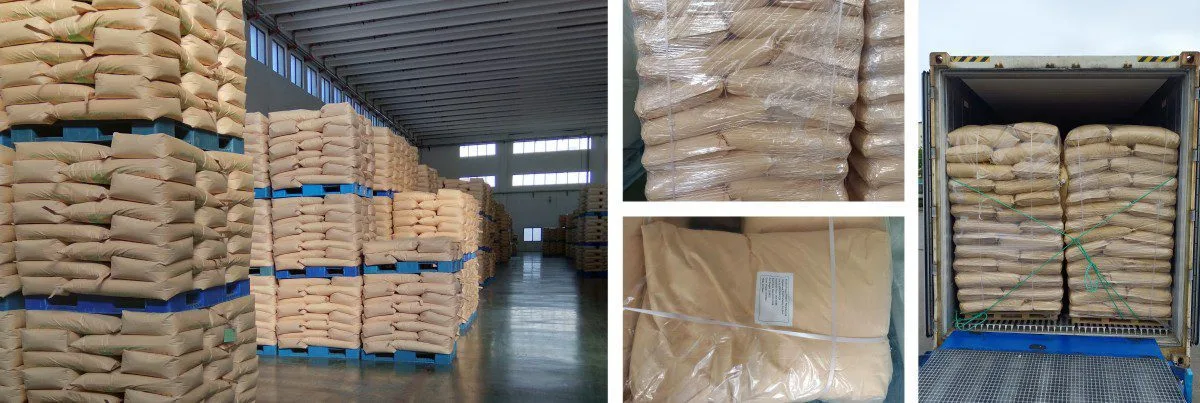
| 20 kg | Kraft paper bag + PE liner | Standard |
| 25 kg | Kraft paper bag + PE liner | Standard |
| Custom | Fiber drum with inner liner | Commercial |
| Bulk | 500 kg big bag | Commercial (≥500 kg) |
Custom packaging (private label, branded bags, specific sizes) available for commercial orders.
Storage Conditions
- Storage temperature: 15–25°C (cool, dry place)
- Relative humidity: <60% RH; avoid humidity above 70%
- Avoid: Direct sunlight, moisture, strong odors
- Shelf life: 24 months from manufacturing date when stored as directed