
Quality
Our ingredients are consumed every day around the globe. That reality is the reason quality is not a department here — it is the condition under which everything else operates. We apply our expertise in organic ingredients to guarantee optimal safety and quality for every lot we release.
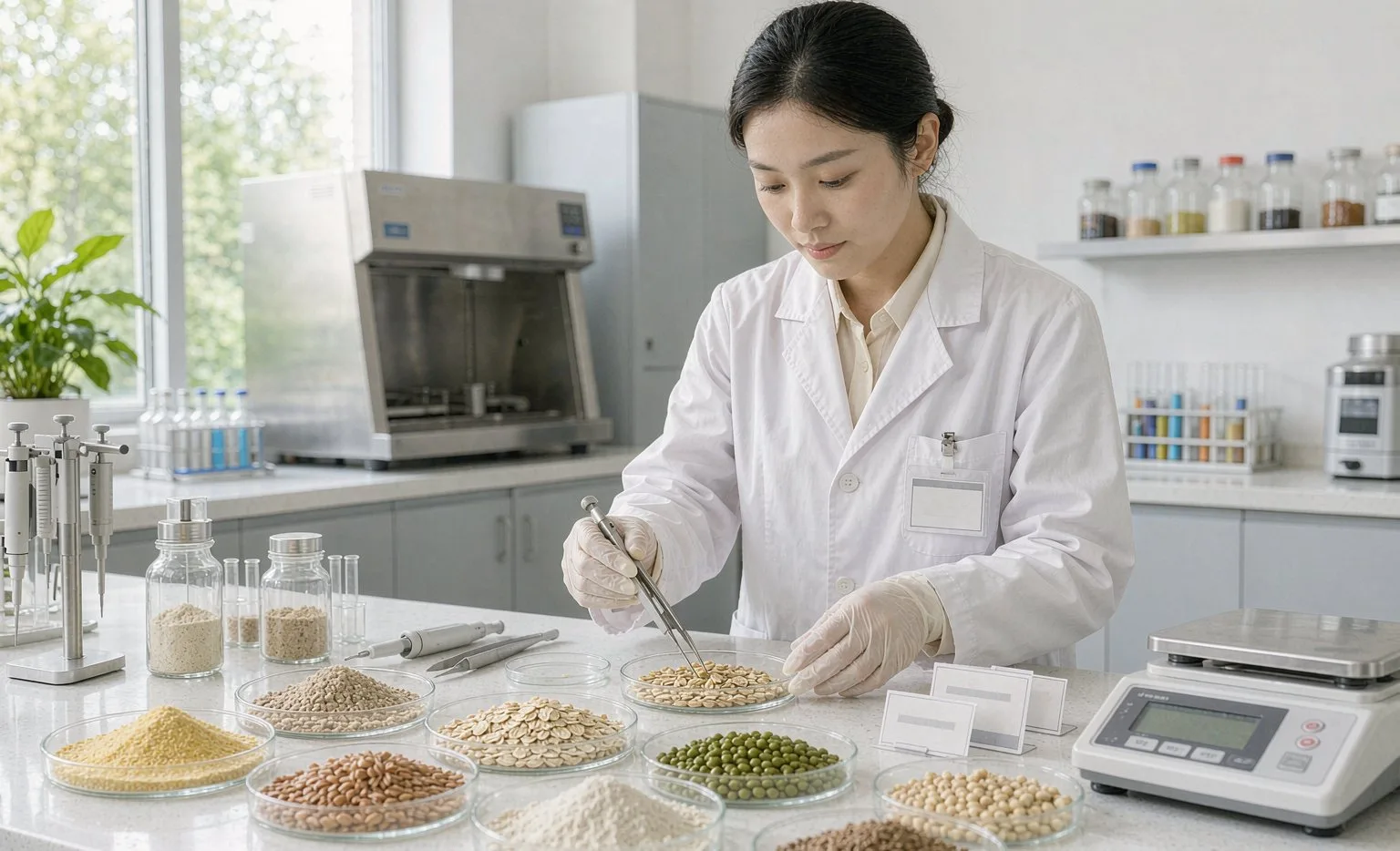
Our commitment
Our quality teams work each day alongside sourcing, production, R&D, and logistics to make that commitment operational. Standards are agreed before a crop is planted, not tested for after it is harvested. That sequencing matters: most quality problems in botanical supply chains are locked in at the field stage, and no amount of finished-goods testing recovers them.
Certification
We are committed to supplying certified ingredients issued exclusively from certified production sites and according to the most up-to-date quality standards. We hold the certifications most widely recognised in each of the markets we serve, so that a customer in one region is not asked to accept documentation designed for another. Depending on programme and destination, this includes USDA Organic, EU Organic, Non-GMO Project verification, Kosher, and Halal.
Certification is not interchangeable. USDA Organic and EU Organic are equivalent in intent but differ in how equivalence is demonstrated on paper, and a shipment documented for one market may need a separate transaction certificate for the other. We confirm which certificate your import will actually be checked against before the order is confirmed, because discovering that gap at customs costs more than the order.
We continually monitor the regulatory context in every market we ship to, in order to maintain compliance for all of our products as requirements evolve.
Our QA/QC system
Our strict quality standards apply from the selection of raw materials onward.
- Raw material control — incoming material is verified against specification before it enters production, including identity, moisture, foreign matter, and pesticide residue screening where applicable. Identity testing is what separates a botanical ingredient from a lookalike, and it is the check we never waive.
- In-process control — critical control points are defined per product line and monitored under HACCP principles, within a food safety management system aligned to ISO 22000.
- On-site laboratories — at each of our industrial sites, our quality control laboratories test raw material, intermediate product, and finished goods rather than relying solely on third-party results. In-house testing shortens the loop between a deviation and the correction of it.
- Release and traceability — no lot is released without full documentation linking it back to its grower, its production batch, and its test records.
Documentation that travels with the lot
Each shipment is accompanied by the paperwork your receiving team and your auditor will ask for: certificate of analysis against the agreed specification, lot and batch identification, and the organic transaction certificate required for your market. Where a customer’s audit protocol requires additional records, we produce them from the same batch file rather than reconstructing them after the fact.
Quality depends on people
Quality depends on the commitment of each actor to our global quality policy. The goal is to meet the growing expectations of manufacturers and consumers in terms of safety, efficacy, and performance — and to do it in a way that survives an audit.