
Astragalus (Astragalus membranaceus), known as huáng qí in Chinese herbal practice, is a revered herb in Traditional Chinese Medicine (TCM), where it has been lauded for centuries for its adaptogenic, tonic, and immune-supporting properties. Practitioners have traditionally used the dried root to support vitality, stamina, and the body’s natural resistance to everyday physical and environmental stress. Today the ingredient is available in several convenient, shelf-stable formats for formulators and brands, including organic astragalus extract powder, organic astragalus root powder, and organic astragalus root slices, each suited to different product applications ranging from capsules and tablets to teas and functional food blends. As interest in botanical ingredients grows across North America and Europe, astragalus is gaining popularity in the Western world for its potential health benefits and its appeal as a clean-label, plant-based component. While it is generally considered safe for most people when used at appropriate levels, it is natural—and responsible—to wonder: What are the negative side effects of astragalus, and who should approach this herb with caution?
Understanding the potential considerations is key to incorporating any supplement safely and effectively into your routine, and astragalus is no exception. No botanical ingredient is universally suitable, and the way a compound interacts with an individual’s physiology, existing prescriptions, and underlying health status determines whether it is helpful or problematic. For procurement teams, product developers, and private-label brands, this matters just as much as it does for end consumers: a clear picture of the known side effects, contraindications, and quality variables helps you make defensible formulation decisions and write accurate, compliant product information. In the sections below, we take a close look at the documented side effects, the populations for whom astragalus may be unsuitable, and the practical precautions that reduce risk. The goal is not to discourage use but to give you a balanced, evidence-aware foundation so the ingredient can be used with confidence where it is appropriate.
Generally Well-Tolerated, but Mild Effects Possible
For the vast majority of individuals, astragalus—particularly when consumed within recommended dosages and as part of a balanced routine—is well tolerated, with a long history of traditional use and a generally favorable safety profile in the broader literature. Most people who introduce the root or its extracts at sensible levels experience no adverse reactions at all. When side effects do occur, they are typically mild, transient, and self-limiting, often resolving as the body adjusts to the new ingredient. These reactions are more likely at the very start of use or when intake exceeds typical serving sizes. Recognizing the early signals—and knowing how to adjust dosage or timing—makes it easy to keep the experience comfortable. The most commonly reported mild effects are summarized in the list below, along with practical ways to minimize them.
- Mild Digestive Upset: Some people might experience minor stomach discomfort, bloating, gas, nausea, or loose stools, especially when first introducing astragalus or when taking very high doses relative to their normal intake. These symptoms are generally short-lived and tend to fade once the digestive system adapts. Sensitive individuals, or those who take the herb on an empty stomach, may notice the effect more strongly. Starting with a lower dose and gradually increasing it over one to two weeks can help mitigate this, allowing the gut microbiome and digestive enzymes time to adjust. Taking astragalus with food rather than on an empty stomach often reduces irritation, and dividing a daily amount into smaller servings can also improve comfort. If digestive symptoms persist beyond the initial adjustment period or worsen with continued use, it is sensible to pause supplementation and consult a qualified healthcare professional to rule out other causes.
- Drowsiness: Although less common, a small number of users have reported feelings of drowsiness, mild fatigue, or a general sense of calm and relaxation after taking astragalus, particularly with larger servings or concentrated extract forms. This is consistent with the herb’s traditional use as a gentle restorative tonic that supports the body during periods of stress or convalescence. For most people this effect is negligible, but individuals who operate machinery, drive, or need sustained alertness should pay attention to how they personally respond. If this occurs, it might be best to take astragalus in the evening, alongside a meal, so any sedating tendency works with rather than against your daily schedule. Avoiding high doses in the morning or before demanding tasks is a simple precaution. As with any new ingredient, observing your own response for the first several days of use is the most reliable way to find a timing and dose that suits you.
Important Interactions and Contraindications
The most significant considerations for astragalus involve its interactions with certain medications and its effects on specific health conditions, and these are where the real caution lies. Unlike the mild, short-term digestive effects described above, interactions with prescription drugs or aggravation of an existing disorder can have serious, lasting consequences. Because astragalus is an active botanical with measurable effects on immune activity, metabolic markers, and circulatory function, it can modify how the body processes or responds to conventional treatments. For that reason, the groups below should treat astragalus as a consult-first ingredient rather than a casual daily addition. The following sections walk through the key interaction categories, explain the underlying mechanism in plain terms, and outline the practical actions that protect vulnerable users. If any of these descriptions apply to you or to your customer base, the safe path is a conversation with a prescribing clinician before use.
- Interactions with Immunosuppressant Drugs:
Astragalus is frequently valued precisely because it supports normal immune function, but that same property creates a direct conflict when the clinical goal is to suppress immune activity.
- The Drawback: Astragalus is known for its immune-boosting properties, which is precisely why it is prized in wellness formulations. This is its great strength, but it becomes a clear drawback if you are taking medications designed to suppress the immune system. Immunosuppressive therapy is prescribed for serious, life-critical reasons, and anything that stimulates immune activity can work against the treatment plan. This includes drugs used after organ transplants—such as cyclosporine, tacrolimus, and corticosteroids—as well as medications for autoimmune diseases like azathioprine, methotrexate, and prednisone. Even seemingly mild botanical stimulation can be enough to disrupt a carefully calibrated regimen. The risk is not theoretical: for someone with a transplanted organ, an over-active immune response can threaten the graft, so introducing an immune-supportive herb without medical oversight is strongly discouraged.
- Why: Astragalus could potentially counteract the effects of these life-saving medications by encouraging immune activity that the drugs are specifically prescribed to dampen. When the two influences pull in opposite directions, the medication can become less effective at maintaining the intended level of immune suppression. The downstream consequences are meaningful: in transplant patients this may raise the risk of organ rejection, while in people managing autoimmune conditions it can trigger flare-ups of rheumatoid arthritis, lupus, or similar disorders. The interaction is not about conventional toxicity; it is about the herb undoing the very control that the prescription is meant to provide. Because the margin of safety in these populations is narrow, the presence of any immune-modulating supplement—astragalus included—needs to be weighed against the clinical objective rather than assumed harmless.
- Action: If you are on any immunosuppressant therapy, avoid astragalus entirely unless specifically advised and monitored by your healthcare provider. This is not a start low and see situation; the prudent default is exclusion unless a clinician who understands your full medication list explicitly clears it. For brands and practitioners, this means labeling and customer guidance should flag immunosuppressant use as a contraindication rather than leaving it implicit. If a healthcare provider does approve supervised use, it should come with routine monitoring of the relevant markers and a clear plan for stopping at the first sign of immune-related change. Never add astragalus to a regimen that includes transplant or autoimmune medication on the assumption that natural implies safe—the interaction risk is exactly where the natural origin provides no protection.
- Impact on Autoimmune Diseases:
Beyond prescribed immunosuppressants, there is a related concern for people whose immune system is already dysregulated by an autoimmune condition.
- The Concern: Because astragalus stimulates the immune system, there is a theoretical—and clinically plausible—concern that it could exacerbate symptoms in individuals with autoimmune diseases, where the immune system is already attacking the body’s own tissues. Conditions frequently cited in this context include rheumatoid arthritis, systemic lupus erythematosus, multiple sclerosis, and Hashimoto’s thyroiditis, among others. In someone whose disease is controlled or in remission, an immune trigger can sometimes tip the balance back toward activity. While not every person with autoimmunity will react the same way, the direction of the herb’s action runs counter to what these patients usually need. The precaution is therefore about respecting the underlying biology: an ingredient that promotes immune responsiveness may be unhelpful precisely when the goal is to keep that response quiet.
- The Science: The body of direct human clinical evidence on astragalus in autoimmune populations is still limited, and published findings are not yet conclusive enough to draw firm universal rules. Some laboratory and animal work points to complex, sometimes immunomodulatory rather than purely stimulatory effects, which makes simple predictions difficult. Despite that nuance, the precautionary principle governs real-world guidance: the general advice is to exercise caution or avoid astragalus if you have an autoimmune condition, particularly one that is active or poorly controlled. Always consult your doctor before using it, and share the specific diagnosis, current medications, and disease status so the recommendation can be tailored. Where a clinician does permit use, it should be within a monitored plan rather than as a self-directed daily dose. Until stronger human data exist, restraint is the responsible default for this group.
- Blood Sugar and Blood Pressure Medications:
Astragalus also shows measurable activity on metabolic and cardiovascular markers, which matters for people managing chronic conditions with medication.
- The Potential: Some research suggests astragalus might have mild effects on blood sugar levels and blood pressure, in addition to its better-known immune-related actions. Preclinical and a number of small clinical investigations have explored the root’s influence on glucose metabolism and vascular tone, and the consistent theme is that the effects, while present, tend to be modest rather than dramatic. This matters because mild in a healthy person is usually uneventful, but mild on top of an already effective medication can push a marker out of its target range. The herb’s traditional role as a restorative tonic overlaps with these systemic effects, so they should be viewed as part of the whole physiological picture rather than isolated curiosities. For formulators, it is worth noting that even gentle activity on these pathways is enough to warrant caution labeling for medicated users.
- The Drawback: If you are already taking medications for diabetes or high blood pressure, combining them with astragalus could potentially lead to blood sugar or blood pressure dropping too low, a state clinicians refer to as hypoglycemia or hypotension respectively. The issue is additive rather than multiplicative: the drug is already doing its job, and the herb’s own modest activity stacks on top of it. Symptoms can include dizziness, lightheadedness, unusual fatigue, shakiness, or confusion, any of which is unpleasant and potentially unsafe. People on insulin, sulfonylureas, ACE inhibitors, beta-blockers, or diuretics should be especially mindful. The practical risk is that a user feels fine on the medication alone, adds astragalus thinking it is benign, and only notices the cumulative effect when readings shift or symptoms appear. Awareness of this additive possibility is the simplest safeguard.
- Action: If you are on these medications, monitor your levels closely—blood glucose for diabetics, blood pressure for those on antihypertensives—and discuss astragalus supplementation with your doctor before starting, to ensure there are no adverse interactions. Keeping a short log of readings during the first weeks of any new ingredient makes it far easier to spot a trend that the herb may be influencing. Your clinician can advise whether a lower starting dose, a different timing, or temporary suspension of use is appropriate, and can adjust prescription levels if needed. For product makers, including a clear note that medicated users should consult a healthcare professional helps meet both safety and compliance expectations. The underlying principle is straightforward: when an herb and a drug act on the same system, coordinated oversight prevents small effects from becoming problems.
- Pregnancy and Breastfeeding:
Two further groups warrant a cautious, exclusion-oriented stance simply because the evidence base to support safe use is absent.
- Lack of Data: There is insufficient reliable information about the safety of astragalus during pregnancy and breastfeeding, and in evidence-based safety assessment, absence of data is not the same as evidence of safety. Most herbal ingredients simply have not been studied in rigorous, controlled trials in these populations, and astragalus is no exception. Traditional use offers anecdotal context but cannot establish modern dosing safety for a developing fetus or a nursing infant. Compounding the uncertainty, pregnancy and lactation involve profound hormonal and metabolic changes that can alter how botanicals are processed. Without standardized, reproducible human data, no responsible recommendation can assert that the herb is harmless in these windows. The honest position is that the knowledge gap itself is the reason for caution, not any confirmed harm—but an unknown risk is still a risk when safer alternatives exist.
- Action: As a precautionary measure, it is generally recommended to avoid astragalus if you are pregnant or breastfeeding, or actively trying to conceive, until credible safety data are available. This default applies to the root, the extract, and the slices alike, since all derive from the same active botanical. The reasoning is not that harm has been proven, but that the potential consequences of an avoidable exposure are high enough to make abstinence the lower-risk choice. Expectant and nursing individuals should instead rely on nutrients and botanicals with established safety records, chosen in consultation with a prenatal or lactation specialist. For brands, pregnancy and breastfeeding warnings belong in the standard cautionary labeling for any astragalus-containing product. When in doubt, the conservative route protects both the user and the formulator, and a clinician can help weigh any individual exception.
Choosing Your Astragalus Product
Whether you choose organic astragalus extract powder (a concentrated form often used in supplements and standardized formulations), organic astragalus root powder (the whole ground root, versatile for blending into capsules, stick packs, and functional foods), or organic astragalus root slices (ideal for making teas, broths, or traditional decoctions), it is worth being deliberate about sourcing. Selecting a reputable supplier that provides certificates of analysis, heavy-metal screening, and identity verification protects both product quality and brand reputation. Opt for certified organic sources wherever possible: organic cultivation minimizes exposure to residual pesticides, herbicides, and other agrochemicals, and helps ensure a purer, more traceable ingredient. Consider the format that fits your application—extracts for potency and consistency, root powder for whole-plant breadth, slices for brewed preparations—and confirm that processing methods preserve the active compounds you intend to highlight. Thoughtful sourcing turns a well-tolerated herb into a dependable, defensible component of your product line.
A balanced reading of the evidence shows that, while astragalus is widely used and typically safe for healthy adults, its immune-modulating properties mean it is not suitable for everyone—particularly those on immunosuppressant drugs, individuals with autoimmune conditions, people managing blood sugar or blood pressure with medication, and pregnant or breastfeeding users. The herb’s strengths and its cautions come from the same biology, so responsible use is about matching the ingredient to the right person rather than treating it as universally benign. Always prioritize open communication with your healthcare provider before starting any new supplement, especially if you have underlying health conditions or are taking medications, and treat the precautions above as practical guardrails rather than alarm. With thoughtful sourcing, appropriate dosing, and honest labeling, astragalus can remain a valuable, well-understood component of a clean-label botanical portfolio.
Have you consulted with your doctor about adding astragalus to your routine? If you belong to any of the groups discussed above—or if you simply take prescription medication of any kind—a brief conversation with a qualified healthcare professional is the most reliable way to confirm that this herb fits your situation. Keeping a current list of everything you consume, from prescription drugs to herbal teas, helps that discussion stay accurate and productive.
Recommended Products
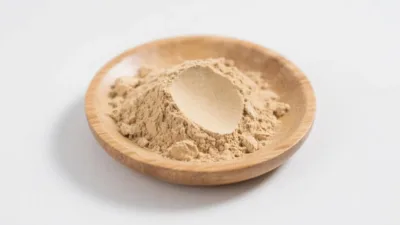
Organic Astragalus Root Powder
Produced by fine-grinding air-dried astragalus roots to 80–100 mesh, it delivers the complete plant…

Organic Astragalus Extract Powder
Produced via water-ethanol extraction at a 4:1–10:1 concentration ratio, this fine powder delivers ≥50%…

Astragalus Root Slices
Unlike single-molecule adaptogens, astragalus works through the full polysaccharide matrix — making a whole-root…
Related Posts


