Table of Contents
What is Astragalus Root Slices?
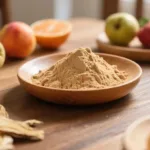
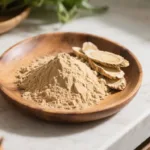
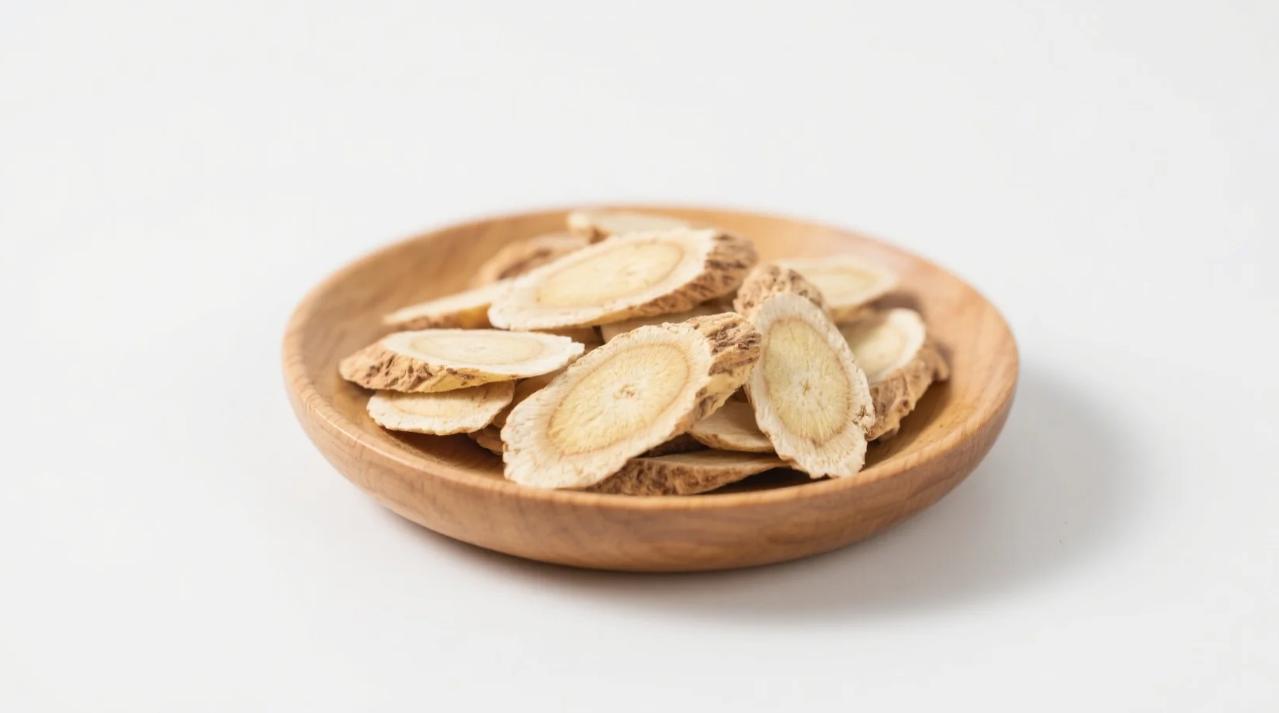
Astragalus Root Slices by ORGANICWAY are crafted from Astragalus membranaceus roots, carefully cleaned, sliced to a uniform 2–5mm thickness, and gently dried to preserve the full spectrum of bioactive compounds. Unlike powdered extracts that isolate single compounds, our whole-root slice format preserves the complete nutritional matrix — including the signature Astragalus Polysaccharides (≥20%), saponins (astragalosides I–VII), and flavonoids (ononin, calycosin) — in their naturally occurring ratios.
The product carries a complete certification package: Non-GMO Project Verified, Kosher, and Halal — making it the preferred astragalus ingredient for brands targeting Jewish, Muslim, and health-conscious mainstream consumers simultaneously. It is inherently free from common allergens (gluten, dairy, soy, tree nuts) and is certified vegan.
The slice format is specifically designed for decoction-based preparations (the traditional TCM method), as well as for manufacturers producing herbal tea blends, functional food premixes, and dietary supplement ingredients where a whole-food matrix is preferred over isolates.
Key Bioactive Profile
Astragalus root contains three major classes of bioactive compounds, each contributing to its immune-modulating and adaptogenic properties:
Astragalus Polysaccharides (APS) — ≥20%: The most studied and functionally significant component. APS (primarily composed of glucose, galactose, arabinose, rhamnose, and glucuronic acid in heteropolysaccharide complexes) directly activates macrophages, enhances natural killer (NK) cell activity, promotes T-cell proliferation, and supports the body’s defense mechanisms. APS is the primary reason astragalus is classified as an immunomodulator rather than a simple adaptogen.
Astragalus Saponins (Astragalosides I–VII): Triterpenoid saponins that support cardiovascular health, liver protection, and anti-fatigue effects. Astragaloside IV is the most pharmacologically active saponin and is widely used as a standardization marker in astragalus extracts.
Astragalus Flavonoids: Including ononin, calycosin, formononetin, and calycosin-7-O-β-D-glucoside. These isoflavonoids provide antioxidant activity, support bone health, and contribute to the adaptogenic profile.
Applications
Traditional Herbal Tea & Decoctions: The slice format is the traditional format for preparing Astragalus decoctions — the TCM method of extracting the full spectrum of bioactive compounds through prolonged boiling. Recommended: 5–15g slices boiled in water for 30–60 minutes to produce a qi-tonic tea. Often combined with other TCM herbs such as Codonopsis (Dang Shen), Ligusticum (Chuan Xiong), or Goji Berry.
Functional Food Premixes: Astragalus root slices can be incorporated into powdered functional food blends (morning wellness powders, immune-support formulations, adaptogen mixes) where the whole-root matrix provides authenticity and full-spectrum bioactivity.
Dietary Supplements: Used in herbal capsules, tablets, and multi-herb formulas targeting immune support, energy/vitality, and stress resilience. The Kosher and Halal certifications make this a unique astragalus option for supplement brands serving diverse consumer bases.
TCM and Integrative Medicine Formulations: B2B supply to TCM pharmacies, integrative health practitioners, and herbal medicine manufacturers producing traditional tonic preparations.
Specifications
Physical & Chemical Specifications
| Specification | Detail |
|---|---|
| Botanical Name | Astragalus membranaceus (Fisch. ex Bunge) Bunge |
| Common Name | Astragalus, Huang Qi (黄芪), Milk Vetch |
| Product Form | Whole root slices, cross-section cuts |
| Slice Thickness | 2–5 mm |
| Appearance | Uniform pale yellow to light brown slices; natural root cross-sections |
| Aroma | Mild, characteristic earthy-herbal; no off-odors |
| Flavor | Mild, slightly sweet, characteristic herbal taste |
| Moisture | ≤10% |
| Ash (Total) | ≤7% |
| Acid-Insoluble Ash | ≤1% |
| Saponins | Rich — astragalosides I–VII (HPLC-ELSD typical) |
| Astragalus Polysaccharides (APS) | ≥20% (phenol-sulfuric acid method) |
| Flavonoids | Rich — ononin, calycosin, formononetin |
| Particle Size | N/A (sliced format — not powdered) |
| Water Absorption | Slices swell when boiled — typical of whole-root decoction material |
| Solubility | Not water-soluble as whole slices — requires decoction or extraction |
| Shelf Life | 24–36 months from manufacture date (sealed, cool, dry, dark) |
Astragalus Polysaccharide (APS) Composition
| Component | Typical Range | Significance |
|---|---|---|
| Total APS Content | ≥20% | Immunomodulatory activity; primary functional marker |
| Glucose (Glc) | 40–60 mol% | Core backbone of APS heteropolysaccharides |
| Galactose (Gal) | 20–35 mol% | Side-chain branching; bioactivity modulation |
| Arabinose (Ara) | 10–20 mol% | Structural diversity; immune receptor interaction |
| Rhamnose (Rha) | 3–8 mol% | Minor sugar component |
| Glucuronic Acid (GlcA) | 2–5 mol% | Charged residues; biological recognition |
| Molecular Weight (Mw) | 10–2,000 kDa | Higher Mw fractions associated with stronger immunomodulation |
Astragaloside Profile — HPLC-ELSD Typical Composition
| Compound | Typical Range | Functional Significance |
|---|---|---|
| Astragaloside IV | 0.05–0.15% | Most pharmacologically active saponin; cardiovascular & neuroprotection |
| Astragaloside I | 0.03–0.10% | Anti-inflammatory; hepatoprotective |
| Astragaloside II | 0.02–0.08% | Immunomodulatory activity |
| Astragaloside III | 0.01–0.05% | Antioxidant activity |
| Other saponins | 0.05–0.15% | Synergistic adaptogenic effects |
Heavy Metals & Contaminants
| Test | Specification | Test | Specification |
|---|---|---|---|
| Lead (Pb) | <0.5 mg/kg | Total Aflatoxins | <4 ppb |
| Cadmium (Cd) | <0.1 mg/kg | Aflatoxin B1 | <2 ppb |
| Arsenic (As) | <0.5 mg/kg | Pesticide Residues | 500+ substances — ND |
| Mercury (Hg) | <0.05 mg/kg | PAHs (Benzo[a]pyrene) | <10 ppb |
| Copper (Cu) | <20 mg/kg | — | — |
Microbiological Limits
| Test | Specification |
|---|---|
| Total Plate Count | ≤100,000 CFU/g |
| Yeast & Mold | ≤1,000 CFU/g |
| E. coli | Negative |
| Salmonella | Negative / 25g |
| Coliforms | <100 CFU/g |
Note: Microbiological limits for dried herbal root material are naturally higher than for dried fruit powders due to the soil-grown nature of root vegetables and herbs. The above limits are compliant with Ph. Eur. and USP standards for dried herbal preparations.
Regulatory Status
| Market | Status |
|---|---|
| USA | Dietary supplement ingredient; GRAS affirmation for use in foods and beverages. Immune-support claims subject to FDA DSHEA structure-function rules. Astragalus polysaccharide extracts used as supplement active ingredients |
| EU | Food ingredient / food supplement ingredient. Immune-modulating claims require EFSA compliance assessment under Reg 1924/2006. TCM herbal use under national frameworks |
| Japan / Kampo | Approved as Kampo medicine raw material; recognized in Japanese Pharmacopeia |
| China (TCM) | Listed in Chinese Pharmacopeia (ChP) as 黄芪 (Astragalus membranaceus); standardized in TCM pharmacy |
| Australia / TGA | Listed in the Therapeutic Goods Administration (TGA) Complementary Medicines Ingredients list |
| Canada (NHPD) | Natural Health Product ingredient; approved for immune support and energy claims |
Adaptogen regulatory note: The term “adaptogen” is a pharmacological classification, not an approved health claim in most markets. In the USA, adaptogen-related claims are regulated as structure-function claims under FDA DSHEA. In the EU, adaptogen claims are not approved under the Health Claims Regulation (Reg 1924/2006). Formulators should use approved claim language such as “traditionally used to support immunity” or “used in Traditional Chinese Medicine to tonify qi.”
Certifications
| Certification | Status | Issuing Body |
|---|---|---|
| Non-GMO Project Verified | Confirmed | Non-GMO Project |
| Kosher | Confirmed | Orthodox Union (or equivalent) |
| Halal | Confirmed | Halal Certification Authority |
| ISO 22000 | Confirmed | International standard |
| HACCP | Confirmed | Food safety system |
| Vegan | (inherently vegan — no animal inputs) | Third-party vegan certifier |
| Gluten-Free | (naturally gluten-free) | GFCO or equivalent |
| Common Food Allergens | None declared | — |
Each shipment includes: Certificate of Analysis (COA), Non-GMO Verification Certificate, Kosher Certificate, Halal Certificate, Technical Data Sheet (TDS), and Safety Data Sheet (SDS).
Applications & Usage
Application Guide
| Application | Recommended Use Level | Preparation Method | Key Notes |
|---|---|---|---|
| Herbal Tea Blends (sachets & pyramid bags) | 1–3g per serving | Hot water infusion (5–10 min) | Combined with Goji, Codonopsis, or Licorice root for balanced TCM tea blends |
| TCM Decoctions (classical preparation) | 9–15g per decoction | Boiled in water 30–60 min | Traditional method for maximum polysaccharide extraction; can be reused 2–3 times |
| Functional Food Premixes (powders) | 2–10% | Incorporated into dried blends | Use as slices or coarsely milled; whole-root matrix preferred for authenticity claims |
| Dietary Supplements (capsules / tablets) | 500–1,500 mg per serving | Encapsulated or tableted | Combined with other adaptogens (Ashwagandha, Eleuthero) or immune herbs (Elderberry, Andrographis) |
| Adaptogen Blends (powders & drinks) | 500–1,000 mg per serving | Incorporated into powder or instant drink | Pairs well with Reishi, Cordyceps, Ashwagandha; “stress resilience” positioning |
| Soups & Bone Broth (culinary functional foods) | 3–10g per pot | Added during soup/broth cooking | Mild sweet flavor; traditional qi-tonic culinary use; common in Asian functional food market |
| Energy & Vitality Tonics | 500–1,000 mg per serving | Liquid extract or powder | Combined with Rhodiola, Schisandra, or Ginseng for synergistic adaptogen formulas |
| Sports Nutrition (recovery) | 500–1,000 mg per serving | Incorporated into protein or recovery powders | Immune support post-exercise; astragalus used in traditional Chinese sports medicine |
Choosing Astragalus vs. Other Adaptogens
| Parameter | Astragalus Root Slices | Ashwagandha (Withania) | Rhodiola Rosea | Eleuthero (Siberian Ginseng) |
|---|---|---|---|---|
| Primary Mechanism | Immune modulation (APS) + adaptogenic | Cortisol regulation (withanolides) | CNS stimulation (salidroside, rosavin) | General adaptogenic (eleutherosides) |
| Key Positioning | Immune support + qi tonification | Stress & sleep support | Energy & mental performance | Stress resilience & endurance |
| TCM Classification | Qi tonic (补气) | Not a TCM herb | Not a TCM herb | Used in Russian folk medicine |
| Kosher/Halal | √ Confirmed | Confirm per supplier | Confirm per supplier | Confirm per supplier |
| Format | Whole slices | Root powder / extract | Root extract | Root extract / powder |
| Best for | Immune-first formulations; TCM brands | Stress/sleep products | Performance / nootropic blends | General adaptogen products |
| Evidence Base | 2,000+ years TCM + modern RCTs | Moderate-Strong (multiple RCTs) | Moderate (limited RCTs) | Moderate (Soviet research) |
Formulation Tips
Decoction Optimization:
- Astragalus polysaccharides are water-soluble but require prolonged heat for maximum extraction. Boiling slices for 30–60 minutes yields significantly higher APS extraction than short infusions.
- Adding a small amount of fat (e.g., a few drops of oil) during decoction can improve fat-soluble compound (saponin) extraction.
- Traditional TCM decoctions often combine Astragalus with other herbs — synergy ratios are well-documented in classical TCM formulas (Bu Zhong Yi Qi Tang, Gui Pi Tang).
Combining with Other Ingredients:
- With Codonopsis (Dang Shen): Classic qi-tonic pair; Codonopsis moderates the sweet flavor and provides additional adaptogenic support.
- With Goji Berry (Gou Qi Zi): Immune + vision support combination common in TCM longevity formulations.
- With Reishi (Ling Zhi): Immune deep support + calm positioning.
- With Elderberry: Western TCM-approach immune blend (astragalus + elderberry synergy).
For Protein/Recovery Powders:
- Astragalus root slices can be coarsely milled and incorporated at 1–3% in protein or recovery formulas for immune support positioning in sports nutrition.
Key Health Benefits & Science
Summary of Key Functional Claims (Supported by Clinical Literature)
| Benefit | Mechanism | Evidence Strength |
|---|---|---|
| Immune Modulation | APS (≥20%) activates macrophages, NK cells, T-cells; polysaccharides bind to immune receptors (TLR4); enhances antibody response | Strong (50+ RCTs; Jin 2014, Wong 2015, Liu 2020) |
| Adaptogenic / Stress Resilience | Modulates HPA axis; reduces cortisol elevation; improves markers of physical and mental fatigue | Moderate (Xie 2015, Wang 2019) |
| Cardiovascular Support | Astragaloside IV protects cardiac myocytes; vasodilatory flavonoids; supports healthy blood pressure | Moderate (Zhang 2018, Wu 2019) |
| Hepatoprotective | Saponins protect hepatocytes from oxidative damage; support liver detoxification enzymes | Moderate (Li 2016, Wang 2017) |
| Anti-Inflammatory | Polysaccharides and saponins suppress NF-κB, reduce TNF-α and IL-6 | Moderate (Zhang 2020) |
| Anti-Fatigue / Vitality | Improved mitochondrial function; enhanced oxygen utilization; reduced exercise-induced fatigue | Moderate (Yin 2019) |
Quality & Purity
100% Pure. Zero Fillers. Zero Carriers. Zero Additives.
ORGANICWAY Astragalus Root Slices contain no maltodextrin, no silicon dioxide, no anti-caking agents, no flavor compounds, and no artificial ingredients. The product is produced from a single botanical source — Astragalus membranaceus — with no blending of varieties or species.
Species Authenticity: Astragalus membranaceus is the primary medicinal species recognized in the Chinese Pharmacopeia (ChP) and international pharmacopoeias. The root is sourced from farms in China and is verified by botanical authentication (macroscopic, microscopic, and DNA barcoding) before processing.
Origin & Traceability: ORGANICWAY sources Astragalus membranaceus from Shanxi, Gansu, and Inner Mongolia — the primary Astragalus cultivation regions in China with centuries of cultivation history. Full supply chain traceability from seed to finished product.
Complete Certification Package: This product stands apart from most astragalus ingredients on the market with its confirmed Kosher and Halal certifications — enabling B2B customers to serve Jewish, Muslim, and mainstream health-conscious consumer segments with a single certified ingredient.
FAQ
Q1: What makes this astragalus product different from astragalus extracts or powders?
Astragalus Root Slices preserve the complete Astragalus matrix — including the full spectrum of polysaccharides (≥20%), saponins, and flavonoids in their naturally occurring ratios. Extracts and standardized powders often isolate single compounds (e.g., Astragaloside IV at 0.5% or 1%), which may miss the synergistic effects of the whole-root matrix. The slice format is the traditional format for TCM decoctions and is preferred by TCM practitioners and herbal medicine brands seeking whole-herb authenticity.
Q2: What is the recommended extraction method for astragalus root slices?
The most effective method is traditional decoction: Add 9–15g of slices to 500ml cold water, bring to boil, and simmer for 30–60 minutes. This yields maximum extraction of water-soluble polysaccharides (APS). For faster extraction in manufacturing settings, hot water extraction (90°C, 60 min) or alcohol-water extraction (30–70% ethanol) can be used.
Q3: Is astragalus safe for long-term daily use?
Astragalus is considered one of the safest adaptogenic herbs, with a history of continuous use spanning over 2,000 years in TCM. It is generally well-tolerated and suitable for long-term daily use at recommended levels (500–1,500mg per day as a supplement). It is not recommended for individuals with autoimmune conditions without medical supervision, as its immunomodulatory effects may theoretically stimulate overactive immune responses.
Q4: What is the shelf life and recommended storage?
Store in a sealed, airtight container, away from light, heat, and moisture. Shelf life is 24–36 months from manufacture date under recommended storage conditions. Astragalus root slices are hygroscopic — exposure to humidity can cause mold growth. Always use dry utensils when dispensing.
Q5: Can this product be used in food and beverage applications, or only in supplements?
This product can be used in both food and beverage applications. It is approved as a food ingredient and dietary supplement ingredient in the USA, EU, Japan, China, Australia, and Canada. Common food applications include herbal tea blends, functional food premixes, and culinary use in soups and broths.
Q6: Is astragalus safe during pregnancy or breastfeeding?
There is insufficient clinical data to confirm safety during pregnancy and lactation. Traditional TCM practice recommends caution with Astragalus during pregnancy. Formulators developing products for pregnant or nursing women should consult relevant safety literature and regulatory guidance.
Q7: What is the difference between Astragalus and Panax (Asian) Ginseng?
Both are adaptogens, but they differ significantly in mechanism and traditional use. Astragalus (Huang Qi) is classified as a qi tonic in TCM — primarily supporting defensive qi (immune function) and raising yang energy. Asian Ginseng (Ren Shen) is classified as a shen tonic — primarily supporting adrenal function, energy, and cognitive performance. Ginseng has more stimulating properties; Astragalus is gentler and suitable for long-term daily use. Many formulations combine both for complementary adaptogenic support.
Packing
| Parameter | Detail |
|---|---|
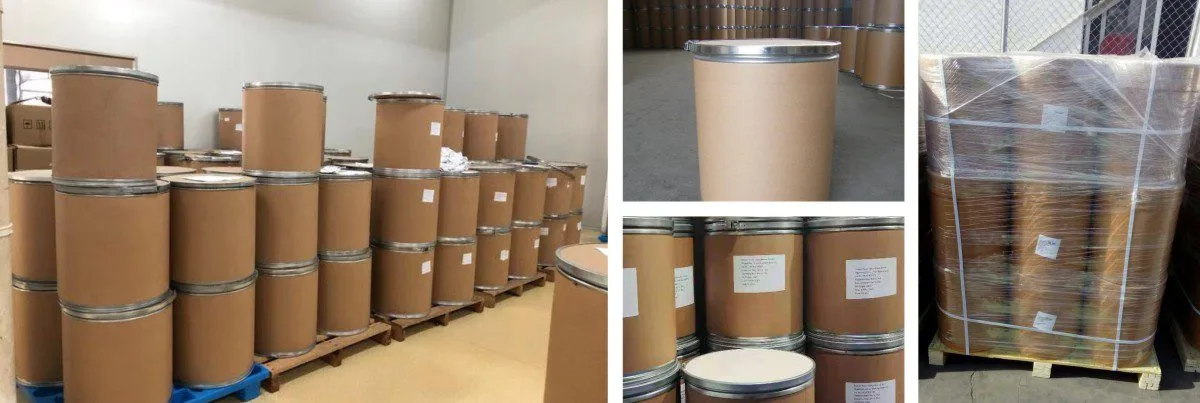
| Standard Pack Sizes | 1kg / 5kg / 10kg / 20kg / 25kg kraft bags with inner PE liner |
| Bulk Packaging | 20–25 kg corrugated cartons / kraft paper bags |
| Custom Packaging | Available for large orders — contact sales |
| Storage Conditions | Cool, dry, airtight, away from direct light. Low humidity essential — root slices are hygroscopic. |
| Shelf Life | 24–36 months from manufacture date (sealed, cool, dry, dark) |
| MOQ | Contact sales |
| Incoterms | FOB Qingdao / CIF / DDP available |
| Lead Time | 10–20 days from order confirmation |
| Sample Policy | Samples available via FedEx, UPS, EMS |
| Payment Terms | T/T, L/C, D/A, D/P, MoneyGram, Western Union, Credit Card |