Table of Contents
What is Organic Isomaltulose?
Organic Isomaltulose — also commercially known as Palatinose — is a naturally occurring disaccharide composed of glucose and fructose linked by an alpha-1,6-glycosidic bond (instead of the alpha-1,2 bond found in sucrose). This structural difference is the key to its functional properties: the alpha-1,6 linkage is hydrolyzed more slowly by human digestive enzymes, resulting in a gradual, sustained release of glucose into the bloodstream rather than the rapid spike associated with conventional sucrose or maltodextrin. With a glycemic index (GI) of 32 — compared to sucrose’s GI of 65 and maltodextrin’s GI exceeding 80 — isomaltulose provides what is commonly described as “sustained energy,” making it a preferred carbohydrate source in sports nutrition, diabetic-friendly formulations, and functional foods targeting metabolic health.
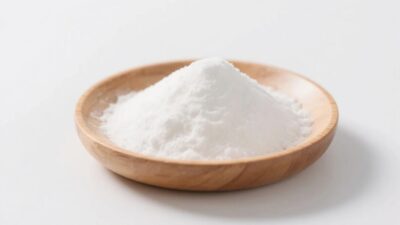
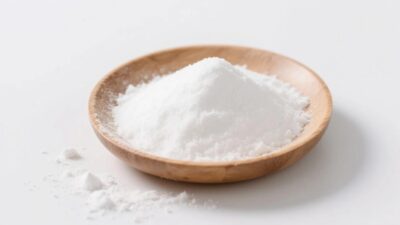
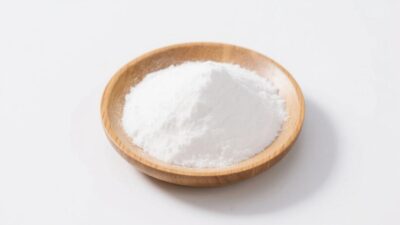
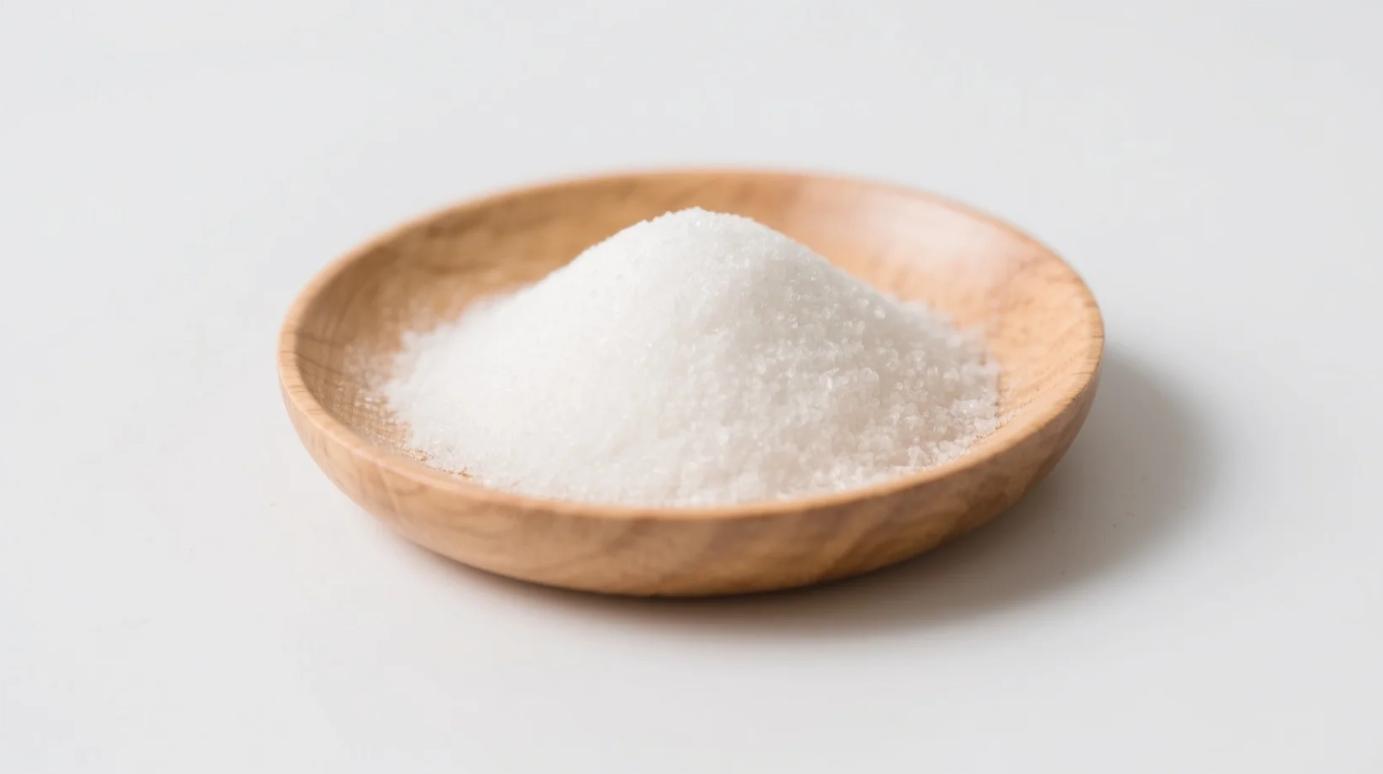
Organic Isomaltulose Powder — Crystalline Format:
Produced from certified organic sugar beet through enzymatic isomerization and spray-drying, the powder delivers ≥99% isomaltulose purity (HPLC-validated), ≥98% solubility in cold water at 20°C, and a neutral, mildly sweet flavor with no aftertaste. The crystalline structure offers excellent flowability and compression properties — suitable for direct compression tablet formulations, protein bar binding, and powdered supplement sachets. Customizable particle size (80–200 Mesh) allows optimization for specific processing requirements. Moisture content is controlled at ≤0.5%, ensuring excellent shelf stability at 36 months.
Organic Isomaltulose Syrup — Liquid Format:
Supplied at 75% solid content, the syrup format enables direct incorporation into beverage, confectionery, and syrup formulations without the need for dissolution. It delivers the same functional isomaltulose profile — GI 32, prebiotic activity, and non-cariogenic properties — in a liquid-ready format ideal for RTD beverages, functional waters, sports drinks, and liquid supplement applications.
Prebiotic Fiber Support:
Beyond its glycemic profile, isomaltulose functions as a prebiotic fiber. The alpha-1,6 linkage resists full digestion in the upper GI tract, allowing it to reach the colon where Bifidobacterium and other beneficial bacteria ferment it preferentially. This fermentation produces short-chain fatty acids (SCFAs) including butyrate — supporting colonic health, barrier integrity, and systemic metabolic benefits. This dual functionality (sustained energy + prebiotic support) differentiates isomaltulose from both rapid-release maltodextrin and inert sugars.
Regulatory and Formulation Credentials:
Certified compliant with FDA GRAS, EU Novel Food (EC 258/97), and Chinese NHFPC standards — enabling global market access. ISO 26642:2010 certification validates minimal blood glucose response. Heat stability up to 160°C makes it suitable for baking, confectionery, and thermal processing. Prebiotic activity validated at ≥3g/day servings. Non-cariogenic (tooth-safe) — does not promote dental caries, confirmed by independent studies.
Custom blending available: isomaltulose can be pre-mixed with stevia, erythritol, monk fruit, dietary fiber (such as organic inulin), or MCT powder for targeted functional formulations. Private label packaging available at 500 kg MOQ; R&D trial at 25 kg.
Certified USDA/EU Organic, Non-GMO Project Verified, Vegan, Gluten-Free, Kosher, and Halal. Sample (1 kg) to bulk (25 kg+) available. Lead time: 10–20 days.
Physical & Chemical Specifications
Product Specifications Comparison
| Parameter | Isomaltulose Powder | Isomaltulose Syrup |
|---|---|---|
| Common Name | Organic Isomaltulose / Palatinose | Organic Isomaltulose / Palatinose |
| Source | Certified organic sugar beet | Certified organic sugar beet |
| Processing | Enzymatic isomerization → Spray-drying | Enzymatic isomerization → Concentration |
| Purity (Isomaltulose) | ≥99% (HPLC) | ≥99% (of solids, HPLC) |
| Solid Content | — | 75% |
| Appearance | White crystalline powder | Clear to light amber syrup |
| Sweetness | 50% of sucrose | 50% of sucrose |
| Glycemic Index (GI) | 32 (ISO 26642:2010 certified) | 32 |
| Calories | 4 kcal/g (same as sucrose) | 4 kcal/g (same as sucrose) |
| Solubility | ≥98% in water at 20°C | Fully miscible in water |
| Particle Size | 80–120 Mesh (customizable to 200 Mesh) | N/A |
| Moisture | ≤0.5% | ~25% (balance water) |
| pH Stability | Neutral (6–8) | Neutral (6–8) |
| Heat Stability | Up to 160°C (caramelization point) | Moderate heat tolerance |
| Flowability | Excellent (crystalline) | N/A |
| Compression Suitability | Excellent (direct compression tablets) | Not suitable |
| Shelf Life | 36 months | 24 months |
| Recommended Storage | Cool, dry, sealed | Sealed, below 25°C |
Key Functional Properties
| Property | Value | Significance |
|---|---|---|
| Glycemic Index | 32 | Sustained glucose release vs rapid spike |
| Sweetness | 50% sucrose | Moderate; often combined with high-intensity sweeteners |
| Prebiotic Activity | Yes | Supports Bifidobacterium growth; SCFA/butyrate production |
| Non-Cariogenic | Confirmed | Tooth-safe; no dental caries promotion |
| Digestion Rate | Slow | Alpha-1,6 linkage; slower enzymatic hydrolysis vs sucrose |
| Solubility | ≥98% | Excellent for beverage and powder applications |
| Heat Stability | Up to 160°C | Suitable for baking and confectionery |
| ISO 26642:2010 | Certified | Validated minimal blood glucose response |
Dosage Reference
| Application | Typical Use Level |
|---|---|
| Sports nutrition (energy gels, bars) | 15–30 g per serving |
| Diabetic-friendly formulations | 10–30 g per serving (per label claim) |
| Functional beverages | 5–15 g per serving |
| Prebiotic supplement | ≥3 g/day for prebiotic effect |
| Tablet / capsule excipient | Per formulation (flow agent / binder) |
| Confectionery / baking | Up to 50% weight replacement for sucrose |
Microbiological & Contaminant Standards
| Test | Standard | Method |
|---|---|---|
| Total Plate Count (TPC) | <1,000 CFU/g | ISO 4833 |
| Yeast & Mold | <100 CFU/g | ISO 21527 |
| Salmonella | Not detected / 25g | ISO 6579 |
| E. coli | Not detected / 25g | ISO 16649 |
| Lead (Pb) | <0.1 ppm | ICP-MS |
| Arsenic (As) | <0.05 ppm | ICP-MS |
| Cadmium (Cd) | <0.05 ppm | ICP-MS |
| Mercury (Hg) | <0.1 ppm | ICP-MS |
| Pesticide Residues | Not detected (organic compliance) | GC-MS / LC-MS |
| Solvent Residues | Compliant with organic processing standards | GC headspace |
All batches tested at accredited third-party laboratories. Certificate of Analysis (COA) available upon request.
Certifications
| Certification | Powder | Syrup |
|---|---|---|
| USDA Organic | Certified | Certified |
| EU Organic (EC 834/2007) | Certified | Certified |
| COR (Canada Organic) | Certified | Certified |
| Non-GMO Project Verified | Verified | Verified |
| Vegan | Certified | Certified |
| Gluten-Free | Certified | Certified |
| Allergen-Free | 14 EU major allergens absent | 14 EU major allergens absent |
| Kosher | Certified | Certified |
| Halal | Certified | Certified |
| FDA GRAS | Confirmed | Confirmed |
| EU Novel Food (EC 258/97) | Compliant | Compliant |
| China NHFPC | Compliant | Compliant |
| ISO 26642:2010 (GI) | Certified | Certified |
Rainforest Alliance certified organic cane farms. ISO 22000 / HACCP compliant manufacturing.
Applications
Application Matrix
| Application | Powder | Syrup | Usage Level |
|---|---|---|---|
| Sports nutrition (energy gels, bars, drinks) | Primary | Primary | 15–30 g/serving |
| Diabetic-friendly / low-GI foods | Primary | Primary | 10–30 g/serving |
| Functional beverages / RTD | Secondary | Primary | 5–15 g/serving |
| Confectionery / chocolate | Primary | Secondary | Up to 50% sucrose replacement |
| Baking (cookies, cereals) | Primary | Secondary | Up to 50% replacement |
| Tablet / capsule excipient | Primary | Not suitable | Per formulation |
| Prebiotic fiber supplements | Primary | Secondary | ≥3 g/day |
| Oral rehydration salts (ORS) | Primary | Secondary | Per pharmaceutical standard |
| Infant / baby nutrition formulas | Secondary | Secondary | Per EFSA/FDA guidelines |
| Chewable supplement tablets | Primary | Not suitable | Per formulation |
Key Health Benefits
| Benefit | Mechanism | Evidence |
|---|---|---|
| Low Glycemic / Sustained Energy | Alpha-1,6 linkage slows enzymatic hydrolysis; gradual glucose release | GI 32 certified (ISO 26642:2010) |
| Prebiotic Fiber Activity | Fermented by Bifidobacterium; produces SCFAs including butyrate | Human gut microbiota studies |
| Non-Cariogenic (Tooth-Safe) | Not metabolized by oral bacteria; no acid production on teeth | Independent cariogenicity studies |
| Blood Glucose Management | Minimal postprandial glucose excursion; reduced insulin demand | Clinical intervention studies |
| Sports Performance | Sustained glucose supply vs rapid spike; supports endurance | Sports nutrition research |
| Gut Microbiome Support | Selective Bifidobacterium proliferation; butyrate for colon health | In vivo and human studies |
Formulation Tips
| Scenario | Recommendation |
|---|---|
| Combining with high-intensity sweeteners | Pair with organic stevia, erythritol, or monk fruit at ratio to match sucrose sweetness |
| Sports gel formulation | Use powder; combine with electrolytes and flavor system; hydrate well |
| Beverage clarity | Use syrup for clear RTD; powder dissolves cleanly for cloudy or opaque formats |
| Direct compression tablets | Excellent flowability; use 80–120 Mesh for standard tablets; 200 Mesh for fine tablets |
| Ketogenic formulations | Not suitable alone (4 kcal/g); combine with allulose or erythritol for keto-labeled products |
| vs. Maltodextrin | GI 32 vs maltodextrin’s GI >80; sustained vs rapid energy release |
| Heat processing | Stable up to 160°C; suitable for baking, extrusion, and confectionery thermal processes |
FAQ
Q: How does isomaltulose differ from regular table sugar (sucrose)?
A: Both contain the same calories (4 kcal/g), but isomaltulose’s alpha-1,6 glycosidic bond (vs sucrose’s alpha-1,2 bond) means it is hydrolyzed more slowly by human digestive enzymes. This produces a gradual, sustained glucose release — GI 32 vs sucrose’s GI 65 — without the rapid blood sugar spike. Additionally, isomaltulose functions as a prebiotic fiber (supporting Bifidobacterium growth), while sucrose does not. For equivalent sweetness, use approximately 2 parts isomaltulose to 1 part sucrose.
Q: Is isomaltulose suitable for a ketogenic diet?
A: No. Isomaltulose provides 4 kcal/g of carbohydrates — the same caloric density as sucrose. It is not compatible with strict ketogenic macros. If you need a low-GI sweetener for keto-formulated products, consider combining isomaltulose with allulose (which is nearly zero calorie) or erythritol (zero glycemic, 70% sweetness) to achieve the desired sweetening profile and label claim.
Q: Can isomaltulose replace maltodextrin in sports nutrition products?
A: Yes — and it is the preferred replacement. Maltodextrin has a GI exceeding 80, causing rapid glucose spikes followed by crashes. ORGANICWAY Organic Isomaltulose at GI 32 delivers sustained, steady glucose release ideal for endurance athletes, reducing the peaks and troughs associated with rapid-carbohydrate products. Use at 15–30 g per serving for sustained energy gels, bars, or recovery beverages.
Q: What makes isomaltulose tooth-safe (non-cariogenic)?
A: The alpha-1,6 linkage structure is not readily metabolized by the oral bacteria that cause dental caries. Unlike sucrose or high-fructose corn syrup — which oral bacteria ferment into enamel-attacking acids — isomaltulose does not produce significant acid on the tooth surface. This has been confirmed by independent cariogenicity studies and supports “tooth-friendly” or non-cariogenic labeling claims in confectionery and oral care applications.
Q: What is the minimum order quantity for custom blending?
A: R&D trials: 25 kg minimum for powder or syrup format. Production-scale custom blending (including pre-mixes with stevia, erythritol, inulin fiber, or MCT powder): 500 kg minimum. Private label packaging: 500 kg MOQ. Standard powder and syrup formats: 25 kg MOQ.
Q: Is organic isomaltulose suitable for infant nutrition?
A: ORGANICWAY Organic Isomaltulose complies with applicable EFSA and FDA infant nutrition guidelines and may be included in infant formula and toddler food formulations where the low-glycemic profile is desired. Confirm final usage levels and claims with your regulatory advisor for specific target markets.
Q: How does the prebiotic activity of isomaltulose compare to inulin?
A: Both are prebiotic fibers, but they differ in mechanism and applications. Isomaltulose’s prebiotic effect comes from its slow digestion and colonic fermentation by Bifidobacterium, producing SCFAs including butyrate. Inulin (a fructan with beta-2,1 linkages) is a larger polymer with higher viscosity and different fermentation kinetics. Isomaltulose offers the advantage of dual functionality: sustained energy (GI 32) + prebiotic support in a single ingredient. For high-fiber supplements, they can be combined.
Q: What are the MOQ, sample availability, and lead times?
A: Free samples (1 kg) are available via FEDEX, UPS, and EMS. Standard bulk MOQ: 25 kg per order. R&D trial MOQ: 25 kg. Custom blending / private label MOQ: 500 kg. Standard lead time: 10–20 business days from order confirmation. Payment: T/T, L/C, D/P, D/A, MoneyGram, Western Union, credit card. Ports of loading: Qingdao, Tianjin.
Packaging & Storage
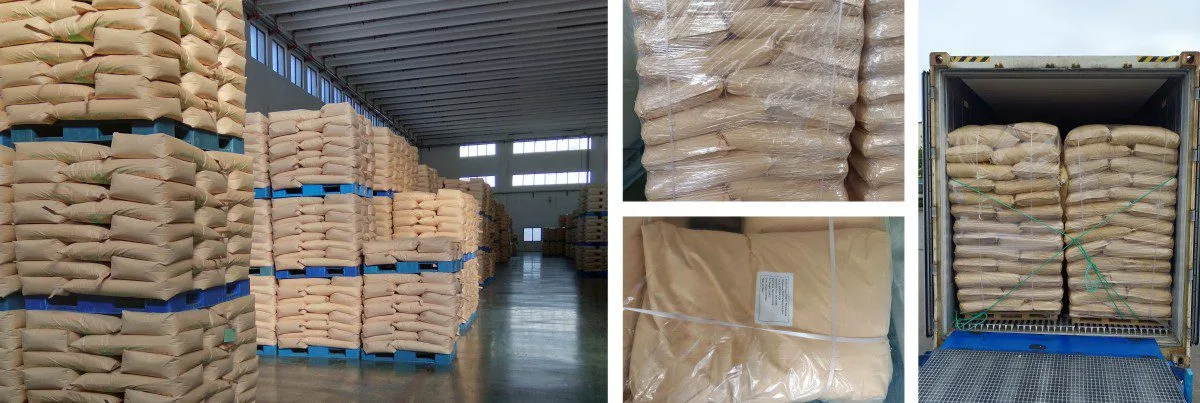
Packaging Specifications
| Parameter | Powder | Syrup |
|---|---|---|
| Standard Unit | 25 kg multi-layer kraft paper bags | 25 kg drums (or as agreed) |
| Pallet Configuration | 40 bags/pallet | 40 drums/pallet |
| Custom Packaging | Available (private label, 500 kg MOQ) | Available (private label, 500 kg MOQ) |
| Sample Pack | 1 kg (free sample) | 1 kg equivalent (free sample) |
Storage Conditions
| Condition | Requirement |
|---|---|
| Temperature | Below 25°C, cool and dry |
| Humidity | Below 50% RH |
| Container | Sealed original packaging |
| Powder Moisture | ≤0.5% (ensure packaging integrity) |
| Syrup Freeze Protection | Protect from freezing |
| Shelf Life (Powder) | 36 months from production date |
| Shelf Life (Syrup) | 24 months from production date |