Table of Contents
What is Organic Inulin Powder?
Organic Inulin Powder — sourced from certified organic chicory root (Cichorium intybus) and jerusalem artichoke (Helianthus tuberosus) cultivated on sustainable organic farms — delivers one of the most versatile and clinically studied prebiotic soluble fiber ingredients available for functional food, beverage, and supplement formulations.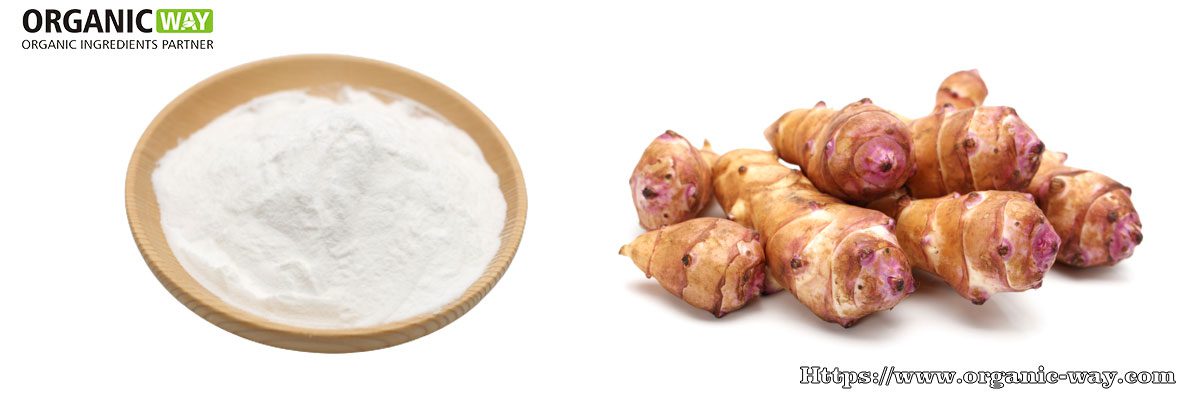
The Prebiotic Science of Inulin:
Inulin is a storage polysaccharide belonging to the fructan family — a chain of fructose units linked by beta-(2,1) glycosidic bonds that resist hydrolysis by human digestive enzymes, reaching the colon intact where beneficial gut microbiota ferment it selectively. This selective fermentation by beneficial gut microbiota is the basis of inulin’s classification as a prebiotic fiber. ORGANICWAY offers two certified organic botanical sources to meet varying supply chain and labeling requirements.
Chicory Root Inulin — The Gold-Standard Source:
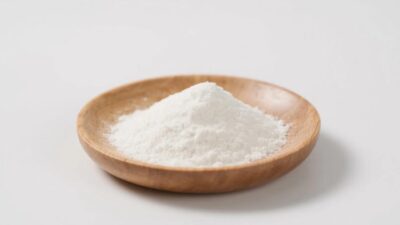
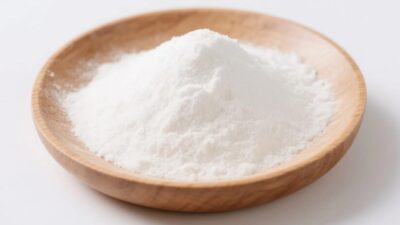
Extracted from the roots of certified organic Cichorium intybus, chicory root inulin is the most extensively studied and widely commercially available inulin variety. The root is washed, dried, and milled into a fine white powder, preserving the full native inulin-type fructan profile. It delivers the same prebiotic fiber functionality as other sources and has the highest volume of published clinical research among inulin varieties.
Jerusalem Artichoke Inulin — Alternative Botanical Source:
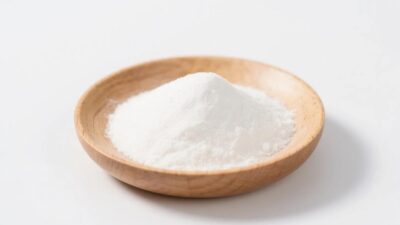
Extracted from certified organic Helianthus tuberosus tubers, jerusalem artichoke inulin offers an identical prebiotic fiber functionality from a botanically distinct source. The tuber is washed, dried, and milled to the same fine white powder specification. With identical solubility, neutral flavor, and prebiotic activity, it serves as a suitable alternative for supply chain diversification, regional sourcing preferences, or finished product label claims requiring specific botanical origin. Notably, jerusalem artichoke inulin is well suited for ketogenic formulations: at only 1.5g net carbohydrates per 10g serving, it fits within standard keto macro targets.
Shared Functional Profile:
Both varieties provide the same core functional profile: prebiotic soluble fiber; low-glycemic sweetening (approximately 10-30% the sweetness of sucrose by weight); and neutral flavor suitable for diverse formulations. FODMAP content is managed and reduced in both varieties.
Certified USDA/EU Organic, Non-GMO Project Verified, Gluten-Free, Vegan, Kosher, and Halal. GMP-manufactured. Sample (1 kg) to bulk (25 kg+) available. Lead time: 10–20 days.
Physical & Chemical Specifications
Product Specifications Comparison
| Parameter | Chicory Root Inulin | Jerusalem Artichoke Inulin |
|---|---|---|
| Latin Name | Cichorium intybus | Helianthus tuberosus |
| Part Used | Root | Tuber |
| Source | 100% certified organic chicory root | 100% certified organic jerusalem artichoke |
| Processing | Root washing → Drying → Precision milling | Tuber washing → Drying → Precision milling |
| Appearance | White to off-white fine powder | White to off-white fine powder |
| Flavor Profile | Neutral, mildly sweet | Neutral, mildly sweet |
| Solubility | Highly soluble in water | Highly soluble in water |
| Moisture | ≤5% | ≤5% |
| Inulin-Type Fructans | High purity | High purity |
| FODMAP Content | Reduced | Reduced |
| Net Carbs (per 10g serving) | Low | 1.5g (keto-compatible) |
| pH Stability | Stable across broad pH range (4–8) | Stable across broad pH range (4–8) |
| Heat Stability | Stable up to ~160°C (Maillard-limited) | Stable up to ~160°C (Maillard-limited) |
| Shelf Life | 24 months from production date | 24 months from production date |
| Recommended Storage | Cool, dry, resealable original packaging | Cool, dry, resealable original packaging |
Key Nutritional Profile
| Component | Chicory Root | Jerusalem Artichoke |
|---|---|---|
| Dietary Fiber (Soluble) | High | High |
| Fructan Chain Length (DP) | Typical inulin DP 2–60 | Typical inulin DP 2–60 |
| Fructose Units | Fructan backbone | Fructan backbone |
| Protein | Negligible | Negligible |
| Fat | Negligible | Negligible |
| Calories | ~1–1.5 kcal/g (non-digestible) | ~1–1.5 kcal/g (non-digestible) |
| Glycemic Index | Very low | Very low |
| Sweetness (vs. sucrose) | ~10–30% | ~10–30% |
Dosage Reference
| Application | Typical Serving |
|---|---|
| Prebiotic / gut health supplement | 5–10 g/day |
| Keto low-carb sweetening | 5–15 g/serving (1:1 weight replacement for sugar) |
| Fiber fortification in beverages | 2–5 g per serving |
| Functional food (bars, yogurt) | 3–8% (w/w) |
| Baby / infant nutrition | Per EFSA/FDA guidelines |
Microbiological & Contaminant Standards
| Test | Standard | Method |
|---|---|---|
| Total Plate Count (TPC) | <10,000 CFU/g | ISO 4833 |
| Yeast & Mold | <100 CFU/g | ISO 21527 |
| Salmonella | Not detected / 25g | ISO 6579 |
| E. coli | Not detected / 25g | ISO 16649 |
| Lead (Pb) | <0.1 ppm | ICP-MS |
| Cadmium (Cd) | <0.05 ppm | ICP-MS |
| Arsenic (As) | <0.5 ppm | ICP-MS |
| Mercury (Hg) | <0.1 ppm | ICP-MS |
| Pesticide Residues | Not detected (500+ screened) | GC-MS / LC-MS |
| Aflatoxin B1 | <1 ppb | ELISA / HPLC |
All batches tested at accredited third-party laboratories. Certificate of Analysis (COA) available upon request.
Certifications
| Certification | Chicory Root | Jerusalem Artichoke |
|---|---|---|
| USDA Organic | Certified | Certified |
| EU Organic (EC 834/2007) | Certified | Certified |
| Non-GMO Project Verified | Verified | Verified |
| Vegan | Certified | Certified |
| Gluten-Free | Certified | Certified |
| Allergen-Free | 14 EU major allergens absent | 14 EU major allergens absent |
| Kosher | Certified | Certified |
| Halal | Certified | Certified |
| ISO 22000 / HACCP | Compliant | Compliant |
| GMP Manufacturing | Verified | Verified |
Both varieties processed in GMP-certified facilities. Reduced FODMAP profile validated per batch.
Applications
Application Matrix
| Application | Chicory Root | Jerusalem Artichoke | Usage Level |
|---|---|---|---|
| Prebiotic gut health supplements (capsule/powder) | Primary | Primary | 5–10 g/day |
| Keto / low-carb sweeteners | Primary | Primary | 5–15 g/serving |
| Sugar replacement in beverages | Primary | Primary | 1:1 weight vs. sucrose |
| Functional dairy (yogurt, kefir) | Primary | Primary | 3–8% (w/w) |
| Protein / fiber bars | Primary | Primary | 3–8% (w/w) |
| Bakery and confectionery | Primary | Primary | 2–5% (w/w) |
| Infant and baby nutrition | Primary | Primary | Per EFSA/FDA |
| Weight management formulas | Primary | Primary | 5–10 g/serving |
| Blood sugar management products | Primary | Primary | 5–10 g/serving |
| Pet nutrition (gut health) | Secondary | Secondary | Per formulation |
Formulation Tips
| Scenario | Recommendation |
|---|---|
| Sugar reduction in RTD beverages | Replace sugar 1:1 by weight; improves mouthfeel and adds mildly sweet profile |
| Keto formulations | Jerusalem artichoke: 1.5g net carbs per 10g serving; fits standard keto macros |
| Gut health stack | Combine with organic psyllium husk, organic flaxseed, or organic acacia fiber |
| Digestive tolerance | Start at 5g/day for gut adaptation; reduce FODMAP sensitivity per batch COA |
| Heat processing | Both varieties stable up to ~160°C; above this, Maillard browning may occur |
| Flavor neutrality | Both varieties offer neutral-to-mildly sweet profile; suitable for savory and sweet applications |
FAQ
Q: What is the difference between chicory root inulin and jerusalem artichoke inulin?
A: Both deliver identical prebiotic soluble fiber functionality — the same beta-(2,1) fructan structure, solubility, and prebiotic classification. The difference is botanical origin: chicory root (Cichorium intybus) is the most widely studied and commercially available inulin source; jerusalem artichoke (Helianthus tuberosus) is an alternative tuber source with the same prebiotic activity. Both carry identical certifications and processing methods. Choice depends on supply chain preference, regional sourcing, or finished product label claims. Notably, jerusalem artichoke inulin is keto-compatible at 1.5g net carbs per 10g serving.
Q: Is jerusalem artichoke inulin suitable for a ketogenic diet?
A: Yes. At only 1.5g net carbohydrates per 10g serving, jerusalem artichoke inulin complies with standard ketogenic macro targets (typically <20–50g net carbs/day). As a non-digestible prebiotic fiber, inulin contributes minimal calories (~1–1.5 kcal/g) .
Q: Can inulin be used as a direct sugar replacement in beverages?
A: Yes. Inulin can replace sugar at a 1:1 ratio by weight in many applications, adding mild sweetness (~10–30% of sucrose), improving texture and mouthfeel, and reducing glycemic impact. In beverages specifically, inulin dissolves cleanly and enhances sensory profile without artificial sweetener off-notes. For zero-calorie applications, it is typically combined with high-intensity sweeteners.
Q: Does inulin cause digestive discomfort?
A: Inulin is a FODMAP fermentable carbohydrate, which means it can cause bloating or gas during initial gut adaptation — particularly at higher doses. ORGANICWAY’s inulin varieties are processed with a reduced FODMAP profile to minimize this effect. For best tolerance, start at 5g/day and increase gradually. Both varieties are suitable for inclusion in infant nutrition per EFSA and FDA guidelines at appropriate levels.
Q: Is inulin safe for infants?
A: Yes. Both ORGANICWAY inulin varieties comply with EFSA and FDA guidelines for infant nutrition applications. Inulin is included as a prebiotic fiber source in some infant formula and baby food products.
Q: How should inulin powder be stored?
A: Store in a cool, dry environment below 25°C, away from moisture and strong odors. Keep the original packaging tightly resealed after opening to prevent moisture absorption and caking. Under recommended storage conditions, both varieties maintain full functionality for 24 months from production date.
Q: What are the MOQ, sample availability, and lead times?
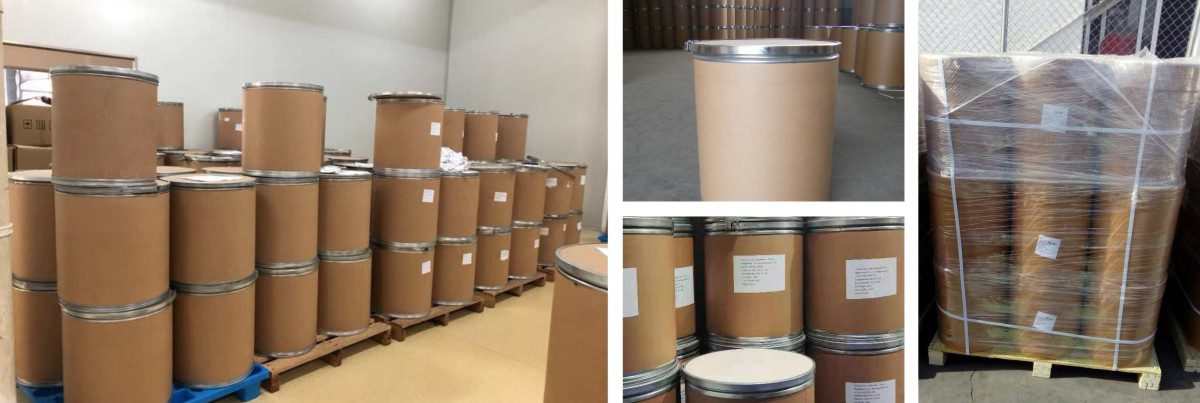
A: Free samples (1 kg) are available via FEDEX, UPS, and EMS. Bulk MOQ: 25 kg per order (40 drums/pallet). Standard lead time: 10–20 business days from order confirmation. Both chicory root and jerusalem artichoke varieties are available. Custom packaging options available on request. Payment: T/T, L/C, D/P, D/A, MoneyGram, Western Union, credit card. Ports of loading: Qingdao, Tianjin.
Packaging & Storage
Packaging Specifications
| Parameter | Details |
|---|---|
| Standard Unit | 25 kg/bag |
| Pallet Configuration | 40 bags/pallet |
| Carton Dimensions | 77 × 44 × 20 cm |
| Primary Packaging | Food-grade resealable bags |
| Custom Packaging | Available on request |
| Sample Pack | 1 kg (free sample) |
Storage Conditions
| Condition | Requirement |
|---|---|
| Temperature | Below 25°C, cool and dry |
| Humidity | Below 50% RH |
| Moisture Protection | Reseal original packaging after each use |
| Odor Protection | Store away from strong-smelling substances (inulin absorbs odors) |
| Shelf Life | 24 months from production date |