Table of Contents
What is Organic Blackberry Powder?
Organic Blackberry Powder brings the exceptional nutritional density of blackberries (Rubus fruticosus species complex) to manufacturers and formulators in two targeted formats — each optimized for different application requirements while preserving the same certified organic sourcing and bioactive richness.
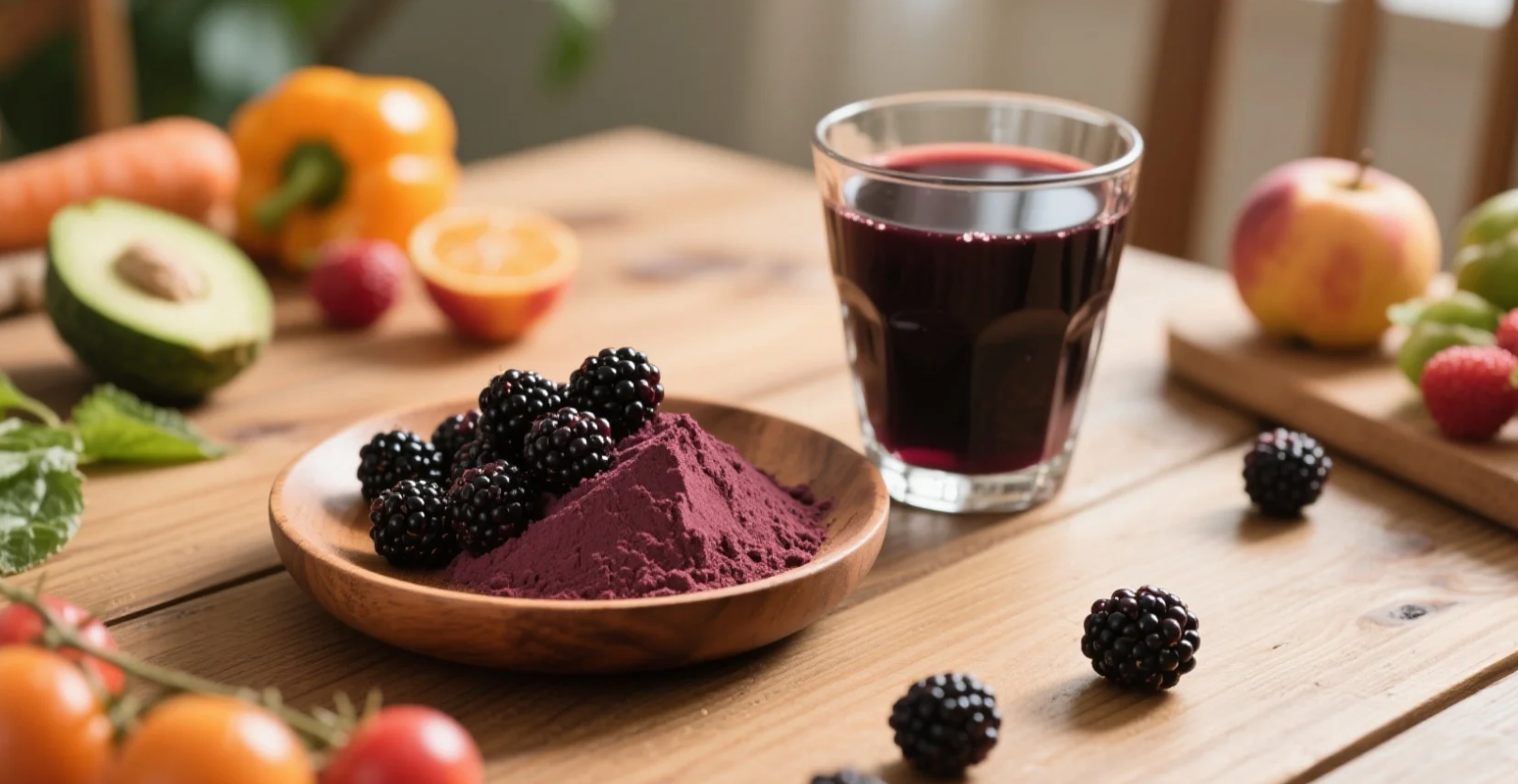
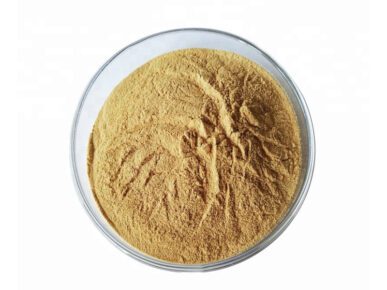
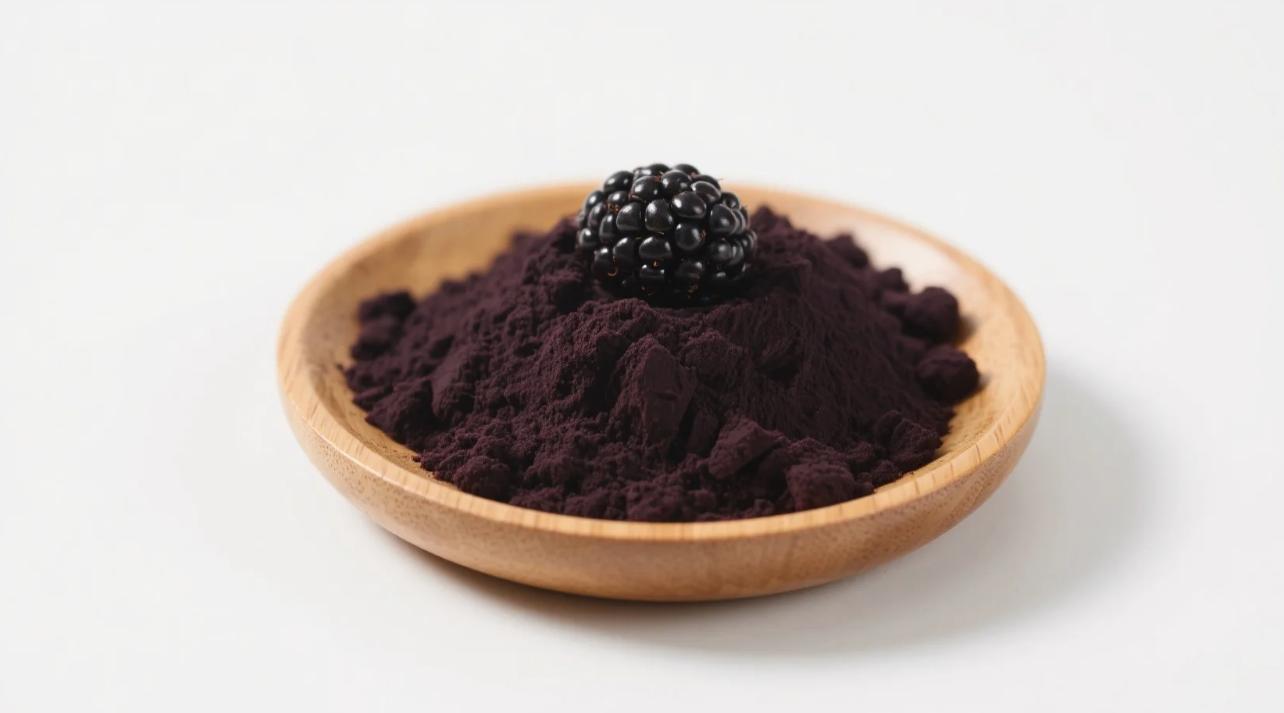
Blackberry Fruit Powder is produced by low-temperature dehydration followed by fine milling of the whole organic blackberry — including the skin, flesh, and seeds. This whole-fruit approach retains the complete nutritional matrix of the blackberry: the skin’s high-density anthocyanins, the seed’s polyunsaturated fatty acids (particularly omega-3 alpha-linolenic acid), the flesh’s soluble fiber, and the whole berry’s Vitamin C, Vitamin K, and manganese content. The result is a deep purple to dark plum-colored powder with an earthy, mildly sweet whole-fruit flavor and a notable dietary fiber contribution (~5 g per 100 g powder). The fine milling process ensures the seed fiber is perceptible as a pleasant whole-food texture rather than grit — highly valued in smoothie bowls, granola bars, and artisan baked goods where authenticity and texture complexity are consumer selling points.
The fruit powder’s defining characteristic is its whole-food fiber and seed matrix. The ground blackberry seeds contribute not only dietary fiber but also seed oil rich in omega-3 and omega-6 fatty acids, tocopherols (Vitamin E), and phytosterols — a composite nutritional profile that reconstituted juice simply cannot replicate. Formulators positioning products for gut health, digestive wellness, or omega-3 fortification will find the whole fruit powder uniquely compelling.
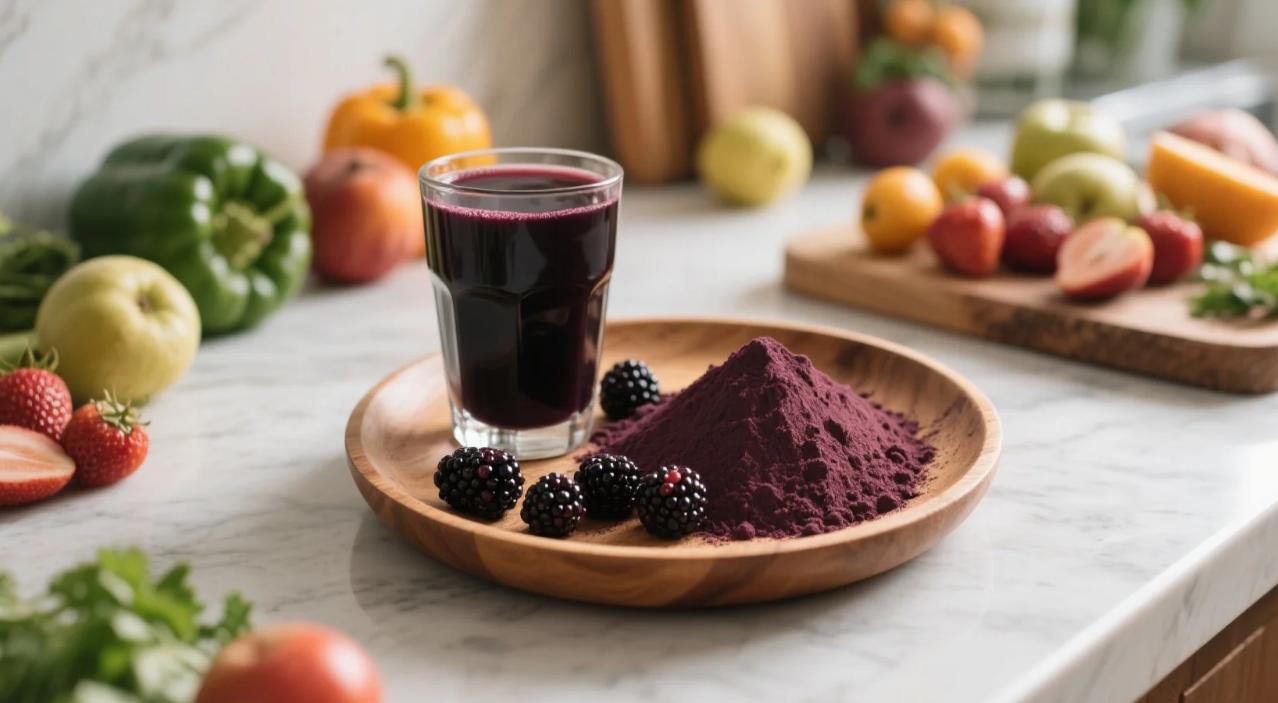
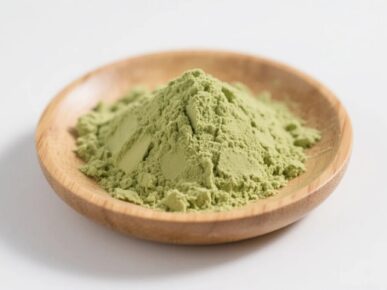
Blackberry Juice Powder is produced by cold-pressing fresh organic blackberries, then concentrating the juice and spray-drying at low temperatures to produce a bright vivid purple powder with instant solubility. The juice-only processing route excludes the seeds and skin fiber, yielding a product with near-zero dietary fiber but superior color vibrancy and flavor concentration. The instant solubility makes it the preferred format for ready-to-drink (RTD) beverages, gummies, beauty-from-within powders, and any application where smooth texture and immediate dispersion are critical. The vivid purple color (from concentrated anthocyanins) serves as a natural clean-label colorant — a direct replacement for synthetic FD&C dyes in pink and purple food and cosmetic applications.
Both formats share a remarkable anthocyanin profile. Anthocyanins are the purple-blue flavonoid pigments responsible for blackberries’ deep color — and their health benefits are among the most extensively researched in the flavonoid family. Key documented benefits include: (1) Potent antioxidant activity — anthocyanins scavenge free radicals and upregulate the body’s own antioxidant defenses (glutathione peroxidase, SOD, catalase), protecting cells from oxidative damage linked to aging and chronic disease. (2) Cognitive and brain health — research published in journals including the Journal of Agricultural and Food Chemistry and Nature Neuroscience has demonstrated that blackberry anthocyanins cross the blood-brain barrier, support neuroplasticity, and improve memory and cognitive function in aging populations. (3) Natural purple colorant — at acidic pH (3.0–5.0), blackberry anthocyanins express a vivid bright purple; at neutral pH they shift toward blue-purple. This pH-dependent color behavior enables targeted color engineering in beverage and confectionery formulations.
Complementing anthocyanins, blackberries deliver a unique micronutrient combination not commonly found together: Vitamin C (immune and collagen synthesis), Vitamin K (bone density and normal blood coagulation — particularly relevant for bone-health-positioned products targeting postmenopausal women and older adults), and manganese (a trace mineral cofactor for antioxidant enzyme superoxide dismutase, bone formation, and carbohydrate metabolism).
Both formats carry USDA/EU Organic, Non-GMO Project Verified, Gluten-Free, and Vegan certifications, with rigorous heavy metal and pesticide screening per organic monitoring protocols.
Certifications: USDA/NOP Organic · EU Organic · Non-GMO Project Verified · Vegan · Gluten-Free · Kosher · Halal · ISO 22000
Physical & Chemical Specifications
Dual Format Specifications
| Parameter | Blackberry Fruit Powder | Blackberry Juice Powder |
|---|---|---|
| Source | 100% Whole Organic Blackberry (skin + flesh + seeds) | 100% Organic Blackberry Juice |
| Processing | Low-temperature dehydration + fine milling | Cold-press · concentrate · low-temp spray drying |
| Appearance | Deep purple to dark plum powder | Bright vivid purple powder |
| Anthocyanins | High (whole berry, including skin) | High (concentrated from juice) |
| Dietary Fiber | ~5 g/100g (whole fruit + seed fiber) | Negligible |
| Seed Oil Content | Present (omega-3/omega-6 + tocopherols) | Excluded |
| Vitamin C | Present (freeze-dried retention) | Concentrated |
| Vitamin K | Present (natural whole berry) | Present (concentrated) |
| Manganese | Present (natural whole berry) | Present (concentrated) |
| Flavor | Earthy, mildly sweet, whole-fruit | Concentrated tart-sweet, fruity |
| Solubility | Partially soluble (fibrous; adds body) | Instant solubility (bright, clear solution) |
| pH Color Behavior | Acidic pH 3.0–5.0 = vivid purple; neutral = deep blue-purple | Same (concentrated; more intense) |
| Carrier | None (100% whole fruit; carrier-free) | May include small amount organic maltodextrin or tapioca starch (full disclosure provided) |
| Moisture | ≤ 5% | ≤ 5% |
| Shelf Life | 24 months | 24 months |
Comparison: Fruit Powder vs. Juice Powder
| Parameter | Blackberry Fruit Powder | Blackberry Juice Powder |
|---|---|---|
| Primary Positioning | Whole-food fiber, seed oil, omega-3, gut health, cognitive support | Anthocyanin color, Vitamin C, instant solubility, beauty beverages |
| Dietary Fiber | ~5 g/100g (high) | Negligible |
| Seed Oil / Omega-3 | Present | Absent |
| Vitamin K | Present | Present |
| Manganese | Present | Present |
| Color | Deep purple / dark plum | Bright vivid purple |
| Solubility | Partial (fibrous; adds texture) | Instant (clear solution) |
| Flavor Intensity | Mild earthy sweetness | Concentrated tart-sweet |
| Carrier | None (100% pure) | Small amount maltodextrin or tapioca starch (optional; disclosed) |
| Best Applications | Granola, smoothie bowls, fiber bars, capsules, gut health, omega-3 blends | RTD beverages, gummies, beauty powders, natural colorant, instant mixes |
| Texture Contribution | Adds pleasant whole-food texture | Smooth, no texture |
Application Dosage Reference
| Application | Fruit Powder | Juice Powder |
|---|---|---|
| RTD Beverages / Beauty Drinks | 5–12 g per serving | 5–12 g per serving (instant solubility) |
| Smoothie Bowls & Smoothies | 10–30 g per serving (texture desired) | 5–15 g per serving |
| Granola & Cereal Bars | 5–15% of formula weight | 3–8% (color + flavor) |
| Baked Goods | 3–10% of flour weight | 2–5% of flour weight |
| Capsules / Tablets | 500 mg – 2 g per unit | 300 mg – 1 g per unit |
| Gummies & Confectionery | Limited (fibrous) | 5–15 g/100g (instant; tart; vivid purple) |
| Dairy / Plant-Based Yogurt | 3–8% (visible berry pieces + fiber) | 2–5% (uniform color + flavor) |
| Natural Colorant (Food) | Not suitable (deep/dark color) | Excellent (vivid purple at pH 3–5) |
| Cosmetics / Skincare | Face masks, serums (anthocyanin antioxidant) | Brightening serums, masks (Vitamin C + anthocyanin) |
Microbiological & Contaminant Standards
| Test Item | Specification |
|---|---|
| Total Plate Count (TPC) | ≤ 10,000 cfu/g |
| Yeast & Mould | ≤ 500 cfu/g |
| Coliforms | ≤ 100 cfu/g |
| E. coli | Negative |
| Salmonella | Negative |
| Heavy Metals (Lead) | ≤ 0.1 ppm |
| Heavy Metals (Arsenic) | ≤ 0.05 ppm |
| Heavy Metals (Cadmium) | ≤ 0.1 ppm |
| Heavy Metals (Mercury) | ≤ 0.05 ppm |
| Aflatoxins | ≤ 4 ppb (total) |
| Pesticide Residues | Not detected (USDA/EU organic monitoring) |
Certifications
| Certification | Fruit Powder | Juice Powder |
|---|---|---|
| USDA / NOP Organic | ✓ | ✓ |
| EU Organic | ✓ | ✓ |
| Non-GMO Project Verified | ✓ | ✓ |
| Vegan | ✓ | ✓ |
| Gluten-Free | ✓ | ✓ |
| Kosher | ✓ | ✓ |
| Halal | ✓ | ✓ |
| ISO 22000 | ✓ | ✓ |
Applications & Formulation Guidelines
Application Matrix
| Category | Fruit Powder | Juice Powder | Formulation Notes |
|---|---|---|---|
| RTD Beauty Beverages | Moderate (adds body, fiber) | ✓ Primary format (instant solubility, vivid color) | 5–12 g/serving; pH 3.0–5.0 for brightest purple; pair with collagen, Vitamin C, hyaluronic acid |
| Smoothie Bowls & Powders | ✓ Primary (whole-food texture + fiber) | ✓ (color + flavor boost) | Fruit powder provides authentic texture; Juice powder enhances vibrancy |
| Granola & Energy Bars | ✓ Primary (fiber binder + omega-3 seed oil) | ✓ (color + tart sweetness) | Fruit powder 5–15% weight; visible berry specks + health halo |
| Capsules & Supplements | ✓ Primary (fiber + seed oil + anthocyanins) | ✓ (concentrated anthocyanin + Vitamin C) | Fruit powder for gut/cognitive positioning; Juice powder for antioxidant/beauty positioning |
| Gummies & Soft Chews | Not suitable (fibrous texture) | ✓ Primary format (instant, smooth, tart) | pH 3.5–4.5 for vivid color + optimal gummy texture; pair with pectin or gelatin |
| Baked Goods | ✓ (earthy sweetness + visible berry specks) | ✓ (bright color even distribution) | Fruit powder preferred for artisan bakery positioning |
| Natural Food Colorant | Not suitable (deep/dark) | ✓ Excellent fit (vivid purple, clean label) | Replace FD&C Red No. 3, Red No. 40, Blue No. 1 in beverages, confectionery, frostings |
| Dairy / Plant-Based Yogurt | ✓ (visible berry texture + fiber) | ✓ (uniform purple color) | Fruit powder for Greek yogurt / plant-based酸奶 premium positioning |
| Cosmetics / Skincare | ✓ (anthocyanin antioxidant in masks) | ✓ (Vitamin C + anthocyanin brightening) | Juice powder instant solubility enables cold-process cosmetics |
| Gut Health / Prebiotic Blends | ✓ Primary (seed fiber + polyphenol prebiotics) | Limited (low fiber) | Fruit powder pairs well with probiotics, inulin, and resistant starch |
pH Color Engineering Guide
| pH Range | Color Expression | Recommended Applications |
|---|---|---|
| pH 2.0–3.5 | Vivid bright red-purple | Sports beverages, fruit-flavored drinks, gummies |
| pH 3.5–5.0 | Vivid purple (optimal) | RTD beauty beverages, functional waters, vitamin sachets |
| pH 5.0–6.0 | Blue-purple / violet | Coconut water, neutral-pH beverages (requires pH testing) |
| pH 6.5–7.0+ | Deep blue-green / muddy | Avoid neutral or alkaline formulations with blackberry colorant |
Synergy Tips
- With Collagen Peptides (Beauty-from-Within): Both formats synergize — Juice Powder’s Vitamin C is an essential cofactor for collagen synthesis; Fruit Powder adds anthocyanin antioxidant protection against collagen degradation. Combine in beauty beverage powders and beauty gummies.
- With Probiotics (Gut + Brain Health): Fruit Powder’s seed fiber provides prebiotic substrate for beneficial gut bacteria; anthocyanins modulate gut microbiota composition. Emerging science links gut-brain axis to cognitive benefits — a dual-positioning opportunity.
- With Omega-3 / Fish Oil (Cognitive Support): Fruit Powder’s seed oil contains natural omega-3 (ALA); the combination with blackberry anthocyanins addresses complementary cognitive support pathways (anthocyanin neuroprotection + omega-3 membrane fluidity).
- With Vitamin D + Calcium (Bone Health): Blackberry’s unique combination of Vitamin K (bone matrix protein synthesis) and manganese (bone enzyme cofactor) pairs naturally with Vitamin D and calcium for comprehensive bone health positioning — particularly relevant for menopause and aging demographic.
- With Açaí / Blueberry (Superfruit Blends): Blackberries complement açaí (complementary anthocyanin profile + higher Vitamin C) and blueberries (different anthocyanin composition) in premium superfruit blend powders and RTD beverages.
FAQ
Q: What is the difference between Blackberry Fruit Powder and Blackberry Juice Powder?
A: Blackberry Fruit Powder is produced by low-temperature dehydration and fine milling of the whole blackberry — including skin, flesh, and seeds. This whole-fruit approach delivers the complete nutritional matrix: high dietary fiber (~5 g/100g), seed oil rich in omega-3/omega-6 fatty acids and tocopherols (Vitamin E), Vitamin C, Vitamin K, and manganese. The appearance is deep purple to dark plum, with an earthy, mildly sweet, whole-fruit flavor and a pleasant textured quality from the finely milled seeds. It is the preferred format for fiber supplements, gut health products, omega-3 fortification, granola bars, and formulations where authentic whole-food texture is a consumer selling point. Blackberry Juice Powder is produced from cold-pressed juice only — the seeds and skin fiber are excluded — then concentrated and spray-dried. This yields a bright vivid purple powder with instant solubility and a concentrated tart-sweet flavor. It is the preferred format for RTD beverages, gummies, beauty drinks, natural colorants, and any application requiring smooth texture, immediate dispersion, and vibrant color expression.
Q: Does Blackberry Juice Powder contain any carriers?
A: Due to the natural sugar content in blackberry juice (fructose and glucose), the spray-dried Juice Powder can exhibit mild hygroscopicity — a tendency to absorb moisture and form clumps during storage and handling. To ensure free-flowing, non-caking powder properties, a small quantity of organic maltodextrin or organic tapioca starch may be used as a processing aid. This is standard industry practice for juice powders with high natural sugar content. Full disclosure of the carrier type and percentage is provided with each batch specification sheet. Fruit Powder is 100% pure whole fruit with no carriers or additives — the low moisture content of the dehydrated whole berry prevents caking without processing aids.
Q: How does the seed fiber in Fruit Powder affect texture in finished products?
A: The finely milled blackberry seeds in Fruit Powder contribute a pleasant, authentic whole-food texture rather than unpleasant grit. The seeds are milled to a fine particle size that registers as subtle texture in liquid applications (smoothies, shakes) and adds pleasant textural complexity in dry applications (granola bars, cookies). The seed fiber also provides functional benefits: insoluble dietary fiber promotes gut motility, while seed polyphenols contribute additional antioxidant activity. In applications where smooth texture is critical (gummies, RTD beverages, capsules with fine powder fill), Juice Powder is the better choice.
Q: How does blackberry support cognitive and brain health beyond general antioxidant effects?
A: Blackberry anthocyanins are among the few flavonoids with documented blood-brain barrier permeability — meaning they reach brain tissue in meaningful concentrations. Research published in peer-reviewed journals (Journal of Agricultural and Food Chemistry, Nature Neuroscience, Annals of Neurology) has demonstrated several cognitive mechanisms: (1) Neuroplasticity support — anthocyanins promote the growth of new neuronal connections (synaptogenesis) in the hippocampus, the brain region critical for memory and learning. (2) Cognitive function in aging — randomized controlled trials in older adults (aged 65–77) showed significant improvements in episodic memory, executive function, and mood scores after 12 weeks of daily blueberry/blackberry anthocyanin supplementation. (3) Neuroinflammation reduction — anthocyanins modulate NF-κB and MAPK inflammatory signaling pathways in microglia (the brain’s immune cells), reducing chronic low-grade neuroinflammation associated with cognitive decline. (4) Insulin sensitivity in the brain — emerging research links blackberry anthocyanins to improved neuronal insulin signaling, relevant for brain energy metabolism and cognitive resilience. These mechanisms are distinct from general antioxidant activity and make blackberry anthocyanins a uniquely compelling cognitive health ingredient.
Q: How does the anthocyanin color behave across different pH levels?
A: Blackberry anthocyanins exhibit pH-dependent color expression — understanding this is critical for color-sensitive formulations:
pH 2.0–3.5 (very acidic): Vivid bright red-purple — ideal for sports beverages, sour-flavored gummies, and energy drinks. The high acidity intensifies the red hue.
pH 3.5–5.0 (moderately acidic): Vivid purple — the optimal range for most food and beverage applications. RTD beauty beverages, vitamin sachets, and functional waters perform best here.
pH 5.0–6.0 (mildly acidic to neutral): Blue-purple / violet — suitable for coconut water or mildly acidic plant-based beverages. Requires pH testing to confirm final color.
pH 6.5+ (neutral or alkaline): Deep blue-green or muddy brown-purple — color degrades significantly. Avoid blackberry anthocyanin as primary colorant in neutral-pH systems (some buffering or pH adjustment is needed).
Heat and light also degrade anthocyanins over time — store in cool, dark conditions and add Juice Powder at the end of the heating process for maximum color retention.
Q: What makes the Vitamin K + manganese combination in blackberries unique for bone health?
A: Blackberry is one of the few fruits that naturally delivers both Vitamin K and manganese — two nutrients that work synergistically in bone metabolism but are rarely found together in significant amounts in the same food:
Vitamin K (particularly Vitamin K2 as menaquinone) is essential for the synthesis of osteocalcin — the bone matrix protein that binds calcium to the bone mineral matrix. Without adequate Vitamin K, calcium cannot be properly incorporated into bone, regardless of calcium intake. Clinical studies link higher Vitamin K intake to significantly reduced fracture risk and improved bone mineral density.
Manganese is a trace mineral cofactor for two critical bone enzymes: glycosyltransferases (involved in synthesizing bone cartilage and connective tissue matrix) and superoxide dismutase (Mn-SOD) (the mitochondrial antioxidant enzyme that protects bone-forming osteoblasts from oxidative damage).
Blackberry’s combination of these two bone-support nutrients — alongside calcium, anthocyanin anti-inflammatory effects, and Vitamin C for collagen synthesis — makes it a uniquely comprehensive bone-health fruit, particularly relevant for positioning in products targeting postmenopausal women, older adults, and athletes.
Q: What are the storage requirements and shelf life for both formats?
A: Both formats have a shelf life of 24 months from production date when stored under proper conditions. Blackberry Fruit Powder is hygroscopic (attracts moisture) due to its low moisture content and natural fruit sugars. Store in the original vacuum-sealed packaging in a cool (<25°C), dry location. Reseal immediately after opening. If moisture intrusion occurs, the powder may clump but remains safe — though color and flavor may degrade. Blackberry Juice Powder is also sensitive to moisture (spray-dried format) and light (anthocyanin pigments are light-sensitive). Store in original sealed packaging in a cool, dark, dry location (<20°C preferred for maximum anthocyanin and color retention). Avoid UV light exposure — amber or opaque packaging is recommended. Both formats should be protected from strong odors as the powder can absorb surrounding flavors.
Q: What are the MOQ and shipping options?
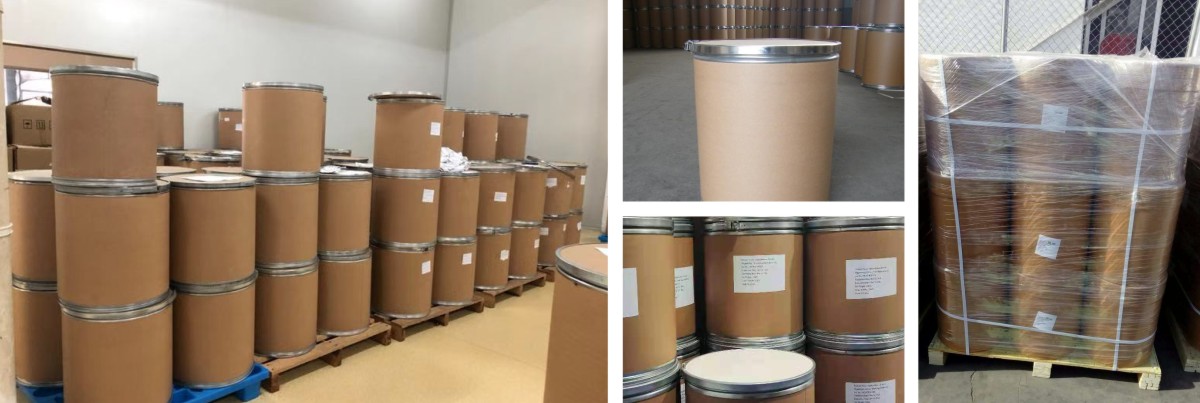
A: Sample: 1 kg free of charge (FedEx / UPS / EMS). Standard batch: 25 kg per carton (40 cartons per pallet; standard packaging dimensions). Lead time: 10–20 business days. Shipping ports: Qingdao or Tianjin, China. Payment terms: D/A, D/P, L/C, T/T, MoneyGram, Western Union, credit card. DDP delivery available worldwide. Both formats are in-stock and ready to ship — samples and PDF specification sheets available on request.
Packaging & Storage
Packaging Specifications
| Package Type | Net Weight | Material |
|---|---|---|
| Standard Carton | 25 kg | Food-grade corrugated carton with inner liner |
| Foil-Lined Kraft Bag | Available on request | Multi-layer kraft with aluminum foil barrier (preferred for light-sensitive Juice Powder) |
| Nitrogen-Flushed Bag | Available on request | Oxygen-absorbing packaging (best for anthocyanin color retention) |
| Customized Packaging | Available on request | Retail sizes, pre-measured sachets, or customized branding packaging |
Storage Conditions
| Parameter | Fruit Powder | Juice Powder |
|---|---|---|
| Temperature | < 25°C (cool, dry) | < 20°C (cool; lower preferred for anthocyanin retention) |
| Humidity | < 60% RH | < 50% RH (lower than fruit powder; spray-dried sugar matrix hygroscopic) |
| Light | Dark packaging recommended (anthocyanins + polyphenols light-sensitive) | Essential: opaque or amber packaging (anthocyanin pigments highly light-sensitive) |
| Odor | Absorbs strong odors; keep sealed | Absorbs strong odors; keep sealed |
| Shelf Life | 24 months | 24 months |
| Special Protection | Vacuum-sealed original packaging | Nitrogen-flushed packaging recommended; reseal immediately after opening |