Table of Contents
What is Stevia Leaf Extract?
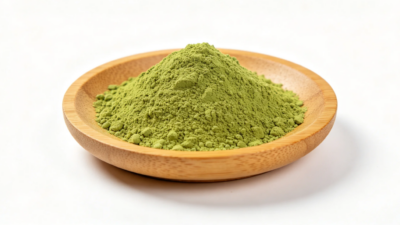
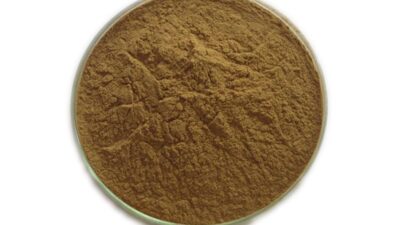
Stevia Leaf Extract (INCI: Stevia rebaudiana leaf extract; INS: 960) is derived from the leaves of Stevia rebaudiana Bertoni, a perennial herb native to Paraguay and now cultivated worldwide. The key bioactive constituents — steviol glycosides — are extracted from dried leaves through hot-water extraction and multi-stage purification to remove chlorophyll, flavonoids, and off-flavor compounds, yielding a clean, heat-stable, highly sweet concentrate.
The primary glycoside of commercial interest is Rebaudioside A (Reb A), which offers the most favorable sensory profile among all steviol glycosides: intense sweetness onset, minimal bitterness, and the shortest lingering aftertaste. Higher Reb A content (95%+) corresponds directly to cleaner flavor and reduced off-notes compared to lower-purity extracts.
How It Differs from Other Stevia Products
| Form | Reb A Content | Sweetness | Best Use |
|---|---|---|---|
| Stevia Leaf Powder (whole/dried) | 5–10% glycosides | 10–15× sucrose | Herbal tea, traditional blends |
| Standard Steviol Glycosides 80% | ≥80% total glycosides | 200–250× sucrose | Cost-sensitive applications |
| Reb A 90% Extract | ≥90% Reb A | 250–280× sucrose | Balanced cost/purity, beverages |
| Reb A 95% Extract | ≥95% Reb A | 270–300× sucrose | Premium RTD, dietary supplements |
| Reb A 98% Extract | ≥98% Reb A | 290–320× sucrose | Pharmaceutical-grade, keto specialties |
| Reb M (Mogroside-free) | Varies | 200–250× sucrose | Sugar-like taste profile, premium blends |
Why Zero-Calorie Matters for Formulation
Stevia glycosides pass through the gastrointestinal tract essentially unmetabolized — they are not absorbed in the small intestine, do not raise blood glucose, and are excreted intact. This physiological property underpins the GI = 0 classification and supports labeling claims including Zero Calorie, Suitable for Diabetics, Keto Friendly, and in qualifying formulations, No Added Sugars.
Heat and pH Stability
A critical functional advantage over many natural sweeteners: Reb A is stable at processing temperatures up to 200°C and across a pH range of 3–9, making it compatible with pasteurization, retort sterilization, UHT processing, and acidic beverage systems (citrus, carbonated drinks). This stability is verified in ORGANICWAY’s standard COA testing protocol.
Bitter Aftertaste: The Science Behind Reb A ≥95%
At purity levels below 80%, steviol glycosides — particularly stevioside — contribute noticeable bitterness and licorice notes through off-flavor interaction with bitter taste receptors (TAS2R38). Upgrading to ≥95% Reb A removes the majority of stevioside and lower-intensity glycosides, achieving a sensory profile that passes organoleptic evaluation for direct consumer product applications.
PRODUCT SPECIFICATIONS
Core Specifications Table
| Parameter | Specification |
|---|---|
| Botanical Source | Stevia rebaudiana Bertoni, leaves |
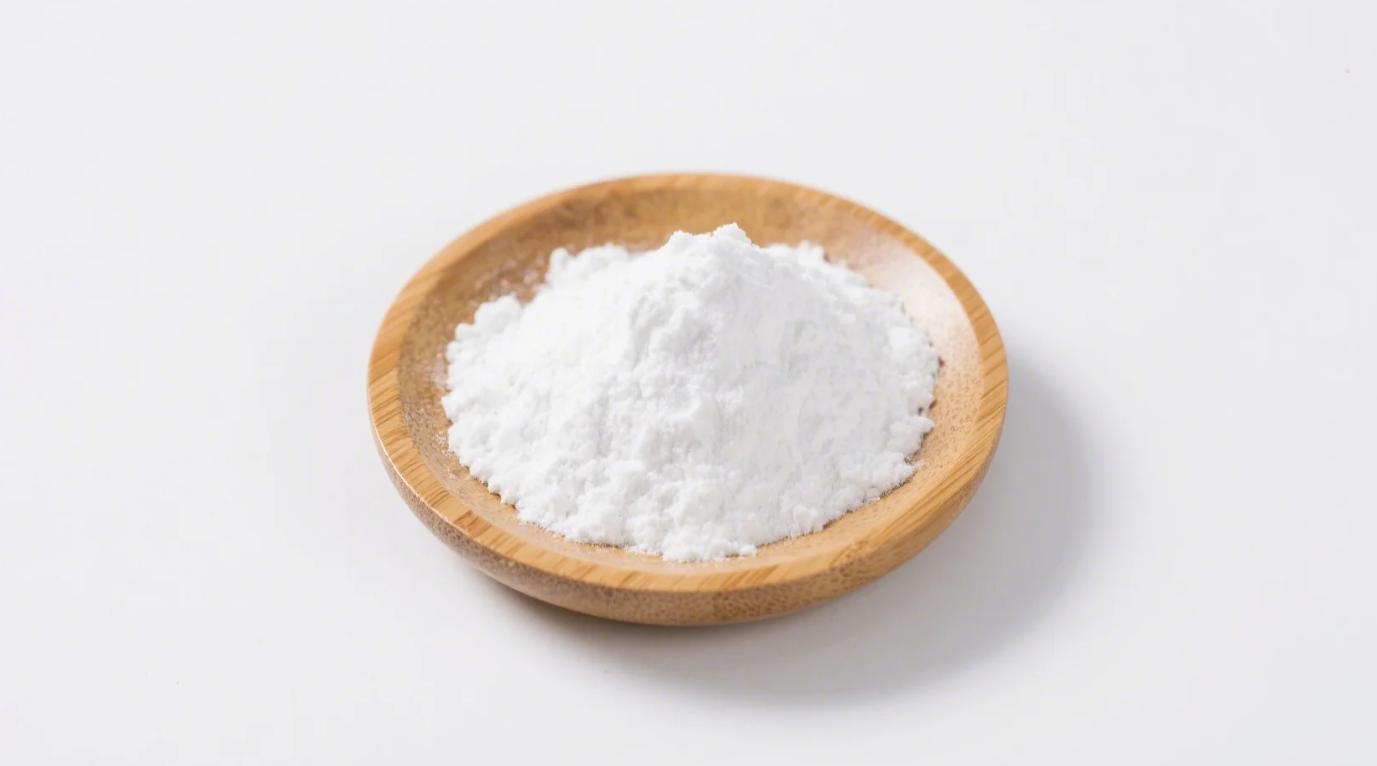
| Product Form | White to off-white free-flowing fine powder |
| Main Active Compound | Steviol Glycosides (Rebaudioside A as primary glycoside) |
| Stevioside Content | Compliant with EU Reg 231/2012 (≤5% in high-Reb A grades) |
| Solubility | Freely water soluble (>1 g/100 mL at 25°C) |
| Sweetness Intensity | 200–300× sucrose (grade-dependent) |
| Caloric Value | 0 kcal/g (physiologically) |
| Glycemic Index | 0 |
| Moisture | ≤ 5.0% |
| Ash Content | ≤ 1.0% |
| Heavy Metals | Compliant with EU Reg 231/2012 & USP standards |
| Microbiology | TPC ≤ 1000 CFU/g; Yeast & Mold ≤ 100 CFU/g; Pathogens absent |
| Shelf Life | 24 months (original sealed packaging) |
| Storage | Cool, dry place (≤25°C), away from light and moisture |
| HS Code | 2932.99 (Steviol glycosides) |
Purity Grade Selection Guide
| Grade | Reb A (% Total Glycosides) | Sweetness vs Sucrose | Sensory Profile | Recommended Applications |
|---|---|---|---|---|
| SG 80 | ≥80% | 200–250× | Mild bitterness; acceptable in masking formulas | Cost-sensitive RTD tea, bakery (combined with masking flavors) |
| Reb A 90% | ≥90% | 250–280× | Slight lingering sweetness; broadly accepted | Mainstream beverages, dairy, sauces |
| Reb A 95% | ≥95% | 270–300× | Clean, minimal aftertaste | Premium RTD, protein supplements, dietary supplements |
| Reb A 98% | ≥98% | 290–320× | Near-pure Reb A; best-in-class taste | Pharmaceutical-grade, premium keto, infant-adjacent formulas |
Grade Selection Decision Rule:
- Need lowest cost → SG 80 + flavor masking agent
- Standard commercial application → Reb A 90%
- Premium label or consumer-facing claim “no aftertaste” → Reb A 95%
- Maximum purity, pharma-quality COA → Reb A 98%
Steviol Glycoside Composition Profile (Reb A 95% Grade, Typical)
| Glycoside | Typical Content | Sweetness vs Sucrose | Taste Note |
|---|---|---|---|
| Rebaudioside A (Reb A) | ≥95% | 250–300× | Clean, sweet |
| Stevioside | ≤3% | 250–300× | Bitter, licorice notes |
| Rebaudioside C | ≤1% | 30× | Astringent |
| Dulcoside A | Trace | 30× | Bitter |
| Other minor glycosides | Balance | — | Negligible |
KEY FEATURES & BENEFITS
For Product Developers & Formulation Chemists
- Zero Calories, Zero Glycemic Impact: Supports FDA Low Calorie, EU Reduced Energy, and WHO dietary guidelines for sugar reduction without compromising sweetness intensity
- Heat Stable to 200°C: Compatible with retort, UHT, baking (180°C+), and spray-drying processes — no degradation of sweetness under thermal processing
- pH Stable (3–9): Performs consistently in acidic carbonated beverages, acidified dairy, dressings, and alkaline baked goods
- No Fermentable Sugars: Does not feed oral bacteria → supports Does Not Promote Tooth Decay claims (subject to regulatory review per market)
- High Water Solubility: >1 g/100 mL at 25°C; complete dissolution in cold and hot beverage bases
- Synergistic Blending: Significant sweetness synergy when combined with erythritol (1:4 ratio), monk fruit, or thaumatin — enables 20–35% reduction in stevia usage cost
For Brand Marketers & Label Architects
- “Zero Calorie” / “Calorie Free” (FDA: <5 kcal/serving; EU: <4 kcal/100 g) ✓
- “No Added Sugars” — stevia is not classified as a sugar ✓
- “Keto Friendly” — GI 0, zero net carbs ✓
- “Diabetic Friendly” — no insulin response ✓
- “Non-GMO” — Non-GMO Project Verified ✓
- “Natural Sweetener” — plant-derived, no synthetic processing ✓
- “Vegan” ✓ | “Kosher” ✓ | “Halal” ✓
SWEETNESS CONVERSION & FORMULATION GUIDE
Sucrose Replacement Ratios
| Sucrose Amount | Reb A 95% Replacement | Reb A 90% Replacement | Notes |
|---|---|---|---|
| 100 g | 0.35–0.45 g | 0.38–0.50 g | Pure stevia; add bulking agent for texture |
| 1 cup (200 g) | 0.70–0.90 g | 0.76–1.0 g | Standard baking substitution |
| 1 tsp (4 g) | 14–18 mg | 15–20 mg | Beverage/tabletop portioning |
| 1 tbsp (12 g) | 40–54 mg | 44–60 mg | Sauce, dressing, syrup |
Important Note: Stevia is a high-intensity sweetener — it provides zero bulk. When replacing more than 30% of sucrose in baked goods, a bulking agent (erythritol, allulose, inulin, maltodextrin) must be added to maintain texture, moisture retention, and volume. Stevia replaces sweetness only; it does not replace the structural role of sugar.
Recommended Blending Partners
| Application | Stevia Reb A | Blending Partner | Ratio (Stevia:Partner) | Benefit |
|---|---|---|---|---|
| RTD Beverages | Reb A 95% | Erythritol | 1:50–1:80 | Volume + mouthfeel |
| Protein Powder | Reb A 95% | Monk Fruit | 1:1–1:2 | Synergy, reduced dosage |
| Baked Goods | Reb A 90% | Allulose | 1:200–1:400 | Bulk + Maillard browning |
| Frozen Desserts | Reb A 90% | Erythritol + Inulin | 1:100 | Texture + freeze point |
| Tabletop Sweetener | Reb A 98% | Maltodextrin | 1:300–1:500 | Free-flowing powder |
| Sauces / Dressings | Reb A 90% | Organic Fructose Syrup | 1:50–1:100 | Viscosity + sweetness |
APPLICATION GUIDE BY INDUSTRY
Beverages (Primary Market)
- RTD Tea & Coffee: Reb A 95% at 0.02–0.05% w/v achieves full sugar replacement in green tea, black tea, iced coffee; excellent clarity and cold solubility
- Carbonated Soft Drinks: pH 2.5–4.5 stable; no degradation at 60°C carbonation process temperatures; use at 0.015–0.04% w/v
- Functional / Sports Drinks: Pairs with BCAA, vitamin blends without flavor interference; common usage 30–60 mg/500 mL
- Flavored Water: Ultra-low dosage (10–25 mg/500 mL) for subtle sweetness enhancement without caloric contribution
Dietary Supplements
- Protein Powders & Meal Replacers: Masks bitterness of high-protein bases (whey, pea, soy) at 0.1–0.3% w/w; Reb A 95% preferred for aftertaste control
- Tablets & Capsule Coatings: Used in chewable tablets and film coatings for palatability; stability across pH 3–8 is critical
- Pre-Workout / Nootropic Powders: Functional compatibility with caffeine, L-theanine, creatine matrices
Bakery & Confectionery
- Cookies & Muffins: Replace sucrose sweetness with Reb A 90–95%; pair with allulose (1:300 ratio) for Maillard browning and moisture retention
- Chocolate: Stevia at 0.02–0.05% w/w in dark chocolate to reduce bitter cocoa notes; does not interfere with tempering
- Hard Candy & Gummy: Heat stable at candy-making temperatures (150–160°C); no caramelization (advantage in color-controlled products)
Dairy & Plant-Based Dairy
- Yogurt: 0.03–0.06% w/w in set or stirred yogurt; compatible with live cultures; does not affect fermentation rates
- Ice Cream / Frozen Yogurt: Combine with erythritol (4:1 erythritol:stevia weight) for freeze point optimization and complete sugar replacement
- Plant-Based Milk: 0.01–0.03% w/w for sweetness enhancement without competing with oat/almond flavors
Personal Care
- Toothpaste & Mouthwash: Non-fermentable by oral Streptococcus mutans → supports tooth-friendly claims; 0.1–0.5% w/w
- Lip Care Products: Provides pleasant taste in lip balms and glosses without caloric concern
REGULATORY & COMPLIANCE SUMMARY
| Jurisdiction | Status | Approval Reference |
|---|---|---|
| USA (FDA) | GRAS (Generally Recognized as Safe) | GRAS Notices GRN 000253, 287, 463, 798 |
| EU | Approved Food Additive | EU Reg 231/2012; Annex II, Part B (E 960) |
| China (GB) | Permitted sweetener | GB 2760-2014 (甜菊糖苷) |
| Australia / New Zealand | Approved | FSANZ Standard 1.3.1 |
| Japan | Approved for specified uses | JETRO positive list |
| Canada | Approved | Health Canada; Table of Permitted Sweeteners |
| Codex Alimentarius | Included | Codex Stan 212 |
CERTIFICATIONS & QUALITY ASSURANCE
| Certification | Scope | Notes |
|---|---|---|
| Non-GMO Project Verified | Non-GMO input and processing | Butterfly logo eligible |
| ISO 22000 | Food safety management system | Production facility |
| HACCP | Hazard analysis & critical control points | Integrated with ISO 22000 |
| GMP Compliant | Good Manufacturing Practice | Facility-level certification |
| Kosher | Pareve certified | Certificate available per lot |
| Halal | Certified | Certificate available per lot |
| Vegan | No animal-derived inputs or processing aids | Certified |
Standard COA includes: Reb A content (HPLC), total steviol glycosides, moisture, ash, heavy metals (Pb/Cd/As/Hg), microbiology (TPC, yeast & mold, Salmonella, E. coli), residual solvents (if applicable).
BITTER AFTERTASTE: A COMPLETE BUYER’S GUIDE
This section addresses the #1 question from food & beverage formulators purchasing stevia for the first time.
Why Does Stevia Sometimes Taste Bitter?
Stevia bitterness originates from two mechanisms:
- Stevioside content: The most abundant glycoside in raw leaf (5–8%) activates bitter taste receptor TAS2R4 and TAS2R38. High-purity Reb A removes most stevioside.
- Lingering sweetness: All steviol glycosides have slower onset and longer duration of sweetness compared to sucrose, which can be perceived as “artificial” in some application matrices.
Bitterness Mitigation Strategies
| Strategy | Mechanism | Application |
|---|---|---|
| Upgrade to Reb A ≥95% | Removes stevioside (primary bitter compound) | All applications |
| Blend with erythritol | Erythritol’s slight cooling sensation masks lingering sweetness | Beverages, RTD |
| Add flavor masking agents | Nucleotides (IMP/GMP), cyclodextrin complexation | Beverages, supplements |
| pH optimization | Slight acidification (pH 3.5–4.5) reduces bitterness perception | Carbonated drinks, juices |
| Reduce stevia dosage | Blend with monk fruit (1:1 synergy) and reduce each by 30–40% | Premium products |
| Cold temperature serving | Bitterness perception decreases at ≤10°C serving temperature | RTD, frozen products |
FAQ
Q1: What is the difference between Stevioside, Steviol Glycosides, and Rebaudioside A — which should I specify on my COA?
Steviol glycosides = umbrella term covering all sweet compounds in stevia leaf (12+ glycosides including Reb A, Reb C, Stevioside, Dulcoside A)
Stevioside = the most abundant glycoside in raw leaf but carries the most bitterness; its content should be low in high-purity extracts
Rebaudioside A (Reb A) = the preferred glycoside for food use; highest purity available, cleanest taste
For your COA, specify: “Rebaudioside A content ≥95% by HPLC (as % of total steviol glycosides)” plus total steviol glycosides ≥95% dry weight.
Q2: Your page lists 200–300× sweetness. What exact dilution factor should I use when replacing 10% sugar in a 500 mL RTD beverage?
For a 500 mL beverage with 50 g sucrose (10%):
Target sweetness equivalent: 50 g sucrose
Reb A 95% sweetness: ~280× sucrose by weight
Stevia required: 50 ÷ 280 = ~0.18 g (180 mg) per 500 mL
Practical dosage: 160–200 mg/500 mL (adjust for matrix and consumer panel testing) Note: Stevia sweetness is non-linear at very high concentrations — always validate with sensory panel.
Q3: Is your stevia extract gluten-free?
Yes. Stevia Leaf Extract is derived from Stevia rebaudiana leaves — a plant entirely unrelated to gluten-containing grains (wheat, barley, rye). It contains no gluten. Suitable for celiac-compliant formulations. Allergen statement: free from all 14 EU major allergens and all 9 FDA major allergens.
Q4: Does stevia affect fermentation in yogurt or sourdough?
No. Steviol glycosides are not fermentable by lactic acid bacteria (Lactobacillus, Streptococcus thermophilus) or yeast (Saccharomyces cerevisiae). Stevia addition does not alter fermentation pH, gas production, or culture viability. For sourdough, stevia does not feed wild yeast — a separate small amount of fermentable sugar (e.g., dextrose) may be needed for leavening.
Q5: Can stevia be declared as “natural” on a product label?
In the USA: Yes — stevia extract is broadly accepted as a “natural sweetener” under FDA convention (plant-derived, hot-water extraction with no synthetic inputs). In the EU: Use caution. Stevia is approved as food additive E 960 — combining “natural” marketing claims with an E number can mislead consumers. Recommend using “Stevia Extract” or “Stevia Leaf Extract (E 960)” on EU labels.
Q6: How does stevia interact with protein in protein powder formulations?
Stevia interacts minimally with protein matrices. At concentrations used in food (≤0.1% w/w), no significant binding or flavor-stripping has been documented. At higher concentrations, slight hydrophobic interaction between Reb A and protein may reduce perceived sweetness intensity by 5–15% — account for this with a slight dosage increase in high-protein matrices (≥15 g protein/serving).
Q7: Can your Reb A 98% grade meet pharmacopoeia standards for use in pharmaceutical products?
ORGANICWAY’s Reb A 98% grade is manufactured under GMP conditions with full heavy metal, microbiological, and residual solvent testing. It meets the purity specifications of USP Steviol Glycosides monograph and EP (European Pharmacopoeia) guidelines. A pharmaceutical-grade COA with method references (USP/EP) is available on request.
Q8: What is your minimum order quantity, lead time, and available packaging?
MOQ: 25 kg (1 bag) for sample/trial orders; commercial MOQ: 100 kg
Standard Packaging: 25 kg kraft paper bags with inner PE liner
Lead Time: 7–10 business days for in-stock grades; 3–4 weeks for custom Reb A grades
Shipping Origin: Qingdao or Tianjin, China
Free Sample: Available upon request (100–200 g for qualified leads)
Packing
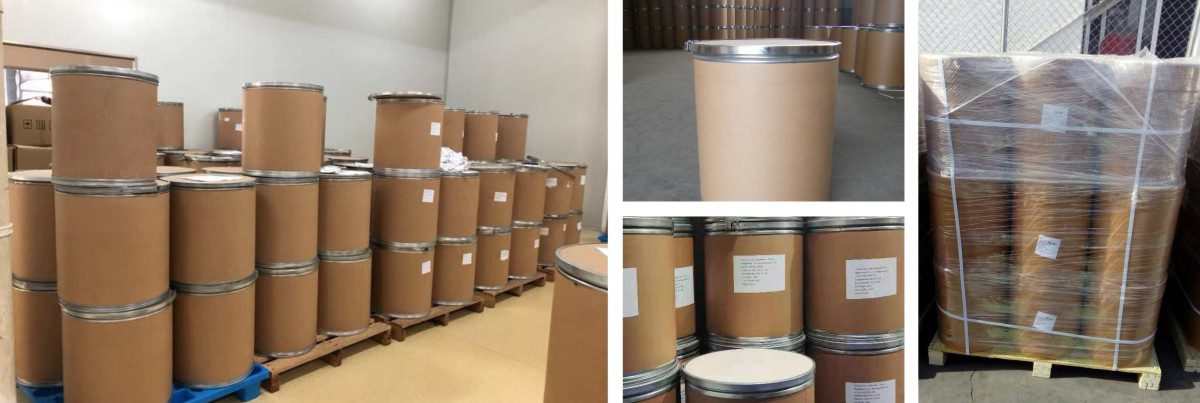
Standard Packaging Options
| Format | Net Weight | Dimensions | Best For |
|---|---|---|---|
| Kraft paper bag with PE inner liner | 25 kg | 40 × 40 × 60 cm | Standard commercial order |
| Double PE liner bag (moisture-sensitive grades) | 25 kg | 40 × 40 × 60 cm | High-humidity destinations |
| Sample pack | 100 g / 200 g / 500 g | Resealable foil bag | Trial / R&D |