
Table of Contents
Missing organic onion powder in your pantry right before a production run or a weeknight meal? Don’t compromise on flavor or on the health benefits your customers have come to expect. When a trusted bulk ingredient suddenly runs out, the instinct is to grab whatever sits on the shelf—but that quick fix often strips away the very compounds that make onion powder valuable in the first place. The good news is that you have real options. In this guide we walk through science-backed alternatives that replicate its umami depth, its gentle natural sweetness, and its bioactive sulfur compounds—without relying on synthetic additives, anti-caking agents, or irradiated fillers. Whether you formulate clean-label sauces, build organic spice blends for retail, or simply cook at home, the swaps below let you preserve both taste and function. A thoughtfully chosen substitute keeps your recipe honest while opening the door to new dimensions of aroma and nutrition. Reach for an alternative that respects the same standards you would demand from a organic onion powder itself.
First: Why Organic Onion Powder Is Unique
(What You’re Replicating)
Organic onion powder isn’t just dehydrated onions ground into a fine dust. Its low-temperature processing preserves a delicate matrix of heat-sensitive molecules that ordinary high-heat drying destroys. When you reach for a substitute, you are really trying to rebuild three things at once: a rounded savory foundation, a touch of sweetness, and a family of sulfur-containing phytonutrients that contribute both aroma and wellness value. Understanding what you are actually replicating makes it far easier to pick the right swap for the job. A powder made from slowly dried organic onions carries far more than convenience—it carries chemistry. Treat the substitute search as a matching exercise, not a panic move, and you will protect the integrity of whatever you are cooking or manufacturing.
- Allicin precursors: Boosts immunity and adds pungency. These sulfur-rich compounds are the reason raw onion makes your eyes water, and in powder form they survive in a stable, shelf-friendly state that releases its sharpness the moment it meets liquid and heat.
- Quercetin: Antioxidant 3× more bioavailable than in fresh onions. This flavonoid is concentrated during gentle drying, giving organic powder a measurable edge over both fresh bulb and conventionally processed product when it comes to cellular protection.
- Fructans: Prebiotic fibers gut microbes crave
Conventional powders often lose 60%+ nutrients due to high-heat drying (Journal of Food Science). Organic low-temperature methods keep this prebiotic fraction intact, which is why the substitute you choose should respect the same gentle processing if gut-health claims matter to your brand.
5 Emergency Substitutes (When Time Matters)
| Scenario | Best Substitute | Ratio | Pro Tip |
|---|---|---|---|
| Sauces/Dressings — where a smooth, fully dispersed onion note matters most and any grit would be noticed immediately by the palate | Organic onion flakes (rehydrated) — the same vegetable merely chopped instead of milled, so the flavor DNA is identical and only the texture differs | 1:1 | Soak in vinegar 10 mins → mimics powder’s solubility and keeps the pieces from settling at the bottom of a vinaigrette or emulsified sauce |
| Soups/Stews — long-simmered applications where background sweetness builds the whole flavor base | Finely grated organic yellow onion — fresh alliinase activity adds a brighter top note that powders sometimes mute | 1 tbsp = 1 tsp powder | Sauté first to remove raw bite and to coax out the sugars that make onion powder so useful in slow cooking |
| Dry Rubs — barbecue and roast blends where a free-flowing, cling-friendly powder is essential | Organic garlic powder + celery seed — a two-part stand-in that covers both pungency and earthy backbone | 2:1 garlic:celery | Adds sulfur notes + earthy depth, and the celery seed contributes a savory, almost salty character that compensates for lost onion complexity |
| Baked Goods — breads, crackers, and savory scones where subtlety wins | Organic chive powder — a mild allium that disappears gracefully into dough without dominating the crumb | 1:1 | Mild flavor; won’t overpower the other herbs, and its green note reads as fresh rather than sharp |
| All-Purpose — everyday seasoning where you want one jar to do most of the work | Organic shallot powder — the closest cousin to onion in both sweetness and aroma, with a refined finish | 1:1 | Richer umami; ideal for meat/veg and for building compound butters, pan sauces, and roasted vegetable tossed finishes |
Note: Non-organic substitutes may contain anti-caking agents like silicon dioxide. Even when the flavor lands close, those flow aids and irradiation steps quietly erode the nutritional story your label is trying to tell, which is why we steer toward certified organic options wherever the budget allows.
For Health Purposes: Advanced Alternatives
(Replicating Nutrient Profiles)
- Prebiotic Boost → Organic Jerusalem artichoke powder, a tuber-derived ingredient prized for its gentle, slightly sweet prebiotic profile
(Contains inulin, a soluble fiber that mirrors the fructan fraction found in onion powder and feeds the same beneficial gut bacteria)
Ratio: ½ tsp = 1 tsp onion powder, since inulin is far more concentrated and a little goes a long way in a formulation - Antioxidant Swap → Organic leek powder
(Higher kaempferol content; supports arteries and delivers a milder, sweeter allium note that blends beautifully into broths and pale sauces)
Ratio: 1:1, making it the easiest direct replacement when your priority is polyphenol density rather than punchy pungency - Sulfur Compounds → Black garlic paste
(Fermented allicin mimics onion’s bioactive sulfur while adding maillard-rich umami and a balsamic-like depth that ordinary powders cannot provide)
Ratio: ½ tsp paste = 1 tsp powder, adjusted to taste because the fermented sweetness is more assertive than dried onion
What NEVER to Use
⚠️ Onion salt: Adds 2,400mg sodium per tbsp vs. powder’s 3mg—a twenty-fold swing that wrecks a low-sodium label and leaves you seasoning with salt you never intended to add.
⚠️ Dehydrated onion soup mix: Contains MSG, maltodextrin and usually wheat fillers—none of which belong in a clean-label organic recipe, and all of which dilute the very flavor you are trying to concentrate.
⚠️ Non-organic garlic powder: Lacks quercetin synergy and may carry residues that undercut the health positioning of your finished product.
Make Your Own Organic Onion Powder
(Better Than Store-Bought)
- Slice organic onions ⅛” thick (uniformity = even drying), using a mandoline if you have one so every piece surrenders its moisture at the same rate and nothing scorches while slower pieces lag behind.
- Dehydrate at 115°F (46°C) for 8–10 hours (retains enzymes), the lowest setting most home dehydrators allow, which is precisely the temperature window that protects allicin precursors and quercetin.
- Grind in coffee/nut grinder → sieve → regrind chunks, cycling the coarse bits back through until you reach a silky, clump-free texture that behaves exactly like the commercial powder you are replacing.
- Store with silica packet in dark glass, kept away from heat and light, so the volatile sulfur compounds and antioxidants stay potent for months rather than weeks.
Flavor Bonus: Add 5% organic dried porcini powder for umami amplification. That small inclusion tricks the palate into perceiving a deeper, more savory onion character, and it works especially well in risottos, gravies, and plant-based burgers where umami is the whole point.
Why “Organic” Matters in Substitutes
Conventional onion alternatives risk more than a vague marketing gap—they introduce concrete variables you cannot control once the ingredient is in your blend:
- Glyphosate residues: Disrupts gut flora (avoided in organic farming) and has become a flashpoint for clean-label audits, so sourcing organic protects you from both a biological and a reputational problem.
- Irradiation: Destroys 90% of quercetin, the very antioxidant that justifies onion powder’s place in a wellness-focused formula, leaving you with flavor but little of the function.
- Anti-caking agents: Aluminum silicate blocks nutrient absorption and clouds a transparency claim, quietly working against the health story you are trying to tell on the package.
Studies show organic onion powder substitutes provide 4× more polyphenols per gram than their conventional counterparts, a difference large enough to matter in functional foods where the antioxidant number is part of the selling point.
The Shelf-Life Solution
If switching to fresh onions because powder is unavailable, you can still capture much of the convenience with a little prep:
- Grate and freeze in 1 tsp portions, so you always have a measured hit of fresh allium ready to drop into a pan without thawing a whole bulb or wasting the remainder.
- Blend with 10% citric acid → preserves alliinase enzymes that drive the pungency and health benefits, locking in the fresh-onion character far longer than freezing alone would allow.
Final Cheat Sheet
For immediate fixes when the clock is running and the pantry is bare:
- Umami needs → Organic shallot powder, the single most versatile swap for savory applications where depth matters more than bite.
- Health benefits → Organic leek powder, your best bet when the antioxidant and vascular-support story is the reason you reached for onion powder at all.
- Texture-critical → Rehydrated organic onion flakes, which restore both the soluble behavior and the gentle chew that a true powder would have delivered.
DIY Test for Quality:
Mix 1 tsp substitute with 1 tbsp water. If it turns translucent without clumping in 15 seconds, it replicates organic onion powder’s solubility—the single trait that decides whether your sauce, dressing, or dry rub will behave on the line. That smooth blend? Your sauce saved, and your customers will never know the original ran out.
Remember: Substitutes aren’t compromises—they’re opportunities to layer new dimensions. Organic swaps don’t just replace; they evolve your culinary craft, nudging a familiar recipe toward something a little more interesting, a little more nutritious, and fully in step with the clean-label standards your audience trusts.
Recommended Products
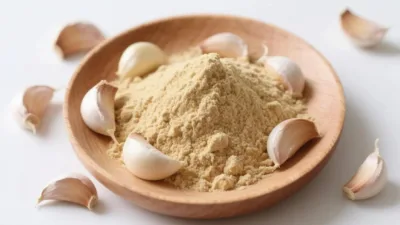
Organic Garlic Powder
Organic Garlic Powder delivers potent, concentrated garlic essence from 100% organically grown Allium sativum.…

Organic Onion Powder
Organic Onion Powder—crafted from certified organic Allium cepa (yellow storage onion, high-solids variety)—is low-temperature…
Related Posts


