
Table of Contents
Behind every great dish lies a humble yet transformative ingredient—onion. For centuries, onions have been celebrated across cultures not only for their culinary magic but also for a remarkably broad spectrum of medicinal properties, appearing in everything from Egyptian burial rituals to Greek athletic training diets and the carefully documented remedies of traditional Ayurvedic medicine.
What makes the onion so enduring is its quiet versatility: it appears in almost every cuisine on earth, it keeps reasonably well through the seasons, and it lends a savory depth that is difficult to fake with anything else.
Today, Organic Onion Powder takes this kitchen staple to new heights, offering unmatched convenience, intense flavor, and a wealth of health benefits in every sprinkle.
By removing the water content and concentrating the flavor, the powder becomes a pantry workhorse that dissolves cleanly into liquids, blends invisibly into dry rubs, and never forces you to stand at the cutting board weeping over a peeled bulb.
Perfect for home cooks who want speed without sacrificing taste and for health enthusiasts who track every ingredient on the label, this organic marvel is more than a spice—it is a small, dependable gateway to cleaner, healthier, and more sustainable living.
When you reach for the jar instead of a plastic-wrapped, pesticide-treated bulb shipped halfway around the world, you are making a choice that touches your own body, your kitchen routine, and the soil it all started in.
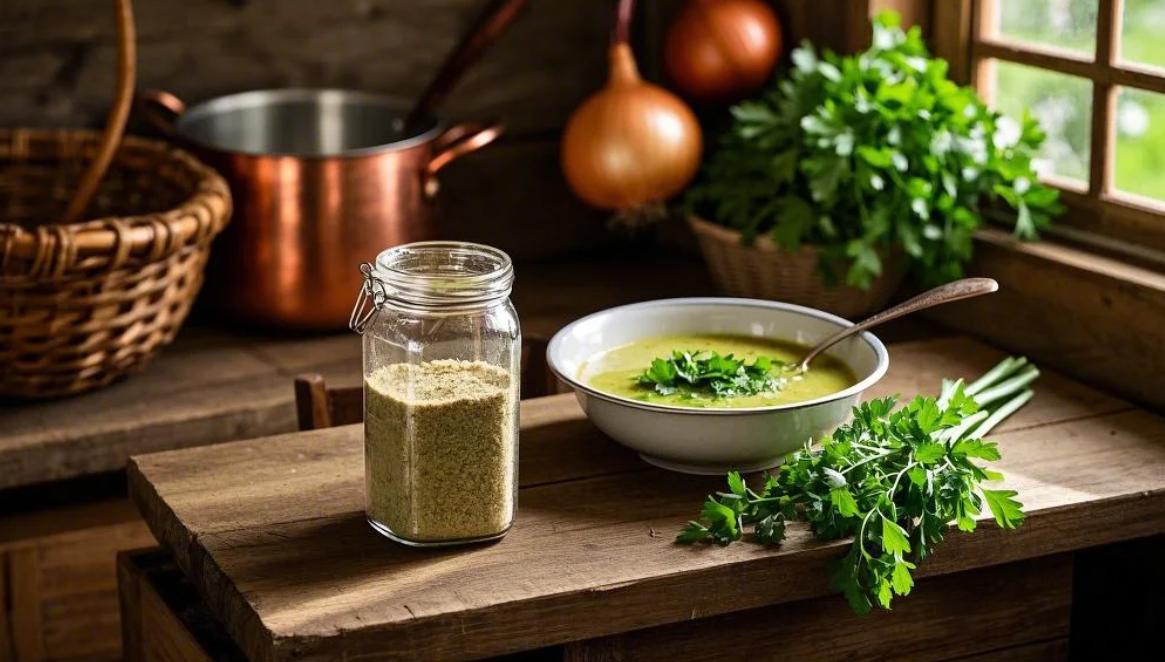
Organic Onion Powder: Where Tradition Meets Modern Wellness
Onions have been a global culinary cornerstone since ancient times, prized by Egyptians, Greeks, and Ayurvedic practitioners for their healing powers and their ability to make plain food taste like a meal worth remembering.
The ancient Egyptians revered onions so deeply that they were buried with pharaohs, while Greek athletes consumed them for strength and Roman soldiers carried them into battle as a folk tonic.
Now, Organic Onion Powder distills these benefits into a versatile, shelf-stable form that fits the rhythm of a modern kitchen without asking you to sacrifice the wisdom of the past.
Made from onions grown without synthetic pesticides or fertilizers, this powder retains their natural essence—no additives, no compromises, and none of the harsh chemical residues that can accumulate in conventionally farmed produce.
The dehydration process gently removes only moisture, leaving behind the sulfur compounds, aromatic oils, and trace minerals that give onions their characteristic bite and their well-documented health value.
In short, you get the full personality of the onion—its sweetness, its sharpness, its lingering warmth—reduced to a fine, free-flowing powder that waits patiently in your cupboard until the moment you need it.
Why Organic Onion Powder Stands Out
Choosing organic isn’t just a trend; it’s a commitment to purity and sustainability that pays dividends for your health and for the land that produced your food.
Conventional onion farming frequently relies on synthetic pesticides, herbicides, and fertilizers that can leave trace residues and gradually strip the soil of its natural vitality.
Organic certification, by contrast, forbids these inputs and instead encourages crop rotation, composting, and biological pest control, which keeps the ecosystem around the farm healthier over the long run.
Here’s why our product shines when you hold it up against ordinary supermarket seasoning:
- Zero Chemical Residues: Free from synthetic pesticides, herbicides, and GMOs, so what lands on your spoon is simply concentrated onion and nothing engineered in a laboratory. This matters most for people who cook daily for children, for anyone managing sensitivities, and for households that simply prefer to know exactly what is in their food.
- Richer Flavor & Nutrients: Organic farming enhances sulfur compounds (allicin) and antioxidants because the plant, grown in living soil without chemical crutches, must build its own natural defenses, and those defenses are precisely the molecules we value for taste and wellness. The result is a powder with a rounder, deeper aroma and a more pronounced savory backbone.
- Eco-Friendly Footprint: Supports farming practices that protect soil health and biodiversity, reducing the runoff that pollutes nearby waterways and preserving the microbial life that makes earth fertile for the next generation of crops. Choosing organic is, in a very real sense, voting for the kind of agriculture you want to see continue.
Health Benefits That Make You Cry (Happy Tears)
Organic Onion Powder packs a nutritional punch that goes beyond seasoning, concentrating many of the compounds that fresh onions are admired for while adding the practical advantage of year-round availability and zero prep time.
Because the powder is simply dried onion with nothing removed except water, the beneficial molecules remain present and ready to work the moment you eat them.
A daily pinch can quietly contribute to several bodily systems at once, which is part of why onions have earned a permanent place in both the kitchen and the medicine cabinet across so many traditions:
- Antioxidant Powerhouse
High in quercetin, a flavonoid that neutralizes free radicals and reduces inflammation throughout the body, helping to cushion cells against the slow wear of oxidative stress that accumulates with age, poor sleep, and environmental exposure. - Heart Health Support
Allicin and sulfur compounds promote healthy blood pressure and cholesterol levels by encouraging relaxed blood vessels and supporting the body’s own lipid-handling systems, which together ease the daily workload on your cardiovascular system. - Immune Boost
Vitamin C and zinc strengthen defenses against infections and seasonal illnesses, giving the immune system the raw materials it needs to respond quickly when you are exposed to common colds and fluctuating weather. - Digestive Wellness
Prebiotic fibers nourish gut bacteria, aiding digestion and nutrient absorption, which means a happier microbiome and, by extension, better overall energy and a more resilient response to the foods you eat. - Bone Strength
Rich in calcium and magnesium, supporting skeletal health and preventing osteoporosis (as per Food & Function studies), two minerals that work together to keep bones dense and muscles functioning smoothly as the years go by.
Endless Culinary Possibilities
From savory dishes to health tonics, Organic Onion Powder elevates every recipe it touches, acting as a quiet amplifier that rounds out flavors without announcing itself too loudly.
Unlike fresh onion, which needs time to soften and sweeten in the pan, the powder delivers instant background umami and can be measured precisely down to the quarter teaspoon.
That reliability is exactly what makes it a favorite among meal preppers, busy parents, and anyone who wants repeatable results from their cooking.A few ideas to get you started:
- Meals: Sprinkle into soups, stews, stir-fries, or mashed potatoes for robust umami depth that builds layer by layer as the dish simmers, and stir a pinch into rice or quinoa while it cooks for a subtle, savory backbone.
- Baking: Enhance breads, crackers, or savory muffins with a subtle onion aroma that pairs beautifully with cheese, herbs, and whole grains, turning an ordinary loaf into something that smells like a bakery.
- Marinades & Rubs: Mix with spices for meat, tofu, or veggie seasoning, where the powder adheres evenly and dissolves into oils and acids to form a cohesive coating that flavors food all the way through.
- Health Shots: Blend with apple cider vinegar, ginger, and honey for an immune-boosting tonic that is easy to swallow and surprisingly warming on a cold morning or after a long day.
- Snacks: Toss with popcorn or roasted nuts for guilt-free flavor that satisfies a salty craving without the heaviness of processed seasoning blends loaded with hidden sugar and sodium.
Organic Onion Powder in the Modern Kitchen
Today’s health-conscious consumers demand clean-label, functional ingredients that do more than taste good—they want to understand what they are eating and trust where it came from.
Organic Onion Powder answers the call by fitting seamlessly into the way people actually cook now, when time is short and the pantry has to do a lot of heavy lifting.
Rather than a specialty item reserved for ambitious recipes, it becomes a default seasoning you reach for without thinking, the way previous generations reached for salt.It earns its place on the shelf by solving small daily annoyances:
- Simplifying Cooking: No peeling, chopping, or tears—just pure, instant flavor that dissolves into sauces and dressings in seconds, so a weeknight dinner no longer depends on how much prep energy you have left.
- Reducing Waste: Use precise amounts without spoilage, aligning with zero-waste lifestyles because a jar lasts for months and never turns to slime at the bottom of the crisper the way a forgotten fresh bulb does.
- Embracing Global Cuisine: Elevate Mexican, Indian, Mediterranean, or Asian dishes effortlessly, since onion is a foundational note in nearly every regional cuisine and the powder lets you hit that note consistently no matter the recipe.
Science-Backed, Nature-Powered
Research underscores onion’s health prowess, and the more scientists look, the more the old folk wisdom about onions appears to hold up under scrutiny.
The compounds that give onions their pungency are the same ones drawing attention in nutrition journals, which is encouraging for anyone who enjoys them regularly.A few representative findings worth knowing:
- A 2020 study in Antioxidants linked quercetin to reduced risk of chronic diseases like heart disease and cancer, pointing to the compound’s ability to calm inflammation and protect cells from damage at the molecular level.
- Journal of Nutrition highlights onion’s antimicrobial properties, aiding gut and oral health by discouraging the growth of undesirable bacteria while leaving beneficial flora largely undisturbed.
- Organic farming preserves these benefits, as synthetic chemicals degrade soil nutrients over time, whereas organic practices keep the soil biology intact so the onions—and therefore the powder—retain a fuller nutritional profile.
Quality Assurances
At [Your Brand Name], our Organic Onion Powder is held to standards that go well beyond the bare minimum, because we believe a product this simple should also be beyond reproach.
With only one ingredient, there is nowhere for shortcuts to hide, and we treat that transparency as a responsibility rather than a marketing point. Every step, from the farm that grows the bulbs to the jar that reaches your kitchen, is documented and checked. Specifically, our powder is:
- Certified Organic: USDA/EU-certified for transparency and safety, meaning an independent body has verified that no prohibited substances touched the crop at any stage of its life.
- Non-Irradiated: Preserves natural enzymes and nutrients through gentle dehydration rather than radiation, so the living qualities of the onion survive the journey from field to pantry.
- Third-Party Tested: Free from contaminants, heavy metals, and artificial additives, with laboratory results that confirm the powder is as clean as the label promises.
From Farm to Jar: A Journey of Integrity
Our onions grow in fertile organic soils, harvested at peak ripeness when their flavor and nutrient content are at their height rather than being pulled early for shipping convenience.
After careful drying and milling, they’re transformed into a fine powder that captures their pure essence—no shortcuts, no fillers, and no mysterious anti-caking agents borrowed from industrial food manufacturing.
The dehydration is tuned to preserve aromatic oils instead of scorching them away, and the milling produces a consistent texture that blends smoothly whether you are whisking it into a broth or folding it into dough.
What ends up in the jar is exactly what left the field, concentrated and nothing else, a small but honest representation of the place and the method that produced it.
FAQ: Quick Answers
Q: Can I replace fresh onions with powder?
A: Yes! 1 tablespoon powder ≈ 1 medium fresh onion (adjust to taste). Keep in mind the powder delivers flavor without the bulk or moisture, so when a recipe relies on the texture of cooked onion pieces you may still want to sauté a fresh bulb alongside it for body.
Q: Does it contain added sugar or preservatives?
A: Never. Just 100% organic onions, with nothing else folded in. That single-ingredient purity is what lets people with strict clean-eating goals use it freely, and it is also why the flavor stays true instead of drifting toward something artificially sweetened.
Q: Is it kid-friendly?
A: Absolutely—perfect for picky eaters who dislike onion textures but will happily eat a sauce or soup that has been quietly fortified with the flavor they claim to hate. It is also gentle enough to fold into baked goods and sprinkle over buttered noodles.
Rediscover the Power of Onions
In a world cluttered with processed flavor enhancers, Organic Onion Powder stands as a testament to simplicity, health, and sustainability. Whether you’re a meal-prep pro mapping out a week of dinners, a wellness seeker fine-tuning what goes into your body, or a planet-conscious cook trying to shrink your footprint, this golden powder offers endless ways to nourish your body and delight your palate.
It asks very little of you—no peeling, no tears, no trip to the store when you are out—and gives back a great deal in return: reliable flavor, quiet nutrition, and the quiet satisfaction of choosing something made the right way.
The humble onion has fed humanity for millennia; in powdered, organic form it simply becomes easier to invite to the table every single day.
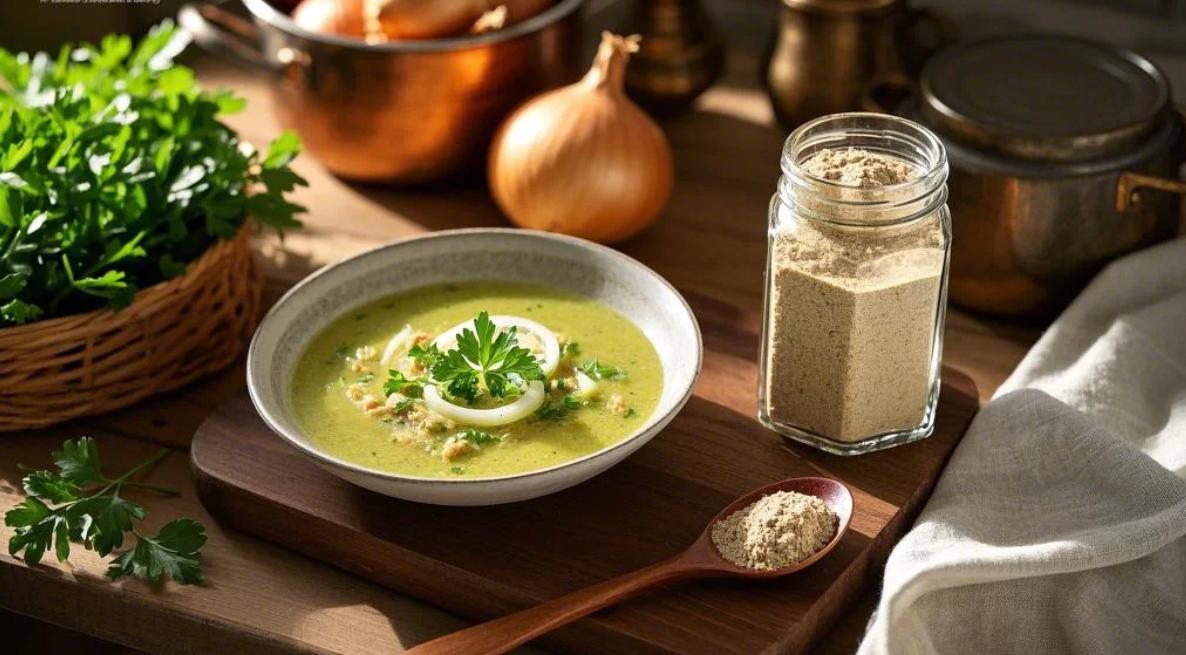
Add a jar to your pantry today—flavor, health, and nature, all in one sprinkle!
Also Covered: The Essence of Organic Onion Powder: Just One Ingredient
The Essence of Organic Onion Powder: Just One Ingredient
At its core, high-quality organic onion powder contains 100% dried, ground organic onions.That’s it.There is no second ingredient tucked behind the comma on the label, no maltodextrin to bulk it out, and no salt or sugar blended in to disguise a weaker batch.
Reputable suppliers ensure their organic onion powder is made from onions grown without synthetic pesticides or fertilizers, cultivated under certified organic practices that govern the soil, the seed, the crop rotation, and the harvest window.
After the bulbs are lifted, they are carefully dehydrated, most often through controlled hot-air drying or gentle low-temperature methods, and then milled into a fine, consistent powder.
This process is engineered to preserve the natural flavor compounds and inherent nutrients found in fresh onions while driving moisture down to a level that keeps the product stable on the shelf.
The dehydration step is where craft matters: dry too fast and you scorch volatile aromatics; dry too slow and you risk off notes or microbial growth. The best mills monitor temperature, airflow, and dwell time so that the finished powder tastes like onion rather than like toast.
What reaches the blender is a single, recognizable agricultural product in concentrated form.
You won’t find any artificial flavors, colors, anti-caking agents, or preservatives in truly organic onion powder, making it a highly sought-after clean label ingredient.
For a procurement manager, that absence is not a marketing footnote; it is the entire value proposition. Many conventional seasonings rely on silicon dioxide, calcium silicate, or similar flow aids to keep the powder free-running in humid plants, and they may carry added flavor enhancers to compensate for weak raw material.
Organic certification forbids those shortcuts, which means the supplier has to earn free-flow through particle-size control, proper sieving, and airtight packaging rather than through chemistry.
The result is an ingredient that survives scrutiny from a retail buyer’s specification team and from a curious consumer reading the back of the pack.
In a market where “clean label” has shifted from a niche claim to a baseline expectation, a one-ingredient onion powder removes the need for explanatory footnotes and lets the brand tell a shorter, more believable story about what is actually inside the food.
Also Covered: Nutritional Highlights of Onion Powder
Nutritional Highlights of Onion Powder
While primarily used for flavor, organic onion powder does contribute to the nutritional profile of dishes, albeit in smaller quantities compared to fresh onions due to its concentrated form.
A tablespoon of powder began life as a meaningful weight of fresh bulb, so the micronutrients present in the raw vegetable survive the drying process in a compacted, shelf-stable package.
It is fair to say that no one reaches for onion powder as a vitamin supplement, yet the small amounts it contributes are not nutritionally empty. The compounds that give onion its character, from sulfur-based aromatics to pigmented flavonoids, are precisely the ones researchers find interesting, and many of them tolerate dehydration well.
When a formulation already calls for onion powder for taste, the fact that it quietly adds a little potassium, a trace of fiber, and a measure of protective plant compounds is a genuine bonus rather than a reason to reformulate.
A typical serving, such as one tablespoon, generally provides the following in recognizable amounts.
- Carbohydrates: Primarily complex carbohydrates, with a small amount of natural sugars that come from the onion itself rather than from added sweeteners. The carbohydrate fraction is what gives onion powder its subtle background sweetness and its ability to support browning reactions in cooked and baked applications. Because the sugars are intrinsic to the vegetable, they behave predictably during processing and do not require the label declarations that an added sugar would trigger, which keeps the ingredient list short and the clean label story intact for the formulator.
- Dietary Fiber: A modest amount of fiber, contributing to daily intake even in the small volumes typically used for seasoning. The fiber in onion powder is the same cell-wall material present in the fresh bulb, concentrated by the removal of water. While a single serving will not move the daily fiber number by much, products that use onion powder as a recurring background note across multiple SKUs can collectively add a small, worthwhile fiber contribution to a diet without changing texture or taste in an obvious way.
- Protein: A small protein content that reflects the natural makeup of the onion bulb. Onions are not a protein crop, so the amount here is minor, yet it is real and it survives drying. For labels that declare protein, the trace contributed by onion powder is part of the honest total rather than an isolated additive, and it integrates seamlessly into savory systems where the powder is already present for flavor reasons alone.
- Minerals: Trace amounts of minerals such as potassium, calcium, magnesium, and phosphorus that the onion drew from the soil during growth. Mineral content is one of the more stable nutrient classes through dehydration, so the powdered form retains a meaningful echo of what the fresh bulb contained. Potassium in particular is worth noting, since many savory categories are under pressure to manage sodium; an ingredient that brings potassium along as a natural companion to flavor is a quiet asset in reduced-salt development work.
- Vitamins: Small amounts of Vitamin C and some B vitamins (like B6) that survive the drying step in reduced but present quantities. Vitamin C is the more fragile of the two and loses some activity to heat and oxygen, which is why the figure is modest, while the B-complex vitamins tend to hold up better through controlled dehydration. The practical takeaway for a formulator is that onion powder should not be counted on as a vitamin source, yet it is far from nutritionally inert and lends a little genuine micronutrient character to the finished food.
- Beneficial Plant Compounds: Onions are known for containing various phytonutrients, including sulfur compounds (which give onions their characteristic aroma and flavor) and flavonoids like quercetin, which are retained in the dried powder form. These compounds are associated with antioxidant properties and are a large part of why onions have attracted scientific interest for decades. The sulfur volatiles are exactly what the nose recognizes as “onion,” so their survival through drying is what makes the powder taste authentic rather than merely salty or sweet. Quercetin, a pigmented flavonoid, is comparatively stable and remains in the powder as a recognizable trace, reinforcing the idea that the ingredient carries more than just taste into the recipe.
It’s important to remember that onion powder is typically used in small quantities for seasoning, so its primary contribution is flavor rather than significant nutritional bulk.
A formulation rarely calls for onion powder by the ounce the way it might call for flour or protein; instead the ingredient works in the background, measured in teaspoons, to round out a savory profile.
That usage pattern means the vitamins and minerals discussed above should be viewed as a pleasant bonus rather than a dietary pillar. However, it’s reassuring to know that it carries over many of the inherent qualities of fresh onions, so the choice to use organic onion powder is never a trade of nutrition for convenience.
The flavor leads, the clean composition follows, and the minor nutrient load simply travels along for free, which is a combination few seasoning ingredients can honestly claim.
Also Covered: Allergen Information and Purity
Allergen Information and Purity
For those concerned about allergens, it’s worth noting that onions are a member of the Allium family (which also includes garlic, leeks, and chives).
While not among the major allergens identified by regulatory bodies in most regions, some individuals can have an allergy or sensitivity to onions that ranges from mild digestive discomfort to more pronounced reactions.
In such cases, any product containing onion powder, including organic varieties, would trigger a response, and the only safe approach is avoidance plus clear labeling.
This is why responsible manufacturers list onion explicitly in the ingredient statement and, where relevant, carry it through to the “contains” or “may contain” portion of the allergy panel.
Organic status changes nothing about the inherent allergenic potential of the onion itself; what organic certification governs is how the crop was grown and processed, not whether a person can tolerate it.
However, a genuine organic onion powder will not contain common allergens like gluten, dairy, soy, or nuts, as it’s purely derived from the onion bulb itself.
The simplicity of the source material is its own safety feature: there is no wheat starch bulking agent, no dairy-derived flavor carrier, no soy lecithin anti-caking aid, and no tree-nut processing residue that could hide inside the powder.
Manufacturers committed to organic standards also avoid cross-contamination with non-organic or allergenic ingredients during processing, typically by running dedicated lines, validating clean-downs between batches, and holding third-party audits that confirm the absence of undeclared allergens.
For a brand serving sensitive consumers or exporting into markets with strict allergen disclosure rules, that documented purity is as valuable as the flavor itself, because it turns a potential liability into a verified, defensible claim.
Also Covered: Versatile Applications
Versatile Applications
The purity and intense flavor of organic onion powder make it incredibly versatile in both home kitchens and industrial food formulations, which is why it appears across such a wide band of savory categories.
Because the powder disperses evenly, survives high heat, and carries no moisture of its own, it slots into systems where fresh onion would weep, burn, or ferment.
A single specification can serve dry rubs, wet sauces, and baked items alike, simplifying the supply chain and shrinking the number of approved ingredients a quality team must track.
Below are the applications where the ingredient earns its keep most often in commercial kitchens and factory lines.
- Seasoning Blends: A foundational ingredient in countless spice mixes for meats, vegetables, and snacks, where it supplies the savory backbone that other spices build upon. In a barbecue rub, onion powder bridges the gap between salt and smoke; in a vegetable seasoning it adds roundness without adding moisture that would clump the mix. Because the particle size is consistent, it blends uniformly with herbs, pepper, and salt, so every pinch of the finished product tastes the same, which is exactly what a brand needs to keep a flavor experience repeatable across regions and production runs.
- Soups, Stews, and Sauces: Adds deep, savory flavor without the texture of fresh onions, which matters in products where a smooth mouthfeel is part of the spec. A cream soup or a clear broth cannot tolerate identifiable onion fragments, yet both benefit from onion’s aromatic depth, and powder delivers that depth invisibly. In stews and slow-cooked sauces the powder dissolves and integrates so completely that it reads as a natural part of the base rather than as a seasoning added at the end, giving developers a reliable way to build umami without relying on MSG or yeast extracts.
- Baked Goods: Enhances savory breads, crackers, and biscuits by contributing onion character that survives the oven intact. The dry form means it will not introduce the extra water that fresh onion would, so bakers can control hydration precisely while still achieving a pronounced savory note. In crackers and snack breads the powder distributes through the dough without creating soggy pockets, and in biscuits it pairs with herbs to produce a layered, aromatic bite. For clean label bakeries, a one-ingredient onion powder is far preferable to a flavored compound that would lengthen the declaration.
- Snack Foods: Perfect for seasoning chips, popcorn, and other savory snacks, where it adheres well to oil or seasoning oil and delivers immediate, recognizable onion taste on the first bite. Snack coatings demand ingredients that are free-flowing, non-caking, and consistent from batch to batch, and a well-milled organic onion powder meets all three. Whether dusted on kettle chips or tumbled with popcorn, it provides the savory hook that keeps a snack from tasting flat, and because it is organic it supports premium positioning without sacrificing the bold flavor snack buyers expect.
- Dressings and Dips: Blends smoothly into liquid applications for consistent flavor, dissolving into the aqueous or oily phase without grit or separation. In salad dressings the powder disperses uniformly so there are no flecks or sediment, and in creamy dips it melds with dairy or plant-based bases to produce a stable onion note that holds through shelf life. This reliability lets developers hit the same flavor target in a refrigerated dip and a shelf-stable dressing using one ingredient, reducing SKU complexity and keeping the label story consistent across a product family.
- Meat Alternatives: Provides essential umami and depth to plant-based meat substitutes, where the absence of animal fats makes savory layering critical to consumer acceptance. Onion powder contributes the roasted, allium richness that signals “meatiness” to the palate, helping vegetable proteins taste like a finished dish rather than like raw material. In burgers, sausages, and grounds it works alongside other spices to build the browned, savory complexity that consumers expect, and because it is clean label and organic, it aligns naturally with the health-forward positioning that drives the plant-based category in the first place.
In essence, organic onion powder offers the unadulterated flavor of onion in a convenient, shelf-stable, and clean label form that fits as comfortably in a home spice jar as it does on an industrial bill of materials.
Its simplicity of content, just pure, dried organic onion, is its greatest strength, because that simplicity is what survives every layer of modern food scrutiny: the regulator checking the label, the retailer auditing the supply chain, and the consumer reading the back of the pack.
By choosing a genuinely single-ingredient powder, formulators ensure their products deliver authentic taste while meeting the demands of health-conscious consumers who have grown skeptical of lengthy ingredient lists.
The next time a specification calls for onion, the cleanest answer is often the most straightforward one: a powder made from nothing but organic onions, concentrated by the removal of water and nothing else, ready to carry real flavor and natural goodness into whatever you are building.
Recommended Products

Organic Onion Powder
Organic Onion Powder—crafted from certified organic Allium cepa (yellow storage onion, high-solids variety)—is low-temperature…
Related Posts


