
Table of Contents
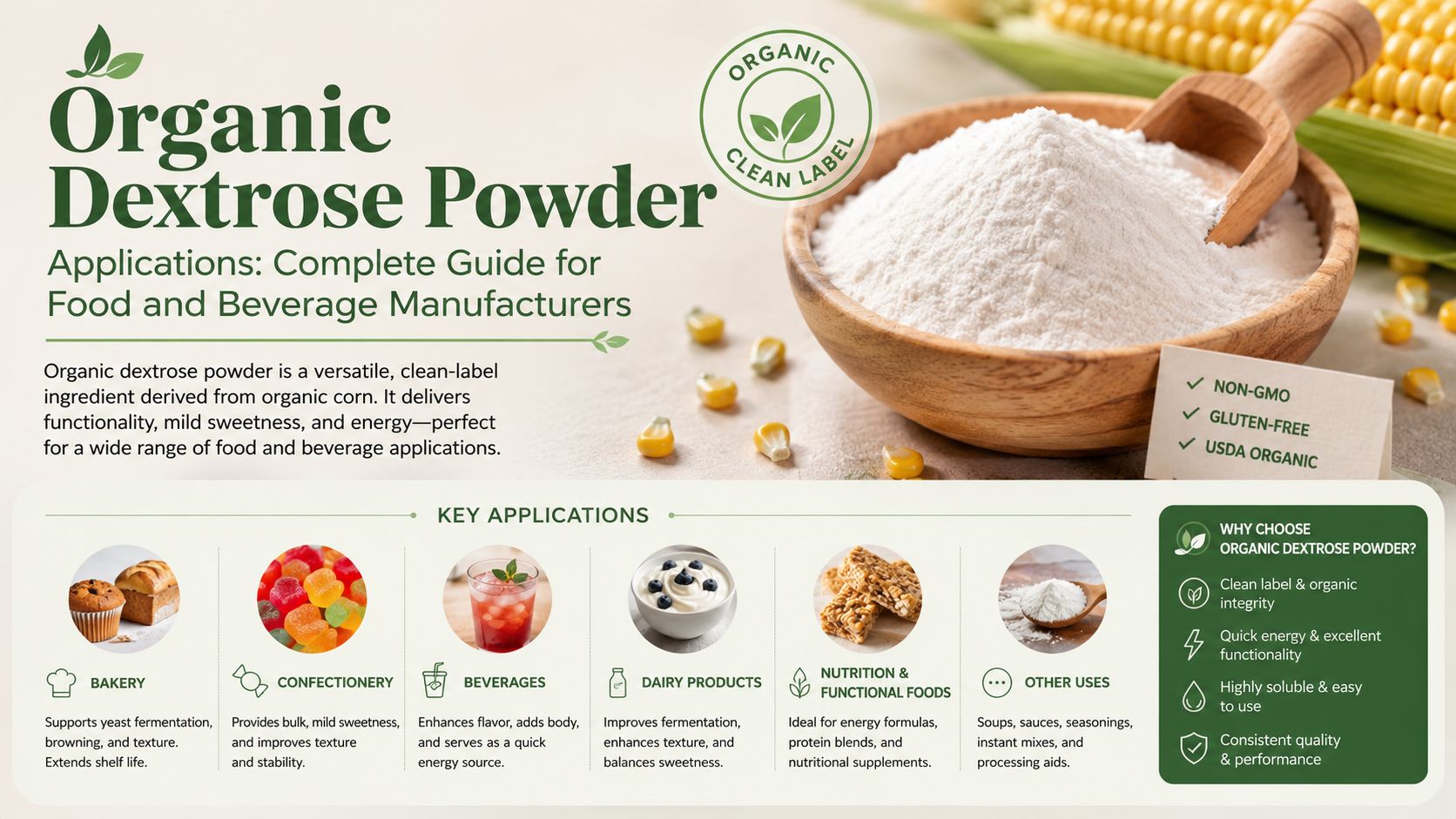
Organic dextrose powder has emerged as one of the most versatile and strategically valuable carbohydrate ingredients available to food and beverage manufacturers. Derived from certified organic, non-GMO corn starch, it provides a combination of functional performance, clean-label acceptability, and nutritional benefit that makes it indispensable across a remarkably broad range of applications.
From ready-to-drink energy beverages to protein-enriched snack products, from low-sugar reformulation to premium baked goods, organic dextrose powder delivers performance that synthetic or conventional ingredients cannot match in terms of brand alignment and consumer trust.
This comprehensive guide covers organic dextrose powder applications across ten major industry categories, providing formulators and procurement professionals with actionable technical guidance, formulation parameters, and strategic insights for each application area.
Core Functional Properties: The Foundation for All Applications
Before exploring specific applications, it is essential to understand the fundamental properties that make organic dextrose powder effective across such diverse uses.
Chemical and Physical Profile
Organic dextrose powder is pure D-glucose in crystallized form, produced through enzymatic hydrolysis of organic corn starch followed by purification and crystallization. Its molecular simplicity — a single glucose unit — is the source of its unique functional versatility.
| Property | Value | Formulation Significance |
|---|---|---|
| Dextrose Equivalent (DE) | 95–100 | Near-complete hydrolysis; rapid, predictable behavior |
| Solubility | Highly soluble | Cold and hot water; suitable for all liquid formats |
| Sweetness | ~70% of sucrose | Moderate sweetness; clean, neutral profile |
| Glycemic Index | 100–106 (high) | Fastest energy delivery among common carbohydrates |
| Moisture Content | ≤5% | Excellent shelf stability in dry and semi-moist products |
| pH (10% solution) | 4.0–6.5 | Compatible with acidic and neutral formulations |
| Caloric Value | 4 kcal/g | Standard energy density for carbohydrates |
Why Organic Certification Amplifies Value
In every application, the organic certification of dextrose powder creates compounding brand value beyond the ingredient’s functional properties:
- Clean-label alignment: “Dextrose” appears on consumer-approved ingredient lists
- Non-GMO verification: Eliminates genetic modification concerns in health-conscious demographics
- Sustainability credentials: Organic agricultural practices support soil health and reduced chemical exposure
- Premium brand positioning: Organic ingredients justify retail price premiums of 30–100% in target categories
Industry Application Matrix: 10 Key Categories
Complete Application Overview
| Industry | Primary Application | Dextrose Role | Typical Usage Level | Key Benefit Delivered |
|---|---|---|---|---|
| Ready-to-Drink Beverages | Energy drinks, protein shakes, electrolyte drinks | Primary carbohydrate | 3–8% | Fast energy, clean sweetness, rapid dissolution |
| Sports & Performance Nutrition | Pre/intra/post-workout formulas | Fast-digesting energy | 15–40% of carbs | Glycogen replenishment, insulin-mediated absorption |
| Functional Snacks | Energy bars, protein bars, granola bites | Sweetener + energy source | 8–25% | Clean sweetness, Maillard browning, binding |
| Baked Goods | Breads, cakes, cookies, pastries | Fermentation substrate + sweetener | 2–10% | Yeast food, crust browning, flavor development |
| Confectionery | Hard candies, gummies, chewing gum | Sweetener + crystallization control | 30–70% | Controlled sweetness, anti-bloom |
| Plant-Based Products | Oat/almond/soy beverages, vegan snacks | Flavor base + energy | 2–15% | Complements plant flavors; clean energy |
| Infant & Medical Nutrition | Baby food, ORS, nutritional supplements | Primary carbohydrate | Variable | Safety, digestibility, glycemic control |
| Dairy & Alternatives | Yogurt, kefir, flavored milk, plant yogurts | Sweetener + fermentation | 1–8% | Flavor balance, Maillard in heated products |
| Low-Sugar Reformulation | Sugar-reduced products, calorie-conscious lines | Partial sucrose replacement | 5–30% | Sweetness balance, functional replacement |
| Sauces & Dressings | Marinades, sauces, glazes | Flavor base + browning | 1–5% | Caramelization, flavor development |
Ready-to-Drink (RTD) Beverage Applications
Energy Drinks and Natural Energy Beverages
Organic dextrose powder is the preferred carbohydrate for natural energy drink formulations because it delivers rapid, clean energy without the negative perceptions associated with synthetic caffeine or excessive caffeine doses.
Formulation Parameters:
| Parameter | Specification | Notes |
|---|---|---|
| Dextrose concentration | 5–8% w/v | Provides 20–30g carbohydrates per 500mL serving |
| Dissolution temperature | Room temperature or cold | Complete dissolution in <60 seconds |
| pH compatibility | 2.5–7.0 | Compatible with most beverage pH ranges |
| Sweetness contribution | Moderate | Works synergistically with natural caffeine sources |
| Cloud/turbidity | Zero | Does not affect beverage clarity |
Application Advantages:
- Works synergistically with natural caffeine sources (green tea, guarana) to support alertness without the “crash” associated with high-dose synthetic caffeine
- Provides immediate blood glucose support during extended cognitive or physical tasks
- Dissolves completely in cold water — ideal for on-the-go consumption
- Does not contribute color, cloudiness, or off-flavors to transparent beverage formats
Protein and Recovery Shakes
In protein-enriched beverages, organic dextrose powder serves dual functions:
- Energy substrate: Supports the insulin-mediated uptake of amino acids into muscle cells (the “anabolic window” concept)
- Flavor optimization: Provides clean sweetness that balances protein bitterness without masking flavor
Recommended Use: 5–15% of total carbohydrate content in post-workout recovery formulations, combined with additional maltodextrin for sustained energy if desired.
Electrolyte and Hydration Drinks
Organic dextrose powder is a scientifically validated component of oral rehydration solutions (ORS). The glucose-sodium co-transport mechanism (SGLT1) in the intestinal lumen requires glucose to facilitate sodium and water absorption.
ORS Formulation Example (per liter):
| Ingredient | Quantity | Function |
|---|---|---|
| Organic Dextrose Powder | 20g | Glucose-sodium co-transport |
| Sodium (as citrate/chloride) | 60–90 mmol/L | Electrolyte replacement |
| Potassium | 20–25 mmol/L | Hydration support |
| Citrate | 10 mmol/L | Buffering; alkalinizing |
| Clean water | To 1 liter | Base |
Plant-Based Beverages
The rise of plant-based milks (oat, almond, soy, rice) has created significant opportunities for organic dextrose powder. It provides:
- Energy balance: Plant-based beverages often have lower natural sugar content than dairy milk
- Flavor bridge: Complements the sometimes bitter or beany notes of plant proteins
- Label simplicity: Dextrose is a familiar, consumer-friendly ingredient on clean-label products
Functional Snack Products
Energy Bars and Protein Bars
Organic dextrose powder is highly effective in energy and protein bar formulations:
Functional Contributions:
| Function | Mechanism | Benefit to Formulator |
|---|---|---|
| Sweetness | ~70% sucrose equivalence | Reduces need for high-intensity sweeteners |
| Maillard browning | Reactive carbonyl group + amino acids | Golden crust on baked bars |
| Yeast fermentation | Readily fermentable | For leavened bar formats |
| Humectancy | Moderate moisture binding | Extends shelf life |
| Binding | Crystalline structure | Contributes to bar cohesion |
Typical Formulation Range: 8–20% of total formula weight in energy/protein bars.
Granola and Cluster Snacks
Organic dextrose powder acts as a binding agent in granola clusters — when heated with oils, it helps clusters adhere while contributing sweetness and promoting browning during baking.
Savory Snack Enhancements
In savory functional snacks (seed-based bars, nut clusters), organic dextrose powder provides:
- Energy balance in high-protein, high-fat formulations
- Clean sweetness that does not compete with savory flavor profiles
- A neutral ingredient that does not introduce flavor complexity
Baked Goods and Confectionery
Baked Goods
Key Functional Roles:
- Yeast Fermentation Substrate: Dextrose is the preferred food for Baker’s yeast in bread and pastry formulations. It is metabolized first before starches, providing the energy for initial gas production and dough development.
- Crust Browning (Maillard Reaction): Dextrose’s open-chain structure makes it highly reactive in the Maillard reaction, producing the golden-brown crust characteristic of premium baked goods. This is particularly valuable in surface applications (egg wash substitutes, topping glazes).
- Flavor Development: In pastries and cookies, dextrose contributes to the development of complex caramel and toffee notes during baking.
- Texture Enhancement: In soft-centered cakes and muffins, dextrose contributes to a tender, moist crumb structure by participating in gluten-inhibiting reactions.
Application Matrix — Baked Goods:
| Product Type | Dextrose Role | Typical Usage | Special Considerations |
|---|---|---|---|
| Artisan breads | Yeast food; fermentation control | 1–3% of flour weight | Use in lean doughs for fermentation boost |
| Sandwich breads | Softness; crumb texture | 1–3% | Synergizes with emulsifiers |
| Cakes and muffins | Tenderness; browning | 3–8% | Dissolves in batter liquid before mixing |
| Cookies | Sweetness; spread control; browning | 3–10% | Adjusts cookie spread and color |
| Pastries and danish | Flavor; crust color | 2–5% | Contributes to flaky layered texture |
| Crackers | Fermentation; flavor | 1–3% | Supports yeast activity in lean formulas |
Confectionery
Hard Candies:
Organic dextrose powder (in syrup form — re-dissolved or as glucose syrup precursor) is used in confectionery to:
- Control crystallization (dextrose crystallizes more readily than sucrose, creating specific texture effects)
- Provide sweetness that complements sucrose in reduced-sucrose formulations
- Support the Maillard browning in caramel and toffee formats
Gummies and Jellies:
In gummy confectionery, organic dextrose syrup contributes:
- Sweetness balance
- Texture modification
- Moisture retention (reducing staling rate)
Low-Sugar Functional Food Reformulation
The Sugar Reduction Challenge
Sugar reduction is one of the most significant reformulation challenges facing food manufacturers today. Simply removing sucrose creates cascading functional problems:
| Function Lost When Sugar Is Removed | Dextrose-Based Solution |
|---|---|
| Sweetness | Organic dextrose at 70% sucrose sweetness reduces calories while maintaining perception |
| Texture and bulk | Combine with organic maltodextrin for texture replacement |
| Moisture retention | Organic glucose syrup provides humectancy |
| Browning (Maillard) | Dextrose provides excellent Maillard reactivity |
| Fermentation | Dextrose is readily fermentable by baker’s yeast |
| Preservation | Partial replacement with dextrose maintains microbial stability |
Reformulation Strategy
Sugar Reduction Framework Using Organic Carbohydrates:
| Reduction Target | Ingredient Strategy | Result |
|---|---|---|
| 25% sugar reduction | Replace 25% sucrose with organic dextrose powder | Maintains sweetness; reduces calories; improves dissolution |
| 40% sugar reduction | Dextrose + high-intensity sweetener blend | Sweetness maintained; texture and browning preserved |
| 50%+ sugar reduction | Dextrose + maltodextrin + fibers + stevia | Functional replacement across all properties |
Regulatory Labeling Considerations
When reformulating with organic dextrose powder:
- Total carbohydrate declaration will increase (dextrose is a carbohydrate)
- Calories will decrease (dextrose at 70% sucrose sweetness = fewer calories per sweetness unit)
- “Sugar” declaration will decrease proportionally to replacement level
- If claiming “reduced sugar,” verify compliance with regional regulations (FDA, EU FIC)
Industry-Specific Formulation Case Studies
Case Study: Premium Sports Nutrition Energy Drink
Product Profile: Clean-label energy drink targeting active consumers aged 25–45
| Ingredient | % | Function |
|---|---|---|
| Filtered water | 85.0% | Base |
| Organic Dextrose Powder | 6.0% | Primary carbohydrate; fast energy |
| Organic Green Tea Extract (40% caffeine) | 0.5% | Natural caffeine source |
| Citric Acid | 0.4% | Flavor; tartness |
| Potassium Citrate | 0.3% | Electrolyte |
| Natural Berry Flavor | 0.2% | Flavor |
| Sodium Chloride | 0.1% | Electrolyte |
| Monk Fruit Extract | 0.05% | High-intensity sweetener |
Result: 24g organic carbohydrates per 500mL serving; clean-label declaration; 4-hour sustained energy with no crash.
Case Study: Organic Protein Energy Bar
Product Profile: High-protein snack bar for gym-goers; baked format; organic certified
| Ingredient | % | Function |
|---|---|---|
| Organic Oats | 28.0% | Base; fiber |
| Organic Pea Protein Isolate | 22.0% | Protein |
| Organic Dextrose Powder | 12.0% | Sweetness; browning; binding |
| Organic Peanut Butter | 10.0% | Fat; flavor |
| Organic Tapioca Fiber | 5.0% | Fiber; texture |
| Organic Honey | 8.0% | Sweetness; binding |
| Organic Almonds | 7.0% | Texture; flavor |
| Organic Coconut Oil | 4.0% | Fat; shelf life |
| Sea Salt | 0.5% | Flavor |
| Natural Vanilla Flavor | 0.1% | Flavor |
Result: 15g protein, 22g net carbs per 60g bar; clean-label; baked golden-brown texture.
Technical Formulation Guidance
Dissolution Optimization
Organic dextrose powder dissolves most efficiently under the following conditions:
| Parameter | Optimal Range | Notes |
|---|---|---|
| Water temperature | 20–40°C | Complete dissolution in <60 seconds |
| Agitation | Low-medium | Excessive agitation may cause foaming |
| Pre-mixing | Dissolve in liquid before adding dry ingredients | Prevents clumping |
| pH | 3.0–8.0 | No dissolution issues within range |
| Order of addition | Add to water phase first | For beverages and RTD products |
Storage and Handling
- Store in original sealed packaging in a cool, dry location (below 25°C, RH <60%)
- Protect from strong odors — dextrose can absorb flavors from the environment
- Use first-in, first-out (FIFO) inventory management
- Pre-dissolve before adding to products with limited mixing time
Compatibility Notes
| Substance | Compatibility | Notes |
|---|---|---|
| Acids (citric, phosphoric) | Excellent | No reactivity concerns |
| High-intensity sweeteners | Excellent | Synergistic sweetness combinations |
| Vitamins and minerals | Excellent | Does not interfere with nutrient stability |
| Protein isolates | Excellent | Supports amino acid absorption |
| Flavor compounds | Excellent | Neutral flavor profile |
| Emulsifiers | Excellent | Compatible in all common systems |
Conclusion
Organic dextrose powder is a foundational ingredient for food and beverage manufacturers across ten major industry categories. Its combination of functional versatility, clean-label appeal, nutritional credibility, and organic certification makes it uniquely positioned to serve both current market demands and emerging consumer trends.
The formulation strategies outlined in this guide — from RTD beverages to low-sugar reformulation, from baked goods to confectionery — demonstrate that organic dextrose powder is not merely a sweetener but a multi-functional ingredient that enables product innovation across the entire portfolio.
Manufacturers who strategically incorporate organic dextrose powder into their formulations gain a competitive advantage through cleaner labels, faster product development cycles, and the ability to command premium pricing in the growing organic and functional food segments.
FAQ
Q1: What is the recommended dissolution procedure for organic dextrose powder in RTD beverages?
Dissolve organic dextrose powder in the water phase before adding any acids, flavors, or other ingredients. Use water at 20–40°C with gentle agitation. Complete dissolution typically occurs within 60 seconds. Adding dextrose directly to acidic solutions may cause temporary clumping before dissolution completes — always pre-dissolve in the water phase first.
Q2: Can organic dextrose powder be used in carbonated beverages?
Yes. Organic dextrose powder is fully compatible with carbonated beverages and is actually beneficial in certain carbonated formats. It serves as a readily fermentable substrate for controlled secondary fermentation in craft beverages and contributes to the carbohydrate content of energy sodas. The dry powder dissolves completely without affecting carbonation levels.
Q3: How much organic dextrose powder should I use in a protein bar formulation?
Typical usage in protein/energy bars ranges from 8–20% of the total formula weight, depending on the desired sweetness level, carbohydrate content, and browning characteristics. For baked protein bars, 10–15% organic dextrose powder provides an optimal balance of sweetness, Maillard browning, and binding properties.
Q4: What role does organic dextrose powder play in sugar reduction reformulation?
Organic dextrose powder serves as a partial sucrose replacement because it provides 70% of sucrose’s sweetness at the same weight, contributing fewer calories per sweetness unit. It also replaces sucrose’s functional properties: texture, moisture retention, browning, and fermentation support. For a 30–40% sugar reduction, replacing part of the sucrose with dextrose maintains most functional properties while reducing calories.
Q5: Is organic dextrose powder suitable for infant nutrition products?
Organic dextrose powder is used in specific infant nutrition applications — particularly oral rehydration solutions (ORS) and certain specialized formulas — because of its high digestibility and rapid glucose absorption. However, standard infant formulas primarily use lactose as the primary carbohydrate. Any use in infant nutrition should comply with relevant regulations (FDA, EFSA, or other applicable authorities) and be evaluated by a qualified food scientist and nutritionist.
Q6: How does organic dextrose powder perform in plant-based dairy alternatives?
Organic dextrose powder performs exceptionally well in plant-based beverages (oat, almond, soy) because it complements these bases’ flavor profiles without introducing beany or bitter notes. It also provides a clean energy source that balances the lower natural sugar content of many plant milks. Typical usage in plant-based beverages ranges from 2–8%.
Q7: What is the glycemic impact of products made with organic dextrose powder?
Organic dextrose powder has a high glycemic index (100–106), meaning it produces a rapid, significant rise in blood glucose. This is a functional benefit in sports nutrition and energy products where fast energy delivery is desired. However, for products targeting sustained energy or blood sugar management claims, consider blending with lower-glycemic carbohydrates (organic maltodextrin, organic fibers) to moderate the glycemic response.
Q8: How does organic dextrose powder contribute to bakery product quality?
Organic dextrose powder contributes four key functional benefits in baked goods: (1) Yeast fermentation — it is the preferred initial food for baker’s yeast, supporting optimal dough rise; (2) Maillard browning — it produces superior crust color through the Maillard reaction; (3) Flavor development — it contributes to caramel and toffee notes during baking; (4) Texture enhancement — in cakes and cookies, it promotes a tender, moist crumb structure.