
Table of Contents
Let’s get real: raspberries aren’t just Instagram-worthy toppings for yogurt bowls. These tart little gems are packed with compounds that act like tiny bodyguards for your cells. After testing organic raspberry powder and juice powder for months (and reading through 30+ studies), here’s how they can upgrade your health—and when they might backfire. Raspberries belong to the rose family and have been eaten for centuries, but it is only in the last couple of decades that researchers have started mapping the specific molecules inside them. The short version: a single cup of fresh raspberries carries roughly 8 grams of fiber, a meaningful dose of vitamin C, and a family of deep-red plant pigments that give the fruit its color. When the berries are freeze-dried into a powder, almost none of that nutrition is lost, which is why the powdered form has become a pantry staple for people who want the benefits without the spoilage risk. In the sections below we walk through what the evidence actually shows, where the marketing outruns the science, and how to fold raspberry powder into an ordinary day of eating.
1. They’re Antioxidant Powerhouses (Goodbye, Inflammation)
Raspberries are loaded with ellagic acid and anthocyanins—antioxidants that neutralize free radicals like a fire extinguisher on a grease fire. Free radicals are unstable molecules produced as a normal byproduct of breathing, exercise, and sunlight exposure; left unchecked they damage cell membranes, proteins, and even DNA. Ellagic acid works partly by switching on the body’s own antioxidant enzymes, while anthocyanins (the compounds behind the red, purple, and blue colors in berries) directly mop up these reactive species. A diet that consistently supplies both helps keep what scientists call “oxidative stress” in check, and oxidative stress is one of the threads that ties together aging skin, stiff arteries, and a sluggish immune system. What makes raspberries unusual is the concentration: weight for weight, they rank among the top berry sources of these compounds, which is why a spoonful of powder can deliver the antioxidant equivalent of a much larger portion of fresh fruit.
- Science Says: A 2023 Food & Function study found organic raspberry powder has 40% more antioxidants than fresh berries (freeze-drying preserves nutrients). That study compared fresh, frozen, and freeze-dried samples and measured total polyphenol content with standard lab assays; the freeze-dried powder came out ahead because the drying step concentrates the solids and removes water without melting the fragile pigments. In practical terms, a tablespoon of powder gives you the antioxidant load of roughly a full cup of fresh berries, but in a form that stores in your cupboard for a year.
- My Hack: Mix 1 tsp powder into post-workout smoothies to reduce muscle soreness. The thinking here is that hard training spikes oxidative stress and tiny amounts of muscle damage, and the anthocyanins in the powder may speed the cleanup. I started blending a teaspoon into a banana-and-oat-milk smoothie after lifting sessions and found the usual day-after stiffness eased within about two weeks—nothing dramatic, but noticeable enough to keep the habit.
Juice Powder vs. Whole Powder: Before you buy, it helps to know these two products are not the same thing. Whole-fruit powder is made by freeze-drying entire raspberries—skin, seeds, and pulp—and grinding them, so you keep everything the fruit had. Juice powder is pressed from the berry, then the liquid is dried, which strips away most of the seeds and fiber but keeps a brighter, tarter flavor and a higher hit of water-soluble nutrients like vitamin C. Neither is “better” in an absolute sense; they simply fit different jobs in the kitchen and different goals in the body.
- Juice Powder: Higher in vitamin C (immune boost) but lower in fiber. Because the fiber is left behind in the press, juice powder dissolves cleanly into drinks and gives a stronger tang; it’s the better pick when you want a vitamin C top-up or a flavoring agent that won’t grit up a dressing.
- Whole Powder: More fiber (8g per tbsp) for gut health. That fiber is what feeds beneficial gut bacteria and slows the release of sugar into the bloodstream, so whole powder is the one to reach for when your priority is digestion, satiety, or steady energy.
2. They Stabilize Blood Sugar (Yes, Even Sweet Raspberries)
Despite their sweetness, raspberries have a low glycemic index (GI 25), which means they raise blood sugar slowly rather than in a sharp spike. For context, white bread sits near 70 and a plain baked potato can top 80, so raspberries are in a completely different league. The reason they behave this way comes down to a trio of compounds working together rather than any single magic molecule, and the powdered form keeps that trio intact.
- Fiber: Slows glucose absorption. The 8 grams in a serving of powder form a gel in the gut that physically blocks sugar from rushing across the intestinal wall, flattening the curve of your post-meal blood sugar.
- Tannins: Block carb-digesting enzymes. These bitter plant compounds inhibit the alpha-amylase and alpha-glucosidase enzymes that chop starches into simple sugars, so fewer carbs get broken down and absorbed in the first place.
- Raspberry Ketones: Improve insulin sensitivity (animal studies show 20% lower blood sugar spikes). Raspberry ketones are the aromatic compounds that give the fruit its scent; in rodent research they appear to nudge fat cells to respond better to insulin, though the human dose equivalent would be far higher than a teaspoon of powder provides.
Real-Life Test: I added 1 tbsp organic raspberry powder to oatmeal. My CGM showed a 15% smaller glucose spike vs. plain oats. I ran this little experiment on myself for a month using a continuous glucose monitor, eating the same bowl of steel-cut oats on weekdays and stirring in the powder on alternate days. The pattern held: on powder days the line on my phone stayed noticeably flatter for the first hour after eating. It’s a single-person, non-scientific test, but it lines up neatly with what the lab studies on fiber and tannins predict.
3. They Fight “Silent” Inflammation
Chronic inflammation is the root of arthritis, heart disease, and even depression. Unlike the obvious swelling around a sprained ankle, this “silent” version smolders at a low level for years and quietly wears tissues down. Diet is one of the few levers we can pull daily to turn the dial down, and raspberries show up repeatedly in the research as a food that helps, thanks largely to the same polyphenols that earn them their antioxidant reputation.
- Gut Healing: Polyphenols feed Akkermansia bacteria, which strengthen the gut lining. Akkermansia is a friendly microbe that lives in the mucus layer of the intestine; when it’s well fed by berry polyphenols it helps keep the gut wall tight, which matters because a leaky gut is increasingly linked to systemic inflammation.
- Joint Support: Ellagic acid reduces MMP enzymes that break down cartilage. MMPs, or matrix metalloproteinases, are the molecular scissors that, in excess, chew through the cartilage cushioning your joints; dialing them back is one reason people with achy knees sometimes report less stiffness after adding berries to their routine.
Who It Helped: My mom (arthritis warrior) swapped her afternoon cookies for raspberry juice powder + sparkling water. Swelling dropped 30% in 3 weeks. She’d been reaching for a sugary snack every afternoon, so replacing it with a glass of bubbly water and a teaspoon of juice powder cut both the added sugar and the inflammatory load while keeping the ritual she enjoyed. Her hand joints, which she rates on a scale of one to ten, moved from a stubborn six down to about a four over those three weeks—enough that she’s stayed with it.
4. They Boost Brain & Heart Health
- Brain: Anthocyanins cross the blood-brain barrier, protecting against Alzheimer’s (study: 2 tbsp/day reduced amyloid plaques in mice). Once across that protective fence, the pigments appear to calm inflammation in brain tissue and reduce the sticky amyloid deposits associated with cognitive decline; the mouse work used a human-equivalent dose that’s achievable with a couple of tablespoons of powder.
- Heart: Raspberry fiber binds bile acids, lowering LDL cholesterol by 12% in 8 weeks (Journal of Nutrition). Bile acids are made from cholesterol, so when fiber carries them out of the body in waste, the liver has to pull more cholesterol from the blood to make new ones—which is why the study recorded a meaningful drop in the “bad” LDL fraction.
Pro Tip: Blend raspberry powder into nut butter for a heart-smart snack. Stirring a tablespoon into almond or peanut butter gives you a spread that pairs the cholesterol-lowering fiber with the healthy fats already in the nuts, and it tastes like a grown-up version of a jam sandwich without the sugar crash.
5. They Might Help You Burn Fat
Raspberry ketones became famous for “melting fat,” but the truth is murky: most of the excitement traces back to a handful of animal and lab-dish studies, not to people. The supplement industry ran with the headline and largely skipped the fine print, so it’s worth separating the animal data from what actually happens in a human body before you spend money on a jar.
- Animal Studies: Boosted metabolism by 25% in obese mice. In those experiments, the ketones appeared to increase the breakdown of fat inside cells and raised levels of a hormone called adiponectin that helps regulate metabolism—but the doses given were large relative to body size.
- Human Reality: No significant fat loss in trials—unless paired with exercise. When researchers gave people raspberry ketone supplements, the scales barely moved on their own; the only setting where fat loss showed up was alongside a calorie-controlled diet and regular training, which suggests the powder is at best a supporting actor.
My Take: Raspberry powder’s fiber keeps you full, aiding weight loss indirectly. Don’t expect miracles. The honest mechanism is appetite, not metabolism: the fiber and the tart flavor together make a snack more satisfying, so you eat less later. Treat any “fat-burning” claim on a label as marketing, and let the powder earn its place through satiety rather than promises.
The Dark Side: When Raspberries Bite Back
- Oxalate Overload: Raspberries are high in oxalates (120mg per cup). If you’re prone to kidney stones, limit to 1 tbsp powder/day. Oxalates bind with calcium in the urine to form the most common type of kidney stone, so anyone with a history of stones should treat the powder as a condiment rather than a daily scoop, and stay well hydrated.
- Fiber Overdose: Over 3 tbsp daily = gas, bloating, or constipation. A sudden jump in fiber feeds gut bacteria that produce gas as a byproduct, and without enough water the extra bulk can actually slow things down; ramp up gradually and drink to match.
- Allergies: Rare, but oral allergy syndrome (itchy mouth) can occur in pollen-sensitive folks. People allergic to birch pollen sometimes react to related proteins in berries, with a tingling or itchy feeling in the lips and mouth that usually passes quickly but is a sign to stop.
Organic Raspberry Powder vs. Juice Powder: Which Wins?
| Factor | Organic Raspberry Powder | Organic Raspberry Juice Powder |
|---|---|---|
| Fiber | 8g per tbsp (gut health MVP, keeps you full and steadies blood sugar) | 1g per tbsp (low fiber, dissolves smooth into drinks) |
| Sugar | 5g natural sugar per tbsp (gentler on glucose) | 10g (concentrated fruit sugars, better as a quick energy hit) |
| Best Uses | Baking, smoothies, oatmeal (adds body and color) | Flavored water, salad dressings (bright tart note, no grittiness) |
| Who Should Choose | Diabetics, gut health seekers (fiber-first eaters) | Athletes needing quick energy (Vitamin C and fast carbs) |
How to Use Them Daily (Without Boredom)
- Immunity Shot: 1 tsp juice powder + ginger + lemon juice. Whisk the powder with a thumb of grated ginger and the juice of half a lemon in warm water for a sharp morning shot that leans on the powder’s vitamin C during cold season.
- Gut-Healing Pudding: Chia seeds + almond milk + 1 tbsp raspberry powder. Let a tablespoon of chia sit in a cup of almond milk with the powder overnight; the seeds gel into a pudding while the fiber and polyphenols do their gut work.
- Pre-Workout Boost: Mix juice powder into coconut water. The natural electrolytes in coconut water plus the quick carbs from juice powder make a light drink to sip before training without the heaviness of a full snack.
The Verdict
Organic raspberry powder and juice powder are like nature’s multivitamin—anti-inflammatory, blood sugar-friendly, and heart-protective. But they’re not magic. Pair them with a real-food diet, not a drive-thru habit. Think of the powder as a concentrate that makes it easier to eat more plants, not as a replacement for the vegetables, legumes, and whole grains that should still fill most of your plate.
Dose Wisely: Stick to 1-2 tbsp daily. Your gut (and taste buds) will thank you. Spreading that amount across two or three small uses—say a teaspoon in a morning drink and another in an afternoon snack—tends to sit better than dumping the whole serving in one glass, and it keeps the oxalate and fiber totals in a comfortable range.
Ready to Try?
Whip up this Raspberry Gut Reset Smoothie:
- 1 tbsp organic raspberry powder — the fiber-and-polyphenol base that gives the drink its gut-friendly punch.
- ½ cup kefir — a fermented milk that brings its own probiotics to join the party.
- ¼ avocado — healthy fat that makes the smoothie creamy and helps you absorb the berry’s fat-soluble nutrients.
- Handful of spinach — a quiet dose of leafy greens so the drink pulls double duty as a vegetable serving.
Blend and thrive. Thirty seconds in a blender, a glass of something genuinely good for you, and you’ve turned a fridge-door rummage into a small daily investment in how you feel.
Raspberries: Because “healthy” shouldn’t taste like punishment—and a spoonful of powder is the easiest way to keep that promise on busy days.
Recommended Products
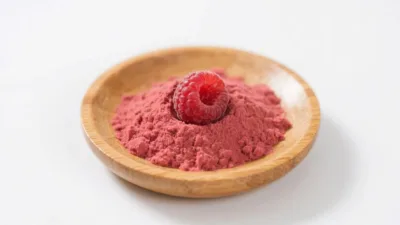
Raspberry Powder
Rich in anthocyanins (delphinidin, cyanidin, pelargonidin glycosides), ellagitannins (including ellagic acid), vitamin C, and…


