
Table of Contents
In today’s health-conscious world, consumers are demanding natural, nutrient-dense, and clean-label ingredients. One ingredient gaining immense popularity among food, beverage, and nutraceutical manufacturers is organic raspberry powder. Whether used for its antioxidant properties, natural color, or sweet-tart flavor, raspberry powder offers a powerful combination of health benefits and functional versatility. Modern shoppers increasingly read ingredient labels and actively avoid synthetic additives, artificial colors, and highly processed sweeteners, which is why formulators are turning to whole-fruit powders that deliver both sensory appeal and measurable nutrition. Raspberries belong to the Rubus genus and are naturally concentrated sources of polyphenols, making them especially attractive for brands that want to make legitimate “high in antioxidants” or “source of vitamin C” positioning claims in the markets where such claims are permitted. For B2B buyers, the appeal goes beyond marketing: a stable, free-flowing powder is far easier to store, transport, and dose than fresh or frozen fruit, and it carries a significantly longer shelf life with none of the cold-chain costs. As a result, organic raspberry powder has moved from a niche bakery inclusion into a mainstream functional-food building block used across beverages, supplements, dairy, and personal care. This article explains the science, the applications, and the procurement considerations that matter when you specify raspberry powder for a commercial product line, so that development and purchasing teams can make confident, evidence-based decisions.
In this article, we’ll explore why organic raspberry powder and organic raspberry juice powder have become essential superfood ingredients for brands looking to create healthier, more appealing products. We will look at the nutritional composition that makes these ingredients functionally valuable, the formulation advantages they bring to clean-label and better-for-you products, the range of industries that already rely on them, and the practical supplier criteria you should evaluate before committing to a bulk contract. Choosing the right fruit powder is rarely just a price decision; it is a decision about sensory consistency, regulatory compliance, supply reliability, and the credibility of your own label. The information below is intended as a practical guide for product developers, procurement managers, and brand owners who need to understand not only what raspberry powder is, but how to use it successfully at commercial scale and how to select a manufacturing partner that can support consistent quality batch after batch. By the end, you should have a clear picture of where raspberry powder fits in your portfolio and what to ask for when you request a quotation.
1. Packed with Essential Nutrients and Antioxidants
Organic raspberry powder is made from carefully selected, ripened organic raspberries that are freeze-dried or spray-dried to preserve their nutritional value. The choice of drying method matters a great deal: freeze-drying, also called lyophilization, operates at very low temperature under vacuum and therefore protects heat-sensitive compounds such as vitamin C and anthocyanins, while spray-drying is generally faster and more economical and is often used for juice-powder grades where solubility is the priority. In both cases the objective is the same — remove water while locking in the fruit’s color, flavor, and bioactive profile so that the finished ingredient performs reliably in a finished product. It is naturally rich in:
- Vitamin C – Supports immune health and collagen production. Raspberries are a meaningful source of vitamin C, also known as ascorbic acid, an essential micronutrient that contributes to normal immune function and to the formation of collagen, the structural protein that supports skin, blood vessels, and connective tissue. In powdered form the vitamin C content is concentrated relative to the fresh fruit on a dry-weight basis, which lets formulators deliver a perceptible nutrient contribution in a small serving size.
- Dietary fiber – Promotes digestive health and satiety. A substantial portion of the raspberry’s mass is insoluble and soluble fiber, including pectin, which survives the drying process and remains available in the powder. Dietary fiber supports regular digestion and can contribute to a feeling of fullness, an attribute that is valuable in meal-replacement shakes, bars, and weight-management products where satiety is a genuine selling point.
- Antioxidants – Including ellagic acid, quercetin, and anthocyanins, which combat free radicals and reduce oxidative stress. Ellagic acid is a polyphenol that occurs naturally in the seeds of raspberries and is studied for its antioxidant and anti-inflammatory activity; quercetin is a flavonoid with similar protective properties; and anthocyanins are the water-soluble pigments responsible for the berry’s deep red color as well as much of its antioxidant capacity. Together these compounds help neutralize reactive oxygen species that would otherwise contribute to cellular oxidative damage over time.
- Natural sugars – Provide mild sweetness without artificial additives. The naturally occurring fructose and glucose in raspberries deliver a rounded, fruit-forward sweetness that can partially replace refined sugar or high-intensity artificial sweeteners in a formulation, helping brands reduce added sugar while keeping a clean ingredient list that shoppers recognize and trust.
Compared to synthetic flavorings, organic raspberry powder delivers real nutrition and authentic fruit-derived benefits. A nature-identical raspberry flavor may mimic the taste, but it contributes nothing nutritionally and often requires “artificial flavor” or “natural flavor” language on the label. A genuine fruit powder, by contrast, is simply dried fruit: it carries the original fiber, vitamins, minerals, and polyphenols, and it lets a brand state real fruit content on pack. For consumers who increasingly distrust ambiguous “flavor” declarations, that transparency is a competitive advantage. The trade-off is that real fruit powders are more variable in color and taste from harvest to harvest, which is precisely why working with a supplier that standardizes and batches its material through specification and blending is important for predictable manufacturing.
2. Ideal for Clean-Label and Functional Foods
With growing demand for clean-label products, food and beverage brands are turning to organic raspberry powder as a natural ingredient that satisfies consumer preferences. Clean label is no longer a niche trend but a baseline expectation in many categories, and fruit powders answer it directly because the ingredient name itself is recognizable and trustworthy to the average shopper. It is:
- 100% natural and certified organic. Because the product is made only from organically farmed raspberries with no added carriers, fillers, or synthetic processing aids, it qualifies for organic positioning and resonates with buyers who specifically seek certified-organic SKUs for their own product lines.
- Free from artificial flavors, colors, and preservatives. The red color comes from the fruit’s own anthocyanins rather than from added dyes such as carmine or synthetic colorants, and the flavor comes from the fruit rather than from chemical flavorings, which removes several of the most consumer-rejected additives from your recipe.
- Vegan, gluten-free, and non-GMO. Raspberry powder contains no animal-derived ingredients, is inherently free of gluten, and can be supplied as verified non-GMO, making it compatible with vegan, gluten-free, and non-GMO product claims and the certifications that support them.
- Suitable for keto, paleo, and plant-based diets. With a moderate carbohydrate load dominated by fiber and naturally occurring sugars, and with no grains or animal products, the powder fits comfortably within ketogenic, paleo, and plant-based dietary frameworks, widening the addressable audience for finished products without reformulation headaches.
Whether you’re formulating functional beverages, protein shakes, nutritional bars, or dietary supplements, organic raspberry powder helps your product stand out in a competitive market. Its recognizable fruit identity gives marketers an immediate story — real berries, real nutrition — while its technical properties give developers a workable ingredient: a fine, free-flowing powder that disperses readily, tolerates standard mixing and extrusion processes, and survives typical shelf-life conditions without the refrigeration that whole fruit demands. For protein shakes and nutritional bars in particular, the combination of natural color, mild tartness, and fiber is difficult to achieve with single-purpose additives, which is why raspberry powder frequently appears as a hero ingredient rather than a minor one in better-for-you formulations.
3. Multiple Applications Across Industries
Organic raspberry powder and organic raspberry juice powder are incredibly versatile. Their compatibility with both dry and wet systems means the same ingredient can appear in a bakery mix, a stick-pack instant drink, a tablet, and a serum, which simplifies sourcing and documentation for multi-category brands. They can be used across multiple industries:
- Food & Beverages – Smoothies, yogurts, bakery items, jams, confectionery. In these applications the powder contributes authentic berry taste, natural red pigmentation, and a clean fruit claim; in yogurt and smoothies it also adds visible fruit specks that signal real fruit content to the consumer at the point of purchase.
- Nutraceuticals – Capsules, tablets, powders, and gummies. The concentrated nutrient and polyphenol profile makes raspberry powder suitable as a standalone supplement or as part of a berry-blend formula, and its natural origin supports the “whole food” positioning that many supplement buyers prefer over isolated synthetics.
- Sports Nutrition – Pre-workout and recovery blends. Antioxidants and natural fruit sugars can support recovery narratives, while the bright flavor helps mask the bitterness of amino acids and other actives commonly found in sports formulations, improving the overall drink experience.
- Functional Drinks – Ready-to-drink beverages, teas, and instant drink mixes. Here the juice-powder grade is especially useful because of its fast solubility and intense color, allowing a vibrant red drink with minimal dosing and a clean formulation that appeals to label-conscious consumers.
- Cosmetics & Personal Care – Natural raspberry extract is used in skincare formulations for its antioxidant benefits. The same polyphenol content that protects the fruit also interests formulators of creams and serums seeking plant-derived antioxidants, and the powder can be incorporated into masks, scrubs, and color cosmetics for both function and natural tint.
Its bright color, rich aroma, and natural sweetness make it a premium choice for product innovation. Beyond the individual attributes, the ingredient reads as indulgent yet wholesome — a rare combination that lets brands charge a premium while still meeting better-for-you expectations. The visual signal of real fruit, in particular, does quiet marketing work on the shelf and on the screen, where color is often the first thing a shopper notices before they ever read a claim or a price.
4. Organic Raspberry Juice Powder: Concentrated Flavor and Color
For manufacturers seeking a more intense raspberry profile, organic raspberry juice powder offers concentrated flavor, aroma, and color. Where whole-fruit powder contains seed, skin, and fiber, juice powder is produced from the pressed juice and therefore delivers a cleaner, more soluble, and more concentrated berry expression with less particulate matter — ideal when clarity, speed of dissolution, or a purer taste are the priority in the finished application.
- Provides vibrant red hues for beverages and confectionery. The juice grade carries a higher anthocyanin density per gram than the whole-fruit powder, so a smaller dose yields a more saturated red, which is useful for drinks, gummies, and coated confections where color impact matters most.
- Enhances taste and aroma without synthetic additives. Because the flavor is derived entirely from the fruit, brands avoid artificial raspberry flavorings while still achieving a recognizable, consistent taste that survives processing and storage across distribution channels.
- Perfect for instant drink formulations where fast solubility is essential. The fine, low-fiber nature of the juice powder means it dissolves quickly in cold or ambient water with minimal sedimentation, supporting stick packs, instant teas, and ready-to-mix beverage systems that consumers expect to prepare in seconds.
By combining organic raspberry powder with organic raspberry juice powder, you can balance nutrition and flavor intensity for maximum consumer appeal. Many developers use the whole-fruit powder as the nutritional and fiber backbone and the juice powder as the flavor and color booster, tuning the ratio to hit both a specific nutrient target and a specific sensory profile. This layered approach gives precise control over cost, taste, and label claims within a single fruit system, and it lets a brand move from a subtle “contains real fruit” statement to a bold “raspberry-forward” identity depending on the segment it is targeting.
5. Why Choose ORGANICWAY as Your Supplier
At ORGANICWAY, we specialize in providing high-quality organic raspberry powder and organic raspberry juice powder sourced from certified organic farms. We work with growers and processors who follow documented organic practices from field to finished goods, and we maintain traceability so that each lot can be linked back to its origin — a requirement that matters for both regulatory compliance and brand protection. Our strict production standards ensure:
- USDA & EU Organic Certifications. Our materials carry recognized organic certifications that enable compliant labeling in major markets, reducing the documentation burden on your own quality team and accelerating your time to launch.
- Non-GMO and allergen-free products. We verify that our raspberry powders are non-GMO and free from common allergens, and we can provide the supporting specifications and statements that your compliance function will require for audits and customer questionnaires.
- Advanced drying technology to preserve nutrients and natural color. Our processing is selected to protect heat- and oxygen-sensitive compounds, so the finished powder retains the vitamin C, anthocyanins, and aroma that define a premium raspberry ingredient rather than a commodity one.
- Bulk supply with consistent quality and competitive pricing. We supply at commercial scale with batch-to-batch standardization, and our pricing is structured to support both pilot runs and ongoing production volumes so that innovation and scale-up are both practical.
We are committed to helping global food, beverage, and nutraceutical brands develop innovative, natural, and healthy products. From initial sampling and specification matching through to steady-state supply, our team supports formulators with the technical information and reliable logistics needed to move from concept to shelf with confidence, and we treat documentation accuracy as part of the product rather than an afterthought.
6. Start Your Product Innovation Today
Whether you’re a manufacturer of functional drinks, dietary supplements, or healthy snacks, incorporating organic raspberry powder and organic raspberry juice powder can help your brand stand out and meet consumer demand for natural, clean-label products. The ingredient aligns with several of the strongest currents in the food and supplement market at once — clean label, plant-based, functional nutrition, and permissible indulgence — which makes it a comparatively low-risk way to modernize an existing line or to anchor a new one. Early engagement with a knowledgeable supplier also shortens development time, because specification, sampling, and stability testing can begin in parallel with your own formulation work instead of waiting until a prototype is finished.
Contact us today to request a free sample and explore bulk pricing options. Our specialists will help you select the right raspberry powder grade for your application, provide full specifications and certificates, and outline a supply plan that fits your production timeline and volume requirements, so you can move from idea to commercial product with a partner you can rely on.
Recommended Products
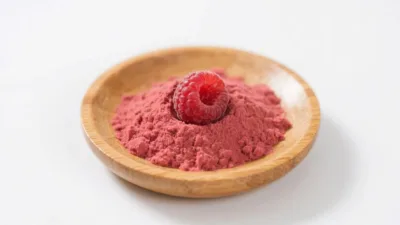
Raspberry Powder
Rich in anthocyanins (delphinidin, cyanidin, pelargonidin glycosides), ellagitannins (including ellagic acid), vitamin C, and…


