Table of Contents
What is Organic Trehalose Powder?
Organic Trehalose occupies a unique position across both the food ingredient and pharmaceutical excipient markets because it solves a problem that no other common sugar or polyol can address with the same mechanism: the preservation of biological and chemical structures under extreme physical stress. The mechanism — vitrification — is the formation of a highly viscous, amorphous glass around a target molecule during dehydration or temperature stress. This glassy matrix immobilises the target molecule, preventing the conformational changes, aggregation, and oxidation that cause protein denaturation, enzyme inactivation, probiotic cell death, and volatile flavour loss during freeze-drying, spray-drying, and high-temperature processing. Trehalose’s glass transition temperature (Tg ≥120°C, DSC-verified) is among the highest of any food-grade stabiliser, meaning its protective glass matrix remains solid and protective across a wider processing temperature range than sucrose, lactose, or maltodextrin.
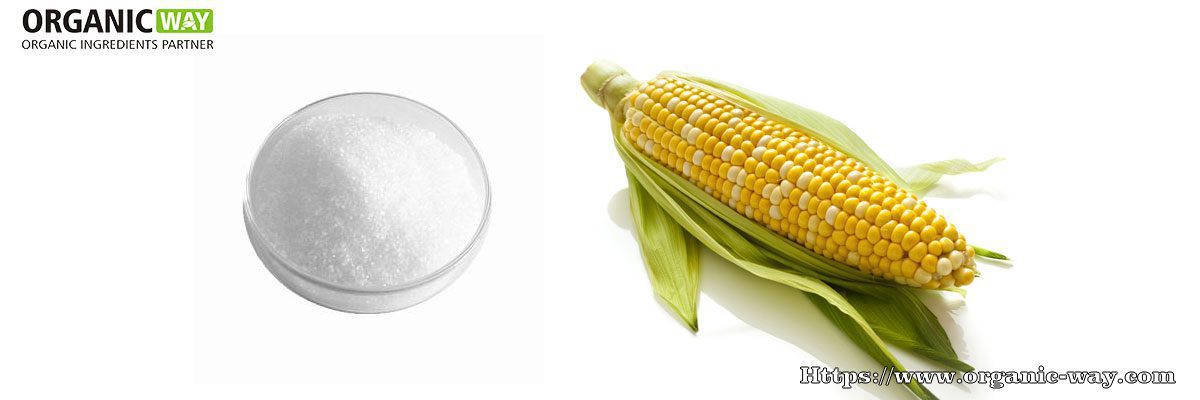
ORGANICWAY supplies trehalose in two grades reflecting distinct application requirements. Food Grade Organic Trehalose (≥98% purity by HPLC, particle size D90 ≤150 µm) addresses the food, beverage, nutraceutical, and cosmetic sectors, where its applications range from ice crystal inhibition in plant-based ice cream, to moisture retention in baked goods, to protein and probiotic stabilisation in functional food formulations. Pharma Grade Organic Trehalose (≥99.5% purity, D90 ≤50 µm, stricter heavy metal limits: Pb <0.05 ppm, As <0.1 ppm) meets the purity, particle size, and contamination requirements of pharmaceutical and biopharmaceutical applications: lyophilised vaccine stabilisation, enzyme and antibody excipient formulation, diagnostic reagent buffers, and cell culture media. Both grades share the same organic certified feedstock (cassava or corn starch), the same enzymatic conversion process without solvents, and the same documented 68 g/100 ml solubility at 20°C.
The food applications of trehalose leverage three distinct functional properties beyond stabilisation. First, its sweetness profile — 45% of sucrose’s sweetness, with no aftertaste and no cooling effect — enables use as a partial sucrose replacer in clean-label formulations where the clean, non-interfering sweetness of trehalose is preferred over the metallic or bitter off-notes of high-intensity sweeteners. Second, its Maillard reaction retardation: trehalose resists browning at lower temperatures than sucrose or glucose, making it a valuable tool for formulators seeking to extend the colour stability of baked goods, dairy products, and processed foods without artificial antioxidants. Third, its prebiotic potential: at 5–10% concentration, trehalose selectively feeds bifidobacteria, supporting a positioning bridge between its clean-label sweetener role and the functional prebiotic ingredients category.
PHYSICAL & CHEMICAL SPECIFICATIONS
Product Specifications
| Parameter | Food Grade | Pharma Grade |
|---|---|---|
| Appearance | White crystalline powder | White crystalline powder |
| Source | Organic cassava / corn starch | Organic cassava / corn starch |
| Processing | Enzymatic conversion (solvent-free) | Enzymatic conversion (solvent-free) |
| Purity | ≥98% (HPLC) | ≥99.5% (HPLC) |
| Moisture | ≤1.0% | ≤0.5% |
| Ash | ≤0.05% | ≤0.02% |
| pH (20% solution) | 5.0–7.0 | 5.0–6.5 |
| Particle Size D90 | ≤150 µm | ≤50 µm |
| Solubility | 68 g/100 ml water (20°C) | 68 g/100 ml water (20°C) |
| Glycemic Index (GI) | 65 (medium) | 65 (medium) |
| Caloric Value | 4 kcal/g | 4 kcal/g |
| Sweetness | ~45% of sucrose; no aftertaste | ~45% of sucrose; no aftertaste |
| pH Stability | Stable pH 3–10 | Stable pH 3–10 |
| Heat Stability | ≤150°C | ≤150°C |
| Glass Transition Temp (Tg) | ≥120°C (DSC) | ≥120°C (DSC) |
| Heavy Metals — Lead (Pb) | <0.1 ppm | <0.05 ppm |
| Heavy Metals — Arsenic (As) | <0.5 ppm | <0.1 ppm |
| Residual Enzyme | Not detected (HPLC-MS) | Not detected (HPLC-MS) |
| Aflatoxin B1 | <1 ppb | <1 ppb |
| Total Plate Count | <1,000 cfu/g | <100 cfu/g |
| Packaging | 25 kg multi-layer kraft paper bags | 25 kg multi-layer kraft paper bags |
| Shelf Life | 36 months | 36 months |
Application Matrix
| Application | Food Grade | Pharma Grade | Notes |
|---|---|---|---|
| Freeze-dried probiotic powders | Excellent | Excellent | Vitrification protects live cells during lyophilisation |
| Lyophilised vaccine stabilisation | Available | Recommended | Pharma Grade: stricter purity and particle size |
| Enzyme and antibody excipients | Available | Recommended | Pharma Grade: USP/EP/JP pharmacopoeia compliance |
| Plant-based ice cream | Excellent | — | Ice crystal inhibition; creamy mouthfeel |
| Baked goods moisture retention | Excellent | — | Extends shelf life; delays staling |
| Maillard reaction control | Excellent | — | Delays browning vs sucrose or glucose |
| Spray-dried flavour encapsulation | Excellent | Available | Locks volatile aromatics during drying |
| Functional beverages and RTD | Excellent | — | Clean sweetness; pH 3–10 stable |
| Sugar-free confectionery | Excellent | — | Non-cariogenic; no aftertaste |
| Cosmetic moisturisers and serums | Excellent | Available | Humectant; water activity management |
| Oral rehydration solutions | Available | Excellent | Clean sweetness; pharma compliance |
| Diagnostic reagent buffers | — | Excellent | Protein stabilisation in assay systems |
| Cell culture media additives | — | Excellent | Osmotic balance; cell cryoprotection |
MICROBIOLOGICAL & CONTAMINANT STANDARDS
| Test | Food Grade | Pharma Grade |
|---|---|---|
| Total Plate Count | <1,000 cfu/g | <100 cfu/g |
| Yeast & Mould | ≤100 cfu/g | ≤10 cfu/g |
| E. coli | Negative / g | Negative / g |
| Salmonella | Negative / 25 g | Negative / 25 g |
| Lead (Pb) | <0.1 ppm | <0.05 ppm |
| Arsenic (As) | <0.5 ppm | <0.1 ppm |
| Cadmium / Mercury | ICP-MS tested; below EU/USP limits | ICP-MS tested; below EU/USP limits |
| Aflatoxin B1 | <1 ppb | <1 ppb |
| Residual Enzyme | Not detected (HPLC-MS) | Not detected (HPLC-MS) |
| Pesticide Residues | Below EU ML / USDA-NOP limits | Below EU ML / USDA-NOP limits |
| Gluten | <20 ppm | <20 ppm |
Heavy metals verified by ICP-MS. Residual enzyme absence verified by HPLC-MS. Full CofA available with every shipment. Pharma Grade complies with USP, EP, and JP pharmacopoeia specifications.
CERTIFICATIONS
| Certification | Status |
|---|---|
| USDA Organic | Yes |
| EU Organic | Yes |
| Non-GMO Project Verified | Yes |
| Kosher | Yes |
| Halal | Yes |
| Vegan | Yes |
| Gluten-Free | Yes |
| USP / EP / JP Compliance | Pharma Grade |
APPLICATIONS & FORMULATION TIPS
Key Functional Benefits
Organic Trehalose’s three most significant functional advantages are its vitrification-based molecular protection mechanism, its exceptional chemical stability across pH 3–10 and temperatures up to 150°C, and its clean non-cariogenic sweetness profile with no aftertaste. The vitrification mechanism is trehalose’s defining property and the reason it is irreplaceable in lyophilisation and freeze-drying applications: trehalose’s high glass transition temperature (Tg ≥120°C) means its protective glassy matrix remains intact across a wider processing temperature range than any common sugar alternative, protecting proteins, live probiotic cells, enzymes, vaccines, and volatile flavour compounds from denaturation, aggregation, and loss during the most thermally and mechanically demanding steps of manufacturing. This property is not shared by sucrose (Tg ~67°C), maltodextrin, or most polyols, making trehalose the technically necessary excipient for high-value biological and nutraceutical formulations that require freeze-dried or spray-dried delivery formats.
Formulation Guidance
For freeze-dried probiotic formulations, trehalose is typically used at 5–20% of the total dry weight of the formulation; the exact ratio depends on the probiotic strain’s freeze-drying sensitivity, but a starting ratio of 1:1 trehalose to probiotic biomass (dry weight) is a common industry baseline. For spray-dried flavour encapsulation, trehalose at 10–30% of the wall material mixture significantly reduces volatile loss compared to maltodextrin-only systems, particularly for heat-sensitive aromatics (citrus, mint, berry). For baked goods moisture retention, trehalose at 2–5% of total flour weight meaningfully extends shelf-life freshness by binding free water and retarding starch retrogradation; it simultaneously delays Maillard browning, which is a specific advantage in products where premature colour development is undesirable. For ice cream and frozen dessert applications, trehalose at 2–8% of total sugar content inhibits ice crystal growth during freeze-thaw cycles, improving texture consistency and reducing iciness in plant-based and reduced-sugar frozen products.
FAQ
Q: How does trehalose compare to sucrose as a sweetener and stabiliser?
A: Trehalose delivers approximately 45% of sucrose’s sweetness with no aftertaste, no cooling effect, and no off-notes — making it a clean, non-interfering sweetener that enhances rather than competes with other flavour components. Calorically, trehalose matches sucrose at 4 kcal/g, so it is not a reduced-calorie sweetener; its advantages are functional and health-related rather than caloric. As a stabiliser, trehalose is substantially superior to sucrose: its glass transition temperature (Tg ≥120°C) is nearly double that of sucrose (Tg ~67°C), meaning that in freeze-drying and spray-drying applications, trehalose’s protective glass matrix remains intact at processing temperatures where sucrose would already be in a rubbery or mobile state and lose its protective function. Trehalose also resists hydrolysis at pH 3–10 and temperatures up to 150°C, whereas sucrose hydrolyses readily in acidic conditions to invert sugar (glucose + fructose), changing the formulation’s sweetness, stability, and browning behaviour.
Q: Is trehalose safe for people with diabetes or blood sugar management concerns?
A: Trehalose has a glycemic index of 65, placing it in the medium GI category — meaningfully lower than sucrose (GI ~65–70 depending on the source) but not a low-GI ingredient in the strict sense. Trehalose is metabolised by the enzyme trehalase in the small intestine, which cleaves it into two glucose molecules; therefore, it does contribute to blood glucose. Its practical advantage for blood sugar management relative to sucrose is its slower rate of hydrolysis and absorption — it releases glucose more gradually than sucrose, producing a more moderate post-prandial glucose and insulin response. For individuals managing diabetes, trehalose is not a substitute for low-GI or non-glycaemic sweeteners; it is best positioned as a moderately better-managed alternative to sucrose when clean label, protein stabilisation, or non-cariogenic properties are the primary formulation drivers. As always, individuals should monitor their own glucose response and consult a healthcare practitioner.
Q: What makes trehalose essential for freeze-drying (lyophilisation) applications?
A: During freeze-drying, biological materials — proteins, live probiotic cells, vaccines, enzymes, antibodies — are exposed to extreme dehydration and ice crystal formation that would normally cause irreversible structural damage. Trehalose protects against this through two complementary mechanisms. First, its vitrification: as water is removed, trehalose forms a highly viscous amorphous glass around the biological target, physically immobilising it and preventing the molecular mobility that leads to denaturation, aggregation, and loss of activity. Second, water replacement: trehalose’s hydroxyl groups can substitute for water molecules in the hydration shell around proteins and membranes, maintaining their native three-dimensional structure even in the near-anhydrous state of the finished lyophilisate. The Pharma Grade’s ≥99.5% purity and D90 ≤50 µm particle size ensure uniform dissolution in the pre-freeze-drying solution and compliance with USP, EP, and JP pharmacopoeia specifications for excipient use in registered pharmaceutical products.
Q: What is the difference between Food Grade and Pharma Grade, and how do I choose?
A: Both grades share the same certified organic feedstock, the same enzymatic conversion process, and the same functional chemistry. The differences are purity and particle specifications. Food Grade (≥98% HPLC, D90 ≤150 µm) satisfies all food, beverage, nutraceutical, and cosmetic applications; it is the appropriate and cost-effective choice for the vast majority of food manufacturing uses. Pharma Grade (≥99.5% HPLC, D90 ≤50 µm) meets the stricter purity, particle size, heavy metal, and microbiological requirements of pharmaceutical and biopharmaceutical applications where the product will be used as a registered excipient in drug formulations, diagnostic reagents, cell culture systems, or any use case governed by USP/EP/JP pharmacopoeia standards. If your application involves a registered pharmaceutical product, a clinical-grade supplement, or a biopharmaceutical formulation, Pharma Grade is required. For all other applications, Food Grade is the appropriate selection.
Q: Does trehalose have any allergen or safety concerns?
A: Organic Trehalose is produced in dedicated facilities free from the top 14 food allergens (EU) and the major 8 allergens (FDA), and contains no gluten, soy, dairy, tree nuts, or shellfish. It is Kosher and Halal certified. The only known safety consideration specific to trehalose is a rare genetic condition called trehalase deficiency, in which individuals lack the intestinal enzyme to hydrolyse trehalose; this condition occurs in approximately 0–9% of Northern European populations and results in gastrointestinal discomfort when trehalose is consumed. This condition is extremely rare and has no safety implications for the general population. Trehalose has GRAS (Generally Recognised As Safe) status in the United States and Novel Food approval in the EU (Regulation EC 258/97 successor framework), confirming its safety for the general population at typical food-use levels.
Q: What is the minimum order quantity and lead time?
A: A 1 kg free sample with full CofA is available for qualifying buyers via FEDEX, UPS, or EMS. Commercial orders start at 25 kg per grade (Food Grade and Pharma Grade can be ordered separately or combined). Private label orders require 100 kg minimum per grade. Lead time: 10–20 working days from order confirmation. Standard packaging: 25 kg multi-layer kraft paper bags, 40 bags per pallet. Shipping from Qingdao or Tianjin; FOB, DAP, and DDP terms available. Accepted payment methods: T/T, L/C, D/P, D/A, MoneyGram, Western Union, Credit Card.
PACKAGING & STORAGE
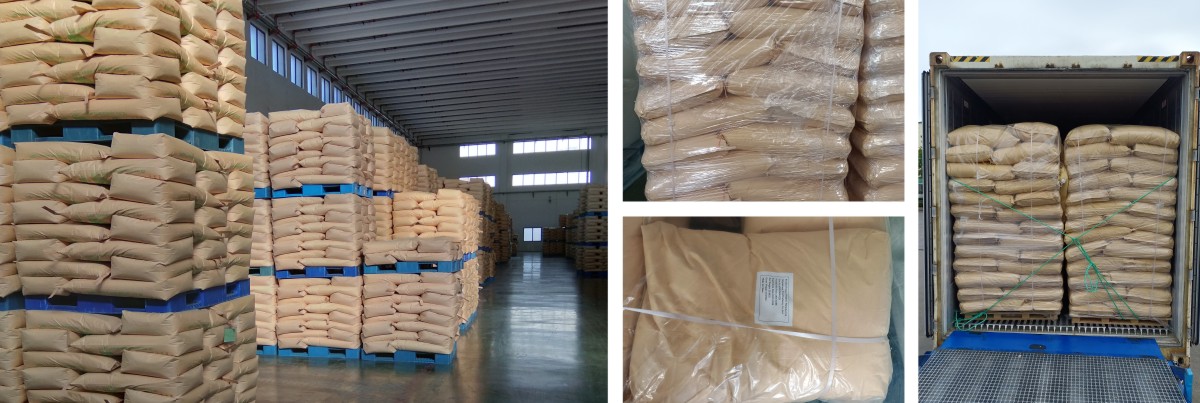
Packaging
| Format | Standard Packaging | Custom Options |
|---|---|---|
| Food Grade Powder | 25 kg multi-layer kraft paper bags; 40 bags/pallet | 5 / 10 / 20 kg bags; fiber drums; IBC super sacks; branded packaging for private label |
| Pharma Grade Powder | 25 kg multi-layer kraft paper bags; 40 bags/pallet | Custom pharma-compliant packaging; double-lined drums; documented chain-of-custody |
Storage Conditions
| Parameter | Food Grade | Pharma Grade |
|---|---|---|
| Temperature | ≤25°C (cool, dry) | ≤25°C (cool, dry) |
| Humidity | <60% RH; moisture-proof packaging | <50% RH; moisture-proof packaging |
| Light | Away from direct sunlight | Away from direct sunlight |
| Odour | Keep away from strong odours | Keep away from strong odours |
| Shelf Life (sealed) | 36 months | 36 months |
| Opened Packaging | Reseal tightly; use within 6 months | Transfer to airtight secondary container; use within 3 months |