Table of Contents
What’s rice starch?
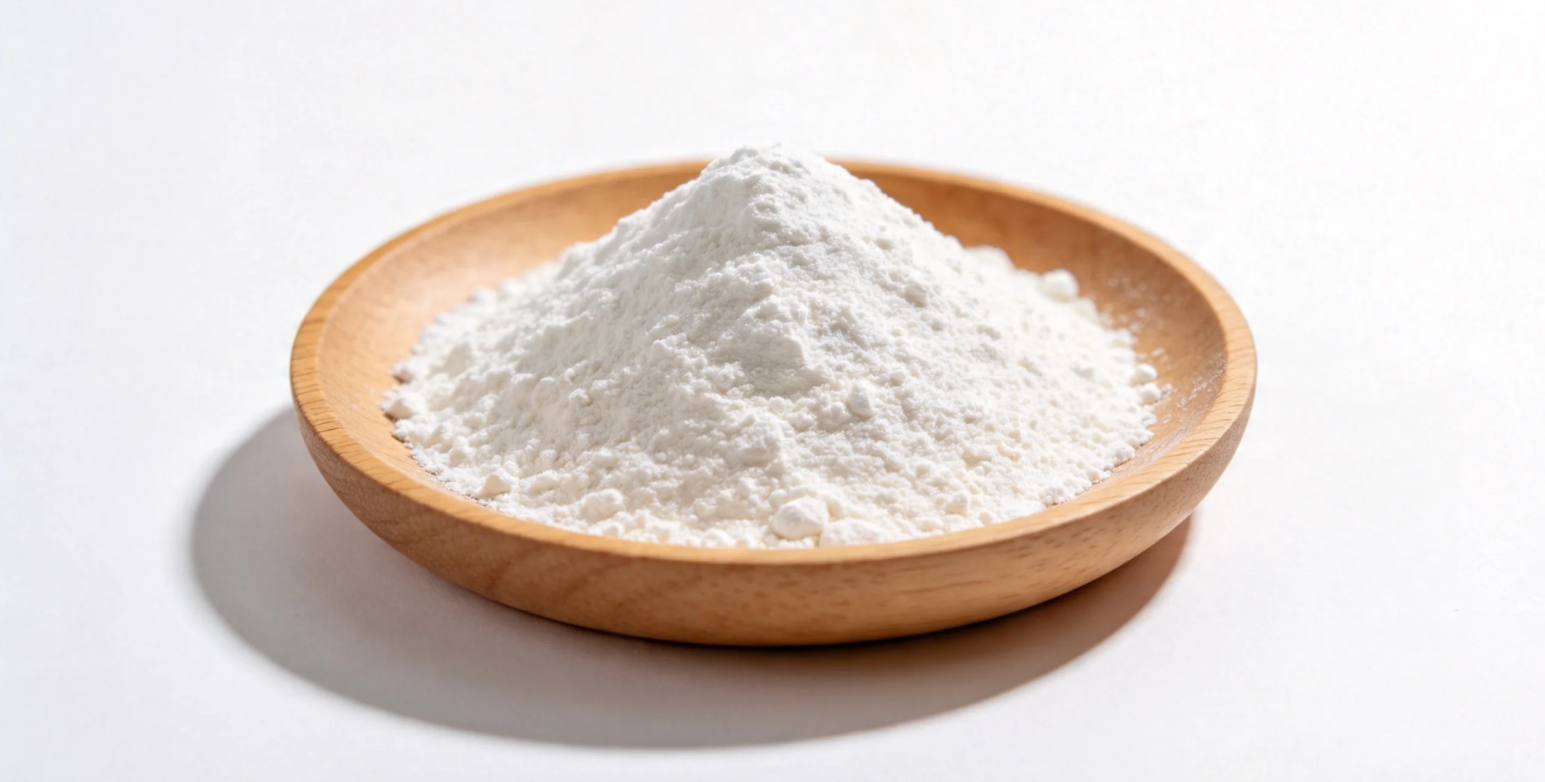
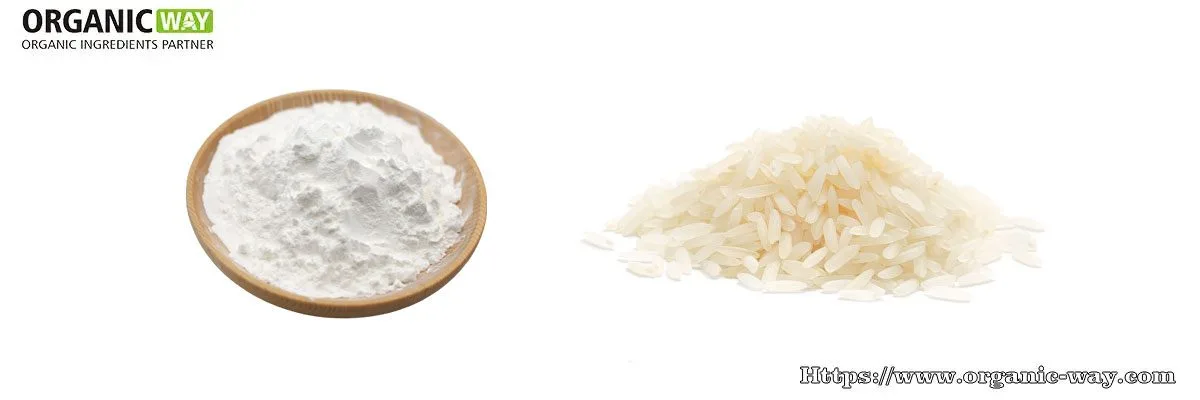
Rice Starch is a premium-grade functional ingredient sourced exclusively from rice (Oryza sativa). Extracted using traditional physical separation processes — no chemicals, no solvents — our starch preserves the natural integrity of the rice grain while meeting the most stringent clean-label demands in the industry.
The product presents as a fine white powder with a remarkably consistent particle size of 5–50 µm — significantly finer and more uniform than corn starch (~10–30 µm, broader distribution) or potato starch (15–100 µm, large and variable). This fine, uniform particle profile translates directly into superior smoothness in final formulations, eliminating the gritty mouthfeel that plagues coarser starches and making it the preferred choice for sensitive-skin cosmetics, infant formulas, and premium food textures.
In terms of functional performance, Rice Starch offers a distinct gelatinization profile: it disperses readily in cold water without clumping, then thickens upon heating. This makes it ideal for cold-mix applications such as salad dressings and cold-process sauces, as well as hot-process products including soups, gravies, and puddings. Compared to corn starch — which requires a cooked paste for full thickening — rice starch provides more immediate viscosity development and a smoother, creamier mouthfeel with less texture retrogradation (syneresis) upon cooling.
One of the standout advantages of Rice Starch is its exceptionally low allergenicity. Rice is one of the least allergenic grains globally, making this starch suitable for hypoallergenic formulas, sensitive-skin cosmetics, baby food, and clinical nutrition products where wheat, corn, or soy starches would pose a risk. Combined with its plant-based, vegan, and grain-free positioning, Rice Starch opens doors to clean-label formulations across every category.
Functional benefits extend beyond basic thickening: Rice Starch reduces syneresis in gelled products, improves freeze-thaw stability in frozen desserts, and contributes a smooth, non-gritty texture in gluten-free baked goods. In gluten-free flour blends, replacing 5–15% of starchy flour with rice starch improves crumb softness and reduces crumbling — making it an essential backbone for retail and foodservice gluten-free programs.
In cosmetics and personal care, Rice Starch is widely used as a natural powder base in loose setting powders, face creams, body lotions, and baby care products. Its small particle size (5–50 µm) creates a silky-smooth skin feel without the heavy or cakey effect of larger-particle minerals. Its natural moisture-absorption affinity also helps control shine and set makeup without clogging pores — a key advantage in clean beauty formulations phasing out synthetic alternatives.
Quality is assured at every step: ISO22000/HACCP certified manufacturing, rigorous microbiological and heavy metal testing, and full traceability from rice field to finished powder. Each batch is analyzed for moisture, ash, particle size, and pH before release.
Certifications: Non-GMO Project Verified · Kosher · Halal · ISO22000/HACCP · Vegan · Gluten-Free · Grain-Free
Physical & Chemical Specifications
Product Specifications
| Parameter | Specification |
|---|---|
| Source | Rice (Oryza sativa) |
| Appearance | Fine white powder |
| Moisture | ≤ 12% |
| Ash | ≤ 0.5% |
| Particle Size | 5–50 µm |
| pH (10% slurry) | 6.0–7.0 |
| Solubility | Dispersible in cold water; gelatinizes in hot water |
| Shelf Life | 24 months |
| Packaging | 25 kg kraft drums · fiber drums · customized packaging |
Comparison: Rice Starch vs. Common Food Starches
| Parameter | Rice Starch | Corn Starch | Potato Starch |
|---|---|---|---|
| Particle Size | 5–50 µm (fine, uniform) | 10–30 µm (moderate) | 15–100 µm (large, variable) |
| Cold-Water Dispersibility | Excellent | Poor | Moderate |
| Gelatinization Temperature | Moderate | High | Low |
| Texture | Smooth, silky, non-gritty | Moderately smooth | Slightly gritty |
| Allergenicity | Very low | Moderate | Low |
| Gluten-Free | Yes (rice-based) | Yes | Yes |
| Freeze-Thaw Stability | Good | Good | Poor |
| Syneresis (Weeping) | Low | Moderate | High |
Application Dosage Reference
| Application | Suggested Usage Level |
|---|---|
| Sauces & Gravies | 2–6% |
| Soups & Broths | 1–4% |
| Puddings & Desserts | 3–8% |
| Gluten-Free Baking | 5–15% of flour blend |
| Salad Dressings (cold-mix) | 0.5–3% |
| Cosmetics / Personal Care | 1–10% (formulation-dependent) |
Microbiological & Contaminant Standards
| Test Item | Specification |
|---|---|
| Total Plate Count (TPC) | ≤ 10,000 cfu/g |
| Yeast & Mould | ≤ 500 cfu/g |
| Coliforms | ≤ 100 cfu/g |
| E. coli | Negative |
| Salmonella | Negative |
| Heavy Metals (Lead) | ≤ 0.1 ppm |
| Heavy Metals (Arsenic) | ≤ 0.05 ppm |
| Aflatoxins | ≤ 4 ppb (total) |
| Pesticide Residues | Not detected |
Certifications
| Certification | Status |
|---|---|
| Non-GMO Project Verified | ✓ |
| Kosher | ✓ |
| Halal | ✓ |
| ISO 22000 | ✓ |
| HACCP Compliant | ✓ |
| Vegan | ✓ |
| Gluten-Free | ✓ |
| Grain-Free | ✓ |
Applications & Formulation Guidelines
Application Matrix
| Category | Applications | Formulation Notes |
|---|---|---|
| Sauces & Dressings | White sauces, gravies, mayonnaise-type dressings, vinaigrettes | Cold-dispersible; heat to gelatinize; use 2–6% for medium viscosity |
| Soups & Broths | Cream soups, chowders, broth-based soups | Pre-disperse in cold water before adding to hot liquid; prevents lumping |
| Desserts & Puddings | Rice puddings, custard-style desserts, gelled desserts | 3–8%; lower syneresis than corn or potato starch |
| Gluten-Free Baking | Bread, muffins, cookies, pancake mixes | 5–15% in flour blend; improves crumb softness; combine with xanthan gum |
| Beverages | Smoothies, nutritional drinks, meal replacements | Fine particle size creates smooth mouthfeel without grittiness |
| Frozen Desserts | Ice cream bases, frozen yogurts, sorbets | Good freeze-thaw stability; reduces ice crystal growth |
| Cosmetics | Loose setting powder, face creams, body lotions, baby care | Silky skin feel (5–50 µm particles); absorbs excess oil; low allergenicity |
| Personal Care | Baby powder, diaper rash creams, sensitive-skin formulations | Hypoallergenic base; plant-derived; gentle on skin |
| Functional Foods | Nutritional supplement powders, RTD nutrition shakes | Neutral flavor; disperses easily; suitable for medical nutrition |
Key Functional Benefits
| Benefit | Mechanism |
|---|---|
| Smooth, Non-Gritty Texture | Fine 5–50 µm particles; smaller and more uniform than corn or potato starch |
| Cold-Water Dispersibility | Pre-hydrates in cold water without clumping; ideal for cold-mix applications |
| Low Allergenicity | Rice is one of the least allergenic grains; suitable for hypoallergenic and infant formulas |
| Reduced Syneresis | Lower weeping than potato or corn starch in gelled systems |
| Freeze-Thaw Stability | Maintains gel structure through freeze-thaw cycles |
| Clean Label | Single ingredient: Rice Starch; no modifiers or additives required |
| Neutral Flavor | Does not impart taste; preserves delicate flavor profiles |
Synergy Tips
In Cosmetics: Pair with kaolin or silica for high-performance loose powders with superior oil absorption and silky skin feel.
With Xanthan Gum (GF Baking): Combine 5–15% rice starch with 0.5–1% xanthan gum in gluten-free flour blends to replicate viscoelastic network typically provided by gluten.
With Carrageenan (Dairy Alternatives): Works synergistically with kappa-carrageenan in plant-based dessert gels for improved texture.
With Lecithin (Beverages): Pre-hydration in cold water prevents clumping before adding to protein or lipid-based beverage matrices.
FAQ
Q: What is the difference between rice starch and corn starch?
A: Rice starch has a finer, more uniform particle size (5–50 µm) that delivers a noticeably smoother, non-gritty texture compared to corn starch (~10–30 µm with broader distribution). Rice starch also disperses readily in cold water without heating — a significant advantage over corn starch, which typically requires a cooked paste for full thickening. In terms of thickening power, corn starch is marginally stronger, but rice starch excels in cold-mix and sensitive-skin formulations where its very low allergenicity is a decisive advantage.
Q: Can rice starch be used in gluten-free products?
A: Absolutely. Extracted from rice, it is naturally free of wheat, barley, and rye. In gluten-free baking, we recommend using 5–15% of rice starch in flour blends — it significantly improves crumb softness and reduces crumbling. It is an essential backbone ingredient in retail and foodservice gluten-free programs, combining seamlessly with other gluten-free flours and hydrocolloids such as xanthan gum.
Q: Is rice starch suitable for cosmetics and personal care products?
A: Yes, it is highly suitable. The fine 5–50 µm particle size creates a silky, smooth skin feel in loose setting powders, face creams, body lotions, and baby care products. It absorbs excess oil without clogging pores — an important advantage in clean beauty formulations. Its very low allergenicity makes it particularly appropriate for sensitive-skin and baby care lines where synthetic ingredients or higher-allergen alternatives would be unacceptable.
Q: How should rice starch be stored?
A: Store in a cool (u0026lt;25°C), dry, and dark location. Keep sealed at all times to prevent moisture absorption and flavor contamination. Rice starch is hygroscopic and can absorb odors from surrounding products — airtight packaging and a sealed container after each use are essential. Under proper storage conditions, shelf life is 24 months from the production date.
Q: Can rice starch be used in cold water without heating?
A: Yes — this is one of its key functional advantages. Unlike corn starch, rice starch disperses readily in cold water without clumping, then thickens as it heats to gelatinization temperature. This makes it ideal for cold-mix applications such as salad dressings, cold-process sauces, and ready-to-drink beverages — without requiring heating equipment or cookers.
Q: How does the 5–50 µm particle size affect performance?
A: The fine, uniform particle size of 5–50 µm delivers three key advantages: (1) Extremely high surface area → rapid hydration → fast dispersion in cold water without high-shear mixing. (2) Large specific surface area → forms a uniform gel network upon gelatinization → smooth, non-gritty mouthfeel. (3) Consistent particle distribution → high batch-to-batch consistency → reliable texture in food products and silky skin feel in cosmetics. In contrast, potato starch’s larger particles (15–100 µm) frequently cause grittiness in finished products.
Q: What are the MOQ and shipping options?
A: Sample: 1 kg free of charge (FedEx / UPS / EMS). Standard batch: 25 kg per kraft or fiber drum. Private label: 100 kg minimum. Lead time: 10–20 business days. Shipping from Qingdao or Tianjin ports, China. DDP delivery available worldwide. In-stock and ready to ship — samples and PDF specification sheets available on request.
Packaging & Storage
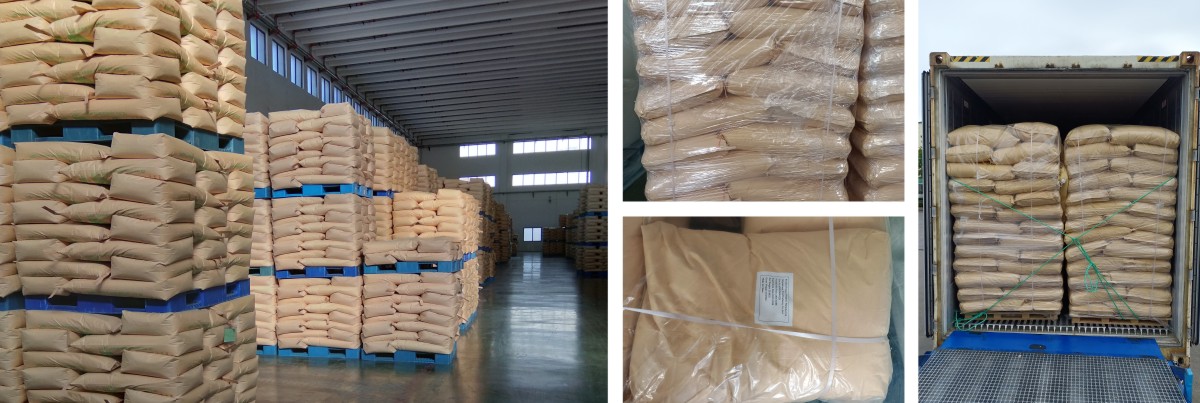
Packaging Specifications
| Package Type | Net Weight | Material |
|---|---|---|
| Kraft Drum | 25 kg | Multi-layer kraft paper with PE liner |
| Fiber Drum | 25 kg | Recycled fiber with food-grade inner coating |
| Customized Packaging | Available | Bulk bags or retail sizes on request |
Storage Conditions
| Parameter | Requirement |
|---|---|
| Temperature | < 25°C (cool, dry) |
| Humidity | < 60% RH; avoid condensation |
| Light | Dark / opaque packaging preferred |
| Ventilation | Good ventilation; avoid strong odors |
| Shelf Life | 24 months (from production date) |
| Handling | Keep sealed; avoid contamination |