Table of Contents
What is Fructooligosaccharides?
Fructooligosaccharides occupies a foundational position in the prebiotic fiber category because it was among the first commercially developed prebiotic compounds and has the most extensive body of clinical research supporting its bifidogenic effects. FOS consists of a short chain of fructose units — typically 2-4 units in the case of FOS, compared to inulin’s longer chain of 10-60 units — linked via beta-2,1 glycosidic bonds that are not digested by human gastrointestinal enzymes. This structural difference has two important functional consequences: FOS is significantly more water-soluble than inulin (making it suitable for clear liquid applications where inulin’s opacity is a liability), and its shorter chain means it is fermented more rapidly in the proximal colon, producing faster bifidogenic effects at lower doses.
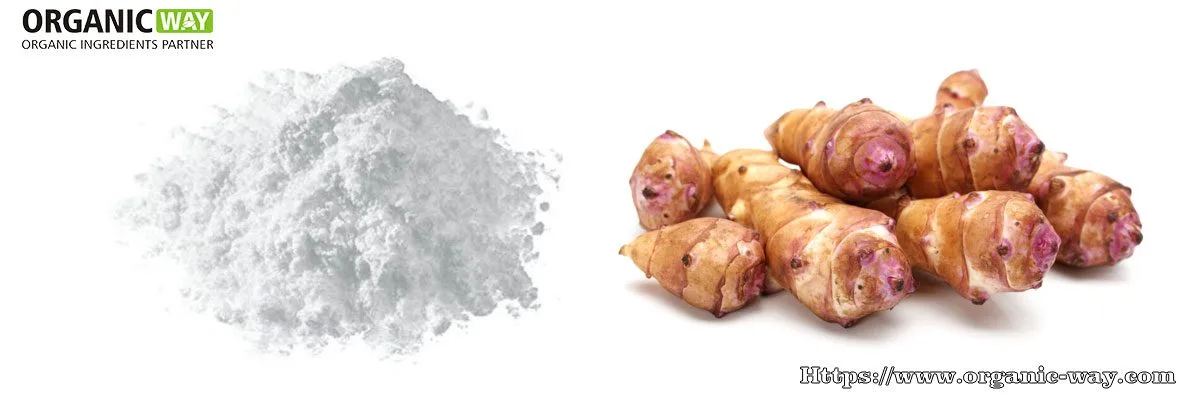
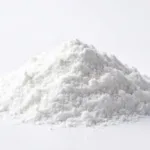
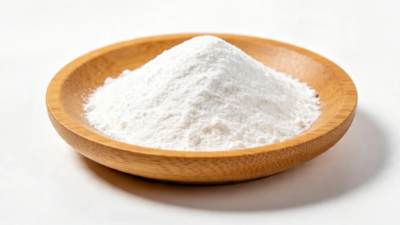
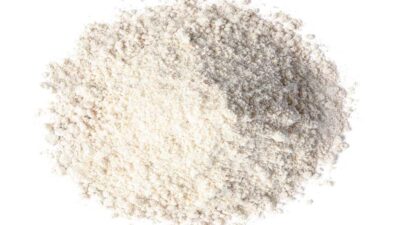
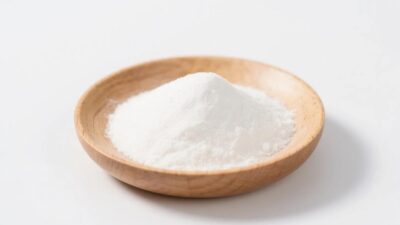
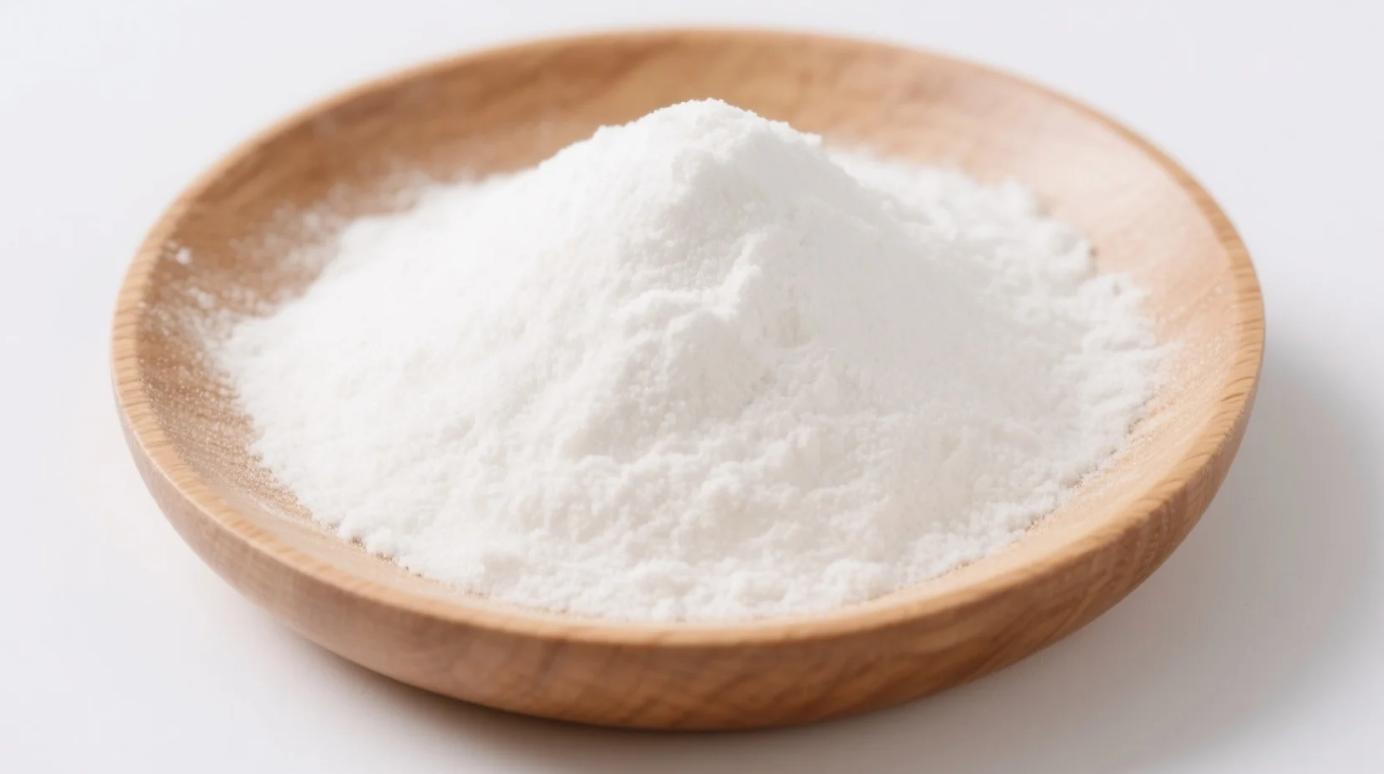
ORGANICWAY supplies FOS in two physical formats optimized for different application types. FOS Powder is a fine white free-flowing powder with ≥95% FOS content on a dry basis, ~95% solids content, excellent and rapid solubility in both cold and warm water, and a sweetness approximately 30% that of sucrose. It is the preferred format for capsule and tablet supplements, dry-mix sachets, powdered infant formula, and baked goods where its dry-phase compatibility and neutral flavor profile are decisive advantages. FOS Syrup delivers the same ≥95% FOS content on a dry basis in a pourable liquid form with 70-75 degrees Brix, ~50% sucrose sweetness, and immediate miscibility in cold and warm liquids. The syrup is engineered for liquid applications: ready-to-drink beverages, dairy and yogurt products, confectionery syrups, and functional food coatings where a pumpable, meterable liquid phase is required.
Both formats share identical prebiotic efficacy, identical pH stability range (pH 4.0-7.0), and identical certifications. The practical choice between them is driven by processing method rather than compositional performance.
PHYSICAL & CHEMICAL SPECIFICATIONS
Product Specifications
| Parameter | FOS Powder | FOS Syrup |
|---|---|---|
| Appearance | Fine white free-flowing powder | Clear to light yellow liquid |
| Source | Cane sugar or chicory (enzymatic) | Cane sugar or chicory (enzymatic) |
| FOS Content (dry basis) | ≥95% | ≥95% |
| Solids | ~95% | 70-75 degrees Brix |
| Sweetness | ~30% of sucrose | ~50% of sucrose |
| Solubility | Excellent and rapid | Immediately miscible |
| Caloric Value | ~1.5 kcal/g | ~1.5 kcal/g |
| pH Stability | pH 4.0-7.0 | pH 4.0-7.0 |
| Heat Stability | Standard pasteurization and baking | Standard pasteurization and baking (avoid prolonged boiling in acidic conditions) |
| Packaging | 25 kg kraft bags | 25 kg kraft bags |
| Shelf Life | 24 months | 24 months |
Application Matrix
| Application | Powder | Syrup | Notes |
|---|---|---|---|
| Capsules and tablets | Recommended | Not suitable | Precise metering; neutral flavor |
| Dry-mix sachets | Recommended | Not suitable | Free-flowing powder required |
| Infant formula | Recommended | Available | Mimics breast milk oligosaccharides (HMOs) |
| Baked goods | Recommended | Available | Replace up to 10-20% of sugar; adds fiber |
| Ready-to-drink beverages | Available | Excellent | Syrup miscibility advantage; pH 4.0-7.0 stability |
| Yogurt and dairy | Available | Excellent | Improves viable bacteria survival; creamy mouthfeel |
| Confectionery syrups | Available | Excellent | Provides bulk; replaces sugar volume |
| Synergistic sweetener blends | Excellent | Excellent | Complements stevia and monk fruit; masks metallic aftertaste |
MICROBIOLOGICAL & CONTAMINANT STANDARDS
| Test | Specification |
|---|---|
| Total Plate Count | ≤10,000 cfu/g |
| Yeast & Mold | ≤100 cfu/g |
| E. coli | Negative / g |
| Salmonella | Negative / 25g |
| Heavy Metals (Pb) | ≤1.0 mg/kg |
| Arsenic | ≤0.5 mg/kg |
| Residues | Below EU ML / USDA-NOP limits |
| Gluten | <20 ppm |
All batches tested and released against specifications. CofA available with every shipment.
CERTIFICATIONS
| Certification | Status |
|---|---|
| Non-GMO Project Verified | Yes |
| Kosher | Yes |
| Halal | Available |
| FSSC 22000 | Yes |
| Vegan | Yes |
| Gluten-Free | Yes |
APPLICATIONS & FORMULATION TIPS
Key Functional Benefits
FOS’s three primary functional roles in formulations are prebiotic fiber enrichment, synergistic sweetness, and clean-label sugar reduction. As a prebiotic, FOS’s short-chain beta-2,1 linked fructose structure is selectively fermented by bifidobacteria and lactobacillus in the colon, producing short-chain fatty acids that support calcium absorption (particularly relevant for bone health formulations targeting postmenopausal women, adolescents, and older adults), gut barrier integrity, and immune function. In infant nutrition, FOS’s structural similarity to human milk oligosaccharides (HMOs) makes it the preferred prebiotic addition to follow-on and growing-up formulas seeking to replicate the bifidogenic benefits of breast milk. As a synergistic sweetener component, FOS pairs effectively with high-intensity sweeteners such as stevia and monk fruit by providing the bulk and mouthfeel they lack and by suppressing the metallic and bitter aftertastes associated with intense sweetener use at effective sweetness levels.
Formulation Guidance
The pH stability range of pH 4.0-7.0 requires formulation attention in high-acid beverage applications. In ready-to-drink products with pH below 4.0, FOS slowly hydrolyzes into fructose over extended shelf life, reducing prebiotic efficacy and increasing free sugar content. Recommended mitigation strategies include adding FOS at the near-filling stage (rather than early in the production process), conducting shelf-life stability tests under target storage conditions, and using the syrup format in acidic beverages where its liquid form simplifies post-processing addition. For fiber label claims, ensure addition rates meet local regulatory thresholds — in the United States, a “high fiber” claim requires ≥6 g per 100 g serving. For baking applications, FOS can replace 10-20% of sugar by weight while increasing dietary fiber content, though note that FOS’s Maillard reactivity is lower than sucrose, which may reduce crust browning in products where color is a sensory cue.
FAQ
Q: Is FOS better than inulin, and how do they differ?
A: FOS and inulin are related but distinct prebiotic fibers with different chain lengths and functional properties. FOS consists of shorter fructose chains (typically 2-4 units) compared to inulin’s longer chains (10-60 units), which makes FOS significantly more water-soluble and slightly sweeter (~30-50% sucrose sweetness vs inulin’s negligible sweetness). This solubility advantage makes FOS the preferred choice for clear beverages and liquid applications where inulin’s opacity and gel-forming properties would be problematic. Inulin, with its longer chains, is better suited for fat replacement in low-fat formulations, texture modification, and applications where its lower fermentability produces a milder gas profile. Both are bifidogenic and supported by extensive clinical evidence; the choice depends on the specific application requirements rather than one being categorically superior.
Q: Can FOS cause digestive discomfort, and how should this be managed?
A: FOS is rapidly fermented by gut bacteria in the colon, which at high doses (typically above 15 g per day) can produce gas and bloating in sensitive individuals. This is a normal consequence of prebiotic fermentation rather than an allergic or toxic response, and it diminishes as gut microbiota adapt to regular FOS consumption. Best practice for consumer products is to recommend gradual dose escalation — starting with a low serving size and increasing over 1-2 weeks — rather than starting at the full effective dose. For products targeting sensitive populations (elderly, individuals with functional gut disorders), combining FOS with a more selectively fermented prebiotic such as XOS may reduce the gas profile while maintaining bifidogenic efficacy.
Q: How stable is FOS under heat processing conditions?
A: FOS is stable under standard pasteurization (UHT) and baking temperatures — the page specifies heat stability up to 160C for the syrup format. The critical limitation is acidic conditions: in products with pH below 4.0, FOS undergoes slow hydrolysis into monosaccharides (fructose) over extended shelf life, which reduces prebiotic efficacy, increases free sugar content, and may affect label accuracy. For high-acid applications (pH <4.0), the recommended approach is to add FOS as late in the production process as possible — ideally at or immediately before filling — rather than in the early mixing stage where it would be exposed to heat and acidity for the longest duration. Conducting shelf-life stability tests under target conditions is essential for any ready-to-drink product formulation.
Q: Is FOS suitable for ketogenic or low-carb diets?
A: FOS is classified as a non-digestible carbohydrate that passes through the small intestine without being absorbed or metabolized, producing negligible effects on blood glucose and insulin levels. This makes it compatible with ketogenic and low-carb dietary frameworks, and in many markets FOS can be excluded from net carbohydrate calculations as a non-digestible fiber. The approximately 1.5 kcal/g caloric value — roughly one-third that of sucrose — further supports calorie-reduction positioning. However, regulatory treatment of FOS as a carbohydrate or fiber for labeling purposes varies by jurisdiction; formulators should verify local regulations before making “net carb” or “zero sugar” claims on finished product labels.
Q: What is the minimum order quantity and lead time?
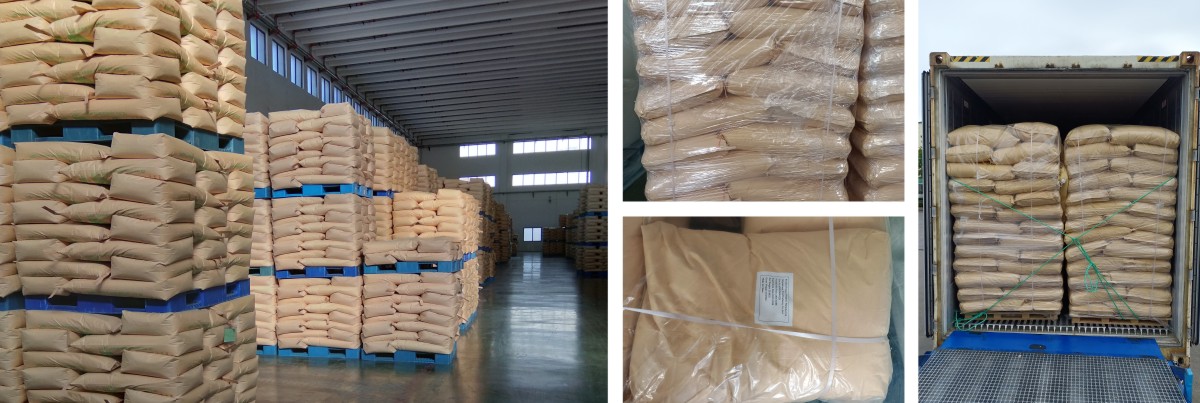
A: 1 kg free sample with full CofA is available for qualifying buyers (FEDEX/UPS/EMS). Commercial orders start at 25 kg (packaged in 25 kg multi-layer kraft paper bags, 40 bags per pallet). Private label orders require 100 kg minimum. Lead time: 10–20 working days from order confirmation. Available incoterms: DAP, DDP, FOB Qingdao or Tianjin. Acceptable payment terms: T/T, L/C, D/P, D/A, MoneyGram, Western Union, Credit Card.
PACKAGING & STORAGE
Packaging
| Format | Standard Packaging | Custom Options |
|---|---|---|
| FOS Powder | 25 kg multi-layer kraft paper bags | 5 / 10 / 20 kg bags; fiber drums; branded packaging for private label |
| FOS Syrup | 25 kg kraft bags or drums | Custom sizes; branded packaging for private label |
Storage Conditions
| Parameter | Both Formats |
|---|---|
| Temperature | Cool, dry place; avoid extreme heat |
| Humidity | <60% RH |
| Light | Avoid direct sunlight |
| Odor | Store away from strong odors |
| Shelf Life (sealed) | 24 months |
| Opened Packaging | Reseal tightly; use within 6 months under proper storage |