
Table of Contents
Gut health has moved from niche wellness circles to mainstream conversation — and for good reason. Research over the past two decades consistently links the gut microbiome to digestion, immune function, mood, and metabolic health. As consumers become more selective about what they put in their bodies, prebiotic ingredients have drawn serious attention. Among them, fructooligosaccharides (FOS) stand out not just as a dietary supplement but as a functional food ingredient with a solid body of clinical evidence behind it. Organic FOS, in particular, appeals to those who want the benefits without synthetic additives or pesticide residues. This guide walks through what FOS actually is, how it works inside the body, its proven health benefits, and how to use it practically every day.
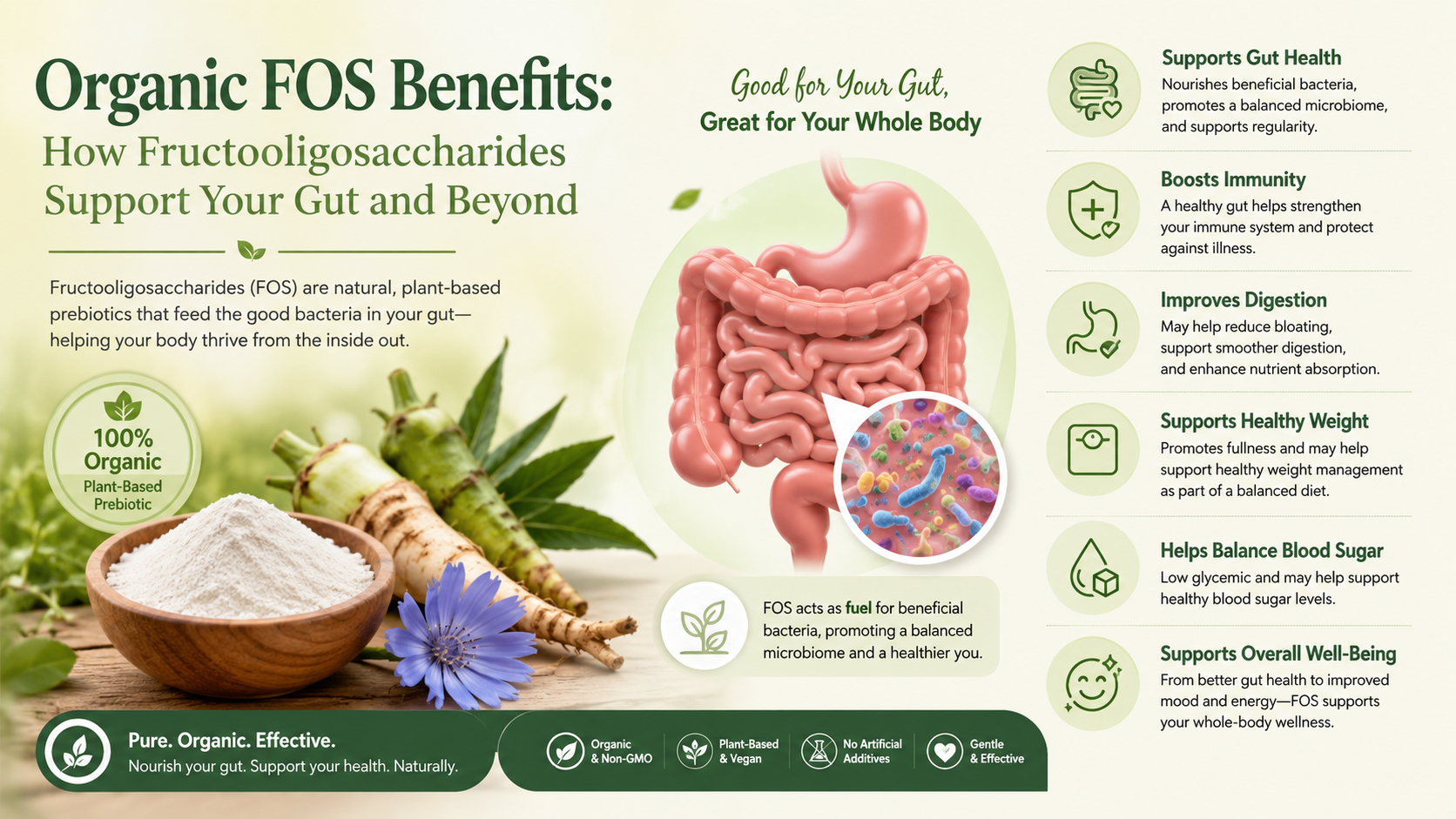
What Are Fructooligosaccharides (FOS)?
Fructooligosaccharides are short chains of fructose molecules linked together by bonds the human digestive system cannot break down. Structurally, they belong to the broader family of fructans — polysaccharides built from fructose units — and typically consist of chains two to eight units long. The most common forms are kestose (GF2), nystose (GF3), and fructosylnystose (GF4), often referred to collectively as short-chain FOS (scFOS).
FOS occur naturally in a wide range of everyday foods. Chicory root contains the highest concentration, which is why chicory is the primary commercial source for FOS extraction. Other natural sources include Jerusalem artichoke, garlic, onion, leek, asparagus, banana, and wheat. Most people already consume small amounts of FOS daily through their diet without realizing it.
Commercially, organic FOS is available in two primary forms:
- Powder: White, fine, slightly sweet powder with good flowability. Widely used in supplements, protein powders, infant formula, and dry food products.
- Syrup: A viscous, clear-to-light-yellow liquid with mild sweetness. Preferred in beverages, dairy applications, sauces, and any formulation where a liquid carrier is more practical.
Both forms carry the same prebiotic activity. The choice between them comes down to the end application rather than any difference in health effect.
How FOS Works in the Body: From Ingestion to Colon
Understanding why FOS delivers health benefits starts with tracing its journey through the digestive tract.
When you consume FOS — whether stirred into a smoothie or baked into a muffin — it travels through the stomach largely intact. The human digestive system lacks the specific enzymes (inulinases and fructosidases) needed to cleave the β(2→1) fructose-fructose bonds that hold FOS chains together. As a result, FOS passes through the small intestine without being absorbed into the bloodstream. This is precisely why it contributes almost no calories — roughly 1.5 kcal per gram compared to 4 kcal per gram for regular sugar, making it about 70% lower in calories than sucrose.
Upon reaching the large intestine, FOS encounters the trillions of microorganisms that make up the gut microbiome. Here, selective fermentation begins. Beneficial bacteria — primarily Bifidobacteria and Lactobacilli — possess the enzymatic machinery to ferment FOS as an energy source. This fermentation process produces short-chain fatty acids (SCFAs), including acetate, propionate, and butyrate.
Butyrate deserves particular attention. It serves as the primary energy source for colonocytes (the cells lining the colon wall), supports the integrity of the gut mucosal barrier, and has demonstrated anti-inflammatory properties in multiple studies. A well-nourished gut lining is less permeable, which means fewer opportunities for undigested food particles or pathogens to slip into systemic circulation — a condition sometimes called “leaky gut.”
The net result of this fermentation pathway is a measurable shift in the composition of the gut microbiome, a reduction in intestinal pH (which inhibits harmful bacteria), and a cascade of systemic effects that extend well beyond the colon.
6 Evidence-Based Health Benefits of Organic FOS
1. Promotes Growth of Beneficial Gut Bacteria
FOS is one of the most studied prebiotics for its selective stimulation of Bifidobacteria and Lactobacilli. Unlike general dietary fiber, which feeds a broad range of microbes, FOS preferentially fuels these two genera — both associated with positive health outcomes.
Clinical studies have consistently shown that daily FOS supplementation (typically 5–8 g/day) significantly increases fecal Bifidobacteria counts within two to four weeks. Higher Bifidobacteria populations are associated with reduced colonization by potentially harmful bacteria such as Clostridium and E. coli. A healthier microbial balance, in turn, supports digestion, reduces intestinal inflammation, and may lower the risk of certain gastrointestinal conditions.
2. Improves Digestion and Bowel Regularity
Constipation and irregular bowel movements affect a substantial portion of adults, often linked to insufficient fiber intake. FOS contributes to regularity through two mechanisms: it increases stool bulk by drawing water into the colon, and it stimulates peristalsis — the rhythmic muscle contractions that move waste through the intestine.
A meta-analysis published in Nutrients found that prebiotic supplementation with FOS reduced transit time and improved stool frequency in constipated adults without causing the cramping associated with some laxative fibers. For those dealing with mild bloating or sluggish digestion, FOS can provide noticeable improvement within one to two weeks of consistent use at moderate doses.
3. Supports Blood Sugar Management
FOS has a glycemic index (GI) of approximately 1 — effectively negligible. Because it bypasses digestion in the small intestine, it does not trigger a glucose spike or an insulin response. This makes it an attractive sweetener alternative for people managing type 2 diabetes, prediabetes, or metabolic syndrome.
Beyond its passive role as a low-GI sweetener, FOS may actively support blood sugar regulation. The SCFAs produced during colonic fermentation — particularly propionate — have been shown to influence hepatic glucose production and improve insulin sensitivity. Some human trials have also found that FOS supplementation modestly reduces fasting blood glucose levels in individuals with impaired glucose tolerance, though it is not a replacement for medical treatment.
4. Enhances Mineral Absorption
One of the less-discussed but well-documented benefits of FOS is its ability to improve the absorption of minerals, particularly calcium and magnesium. The fermentation of FOS acidifies the colon environment, and this lower pH increases the solubility of minerals, making them more available for uptake by intestinal cells.
Animal studies first identified this effect, and subsequent human trials have confirmed that FOS supplementation increases calcium absorption by a meaningful margin — particularly relevant for postmenopausal women, adolescents during peak bone development, and older adults at risk of osteoporosis. One study in adolescent girls found that 8 g/day of short-chain FOS significantly improved calcium retention compared to a control group.
5. Supports Immune Function via the Gut-Immune Axis
Approximately 70% of the body’s immune cells reside in or around the gut — a network known as the gut-associated lymphoid tissue (GALT). The composition of the gut microbiome directly influences how these immune cells develop and respond.
By selectively increasing Bifidobacteria and Lactobacilli populations, FOS helps maintain a microbial environment that promotes regulatory immune responses rather than chronic inflammation. Butyrate, produced during FOS fermentation, also plays a direct role: it supports the function of regulatory T cells and helps moderate the inflammatory signals that, when chronically elevated, are linked to conditions ranging from allergies to autoimmune disease. While FOS is not an immune booster in the pharmaceutical sense, its effect on the gut-immune axis provides a credible, mechanism-supported pathway to long-term immune resilience.
6. Assists with Weight Management
FOS contributes to a sense of fullness through two pathways. First, fermentation by gut bacteria stimulates the release of gut hormones — including glucagon-like peptide-1 (GLP-1) and peptide YY (PYY) — that signal satiety to the brain. Second, because FOS provides sweetness at only about 30–50% the intensity of sucrose and contributes roughly 70% fewer calories, it allows food manufacturers and home cooks to reduce sugar content without sacrificing palatability.
Clinical trials using FOS as a partial sugar replacement have shown modest reductions in total energy intake when participants were not consciously calorie-restricting. For weight management, FOS is not a standalone solution, but as part of a diet that emphasizes whole foods and adequate fiber, it is a practical tool for reducing sugar load without the artificial taste of sugar substitutes.
Organic FOS Powder vs. Syrup: What’s the Difference?
| Feature | FOS Powder | FOS Syrup |
|---|---|---|
| Form | White, free-flowing powder | Viscous clear/light-yellow liquid |
| Sweetness | ~30–50% of sucrose | ~30–50% of sucrose |
| Solubility | Highly soluble in water | Already in liquid form; easy to blend |
| Best Uses | Supplements, protein blends, baked goods, dry mixes | Beverages, yogurt, sauces, dairy, liquid supplements |
| Storage | Cool, dry place; 12–24 month shelf life | Sealed container; 12–18 month shelf life |
| Dosing Precision | Easy to weigh | Requires volume measurement |
| Moisture Sensitivity | Can clump if exposed to humidity | Not applicable |
For home use, powder is generally more convenient and versatile. Syrup integrates more smoothly into liquid applications and is the preferred format for food manufacturers who need a pumpable, consistent liquid ingredient.
How to Incorporate FOS Into Your Daily Routine
Adding FOS to your diet does not require a significant lifestyle change. It dissolves easily and blends into many foods without altering texture or flavor in any noticeable way.
Practical ways to use FOS powder:
- Stir 1–2 teaspoons into your morning coffee or tea
- Blend into a smoothie with berries and Greek yogurt
- Add to overnight oats or porridge
- Use in baking as a partial sugar replacement (note: FOS does not caramelize or brown like sucrose)
- Mix into homemade salad dressings for a subtle sweetness
Dosing guidance: Start with 1–3 g per day for the first week. This allows your gut microbiome to adjust gradually and minimizes the chance of temporary bloating or gas — common when any new fiber is introduced. After the first week, you can increase to 4–5 g per day if tolerated. Most research showing significant prebiotic benefit uses doses in the 5–8 g/day range, but meaningful effects on gut bacteria composition begin at lower doses.
Consistency matters more than quantity. A modest daily dose taken regularly produces better results than a large, infrequent dose.
Who Benefits Most from Organic FOS?
While FOS can support gut health broadly, certain groups are likely to see the most meaningful impact:
- People with digestive discomfort: Those experiencing occasional constipation, bloating, or irregular bowel movements often notice improvement within one to two weeks of consistent FOS use.
- Individuals managing blood sugar: Anyone monitoring glycemic response — including people with type 2 diabetes or prediabetes — can use FOS as a low-GI sweetener that also supports microbial health.
- Vegans and vegetarians: Plant-based diets sometimes lack diverse fermentable fiber sources. FOS supplements what vegetables like chicory and garlic already provide naturally.
- Older adults: Bifidobacteria populations naturally decline with age. Supplementing with FOS helps maintain microbial diversity and supports calcium absorption — both increasingly important for healthy aging.
- People recovering from antibiotics: Antibiotic treatment disrupts the gut microbiome. FOS can help selectively replenish beneficial bacteria during and after antibiotic courses.
If you have a diagnosed gastrointestinal condition such as irritable bowel syndrome (IBS), Crohn’s disease, or small intestinal bacterial overgrowth (SIBO), read our detailed guide on who should avoid FOS and what precautions apply before starting supplementation.
Buying Guide: What to Look For
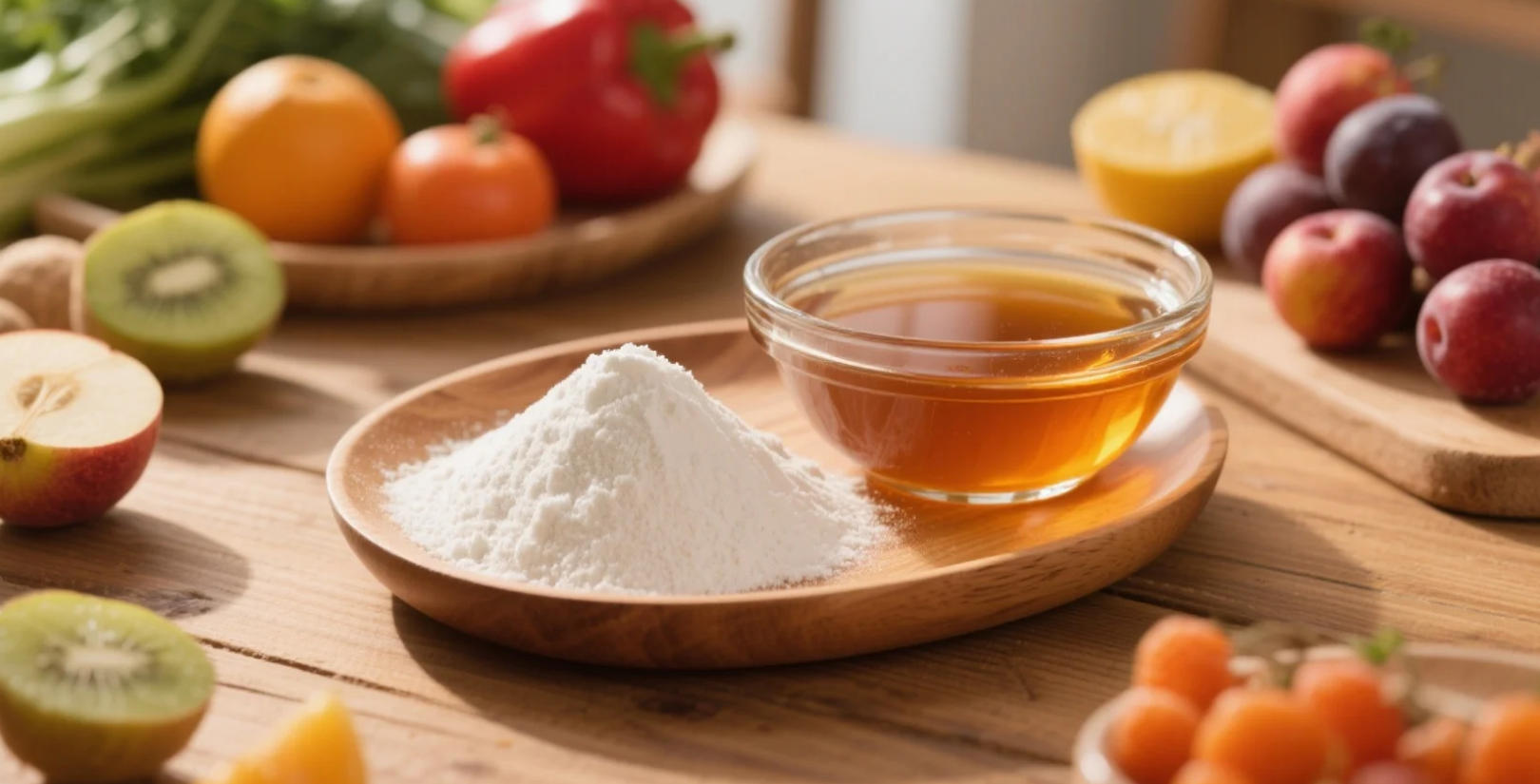
Not all FOS products are equal. Here is what to check before purchasing:
1. Organic certification: Look for USDA Organic, EU Organic, or equivalent certification. This confirms the raw material (usually chicory root) was grown without synthetic pesticides or fertilizers, and that the extraction process meets organic handling standards.
2. Non-GMO verification: FOS derived from chicory is inherently non-GMO at the plant level, but third-party non-GMO verification (such as Non-GMO Project) provides additional assurance about the processing environment.
3. Source transparency: A reputable supplier will clearly state the botanical source (typically Cichorium intybus, chicory root) and the country of origin. Avoid products that list “FOS” without specifying source material.
4. Purity and composition: Pure FOS should list scFOS or GF2–GF4 fractions as the primary ingredient. Some lower-cost products blend FOS with inulin (a longer-chain fructan) to reduce costs. Inulin is not harmful, but it has a different fermentation rate and may cause more gas than pure scFOS, particularly for sensitive individuals. If you want predictable results, choose a product that clearly differentiates between FOS and inulin content.
5. Packaging and storage integrity: FOS powder is hygroscopic — it absorbs moisture from the air. Well-packaged products use resealable, moisture-barrier bags or airtight containers. Syrup products should come in sealed, food-grade containers that prevent oxidation.
6. Third-party testing: Certificates of Analysis (CoA) from independent laboratories confirm purity, microbial safety, and the absence of heavy metals. Ask for CoA documentation when purchasing in bulk or from a new supplier.
For brands or manufacturers sourcing organic FOS at scale, understanding how FOS compares to other prebiotic fibers in formulation applications is equally important — see our comparison guide at Organic FOS vs. Other Prebiotic Fibers.
Adding FOS to Your Wellness Routine
Organic FOS is one of the most researched, well-tolerated prebiotic ingredients available today. Its mechanism is clear — selective fermentation by beneficial gut bacteria, production of butyrate and other short-chain fatty acids, and downstream effects on digestion, blood sugar, mineral absorption, and immune function. Its practical profile — mild sweetness, low calorie count, easy solubility — makes it straightforward to incorporate into everyday foods.
For those new to prebiotics, FOS is a sensible starting point. Begin with a low dose, give your gut microbiome a few weeks to respond, and choose certified organic products from transparent suppliers.
If you are a brand or product developer looking to source organic FOS powder or syrup with verified certification and full traceability, ORGANICWAY works directly with certified suppliers and can provide samples, technical documentation, and formulation guidance. Reach out at info@organic-way.com to discuss your requirements.
Recommended Products

Fructooligosaccharides
Fructooligosaccharides (FOS) is a prebiotic dietary fiber produced via enzymatic breakdown from cane sugar,…
Related Posts


