
Table of Contents
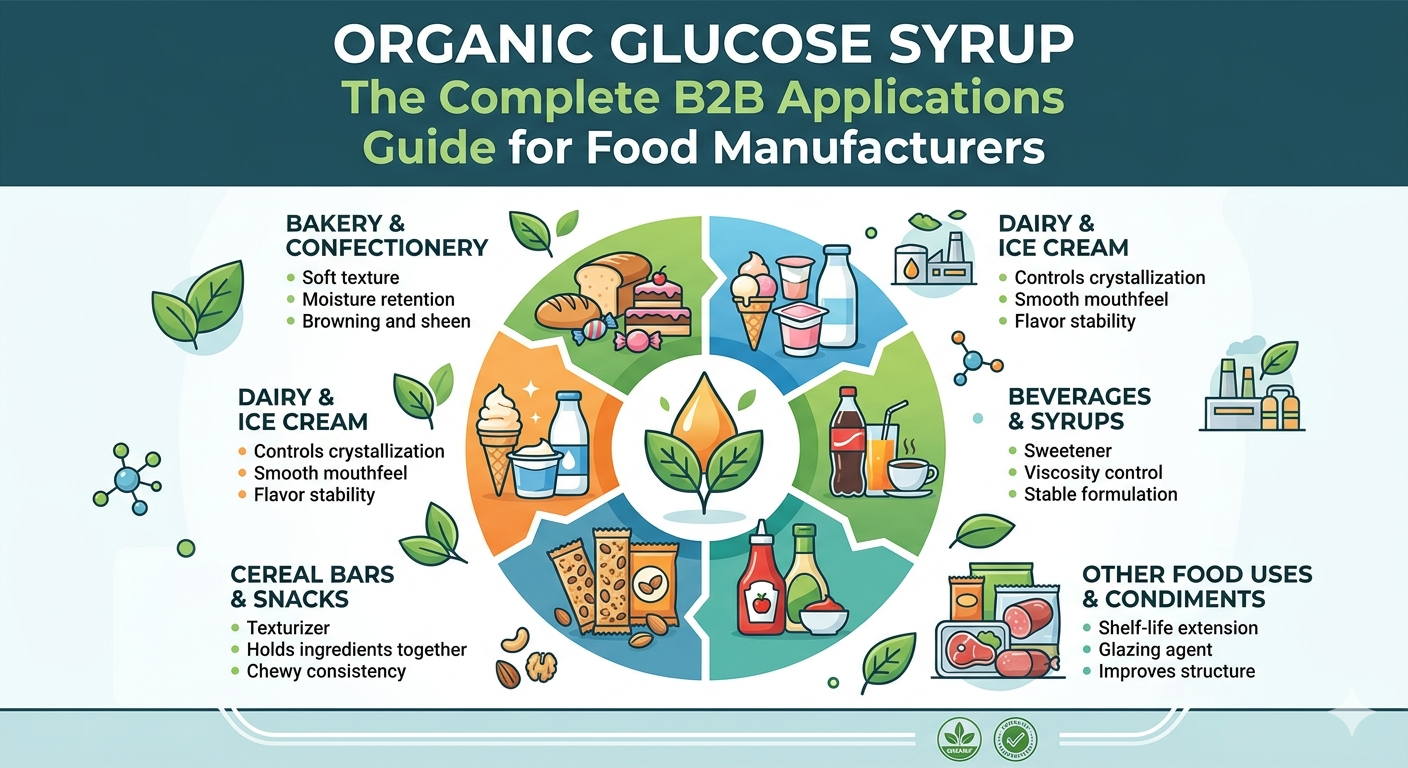
Organic glucose syrup applications span five major industry verticals: confectionery, bakery, beverages, plant-based foods, and functional nutrition. Each category demands different DE values, inclusion rates, and functional targets — and the differences matter at scale.
This guide is built for B2B formulators and product development teams. We provide an industry-by-industry application matrix, specific formulation parameters, and optimization recommendations across seven major application scenarios, designed to accelerate your path from bench prototype to commercial production.
Application Matrix — Choosing the Right DE Value by Industry
The most critical decision in applying organic glucose syrup is selecting the correct DE value. This matrix provides B2B formulation starting points:
| Industry | Recommended DE | Typical Usage Level | Primary Function | Secondary Function |
|---|---|---|---|---|
| Confectionery — Hard Candy | 55–65 DE | 20–35% of sweetener | Crystallization control, clarity | Sweetness, gloss |
| Confectionery — Gummy/Chewy | 42–55 DE | 25–40% of sweetener | Chewing texture, moisture retention | Sweetness, soft texture |
| Confectionery — Caramel/Toffee | 35–45 DE | 15–30% of sweetener | Softness, prevent crystallization | Flavor carrier, color |
| Bakery — Cookies/Crackers | 30–42 DE | 3–10% of sweetener | Moisture retention, texture | Flavor enhancement |
| Bakery — Cakes/Bread | 25–40 DE | 5–15% of sweetener | Softness, shelf extension | Browning (Maillard reaction) |
| Beverage — Still Drinks | 55–70 DE | 5–15% of sweetener | Sweetness, mouthfeel | Flavor balance |
| Beverage — Carbonated | 65–75 DE | 3–10% of sweetener | Sweetness, viscosity | Clarity |
| Plant-Based Products | 42–55 DE | 5–20% of sweetener | Texture, moisture | Flavor delivery |
| Frozen Desserts | 38–50 DE | 8–15% of sweetener | Freeze/thaw stability | Smooth texture |
| Functional Foods/Protein Bars | 42–55 DE | 10–25% of sweetener | Moisture binding, chewiness | Flavor masking |
Important: These are starting guidelines. Validate with your specific formula, processing conditions, and target shelf life.
Confectionery Applications
Hard Candy and Pressed Candy
Organic glucose syrup is indispensable in hard candy formulations for three reasons:
- Crystallization suppression: At 20–35% usage, it reduces sucrose recrystallization risk by 60–75%
- Clarity control: 55–65 DE syrup contributes to transparent, glossy hard candy
- Processing window: Extends the workable temperature range during cooking, reducing burning risk
Sample formulation starting point (hard candy):
Organic sucrose: 55–65%
Organic glucose syrup 55 DE: 25–35%
Organic citric acid solution: 0.5–1.5%
Flavor oil: 0.1–0.3%
Color (natural): as needed
Water: adjust to 100%
Process notes: Cook to 150–155°C. Syrup addition before cooking improves texture uniformity and reduces the risk of grainy texture caused by uneven sucrose crystallization.
Gummy and Chewy Candies
For gummy candies (jelly beans, fruit gummies, marshmallows), organic glucose syrup at 42–55 DE delivers:
- Elastic, non-sticky chewing texture
- Moisture retention preventing product hardening
- Reduced gelatin setting temperature, allowing lower processing temperatures
Formulation tip: Combine with 1–3% organic citric acid for fruit-flavored gummies. The syrup’s buffering capacity helps control sourness release.
Caramel and Toffee
In caramel formulations, organic glucose syrup:
- Prevents sugar crystallization during cooking
- Improves plastic flow during extrusion or molding
- Contributes to extended chewiness and soft bite
Shelf life advantage: Caramel with 20% organic glucose syrup (42 DE) maintains soft texture for 30–60% longer than caramel without syrup, based on typical ambient storage conditions.
Bakery Applications
Cookies and Crackers
In cookies, organic glucose syrup (30–42 DE) at 3–10% usage:
- Reduces breakage during packaging and transport
- Improves moisture retention, extending the acceptable eating window
- Supports browning through Maillard reaction, improving visual appeal
- Acts as a flavor carrier for vanilla, chocolate, and fruit flavors
For gluten-free cookies: Organic glucose syrup compensates for reduced starch content in gluten-free flour blends, providing bulk and binding that would otherwise require additional hydrocolloids.
Cakes and Breads
For premium cakes and artisan breads, organic glucose syrup:
- Extends softness retention by slowing starch retrogradation (staling)
- Improves crust color through enhanced browning
- Provides a subtle sweetness that supports premium positioning
Addition timing: Add to the aqueous phase before dry ingredient incorporation. Do not add directly to fat phase, as it may interfere with creaming.
Fillings and Glazes
For fruit fillings, custard fillings, and pastry glazes:
- Organic glucose syrup (55 DE) at 10–20% improves thickness and spreadability
- Reduces syneresis (liquid weeping) in fruit fillings during storage
- Creates a glossy, crack-resistant glaze surface
Beverage Applications
Still and Functional Beverages
For juice-based drinks, functional beverages, and ready-to-drink teas:
Formulation benefits:
- Mild sweetness (lower than sucrose) balances acidic fruit flavors
- Contributes body and mouthfeel in reduced-sugar formulations
- Improves flavor stability over shelf life
- Supports natural cloud and texture in juice beverages
Typical usage: 3–15% depending on sweetness target and sugar reduction goal
DE recommendation: 55–65 DE for neutral flavor carriers; 65–70 DE for high-clarity or carbonated applications
Plant-Based Milks and Dairy Alternatives
Oat milk, almond milk, rice milk, and coconut beverages benefit from organic glucose syrup through:
- Improved mouthfeel and body, compensating for fat reduction
- Natural sweetness that complements rather than overpowers plant flavors
- Enhanced emulsion stability in fortified products
Note: In oat milk specifically, the oats already provide some natural sweetness. Start at 2–5% organic glucose syrup and adjust to avoid an overly sweet product.
Fermented Beverages (Kombucha, Functional Drinks)
Organic glucose syrup serves as an excellent fermentation substrate because:
- Controlled, consistent DE ensures predictable fermentation kinetics
- Neutral flavor does not compete with fermentation acids and SCOBY aromatics
- Organic certification supports premium positioning in the gut-health market
Plant-Based and Vegan Products
Organic glucose syrup is a cornerstone ingredient in plant-based food innovation:
| Product Category | DE Value | Usage Level | Key Benefit |
|---|---|---|---|
| Plant-based chocolate | 42–55 DE | 10–20% | Smooth texture, prevents bloom |
| Vegan caramel | 38–45 DE | 15–25% | Softness, moisture |
| Protein bars (vegan) | 42–55 DE | 8–15% | Texture, binding |
| Plant-based ice cream | 38–50 DE | 8–12% | Creaminess, freeze stability |
| Vegan confectionery | 42–55 DE | 15–30% | Full functional replacement |
Clean-label advantage: Organic glucose syrup eliminates the need for synthetic humectants (like glycerol) in many vegan formulations, supporting cleaner, shorter ingredient lists.
Sugar-Reduced and Sugar-Free Formulation
Organic glucose syrup is a key enabler of sugar-reduction strategies:
Blending Strategy
Baseline formula: 100% sucrose Reduced formula:
- 50–60% sucrose (retains sweetness identity)
- 20–30% organic glucose syrup 55 DE (bulk + function)
- 15–25% high-intensity sweetener (stevia, monk fruit blend) (sweetness gap)
This blend typically achieves 30–50% sugar reduction while maintaining functional performance equivalent to the full-sucrose product.
Polyol Combination
Organic glucose syrup pairs effectively with sugar alcohols:
- With erythritol: Reduces cooling sensation and improves texture
- With maltitol: Improves softness and reduces brittleness common in 100% maltitol confections
- With isomalt: Improves freeze-thaw stability in sugar-free ice cream
Functional Nutrition Applications
In protein bars, meal replacement shakes, and sports nutrition products:
Why organic glucose syrup fits functional nutrition:
- Quick-digesting carbohydrate source: Supports glycogen replenishment post-exercise
- Clean label: Aligns with clean-eating consumer expectations
- Flavor masking: Reduces the bitter aftertaste of protein isolates
- Moisture binding: Prevents bar hardening in high-protein formulations during storage
- Organic certification: Required for products sold in premium retail channels (Whole Foods, Sprouts, natural health stores)
Typical inclusion in protein bars: 8–15% of total formulation weight, using 42–55 DE syrup
FAQ
Q1: What DE value is best for premium chocolate coating?
For confectionery coatings, a 42–50 DE organic glucose syrup at 5–10% addition improves viscosity control during enrobing, reduces cocoa butter migration (preventing fat bloom), and creates a smoother, glossier finish. Tapioca-source syrup is preferred for its neutral flavor.
Q2: Can organic glucose syrup be used in products requiring Kosher or Halal certification?
Yes. Organic glucose syrup can carry Kosher and Halal certifications. Verify with your supplier that the specific batch carries current Kosher (KD or KLBD) or Halal certification relevant to your distribution market.
Q3: What is the minimum usage level to achieve crystallization control in confectionery?
A minimum of 15–20% organic glucose syrup (of total sweetener weight) is required for meaningful crystallization suppression in hard candy and caramel. Below 10%, the effect is negligible.
Q4: How does organic glucose syrup perform in products stored at high humidity?
In high-humidity environments (>60% RH), products containing organic glucose syrup may absorb moisture from the air, becoming softer or sticky. For tropical market applications, consider a coating step (confectioner’s sugar, chocolate coating) or reduce syrup usage to 10–15%.
Q5: Is organic glucose syrup suitable for infant and toddler food formulations?
Organic glucose syrup is used in some infant cereal and snack formulations. However, infant food regulations vary significantly by market (EU 609/2013, US FDA, China GB standards). Confirm with your regulatory team and organic certification body before using in this category.
Q6: How does organic glucose syrup interact with natural colorants in confectionery?
Organic glucose syrup is generally compatible with natural colorants (anthocyanins, carotenoids, chlorophyll, betanin). However, in acidic environments (pH < 4.0), some anthocyanin-based colors may shift in hue. Test color stability throughout your target shelf life.
Q7: What is the recommended addition method for bakery applications?
For most bakery applications, add organic glucose syrup to the aqueous phase (water, milk, or egg mixture) before combining with dry ingredients. For cookies with creaming method, add to the creamed fat-sugar mixture before flour incorporation.
Recommended Products

Organic Glucose Syrup
Organic Glucose Syrup by ORGANICWAY is a versatile, clean-label liquid sweetener derived from certified…


