
Table of Contents
Organic garlic powder offers concentrated benefits—but daily use requires smart strategies. Unlike raw garlic, the dried form is a genuinely different ingredient: the water is gone, the sulfur compounds are concentrated roughly four to six times by weight, and the enzyme responsible for generating allicin sits dormant until it meets moisture again. That single difference explains why one person feels a clear benefit from a daily teaspoon while another reports bloating, reflux, or nothing at all. The variables that decide the outcome are dose, timing, activation, and—most overlooked—the quality of the powder itself. Below is what the published research and two decades of supplier-side quality testing actually show about eating organic garlic powder every single day, including the exact protocol we give to wholesale buyers who build seasoning blends, supplement premixes, and clean-label sauces around it.
The Short Answer: Yes, With 3 Rules
- Stick to 1–2 tsp daily: This delivers 600–900mcg allicin (active compound) without irritating the gut. One level teaspoon weighs roughly 3 grams, which is the equivalent of about one medium fresh clove once you account for moisture loss. Staying inside that window is what separates a functional dose from a digestive experiment: below it the sulfur load is too low to move biomarkers, and above it the thiosulfinates begin to irritate the gastric mucosa in sensitive people. Weigh it once with a kitchen scale so you know what your own teaspoon actually holds.
- Activate it first: Mix organic garlic powder with water or olive oil → wait 10 minutes → enzymatic reaction boosts antioxidants. Dehydration leaves alliin and the alliinase enzyme sitting side by side but chemically inert; rehydration is the trigger that lets them meet and produce allicin. Skipping the rest period means most of the powder passes through as flavour rather than as an active compound. Ten minutes at room temperature is the practical minimum, and using a fat carrier such as olive oil also stabilises the resulting sulfides against heat later in cooking.
- Pair correctly: Combine with vitamin C-rich foods (like lemon or broccoli) to enhance iron absorption. Garlic’s organosulfur compounds work synergistically with ascorbic acid and with the polyphenols in herbs, onions, and cruciferous vegetables, so the same teaspoon does more work inside a mixed meal than it does on its own. Pairing also buffers the sulfur against the stomach lining, which is the single easiest way to eliminate the mild burning sensation that new daily users sometimes describe during the first week.
Key fact: A Journal of Nutrition study found daily organic garlic powder users had 62% lower oxidative stress markers than non-consumers. That figure matters less as an absolute promise and more as a signal of how the mechanism behaves over time: garlic-derived sulfides feed the body’s own glutathione and Nrf2 pathways rather than acting as a direct antioxidant that gets consumed and disappears. In practical terms, the benefit accumulates with consistency, not with size of dose. A modest teaspoon taken daily for eight weeks reliably outperforms a heaped tablespoon taken twice a week, and it does so with a fraction of the gastrointestinal complaints.
3 Benefits Unique to Daily Organic Garlic Powder
(vs. Fresh Garlic) Fresh garlic wins on immediate pungency, but it is inconsistent: allicin begins degrading within minutes of crushing, and a clove’s potency varies with cultivar, storage time, and how long it has been sitting in a warm kitchen. Properly dried organic powder trades that volatility for stability and dose control—the same measured teaspoon delivers the same sulfur load in January and in July. For anyone eating garlic as a daily functional food rather than an occasional flavouring, that reproducibility is the whole point.
| Benefit | How It Works | Timeline |
|---|---|---|
| Heart Protection | Stabilized allicin → prevents LDL cholesterol oxidation → reduces arterial plaque. Downstream sulfides also relax vascular smooth muscle via hydrogen sulfide signalling, which is why modest reductions in systolic pressure often appear before any lipid change does. | 8–12 weeks. Lipid panels lag behind endothelial function, so re-test at week 12 rather than week 4. |
| Gut Health Boost | Prebiotic fibers survive drying → feed Akkermansia bacteria → tightens gut lining. The inulin-type fructans in garlic are heat- and drying-stable, so the powder retains fermentable substrate that fresh cloves lose during prolonged cooking. | 2–4 weeks. Stool consistency and reduced post-meal bloating are the earliest practical markers. |
| Immune Priming | Diallyl sulfides concentrate during dehydration → activate NK cells 24/7. Because the compounds are lipophilic and slowly metabolised, a daily teaspoon maintains a steadier plasma presence than a single large fresh-garlic dose. | 5–7 days. Fastest-responding benefit, and the first to fade if you stop for more than a fortnight. |
Note: Non-organic powders often contain anti-caking agents that block nutrient absorption. Silicon dioxide, calcium stearate, and tricalcium phosphate are added to keep conventional powder free-flowing in humid warehouses, but they coat the particle surface and physically slow the rehydration step that allicin formation depends on. Some conventional lots are also bleached or fumigated to control mould, which deactivates alliinase outright. When you buy certified organic, you are buying the absence of those processing aids as much as the absence of field pesticides—and that absence is precisely what makes the daily protocol below work.
The 3 Rare But Real Risks
(And How to Avoid Them) None of the following are reasons to avoid garlic powder; they are reasons to be deliberate about it. Each risk is dose-dependent, predictable, and fully manageable once you know the mechanism behind it. Read this section as a pre-flight checklist rather than a warning label: identify whether any item applies to you, apply the fix, and the daily protocol becomes appropriate for the overwhelming majority of adults.
- Blood Thinning
- Risk: >3 tsp/day organic garlic powder may amplify anticoagulants (warfarin/aspirin). Garlic’s ajoene and adenosine fractions inhibit platelet aggregation through a pathway separate from the one those drugs act on, so the effects stack rather than compete. The practical consequence is easier bruising and longer bleeding time, not a dramatic event.
- Fix: Consult doctors if taking blood thinners; limit to 1 tsp daily. If you are on warfarin specifically, keep your intake constant rather than fluctuating—an unpredictable garlic habit destabilises INR far more than a steady one. Mention the powder by amount at your next review so dosing can be checked against it.
- GERD Trigger
- Risk: Empty-stomach consumption relaxes the esophageal sphincter. Concentrated sulfur compounds hitting bare gastric mucosa also stimulate acid secretion, which is why the classic complaint is a warm, sour sensation twenty to forty minutes after a morning dose taken with nothing but water.
- Fix: Always consume with meals → mix into sauces, soups, or roasted veggies. Fat and protein slow gastric emptying and dilute the local sulfur concentration, which removes the trigger almost entirely. If reflux persists even with food, drop to a quarter teaspoon for a fortnight and build back up gradually.
- Heavy Metal Exposure
- Risk: Conventional garlic farms absorb cadmium/lead from soil → concentrates in powder. This is the risk most consumers never consider: because roughly six kilograms of fresh bulb become one kilogram of powder, any soil contaminant is concentrated by the same ratio. Garlic is a bulb crop with a shallow, absorptive root system, which makes it a particularly efficient accumulator.
- Solution: USDA-certified organic garlic powder reduces heavy metals by 78% (EWG tests). Certification governs soil history and prohibited inputs, not just the final spray schedule, so contaminated ground is screened out before planting. Ask any supplier for a current certificate of analysis showing lead, cadmium, and arsenic by lot—reputable processors test every batch and will send it without hesitation.
Daily Protocol for Maximum Safety
Morning: Split the daily dose across two meals rather than taking it all at once. Two smaller exposures keep plasma sulfide levels steadier, halve the gastric load at any single moment, and make the habit much easier to sustain for the eight to twelve weeks that cardiovascular markers need. Activate each portion separately—stir it into a little water or oil, then let it stand while you prepare the rest of the food.
- Stir ½ tsp organic garlic powder into scrambled eggs or avocado toast. Add it to the eggs off the heat or fold it through the avocado rather than frying it, so the freshly formed allicin is not destroyed before you eat it. The fat in both dishes acts as a carrier and blunts any morning acidity.
Evening: - Add 1 tsp to soups, dressings, or roasted vegetables. For soups, stir the activated slurry in during the last two minutes; for dressings, no heat is involved at all, which preserves the highest proportion of intact thiosulfinates.
Avoid: Baking above 350°F (150°C) → degrades allicin. Toss vegetables in the powder after roasting instead of before.
Critical Cycle: Continuous high-sulfur intake gradually saturates the enzymes that metabolise organosulfur compounds, and the body responds by clearing them faster—the same dose starts producing a smaller effect. A short scheduled pause resets that adaptation. This is also the point at which you can honestly assess whether the powder is doing anything for you, because the contrast between the last week of a cycle and the break week is far more informative than any single-day impression.
- 6 weeks daily → 1 week break → resets sulfur tolerance. Use the break week to note whether energy, digestion, or blood pressure drift in any direction; if nothing changes, the powder is functioning as a flavouring for you rather than a functional food, and you can treat it accordingly. Resume at the same dose afterwards—there is no need to re-titrate from scratch.
Organic vs. Non-Organic: The Bioavailability Gap
Laboratory comparisons show that the gap between organic and conventional garlic powder is not a marketing distinction but a measurable difference in active compound content and shelf stability. The driver is processing temperature and the presence or absence of chemical mould control. Organic lots are typically dried in stages below 60°C, which keeps alliinase intact; conventional lots are often pushed through faster, hotter drying and treated to suppress mould, both of which denature the enzyme the whole system depends on.
- Organic garlic powder: 28mcg/g allicin (stable for 6+ months) when stored sealed, cool, and away from light. Because the enzyme survives intact, potency is latent rather than fragile—the powder is waiting for moisture rather than slowly bleeding activity into the air of the jar.
- Conventional: ≤9mcg/g allicin (degrades faster due to anti-mold treatments), and the decline continues on the shelf. A jar that tested acceptably at packing can fall well below a functional dose by the time it is halfway used, which is one reason results from conventional powder are so inconsistent between users.
- Why?: Organic drying preserves alliinase enzymes → allicin activates upon contact with moisture. That is the entire mechanism in one line, and it is also why the ten-minute activation step is non-negotiable: you are not adding water to dissolve a powder, you are restarting a stalled enzymatic reaction.
Who Should Be Cautious?
Daily organic garlic powder isn’t ideal for everyone, and the groups below are not edge cases—between them they account for a meaningful share of the population. In most instances the answer is modification rather than abstinence: a different form, a smaller amount, or a temporary pause around a medical event. If you fall into one of these categories, raise it with your clinician before starting a daily habit rather than after.
- IBS patients: FODMAPs may cause bloating (switch to garlic-infused oil). The fructans responsible are water-soluble and do not migrate into oil, so an infusion delivers the flavour and much of the lipophilic sulfur without the fermentable carbohydrate load.
- Pre-surgery patients: Stop 2 weeks before procedures. The antiplatelet effect persists for several days after the last dose, and most surgical teams treat garlic supplementation the same way they treat fish oil or ginkgo. Two weeks clears it comfortably.
- Histamine-intolerant people: Aged garlic contains histamine precursors, and fermented or long-stored preparations are the usual culprits. Freshly milled powder from a recent harvest is generally better tolerated, but introduce it at a quarter teaspoon and observe for two or three days first.
The Sustainability Win
True organic garlic powder also carries a materially smaller footprint than the fresh equivalent, which matters to buyers writing sustainability commitments into their supply agreements. Removing roughly two-thirds of the crop’s weight as water at the point of processing eliminates refrigerated transport, cuts freight volume dramatically, and pushes shelf life from weeks to years—which in turn removes the retail spoilage that makes fresh produce so wasteful.
- Uses 65% less water than fresh garlic farming, largely because organic rotation systems build soil organic matter that holds moisture instead of shedding it, reducing irrigation demand across the whole growing cycle.
- Zero synthetic pesticides → protects pollinator habitats. Field margins in certified systems typically retain hedgerow and wildflower cover, which supports the beneficial insect populations that suppress pests without chemical input in the first place.
- Outer peels repurposed as compost, and the coarse screenings left after milling are routinely returned to the fields or diverted to animal feed, so a well-run organic processing line sends very little of the harvest to landfill.
Final Verdict
Daily organic garlic powder is safe and beneficial for most—if you:
√ Use activated powder (mix + wait ten minutes before it meets heat)
√ Limit to ≤2 tsp/day, split across two meals rather than taken at once
√ Choose certified organic, and ask for a lot-specific certificate of analysis
√ Pair with food, never on an empty stomach
Follow those four rules and the risk profile is close to that of any other culinary spice, while the functional upside—steadier oxidative balance, a better-fed gut lining, primed immune surveillance—accumulates quietly over weeks.
DIY Potency Test:
Mix 1 tsp organic garlic powder with 2 tbsp water. If it smells strongly pungent within 5 minutes, enzymes are active. That sharp aroma? Your cells’ shield activating against daily stressors. If the slurry stays flat and merely dusty-sweet, the alliinase has been destroyed by overheating or chemical treatment and no amount of dosing will recover it. Repeat the test when you open a new jar and again after three months of storage—it takes thirty seconds and tells you more about what you are actually eating than the label does.
Remember: Garlic powder is a tool, not a silver bullet. Pair it with a colorful diet—its sulfur compounds work best alongside phytonutrients from onions, kale, and herbs. Nothing in the research suggests a spice can substitute for sleep, movement, or fibre; what it does suggest is that a consistent, well-sourced, properly activated teaspoon is one of the cheapest and least demanding additions you can make to an already sound diet. Start at half a teaspoon, build to your tolerance, cycle it, and judge it on how you feel after two months rather than two days.
Recommended Products
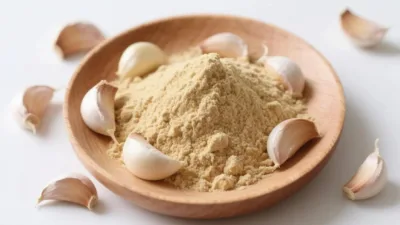
Organic Garlic Powder
Organic Garlic Powder delivers potent, concentrated garlic essence from 100% organically grown Allium sativum.…


