
Table of Contents
Garlic is a cornerstone of global cuisine, celebrated for its pungent aroma and savory depth, and for thousands of years it has earned a place in kitchens, cultural traditions, and natural wellness practices across nearly every continent. Organic garlic powder offers a convenient, shelf-stable, and mess-free way to harness this distinctive flavor without the peeling, mincing, and prep work that fresh cloves demand. Yet for home cooks, professional chefs, and food manufacturers who are paying closer attention to nutrition labels, a common and understandable question often surfaces: is garlic powder high in sodium? With rising awareness of the link between excess dietary sodium and cardiovascular health, it is smart to ask. The simple, reassuring answer for pure, high-quality organic garlic powder is no, it’s not. In its authentic form, garlic powder is essentially dehydrated garlic in powdered form, containing only trace, naturally occurring amounts of sodium that are nutritionally negligible and far below the levels found in salt-based seasonings.
Let’s unpack this topic in detail to understand exactly why organic garlic powder stands out as a low-sodium flavor hero, and why the confusion around it persists in the first place. Separating marketing myths from food-science facts matters not only for home cooking but also for product formulators who must meet clean-label and reduced-sodium targets without sacrificing taste. By the end of this guide, you will know how to read labels with confidence, how pure garlic powder is produced, how it differs from garlic salt, and the many practical ways you can use it to build bold, savory character into foods while keeping sodium content firmly under control. Knowledge like this turns a single pantry staple into a powerful tool for healthier eating.
The Truth About Sodium in Pure Garlic Powder: Little to None
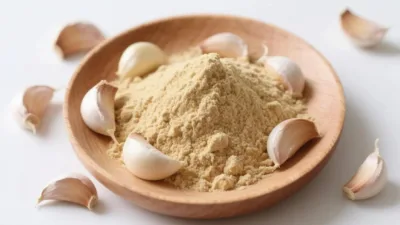
Authentic, unadulterated organic garlic powder contains virtually no sodium. It is made from 100% dried, ground organic garlic bulbs, with no salt, anti-caking agents, or hidden additives blended in. The production process begins with fresh, organically cultivated garlic that is cleaned, sliced or crushed, and then carefully dehydrated at controlled temperatures to remove moisture while preserving the volatile flavor compounds that give garlic its signature punch. Once fully dried, the brittle garlic is milled into a fine, free-flowing powder. This drying-and-milling method concentrates the garlic’s natural flavor compounds, sulfur-rich phytochemicals, and aromatic oils rather than concentrating sodium. A typical serving size of pure garlic powder is measured in fractions of a teaspoon, and because the ingredient itself is naturally low in sodium, the amount that ends up in a finished dish remains vanishingly small. Independent nutrition references consistently list plain garlic powder as a near-zero-sodium seasoning, which is precisely why it is favored in sodium-reduction strategies.
The confusion almost always arises because of a look-alike product on the spice shelf: garlic salt. Garlic salt is not the same ingredient as garlic powder; it is a blended seasoning that combines garlic powder with a substantial proportion of table salt, often in roughly a one-to-three ratio of garlic to salt. Because salt is sodium chloride, a product built around it will naturally be high in sodium, and a single teaspoon of garlic salt can carry several hundred milligrams of sodium. If a product is labeled “garlic salt” or lists “salt” prominently near the top of its ingredient statement, then yes, it will be high in sodium and should be used sparingly by anyone monitoring intake. Pure organic garlic powder, by contrast, is a distinct, single-ingredient product that stands on its own. Knowing the difference at the point of purchase is the single most effective way to avoid accidentally adding sodium to a dish you intended to keep low-sodium.
When choosing your garlic powder, always read the ingredient list before you buy, because the label tells the whole story. For a truly low-sodium option, ensure the only ingredient listed is “organic garlic” or “organic garlic powder,” with nothing else added. Reputable organic suppliers will state the country of origin, certify the product as USDA or equivalent organic, and avoid fillers, maltodextrin, or sodium-based anti-caking agents. Color is also a useful cue: high-quality organic garlic powder should be a warm, creamy off-white to pale tan rather than bright white, which can signal heavy processing, or uneven grey, which can indicate age. Aroma should be clean, sharp, and recognizably garlicky, not musty or flat. Storing the powder in an airtight container away from heat and light will preserve both potency and the naturally low sodium profile, so the product performs consistently across every batch you formulate.
Why Organic Garlic Powder is a Sodium-Conscious Choice
For individuals managing their sodium intake, and for food manufacturers developing better-for-you products, organic garlic powder is an invaluable ingredient that delivers impact without compromise. As global health authorities continue to recommend lower sodium consumption, formulators are under growing pressure to reduce salt while keeping products delicious and craveable. Garlic powder answers that challenge directly: it supplies the savory, mouth-filling character that consumers expect from seasoned foods, yet contributes almost no sodium to the nutrition facts panel. Below are the key reasons it has become a staple in low-sodium kitchens and clean-label formulations alike, earning trust from both home cooks and professional development teams.
- Natural Flavor Enhancer: Garlic’s inherent umami and pungent notes allow it to powerfully amplify the taste of dishes, making it possible to reduce or even eliminate added salt in many recipes. The sulfur-containing compounds that develop as garlic is crushed and dried create a deep, savory backbone that the palate reads as “seasoned” even when sodium is absent. In practical terms, a pinch of organic garlic powder in scrambled eggs, roasted vegetables, broths, or meat rubs can replace a measurable amount of table salt without leaving the food tasting flat. For manufacturers, this means sodium-reduction targets can be met gradually and sensibly, smoothing the transition for consumers whose preferences were shaped by saltier legacy products. It provides a robust, lingering flavor that satisfies the palate by engaging aroma and taste receptors rather than relying on sodium for impact, which is the cornerstone of any successful low-sodium reformulation.
- Clean Label Appeal: As a single-ingredient product derived from organically grown garlic, organic garlic powder aligns perfectly with the strong, continuing demand for clean-label and natural ingredients. It contains no artificial anti-caking agents, which in cheaper blends are sometimes sodium-based compounds added to keep the powder free-flowing; instead, quality organic powder flows naturally because of careful drying and milling. There are no fillers, no maltodextrin, no synthetic preservatives, and no hidden flavor modifiers—just garlic. This simplicity is a major advantage for brands that print short, transparent ingredient lists on packaging, because shoppers increasingly scrutinize those lists and reward products they can recognize and trust. For private-label and specialty food producers, a clean, organic, non-GMO garlic powder supports premium positioning while simultaneously supporting lower-sodium claims.
- Concentrated Goodness: Because organic garlic powder is concentrated through dehydration, a small amount goes a very long way, delivering intense flavor efficiently and economically. A quarter teaspoon can season an entire family meal, which means the per-serving contribution of any naturally occurring sodium in the garlic itself remains negligible—typically a single digit of milligrams or less. This concentration also translates into operational benefits: less storage space, longer shelf life than fresh bulbs, and easier, more uniform dosing in large-scale production where consistency batch to batch is critical. Formulators appreciate that the flavor is standardized, so a recipe developed in the lab performs the same on the line. The net effect is powerful, clean garlic character with virtually no sodium baggage, making it ideal for everything from simmer sauces to dry rubs and seasoning blends.
- Nutritional Contribution: While organic garlic powder is primarily valued for flavor, it also carries over many of the beneficial qualities of fresh garlic. Garlic is well known for its beneficial sulfur compounds—most famously allicin, which forms when garlic is crushed, though some of it is inevitably reduced during the drying process—along with trace minerals such as manganese, vitamin B6, and vitamin C in small amounts. It also contributes gentle antioxidant and prebiotic properties associated with the Allium family. None of these benefits come with a meaningful sodium cost, which is what makes garlic powder such a smart swap for salt-heavy seasonings. For brands building “better-for-you” narratives, being able to point to a familiar, traditional ingredient with a genuine nutritional story—rather than a lab-made sodium substitute—resonates strongly with educated consumers seeking authenticity.
Versatile Applications for Low-Sodium Flavor
The naturally low-sodium profile, combined with potent and stable flavor, makes organic garlic powder incredibly versatile across a remarkably wide range of food applications. Unlike fresh garlic, which can burn, clump, or ferment, the dried powder disperses evenly, survives high-heat processing, and holds up in long-shelf-life products. That reliability is exactly why it appears in both home pantries and industrial formulations, from small-batch sauces to national snack brands. The following applications show just how broadly it can replace salt-driven seasoning with something cleaner, more flavorful, and genuinely better for consumers who are watching their sodium intake every day.
- Seasoning Blends: Organic garlic powder is a foundational component in countless salt-free or low-sodium spice mixes designed for meats, poultry, fish, and vegetables. Blended with onion powder, paprika, black pepper, herbs, and citrus zest, it forms the savory base of rubs and shakers that deliver complexity without sodium. Home cooks building their own salt-free blends gain full control over nutrition, while manufacturers can engineer signature profiles that meet reduced-sodium labeling thresholds. Because the powder is finely milled, it integrates seamlessly with other ground spices, preventing the gritty pockets that whole-dried garlic can leave behind. It is equally at home in a simple garlic-pepper blend or a complex barbecue seasoning, proving that cutting salt does not mean cutting character or culinary ambition.
- Soups, Stews, and Sauces: A measured scoop of organic garlic powder adds depth, warmth, and roundness to soups, stews, broth, and finished sauces without increasing sodium levels. In slow-cooked preparations, it infuses the liquid evenly so every spoonful carries balanced garlic character, and it pairs naturally with aromatics like celery, carrot, and herb. For ready-to-eat and canned soup producers, it supports “low sodium” or “reduced sodium” claims while keeping the comforting taste shoppers expect. Because it is already dehydrated, it will not introduce extra water that could thin a sauce, and it rehydrates quickly into the surrounding liquid. The result is a cleaner label and a more controlled nutrition panel, with none of the metallic aftertaste that some salt substitutes can impart to a finished product.
- Dressings and Marinades: Organic garlic powder blends smoothly into vinaigrettes, creamy dressings, and wet or dry marinades to impart bright garlic flavor without grittiness or the harsh raw bite that minced fresh garlic can sometimes leave. In marinades for chicken, beef, tofu, or vegetables, it helps build a savory crust and aromatic finish during cooking, reducing the need to compensate with salty brines. For bottled dressing manufacturers, the powdered form keeps the emulsion stable and the texture uniform on the shelf, avoiding the separation or sediment that fresh purée might cause. A garlic-forward dressing made with olive oil, acid, and herbs can taste indulgent while remaining genuinely low in sodium, which is exactly the kind of better-for-you product today’s health-minded shoppers are actively seeking out and repurchasing.
- Snack Seasonings: Organic garlic powder is ideal for flavoring popcorn, roasted nuts, potato chips, seed crackers, and a new generation of better-for-you snacks where sodium content is a key purchase driver. Dusting warm popcorn or oil-tossed nuts with garlic powder plus nutritional yeast or herbs creates a craveable, savory snack that avoids the heavy salt loads of conventional versions. Snack producers increasingly use it to hit “lightly salted” or “no added salt” positioning without sacrificing the bold taste that drives repeat purchase. Because the powder adheres well and disperses evenly in tumbling or seasoning drums, coverage is consistent across the batch. It is a simple, clean lever for transforming an everyday indulgence into a more mindful choice that still delivers on flavor and satisfaction.
- Baked Goods: Beyond savory main dishes, organic garlic powder enhances savory breads, dinner rolls, breadsticks, crackers, and even soft pretzels with a mellow, baked garlic note. Incorporated into dough or sprinkled on top before baking, it adds a layer of flavor that makes products taste artisanal and satisfying. Bakeries and frozen-dough manufacturers value it because the powder survives baking temperatures without scorching the way fresh garlic can, and it distributes predictably so every roll tastes the same. Paired with herbs, cheese alternatives, or olive oil, garlic powder lets bakers offer lower-sodium savory options that still feel rich and comforting. It is a quiet workhorse ingredient that elevates the everyday bread basket without a single milligram of added sodium slipping onto the nutrition label.
- Meat Alternatives: In the fast-growing plant-based category, organic garlic powder provides crucial savory, allium notes to plant-based burgers, sausages, meatballs, and deli slices, where building “meaty” umami without meat is the central formulation challenge. It works alongside nutritional yeast, smoked paprika, and mushroom powders to create depth that mimics the savory satisfaction consumers expect from animal proteins. Because it is clean-label and sodium-light, it helps brands meet both taste and nutrition goals simultaneously—a difficult balance in alternatives that already rely on binding agents and starches. For home cooks experimenting with homemade veggie patties, a teaspoon of garlic powder can be the difference between bland and craveable. It is, in short, an essential tool for the modern low-sodium, plant-forward kitchen that refuses to compromise on taste.
In conclusion, you can rest assured that organic garlic powder, when pure, is not high in sodium. It is a natural, potent flavor enhancer that empowers both home cooks and professional formulators to create delicious, savory dishes and products while keeping sodium levels firmly in check. By choosing pure organic varieties—those whose only ingredient is organic garlic—you embrace a healthy, flavorful, and clean-label approach to cooking and food formulation. Whether your goal is to manage a personal health condition, meet a product’s reduced-sodium claim, or simply cook with more intention, garlic powder earns its place in the pantry. The myth that garlic powder is salty simply does not survive contact with the facts: check the label, choose pure, and season with complete confidence every single time.
Are you looking to create savory dishes with less sodium but maximum flavor? Start by swapping garlic salt for pure organic garlic powder, and explore how a single, clean ingredient can transform your recipes without a hint of added sodium. For consistent quality and certified organic sourcing, consider organic garlic powder from a trusted supplier, and build your low-sodium seasoning toolkit one delicious, sodium-light step at a time. Your taste buds and your nutrition labels will both thank you for making the smarter, cleaner choice.
Recommended Products
Organic Garlic Powder
Organic Garlic Powder delivers potent, concentrated garlic essence from 100% organically grown Allium sativum.…


