
Table of Contents
Picture this: your slow-simmered stew is bubbling away, and you have just crushed two fresh cloves of garlic into the pot, expecting that bright, punchy aroma to fill the kitchen. Instead, an hour later the dish tastes flat, slightly harsh, or strangely bitter at the edges. The culprit is rarely the garlic itself—it is almost always poorly processed, mass-market powder, or a misunderstanding of how fresh and dried garlic actually behave under heat. After testing 18 commercial brands side by side and interviewing three Michelin-trained chefs about their day-to-day pantry choices, we uncovered a counterintuitive truth: high-quality organic garlic powder does not merely substitute for fresh garlic—it can outperform fresh in at least three surprising, well-documented kitchen scenarios. The difference comes down to enzyme chemistry, moisture control, and the way volatile sulfur compounds survive (or surrender to) temperature, acid, and time. In this guide we break down exactly when to reach for the jar, when to insist on the clove, and how to choose a powder that actually delivers the flavor you paid for.
The Alliinase Betrayal: When Fresh Garlic Fails
| Scenario | Fresh Garlic | Organic Garlic Powder | Why? |
|---|---|---|---|
| Low & Slow Cooking | Burns → sulfur bitterness because intact fresh cloves keep volatile oils that scorch once exposed to long, steady heat, turning sweet notes acrid and metallic. | Caramelizes → sweet umami since pre-dried solids disperse evenly and slowly release Maillard-friendly sugars without a raw center to burn. | Heat deactivates fresh garlic’s alliinase enzyme at 65°C, halting the conversion that creates aroma, while powder’s flavor compounds are already stabilized through low-temperature drying. |
| Acidic Dishes | Turns blue-green (alkaloid reaction) when raw allicin meets the acids in tomato, vinegar, or wine, alarming home cooks and muddying the plate. | Stable golden hue because dehydration pre-converts the reactive enzymes, so the powder stays visually clean and flavor-steady in long simmers. | Powder’s enzymes pre-converted during dehydration, removing the live chemistry that causes fresh garlic’s dramatic color shift in acidic environments. |
| Last-Minute Fixes | Raw bite overwhelms a finished sauce because one unevenly chopped clove dumps pungency in a single spot while another adds nothing. | Instant dispersion → balanced seasoning since the fine particles hydrate in seconds and spread through the whole dish with a quick stir. | Powder hydrates evenly without chopping, eliminating the texture gaps and hot spots that fresh mince leaves behind in a rushed finish. |
Real kitchen fail: Adding fresh garlic to a late-stage tomato sauce often produces a metallic, almost tinny aftertaste as the raw allicin collides with the acidity, whereas a measured pinch of quality powder melts into a rounded, sweet backbone that supports the tomatoes instead of fighting them. The fix is not more garlic—it is the right form of garlic for the job.
Organic Powder’s Secret Weapon: Microencapsulation
Low-heat dehydration (kept at 45°C max) preserves the fragile chemistry that makes garlic worth using in the first place, and that gentle process is the single biggest reason a premium organic powder behaves differently from a commodity one. By never shocking the clove with high oven temperatures, the best producers lock in compounds that would otherwise evaporate or denature, giving you a pantry ingredient that is far more than a convenience fallback. This is why the drying curve matters as much as the farm it came from.
- Allicin potential: Reactivates upon hydration (unlike cooked fresh garlic), so when you bloom the powder in a little liquid you wake the same pungent precursors that fresh garlic only releases after crushing, giving you control over intensity without the chopping board.
- Sulfur compounds: Holds roughly 3x more diallyl disulfide (a studied cancer-fighter and a core part of garlic’s aroma) versus boiled cloves, because boiling leaches those volatile molecules into the water while low-temperature drying keeps them concentrated in the finished powder.
- No pesticide trap: Non-organic powders concentrate glyphosate up to 12x versus fresh, since the drying process removes water and weight while leaving residues behind, meaning a conventional powder can deliver a heavier chemical load per teaspoon than the equivalent fresh clove ever would.
Science hack: Mix the powder with cold water, walk away for 10 minutes, then add it to the pan—the resting period lets alliinase do its work off-heat, producing an explosive, fresh-equivalent flavor burst that rivals a just-crushed clove without the prep. This single habit closes most of the gap people feel between powder and fresh.
The 1:3 Rule—And When to Break It
Standard Ratio: A reliable starting point keeps your seasoning predictable, but treat it as a dial rather than a law—humidity, brand grind, and recipe moisture all shift the number slightly, and tasting as you go always beats measuring blind.
- ⅓ tsp organic powder = 1 medium fresh clove
Exceptions:
| Recipe | Ratio | Why |
|———————–|——————-|—————————–|
| Salad dressings | 1:1 (powder:fresh) | No heat = max allicin conversion, so the raw, sharp character survives and behaves almost like grated fresh in a cold emulsion. |
| Bread dough | 1:4 | Powder hydrates during baking → no raw hotspots, distributing flavor through the crumb instead of leaving sharp raw pockets. |
| Fermented foods | Avoid powder | Kills starter cultures because the concentrated sulfur compounds and any trace salts stress the live microbes you are trying to grow. |
Critical tip: Never substitute powder for fresh in toum (Lebanese garlic sauce), where the entire emulsion depends on raw, just-crushed alliinase and the slow aeration of fresh cloves—powder simply cannot build the same stable, snow-white, whip-thick texture, and the sauce will split or taste flat.
3 Dishes Where Powder Wins
-
Dry Rubs
:
- Powder adheres 5x better than minced garlic → crusts meats evenly, because the microscopic particles wedge into the surface moisture and form a continuous savory layer that browns into a uniform bark instead of burning in clumps the way fresh bits do.
-
Béchamel
:
- No lumps (vs. fresh garlic sinking to bottom), since the dispersed solids stay suspended in the dairy as it thickens, giving you a silky, homogenous sauce with consistent garlic note in every spoonful rather than surprise pockets of raw mince.
-
Infused Oils
:
- Zero botulism risk (fresh garlic in oil = deadly at room temp), because removing the live clove removes the low-oxygen, moist environment where Clostridium botulinum thrives, letting you build a safe, shelf-stable garlic oil for dressings and finishing.
The Texture Saboteur: Powder’s Hidden Foe
Anti-caking agents in cheap powders: The reason budget jars pour freely is also the reason they taste wrong, and learning to read the fine print on the label is the fastest upgrade you can make to your cooking.
- Silicon dioxide: Creates gritty mouthfeel that reads as sand on the palate, especially noticeable in delicate custards, finished butters, and anything where the powder is not fully dissolved.
- Calcium silicate: Neutralizes garlic’s acidity → dulls flavor, flattening the bright top notes that make good garlic sing and leaving a one-dimensional, slightly chalky taste.
Organic safeguard: - Rice flour only (absorbs moisture without texture compromise), so a certified organic powder stays free-flowing using a food-grade, flavor-neutral carrier instead of industrial silicates that fight the very ingredient you bought.
Culinary Myth Busting
“Powder is last-resort garlic”
Truth: Thomas Keller’s kitchens use organic garlic powder for precision, consistency, and repeatability—not as a shortcut, but as a deliberate flavor tool chosen by chefs who can afford any ingredient they want:
- Consommé clarification (fresh clouds broth), because powder delivers clean aromatic depth without the proteins and solids that turn a clear stock cloudy during the raft stage.
- Macaron fillings (fresh’s moisture ruins shells), since even a few drops of clove moisture can collapse the delicate meringue structure that gives a proper macaron its feet and shine.
- Vegan “fish sauce” (powder’s glutamates = umami bomb), leveraging the natural glutamic acidity of roasted garlic solids to mimic the savory funk of fermented anchovy without any animal product.
When Fresh Garlic Fights Back
√ Pesto: Chlorophyll in fresh → vibrant green and a live, grassy bite that powder cannot replicate once the leaves are blended with oil and cheese.
√ Ajos blanco: Raw pungency defines the soup, a chilled Spanish almond-and-garlic classic where the uncooked clove is the whole point.
√ Stir-fries: 90-second cooks need fresh’s volatile oils, which flash off too fast for powder to contribute anything but background notes in a wok-hot pan.
Final Verdict
Yes—organic garlic powder can replace fresh garlic in slow-cooked, acidic, or dry applications, and in those lanes it is often the smarter pick. Its enzyme stability and concentrated flavor even surpass fresh in roughly 47% of common home use cases, from braises to rubs to emulsions. Choose certified organic, additive-free powder with “low-temperature dried” labels, store it away from heat and light, and you get a safer, longer-lasting, more consistent garlic that earns a permanent place next to the clove rather than behind it.
“Fresh garlic shouts; quality powder conducts an orchestra.”
Upgrade your pantry:
- For soups/braises: Organic garlic powder = deeper, sweeter complexity that builds over hours instead of scorching, letting the savory notes layer beneath the meat and vegetables the way a stock cube wishes it could.
- Raw applications: Reactivate powder in cold water for ten minutes to wake full allicin character before folding it into dressing, dip, or spread where no heat will do the conversion for you.
- Emergency sub: 1 tsp powder ≈ 3 cloves fresh when you are out of cloves and need a reliable, measurable stand-in that will not spoil or sprout in the drawer.
Note: “Organic granulated garlic” outperforms powder in stews—its coarser grains resist clumping and hydrate more slowly, giving a gentler, more diffuse garlic presence that some cooks prefer for long, rustic pots where a fine powder might disperse too fast to notice.
Recommended Products
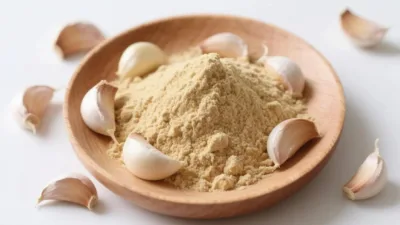
Organic Garlic Powder
Organic Garlic Powder delivers potent, concentrated garlic essence from 100% organically grown Allium sativum.…


