Table of Contents
What is pea fiber?
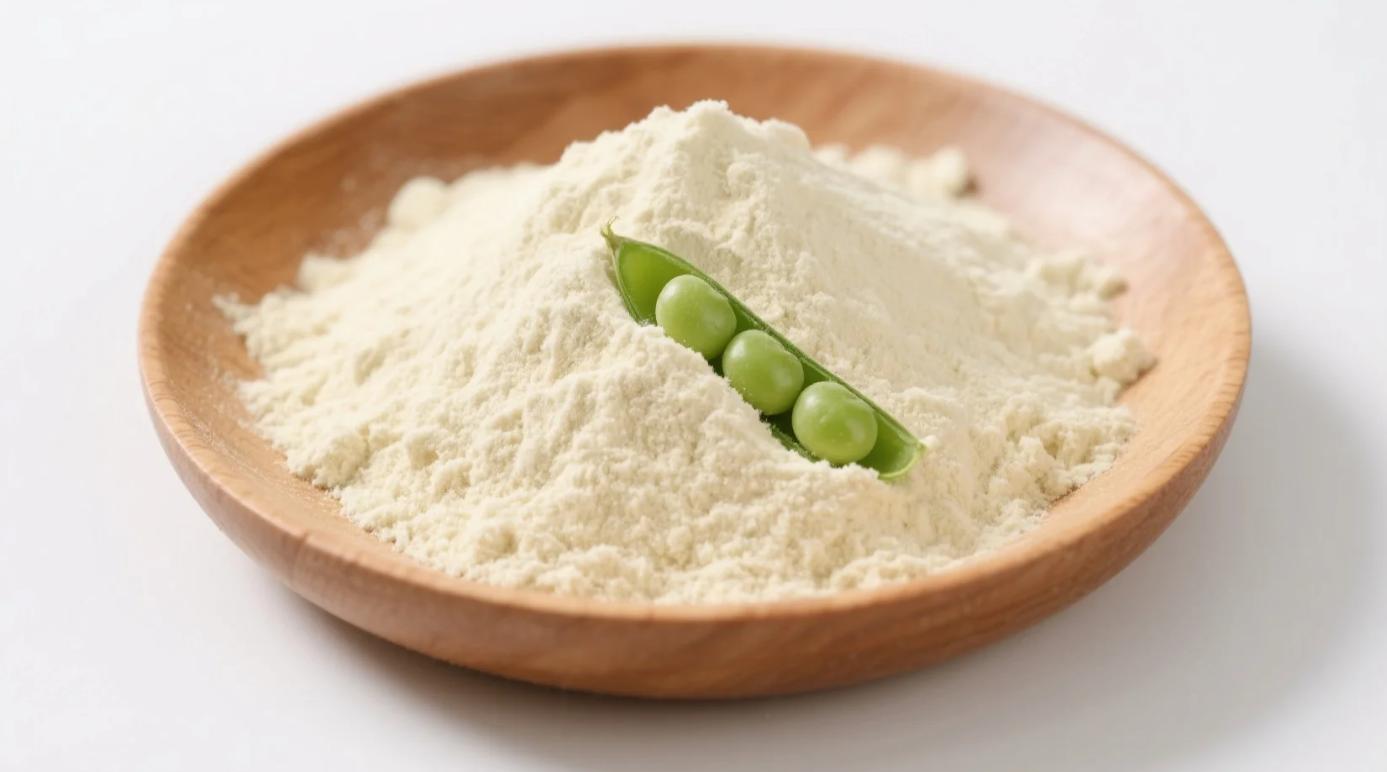
Pea Fiber is a functional dietary fiber ingredient derived exclusively from the hull (outer skin) of yellow peas. Through a gentle mechanical process without chemical solvents, it delivers a powerful combination of soluble and insoluble fiber in a fine, off-white to light cream-colored powder.
Unlike pea protein, which is extracted from the internal portion of the pea for its amino acid profile, pea fiber harnesses the structural matrix of the pea hull — primarily for its exceptional water-holding, oil-binding, and texture-enhancing properties.
Core Differentiation vs. Commodity Fiber Alternatives
Pea Fiber is typically preferred over cellulose and wheat fiber for several reasons:
- Gluten-Free: Naturally free from gluten, making it suitable for allergen-sensitive consumers where wheat fiber is not appropriate.
- Clean Label Appeal: “Pea Fiber” carries a more consumer-friendly identity — aligning with whole-plant positioning — whereas “cellulose” may be perceived as wood pulp.
- Superior Water-Holding: Water-holding capacity of 1:5 to 1:8 significantly exceeds cellulose (1:3 to 1:4) and wheat fiber (1:4 to 1:6).
Functional Performance
- Water-Holding: Each gram of fiber binds 5–8 grams of water depending on grade, reducing purge and weep while increasing finished product yield.
- Oil-Binding: Demonstrates significant oil-binding ability (1:3 to 1:5), maintaining perceived richness in reduced-fat formulations.
- Thermal Stability: Exceptional stability under high-heat conditions including baking, frying, and extrusion.
- Neutral Flavor: Very mild, neutral taste — significantly gentler than whole pea flour — allowing seamless integration into fiber fortification goals without compromising flavor.
PHYSICAL & CHEMICAL PROPERTIES
Product Specifications
| Parameter | Specification | Test Method |
|---|---|---|
| Common Names | Pea Hull Fiber, Pea Cell Wall Fiber | — |
| Source | Non-GMO yellow peas (Pisum sativum) | — |
| Appearance | Fine off-white to light cream-colored powder | Visual |
| Total Dietary Fiber | ≥80% (typically 85%+) | AOAC 985.29 |
| — Soluble Fiber | ~25–30% of total | AOAC 985.29 |
| — Insoluble Fiber | ~70–75% of total | AOAC 985.29 |
| Moisture Content | ≤10% | Karl Fischer |
| Water-Holding Capacity | 1:5 to 1:8 (grade-dependent) | AACC 56-30 |
| Oil-Binding Capacity | 1:3 to 1:5 | In-house method |
| Particle Size | Available in 50, 80, or 100 mesh | Sieve analysis |
| Bulk Density | 0.30–0.50 g/cm³ | Tapped density |
| pH (10% suspension) | 6.0–7.5 | Potentiometric |
| Color (L* value) | ≥80 | Colorimetry |
| Flavor | Very mild, neutral, no beany aftertaste | Organoleptic |
| Solubility | Insoluble; swells in water | Visual |
| Shelf Life | 24 months (stored properly) | — |
Product Grades
| Grade | Particle Size | Water-Holding | Primary Application |
|---|---|---|---|
| Standard | 50 mesh | 1:5 | Plant-based meat alternatives, visible fiber applications |
| Fine | 80 mesh | 1:6–1:7 | Baked goods, snacks, general-purpose formulations |
| Ultra-Fine | 100 mesh | 1:7–1:8 | Beverages, sauces, smooth-texture applications |
MICROBIOLOGICAL & CONTAMINANT STANDARDS
Microbiological Limits
| Test | Specification | Method |
|---|---|---|
| Total Plate Count (TPC) | ≤10,000 CFU/g | ISO 4833 |
| Yeast & Mold | ≤500 CFU/g | ISO 21527 |
| E. coli | Not detected | ISO 16649 |
| Salmonella spp. | Not detected / 25g | ISO 6579 |
| Staphylococcus | Not detected | ISO 6888 |
Heavy Metal Limits
| Metal | Specification | Method |
|---|---|---|
| Lead (Pb) | <0.05 mg/kg | ICP-MS |
| Arsenic (As) | <0.02 mg/kg | ICP-MS |
| Cadmium (Cd) | <0.1 mg/kg | ICP-MS |
| Mercury (Hg) | <0.01 mg/kg | ICP-MS |
Purity & Contaminant Standards
| Test | Specification | Method |
|---|---|---|
| Pesticide Residues | Not detected (500+ compounds tested) | GC-MS / LC-MS/MS |
| Ochratoxin A | <2 ppb | ELISA / HPLC |
| Gluten | <10 ppm | ELISA R5 Mendez |
CERTIFICATIONS
| Certification | Status | Issuing Body |
|---|---|---|
| Non-GMO Project Verified | Available | Non-GMO Project |
| Gluten-Free | Certified | Third-party laboratory |
| Kosher | Certified | Orthodox Union (OU) or equivalent |
| Halal | Certified | IFC or equivalent |
| Vegan | Certified | Vegan Society or equivalent |
| ISO 22000 | Available | BSI / SGS or equivalent |
| HACCP | Available | Third-party audit |
| GMP | Available | FDA-aligned manufacturing standards |
COA, TDS provided per batch. All certificates issued against the specific production batch.
APPLICATIONS & USAGE GUIDELINES
Recommended Application Sectors
| Application | Typical Dosage | Format | Key Benefits |
|---|---|---|---|
| Plant-Based Meat Alternatives | 1–3% of total weight | Standard (50 mesh) | Texture, juiciness, purge reduction |
| Bakery Products | Replace 3–5% of flour | Fine (80 mesh) | Moisture retention, shelf-life extension |
| Protein Powders & Meal Replacements | 2–5g per serving | Ultra-Fine (100 mesh) | Fiber enrichment, digestive health claims |
| Pet Food | 1–3% | Standard / Fine | Gut motility, weight management |
| Sauces, Dressings & Condiments | 0.5–2% | Ultra-Fine (pre-hydrated) | Thickening, emulsion stability |
| Breakfast Cereals | 3–8% | Fine (80 mesh) | Fiber fortification, texture |
| Extruded Snack Foods | 1–3% | Fine / Ultra-Fine | Crispness, fiber claim support |
| Confectionery | 1–3% | Fine (80 mesh) | Moisture management, texture |
Formulation Notes
Pre-Hydration: Always pre-hydrate pea fiber in water (1:5 to 1:8 ratio) before incorporating into dry systems. Add hydrated fiber early in the mixing process to ensure even distribution.
Water Adjustment: When replacing flour with pea fiber in baking, increase total water content by 10–15% to compensate for fiber’s water absorption.
Mesh Selection:
- 50 mesh (Standard): Visible-texture applications — granola, meat analogs
- 80 mesh (Fine): General-purpose — baked goods, snacks
- 100 mesh (Ultra-Fine): Smooth-texture — beverages, sauces
pH Stability: Pea fiber is stable across a wide pH range (3.5–8.0), making it suitable for acidic applications including fruit-based formats and carbonated beverages.
Heat Processing: No special handling required for standard heat processes; maintains functionality through baking, extrusion, and retort.
Oil-Binding in Reduced-Fat Formulations: The fiber matrix helps maintain the perception of richness and succulence when fat content is reduced, supporting clean-label positioning in better-for-you product categories.
FAQ
Q: Is Pea Fiber the same as Pea Protein?
A: No. Pea protein is extracted from the interior of the pea and is valued for its amino acid profile — particularly its lysine content. Pea fiber is derived primarily from the pea hull (outer skin) and is valued for its high dietary fiber content (≥80%) and functional properties (water-holding, oil-binding, texture enhancement). They serve entirely different formulation purposes.
Q: Does it have a strong pea or beany flavor?
A: No. Through ORGANICWAY’s gentle mechanical processing, Pea Fiber develops a very mild, neutral flavor profile that is significantly gentler than whole pea flour. It integrates seamlessly into delicate applications ranging from white bread to vanilla-flavored protein shakes without introducing off-flavors.
Q: Is this suitable for ketogenic or low-carbohydrate diets?
A: Yes. Because Pea Fiber consists almost entirely of insoluble fiber with zero net digestible carbohydrates and minimal calories, it is well-suited for keto-certified products. It is a popular fiber fortification ingredient in keto breads, tortillas, and snack formats where consumers seek to reduce net carbohydrate intake while increasing dietary fiber.
Q: How does it compare to cellulose or wheat fiber?
A: Pea Fiber is typically preferred over cellulose and wheat fiber for several reasons: (1) It is naturally gluten-free, making it suitable for allergen-sensitive consumers where wheat fiber is not; (2) It carries a more consumer-friendly clean-label identity — “pea fiber” aligns with whole-plant positioning whereas “cellulose” may be perceived as wood pulp; (3) It offers superior water-holding capacity (1:5 to 1:8 vs. 1:3 to 1:4 for cellulose); (4) Non-GMO verified options are available from a single supply source.
Q: Is Pea Fiber safe for pets?
A: Yes. Pea fiber is approved for use in companion animal nutrition. It supports healthy gut motility, stool quality, and weight management in dogs and cats. ORGANICWAY’s and Non-GMO verified product is particularly suitable for premium pet food formulations where clean-label positioning is valued.
Q: What are the minimum order quantity and lead time?
A: The minimum order quantity is 25 kg. Standard lead time is 10–20 days from order confirmation. Samples are available and can be shipped via FedEx, UPS, or EMS. Ports of departure: Qingdao or Tianjin, China.
Q: Are custom formulations or particle sizes available?
A: Yes. ORGANICWAY offers customization options including particle size (50, 80, or 100 mesh), water-holding capacity grades, and packaging configurations. Contact the sales team to discuss custom requirements.
PACKAGING & STORAGE
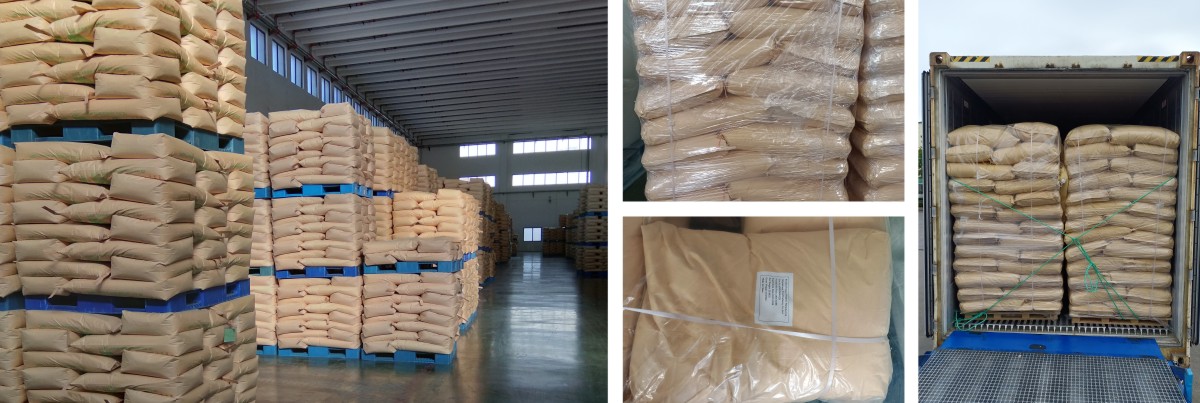
Packaging Options
| Package Size | Format | Packaging Material | MOQ |
|---|---|---|---|
| 25 kg | Powder | Multi-ply kraft paper bag with inner liner | Standard |
| Custom | Powder | Bulk tote / custom specification | Commercial |
All packaging materials comply with EU 10/2011 and FDA 21 CFR food-contact regulations. Custom packaging available for contracted supply programs.
Pallet Configuration
| Item | Specification |
|---|---|
| Bags per Pallet | 40 |
| Pallet Dimensions | 77 × 44 × 20 cm |
| Gross Weight per Pallet | ~1,040 kg |
Storage Conditions
- Storage temperature: ≤25°C (cool, dry environment)
- Relative humidity: ≤60% RH
- Avoid: Moisture, humidity, strong odors, direct sunlight
- Shelf life: 24 months from manufacturing date (sealed, unopened)
- After opening: Reseal tightly; consume within 6 months