
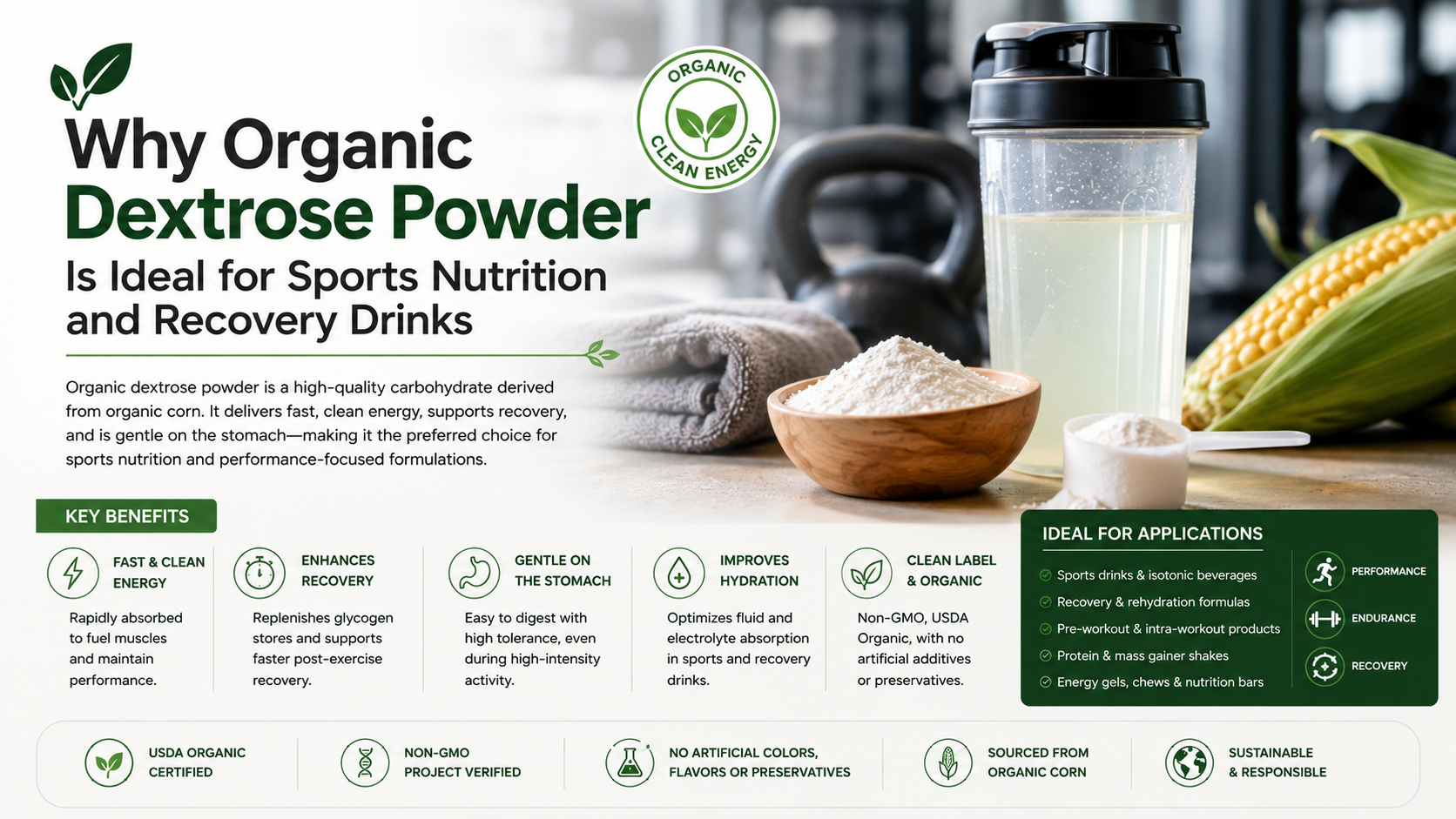
The sports nutrition market has undergone a fundamental transformation over the past decade. What was once a niche category targeting elite athletes has evolved into a mainstream health and wellness sector serving consumers across all fitness levels, age groups, and lifestyle goals. Within this transformation, carbohydrate ingredients — and specifically organic dextrose powder — have become central to the most commercially successful product categories.
Yet despite the ubiquity of carbohydrates in sports nutrition, many manufacturers fail to fully leverage the scientific advantages of organic dextrose powder. The choice between carbohydrate sources is not merely a cost or taste decision — it directly affects athlete performance outcomes, product efficacy claims, and ultimately, consumer satisfaction and brand loyalty.
This article provides sports nutrition formulators, brand managers, and procurement professionals with a comprehensive understanding of why organic dextrose powder is the preferred carbohydrate choice for sports nutrition and recovery drink formulations. We cover the underlying science, practical formulation parameters, competitive differentiation strategies, and regulatory considerations.
The Science of Energy Metabolism in Exercise
Understanding the Athlete’s Energy System
During exercise, the body relies on three primary energy systems, with the contribution of each depending on exercise intensity and duration:
| Energy System | Duration | Primary Fuel | Role of Carbohydrates |
|---|---|---|---|
| Phosphagen (ATP-PCr) | 0–10 seconds | Phosphocreatine | No significant role |
| Glycolytic | 10 seconds – 2 minutes | Muscle glycogen + blood glucose | Critical; glucose is the preferred substrate |
| Oxidative | >2 minutes | Fat + carbohydrates | Carbohydrate remains essential at all intensities |
At any meaningful exercise intensity, carbohydrate availability is the limiting factor for performance. The body’s carbohydrate stores — muscle glycogen and blood glucose — are finite and deplete progressively during exercise. When these stores are exhausted, performance deteriorates rapidly, regardless of fitness level.
Why Glucose Is the Preferred Exercise Fuel
Within the glycolytic energy system, glucose (not fat, not protein) is the preferred substrate for several reasons:
Reason 1 — No Oxygen Required for Initial Breakdown Glucose can be broken down through anaerobic glycolysis without oxygen, making it available at the onset of high-intensity exercise when oxygen delivery is insufficient for fat oxidation.
Reason 2 — Higher Glycolytic Rate Glucose produces ATP (adenosine triphosphate — the body’s energy currency) at a faster rate per unit time than fat metabolism, which is critical during high-intensity efforts.
Reason 3 — Direct Muscle Utilization Blood glucose can be transported directly into muscle cells via the GLUT4 transporter, which is activated by both insulin and muscle contraction. This provides an immediate, non-limited energy source during exercise.
Reason 4 — Complete Oxidation Efficiency In the presence of oxygen, glucose can be completely oxidized through the citric acid cycle and electron transport chain, producing substantially more ATP per molecule than anaerobic metabolism.
The Glycogen Depletion Problem
The average human body stores approximately 300–500g of carbohydrate in muscle glycogen and liver glycogen combined — enough to fuel approximately 90–120 minutes of moderate-intensity exercise. This storage is finite, and depletion leads to:
- Early fatigue: Exercise intensity drops as the body is forced to rely on less efficient fat metabolism
- Central nervous system effects: Reduced blood glucose affects cognitive function and perceived exertion
- Impaired recovery: Insufficient post-exercise glycogen replenishment delays the next training session
- Immune suppression: Carbohydrate restriction increases stress hormone release, suppressing immune function
This is why carbohydrate intake during and after exercise is scientifically validated as essential for sustained performance.
Why Organic Dextrose Powder Is the Optimal Carbohydrate Source
Structural Advantage: Simple Sugar, Immediate Energy
Organic dextrose powder is D-glucose in its simplest, most bioavailable form. Unlike complex carbohydrates (starches, maltodextrins) that require enzymatic breakdown before absorption, dextrose requires no digestion — it is absorbed directly in the intestinal lumen and transported to the bloodstream within minutes of ingestion.
| Carbohydrate Type | Digestion Required | Time to Blood Glucose | Metabolic Pathway |
|---|---|---|---|
| Organic Dextrose Powder | None | 5–15 minutes | Direct absorption → bloodstream |
| Maltodextrin | Partial (salivary/pancreatic amylase) | 15–30 minutes | Polymers → glucose → bloodstream |
| Sucrose | Partial (invertase) | 15–30 minutes | Glucose + fructose → bloodstream |
| Starches | Extensive (multiple enzymes) | 30–60+ minutes | Slowly released glucose |
Insulin-Mediated Absorption Enhancement
Perhaps the most significant advantage of organic dextrose powder in sports nutrition is its ability to stimulate insulin release. This is critically important for post-exercise recovery:
During exercise, GLUT4 transporters in muscle cells are activated by muscle contraction, allowing glucose to enter muscle cells without insulin. However, after exercise, when muscles are no longer contracting, insulin is required to transport glucose into muscle cells for glycogen replenishment.
Organic dextrose powder — by producing a rapid, significant rise in blood glucose — triggers a correspondingly robust insulin response. This insulin acts synergistically with the muscle’s contraction-activated glucose uptake to drive rapid glycogen resynthesis.
Research Validation: Studies consistently demonstrate that consuming glucose (dextrose) after exercise produces faster glycogen replenishment rates than fructose-based carbohydrates, which must be metabolized through the liver first.
Synergy with Protein and Amino Acids
Organic dextrose powder enhances the anabolic (muscle-building) response to protein intake through the glucose-insulin-amino acid (GIA) pathway:
- Dextrose raises blood glucose → insulin is released
- Insulin drives amino acids into muscle cells
- Branched-chain amino acids (BCAAs), leucine, and other amino acids are taken up more efficiently
- Muscle protein synthesis is maximized
This synergy makes organic dextrose powder an ideal co-ingredient with whey protein, plant proteins, and amino acid supplements (BCAAs, EAAs, creatine).
The Organic and Clean-Label Advantage
Beyond its scientific superiority, organic dextrose powder aligns with the values and preferences of the modern sports nutrition consumer:
What Premium Consumers Demand:
| Consumer Value | How Organic Dextrose Powder Addresses It |
|---|---|
| Clean ingredients | Derived from organic, non-GMO corn; minimal processing |
| Transparency | Simple, recognizable ingredient name on labels |
| Sustainability | Organic farming practices support soil health |
| Safety | Certified free from pesticide residues and GMOs |
| Premium positioning | Organic certification justifies higher retail price points |
Sports nutrition brands that incorporate organic ingredients — including organic dextrose powder — command 30–80% price premiums over conventional equivalents, making the ingredient cost premium economically justified.
Application Categories: Where Organic Dextrose Powder Excels
Pre-Workout Formulas
Objective: Maximize glycogen availability before training to delay fatigue onset
Why Organic Dextrose Powder: Pre-loading with dextrose 30–60 minutes before training maximizes blood glucose availability during the initial phase of exercise, when glycogen depletion begins.
Formulation Note: Combine with caffeine (150–200mg) for synergistic alertness effects. Organic green tea extract provides natural caffeine with added antioxidant benefits.
Intra-Workout Drinks
Objective: Sustain blood glucose during extended training sessions (>60 minutes)
Why Organic Dextrose Powder: During prolonged exercise, blood glucose becomes increasingly important as muscle glycogen depletes. Rapid-absorbing dextrose maintains blood glucose at optimal levels.
Carbohydrate Blending Consideration: Some formulators combine organic dextrose powder with organic maltodextrin for intra-workout formulas, pairing fast (dextrose) with sustained (maltodextrin) energy delivery. A common ratio is 60:40 or 70:30 (dextrose:maltodextrin).
Post-Workout Recovery Shakes
Objective: Maximize glycogen replenishment and muscle protein synthesis as rapidly as possible
Why Organic Dextrose Powder: Post-workout is the window of opportunity for fastest glycogen resynthesis. The combination of rapid glucose absorption, strong insulin response, and synergy with protein makes organic dextrose powder the single most effective carbohydrate for this application.
Formulation Matrix — Recovery Shake:
| Ingredient Category | % | Specific Ingredients |
|---|---|---|
| Protein (recovery) | 20–30% | Whey protein isolate/concentrate |
| Carbohydrate (dextrose) | 15–25% | Organic dextrose powder |
| Fat (optional) | 5–15% | MCT oil, organic coconut oil |
| Electrolytes | 2–5% | Sodium citrate, potassium citrate |
| Flavoring | 1–3% | Natural flavors |
| Functional additives | 0.5–2% | Creatine, BCAAs, HMB |
| Sweetener (optional) | 0–0.5% | Monk fruit, stevia |
Recommended Dextrose Dose: 0.8–1.2g per kg body weight within 30 minutes post-exercise for optimal glycogen replenishment.
Sports Gels and Energy Chews
Objective: Provide concentrated, portable energy during training or competition
Why Organic Dextrose Powder: In gel and chew formats, organic dextrose powder provides concentrated energy in a small volume. The high solubility allows for rapid dissolution and absorption.
Formulation Advantage: Organic dextrose powder contributes clean sweetness without the flavor-masking effects that can interfere with the strongly flavored ingredients (caffeine, electrolytes, B-vitamins) commonly used in energy gel formulations.
Electrolyte and Hydration Drinks
Objective: Replace fluids and electrolytes lost during exercise while maintaining energy
Why Organic Dextrose Powder: The glucose-sodium co-transport mechanism (SGLT1) in the intestinal epithelium requires glucose to facilitate sodium and water absorption. Organic dextrose powder is the most efficient carbohydrate source for this purpose.
Scientific Basis: Oral Rehydration Therapy (ORT) — the same principle used in medical settings to treat dehydration — relies on the glucose-sodium co-transport mechanism. Sports hydration drinks that incorporate dextrose achieve superior fluid absorption compared to non-glucose electrolyte drinks.
Formulation Parameters and Technical Guidance
Optimal Carbohydrate Concentration for Absorption
Research on gastric emptying and intestinal absorption rates provides clear guidance on optimal carbohydrate concentrations in sports drinks:
| Concentration | Physiological Effect | Formulation Recommendation |
|---|---|---|
| <4% w/v | Rapid gastric emptying; fast absorption | Suitable for very short exercise; may not provide sufficient energy |
| 4–6% w/v | Optimal balance — fast absorption + sustained delivery | Ideal for most sports drinks |
| 6–8% w/v | Maximum energy delivery; slightly slower gastric emptying | For high-intensity efforts; test tolerability |
| >8% w/v | Delayed gastric emptying; GI distress risk | Not recommended for most athletes |
Organic Dextrose Powder Application: At 4–6% concentration, organic dextrose powder delivers 20–30g of carbohydrate per 500mL serving — within the recommended 30–60g per hour range for sustained exercise.
Sweetness Calibration
Organic dextrose powder’s moderate sweetness (~70% of sucrose) is well-suited for sports nutrition applications:
| Sweetness Goal | Formulation Approach |
|---|---|
| Light sweetness | Dextrose alone at 4–6% provides subtle sweetness |
| Moderate sweetness | Combine with high-intensity sweeteners (monk fruit, stevia) to reduce total carbohydrate |
| High sweetness | Use organic glucose syrup in addition to or instead of dextrose |
pH and Acid Compatibility
Organic dextrose powder is compatible with acidic sports drink formulations (typical pH 2.5–4.0). At these pH levels:
- No chemical degradation occurs
- Dissolution remains complete
- Flavor integration is unaffected
Commonly used food acids in sports drinks (citric acid, phosphoric acid, malic acid) do not react with dextrose under normal storage conditions.
Mixing and Solubility Guidelines
Best Practices:
- Pre-dissolve: Always dissolve organic dextrose powder in the water phase before adding acids, proteins, or other ingredients
- Water temperature: 20–40°C water achieves complete dissolution in <60 seconds
- Agitation: Gentle stirring is sufficient; avoid high-shear mixing that introduces air
- Order of addition: Water → Dextrose → Acids/Flavors → Proteins → Thickeners
Competitive Differentiation for Sports Nutrition Brands
The Clean-Label Sports Nutrition Opportunity
The sports nutrition consumer is increasingly sophisticated, seeking products that align with broader lifestyle values:
Market Trends Driving Organic Ingredient Adoption:
- Clean Label Movement: Consumers increasingly read ingredient lists and prefer products with simple, recognizable ingredients
- Non-GMO Awareness: Growing consumer concern about genetic modification in food ingredients
- Sustainability Focus: Millennial and Gen-Z consumers prefer brands demonstrating environmental responsibility
- Holistic Health: Integration of sports nutrition with general wellness and clean living values
Label Claim Strategy
Organic dextrose powder enables the following approved label claims (verify with applicable regulations):
| Claim Type | Applicability | Regulatory Note |
|---|---|---|
| “Organic” | When certified | Requires USDA/EU/JAS organic certification for the finished product |
| “Non-GMO” | When verified | Non-GMO Project Verification recommended |
| “Clean Label” | Marketing claim | Supported by simple ingredient name and recognizable source |
| “Gluten-Free” | Typically applicable | Dextrose is gluten-free; verify cross-contamination protocols |
| “Vegan” | Typically applicable | Dextrose is plant-derived; verify processing aids |
| “Sustained Energy” | When blended | Combine with maltodextrin for sustained energy claims |
Premium Positioning Case Study
A sports nutrition brand using organic dextrose powder in its recovery product line can differentiate across multiple dimensions:
Brand Positioning Matrix:
| Dimension | Conventional Product | Organic Alternative |
|---|---|---|
| Ingredient sourcing | Conventional corn-derived | Certified organic, non-GMO corn |
| Label complexity | Dextrose + synthetic additives | Simple, organic-certified ingredients |
| Consumer perception | Mainstream sports nutrition | Premium wellness-oriented |
| Retail positioning | Standard sports nutrition aisle | Premium or natural products section |
| Retail price premium | Baseline | 40–80% higher |
| Margin opportunity | Standard | Significantly higher |
Conclusion
Organic dextrose powder is not simply another carbohydrate option for sports nutrition — it is the scientifically superior choice for energy delivery and recovery formulations, amplified by the market advantages of organic certification and clean-label positioning.
The physiological mechanisms are clear: as the most rapidly absorbed carbohydrate source, organic dextrose powder maximizes blood glucose availability during exercise, triggers optimal insulin responses for post-workout glycogen replenishment, and synergizes with protein and amino acids to enhance muscle recovery.
For manufacturers, the strategic case is equally compelling. Organic ingredients command premium pricing, appeal to the most valuable consumer segments (clean-label, sustainability-conscious, wellness-oriented), and enable positioning in the fastest-growing sports nutrition subcategories.
The question is no longer whether organic dextrose powder belongs in sports nutrition formulations — it is how quickly your brand will make the transition to capture this competitive advantage.
FAQ
Q1: What makes organic dextrose powder better than maltodextrin for post-workout recovery?
Organic dextrose powder is superior for post-workout recovery because it requires no enzymatic digestion and is absorbed directly into the bloodstream within 5–15 minutes of ingestion. This rapid absorption triggers a strong insulin response, which drives glucose and amino acids into muscle cells at the optimal time for glycogen replenishment and muscle protein synthesis. Maltodextrin must be broken down by salivary and pancreatic amylase before absorption, delaying the energy delivery and insulin response by 15–30 minutes.
Q2: What is the optimal carbohydrate-to-protein ratio for post-workout recovery drinks using organic dextrose powder?
Research supports a 3:1 to 4:1 carbohydrate-to-protein ratio for maximizing glycogen replenishment and muscle protein synthesis. For a standard post-workout shake providing 25g of protein, use 75–100g of organic dextrose powder. This ratio can be adjusted based on training intensity (higher for endurance athletes, moderate for strength-focused training) and individual goals.
Q3: Can organic dextrose powder be used in endurance sports nutrition products?
Absolutely. Organic dextrose powder is one of the most effective carbohydrate sources for endurance sports. For events lasting more than 60 minutes, the recommended carbohydrate intake is 30–90g per hour, achievable with 500–1,500mL of a 6% dextrose solution per hour. For ultra-endurance events, combining organic dextrose powder with organic maltodextrin (60:40 ratio) provides both fast and sustained energy delivery.
Q4: What is the recommended dosage of organic dextrose powder in pre-workout formulas?
For pre-workout formulas targeting energy and performance, a typical dose of organic dextrose powder is 0.5–1.0g per kg of body weight, consumed 30–60 minutes before training. For a 70kg athlete, this translates to 35–70g of dextrose. This pre-loading maximizes glycogen availability during training and can improve time-to-exhaustion by 10–20% in studies using glucose pre-loading.
Q5: How does organic dextrose powder interact with electrolytes in sports drinks?
Organic dextrose powder and electrolytes have a synergistic relationship in sports drinks. The glucose-sodium co-transport mechanism (SGLT1) in the intestinal epithelium requires glucose to facilitate sodium and water absorption. Formulating sports drinks with organic dextrose powder at 4–6% concentration along with sodium (60–90 mmol/L) and potassium (20–25 mmol/L) achieves superior hydration compared to electrolyte drinks without glucose.
Q6: Is organic dextrose powder suitable for clean-label sports nutrition products?
Yes. Organic dextrose powder is one of the most clean-label-compatible carbohydrate ingredients available. Its simple chemical name, recognizable origin (organic corn), minimal processing, and organic/non-GMO certifications make it an ideal ingredient for clean-label sports nutrition brands. Combined with organic proteins, organic flavorings, and organic sweeteners (monk fruit, stevia), it enables a completely clean-label finished product.
Q7: What is the glycemic index of organic dextrose powder and why does it matter for sports nutrition?
Organic dextrose powder has a glycemic index of 100–106 (high), which is actually a functional advantage in sports nutrition. The high GI means rapid blood glucose elevation, strong insulin response, and fast glycogen replenishment — exactly what athletes need. For recovery products, a high GI carbohydrate is optimal. For sustained-energy products (meal replacements, endurance fuel), consider blending with lower-GI organic maltodextrin.
Q8: How does organic dextrose powder support sustainable brand growth in the sports nutrition market?
Organic ingredients support sustainable brand growth by appealing to the most valuable consumer segments (Millennials, Gen-Z, premium wellness consumers) who prioritize clean-label, sustainable sourcing in their purchasing decisions. Brands using organic ingredients typically experience higher customer loyalty, stronger word-of-mouth marketing, and better shelf placement in premium retail channels — all of which contribute to long-term margin growth that far exceeds the ingredient cost premium.
Recommended Products

Organic Dextrose Powder
Available in two crystalline forms — Organic Dextrose Monohydrate (CAS 5996-10-1, ≥99.5% purity) and…

Organic Glucose Syrup
Organic Glucose Syrup by ORGANICWAY is a versatile, clean-label liquid sweetener derived from certified…

Organic Maltodextrin Powder
Available in three Dextrose Equivalent (DE) grades — DE 8-10, DE 10-15, and DE…
Related Posts


