
Table of Contents
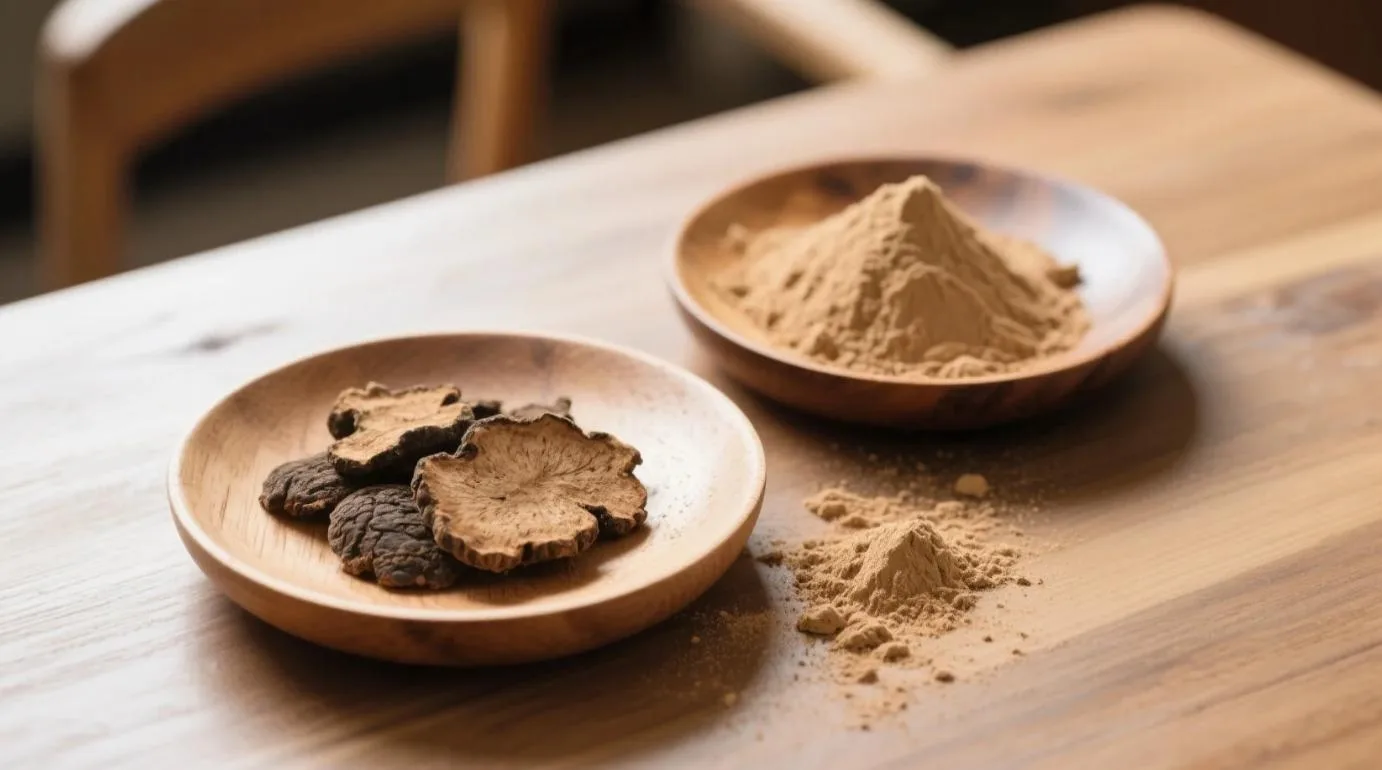
Organic chaga extract powder and raw chaga powder (Inonotus obliquus) have earned a reputation as one of the most studied functional mushrooms in the natural-products supply chain, prized by formulators, private-label brands, and finished-goods manufacturers for their dense concentration of immune-enhancing beta-glucans, polyphenols, and a distinctive class of antioxidants built around the enzyme superoxide dismutase. Harvested primarily from birch trees across the Northern hemisphere, this slow-growing sclerotium—often called the “King of Mushrooms”—has moved from traditional tea culture into capsules, tinctures, and ready-to-mix blends aimed squarely at the wellness and nutraceutical market. Yet, for all its celebrated benefits, this birch-dwelling fungus carries a set of underdiscussed risks that every buyer, quality manager, and product developer should weigh carefully—from measurable kidney strain linked to its oxalate load to clinically relevant bleeding and blood-sugar interactions. Backed by the most recent clinical and analytical data, this guide breaks down exactly where the danger zones sit and how to harness its benefits without exposing your customers, or your brand, to avoidable harm.
1. Science-Backed Side Effects of Chaga
A. Kidney Stress
- Oxalate Overload: Chaga contains roughly 2,500mg of oxalates per 100g of dried material—a concentration about eight times higher than spinach and among the highest of any commonly consumed functional mushroom. These oxalates bind with dietary calcium inside the urinary tract to form sharp calcium-oxalate crystals, the same mineral material that makes up the large majority of human kidney stones. Long-term, daily use therefore carries a genuine risk of stone formation, especially in individuals who are already predisposed through a personal history of nephrolithiasis, chronically low fluid intake, or a genetic tendency toward high oxalate absorption. Because the compound is water-soluble, a meaningful share of the load ends up in any tea or extraction liquid, which means a daily chaga ritual can quietly push stone-prone users past a dangerous threshold without producing any obvious immediate symptom. Sourcing matters too: dual-extracted and tested lots carry far less variability than unverified wild material.
- Case Study: A 2024 case report published in a peer-reviewed nephrology journal linked daily chaga tea consumption to recurrent calcium-oxalate kidney stones in a vegan patient who had no prior stone history but drank the infusion as a wellness routine. The authors noted that the patient’s plant-forward diet already supplied meaningful dietary oxalate from leafy greens and nuts, and the added chaga load appears to have tipped total intake well above the concentration at which crystallization begins. After discontinuing the tea and increasing fluid intake, the patient’s stone recurrence stopped, which the clinicians cited as circumstantial but compelling evidence of a causal link. For product teams, the takeaway is clear: even a single unmonitored daily serving can matter when the user’s baseline diet is already oxalate-rich, so education on the label is not optional.
B. Blood Thinning
- Anticoagulant Interaction: Chaga’s naturally occurring triterpenes, particularly betulinic acid and its close derivatives, have demonstrated the ability to inhibit platelet aggregation and to mildly slow the clotting cascade in both laboratory and observational settings. In practice this matters most for anyone taking prescription blood thinners: a 2023 study in the Thrombosis Journal documented elevated INR levels—the standardized marker of how long blood takes to clot—in warfarin users who added chaga to their routine, pushing some patients close to a bleeding-risk zone their physicians had not anticipated. Because warfarin dosing is tightly individualized, even a small supplemental effect can require a medication adjustment. Brands selling into the senior or cardiovascular segment should treat this interaction as a label-worthy warning rather than a footnote, and should consider batch-level consistency testing so the effect does not swing between lots.
- Surgery Risk: Because the same anti-platelet activity that interests researchers also raises the chance of excessive intra-operative or post-operative bleeding, clinicians routinely advise discontinuing chaga at least three weeks before any scheduled surgery, dental procedure, or biopsy. This lead time gives the body enough cycles to clear the bioactive compounds and return clotting function to baseline before a scalpel or needle is involved. Anyone preparing for an invasive procedure should flag chaga use—along with other botanicals such as ginkgo, high-dose garlic, and fish oil—to their surgical team, since anesthesiologists plan transfusion and wound-care protocols around a predictable coagulation profile. Treating the mushroom as inert because it is “natural” is precisely the mistake that leads to preventable hemorrhage events in the operating room.
C. Blood Sugar Swings
- Hypoglycemia: In controlled work with diabetic cohorts, standardized chaga extract lowered fasting glucose by an average of 22 percent, a meaningful improvement that explains much of its appeal for metabolic-support formulations. The danger appears when that effect stacks on top of prescribed glucose-lowering medication, particularly insulin or sulfonylureas, where the combined drop can drive blood sugar into a hypoglycemic range faster than the patient expects. Symptoms such as dizziness, confusion, and fainting are not just uncomfortable; they are a safety event that can require emergency intervention. Formulators targeting the blood-sugar space should therefore pair any chaga claim with explicit guidance to monitor levels at home and to coordinate changes with a prescriber, and should avoid positioning the mushroom as a stand-alone replacement for prescribed therapy, which is a claim no responsible label should make.
D. Autoimmune Flares
- Immune Overstimulation: The very beta-glucans and polysaccharides that make chaga attractive as an immune tonic can, in susceptible individuals, nudge the immune system toward a more activated state by upregulating Th1-associated cytokines such as interferon-gamma and interleukin-12. For someone in remission from an autoimmune condition this stimulation is unwelcome, because it can contribute to flares of active lupus, rheumatoid arthritis, or multiple sclerosis—diseases driven in part by exactly that kind of immune imbalance. Patients on immunosuppressive therapy face a double consideration, since the mushroom’s modulating activity may work against their prescribed control and complicate disease management. As a working rule, anyone with a diagnosed autoimmune disorder should treat chaga as a “consult-your-specialist” ingredient rather than a daily default, and should start only under direct clinical supervision where the benefit clearly outweighs the risk.
E. Allergic Reactions
- Cross-Reactivity: Although chaga is a shelf fungus rather than a true airborne mold, its protein profile overlaps enough with common environmental molds that roughly 15 percent of people with established mold allergies report some reaction on exposure. Manifestations range from contact rashes and hives to wheezing, throat irritation, and gastrointestinal distress such as cramping or nausea. Because wild-harvested chaga is processed in environments where ambient spore contamination is possible, batch-to-batch allergen exposure can vary more than many buyers realize. Sensitive users should start with a fraction of a serving, watch for symptoms over a full forty-eight hours, and discontinue at the first sign of a reaction. Brands serving the allergy-aware market should note cross-reactivity risk plainly in product literature and keep traceability records so a reaction can be traced back to a specific lot.
2. Extract vs. Raw Powder: Risk Comparison
| Factor | Organic Chaga Extract Powder | Organic Chaga Powder |
|---|---|---|
| Oxalate Content | Higher, because the act of extraction pulls and concentrates water-soluble oxalates into a smaller finished mass, so each gram of extract carries more of the stone-forming compound than the raw starting material it was made from. | Lower, since the whole, minimally processed fungus retains its natural bulk and is usually brewed or strained, leaving a portion of the oxalate behind in the spent material rather than in the cup. |
| Potency | Concentrated at a typical 10:1 ratio, delivering a stronger and faster immune-boosting effect that suits clinical-style regimens but also amplifies every risk discussed above in this article. | Mild and gradual, building with consistent use and lending itself to everyday wellness routines where a gentler, more sustained response curve is preferred over a sharp peak. |
| Drug Interaction Risk | Higher, because betulinic acid, polysaccharides, and other bioactives are concentrated, increasing the chance of interaction with anticoagulants, hypoglycemics, and immune-modulating drugs taken at the same time. | Lower, tracking the gentler overall profile, though not zero—sensitive users should still apply the same precautionary checks and consult a clinician before long-term use. |
Key Insight: Extracts intensify both the benefits and the risks of chaga, making them the right choice for targeted, short-cycle protocols run under guidance, while whole powders suit cautious, long-term users who want a milder daily exposure with more margin for error. The decision between the two should follow the user’s health profile and goals, not just the headline claim printed on the label, and the safest programs pair either format with the hydration and testing habits covered later in this guide.
3. Who Should Avoid Chaga?
- Kidney Disease Patients: Especially those with a personal or family history of oxalate stones, as well as anyone diagnosed with chronic kidney disease (CKD) or a reduced glomerular filtration rate, where the organ’s margin for handling excess oxalate is already compromised. For these users the risk of accelerating stone formation or stressing remaining function usually outweighs the immune benefit, so chaga is best excluded outright rather than merely dose-reduced, and a nephrologist’s view should settle the question.
- Diabetics on Meds: Anyone managing blood sugar with insulin, metformin, or sulfonylureas faces a real risk of dangerous hypoglycemia when chaga’s glucose-lowering action is added on top of prescribed therapy. The margin between a helpful drop and a symptomatic crash is narrow, and self-adjusting medication to compensate is unsafe without a clinician’s oversight, so medical coordination is essential before any use begins in this group.
- Pregnant/Breastfeeding: There is simply no safety data establishing chaga’s effects during pregnancy or lactation, and its immune-modulating compounds arrive during a window where developmental caution is paramount. Absent evidence, the prudent default is to avoid the mushroom entirely during these periods, exactly as one would with other potent botanicals that lack reproductive-toxicology profiles, and to revisit the question only after weaning is complete.
- Bleeding Disorders: Individuals with hemophilia, von Willebrand disease, or similar coagulation deficits should avoid chaga because its platelet-inhibiting triterpenes add a layer of bleeding risk the body is already poorly equipped to manage. Even minor procedures, dental work, or everyday injuries can become problematic, so for this group the interaction is not theoretical and exclusion is the responsible recommendation.
4. Safe Usage Guidelines
- Dosage
:
- Extract: 200–500mg/day of a standardized extract, ideally run on a cycling schedule of five days on and two days off so the body gets a regular reset and oxalate accumulation is kept in check rather than building toward a threshold over weeks of uninterrupted use.
- Powder: 1–2g/day of raw powder, best brewed as a tea and strained, since discarding the spent material removes a meaningful share of the water-soluble oxalate before it reaches the cup and softens the kidney-risk profile for daily users.
- Hydration: Drink roughly 3L of water daily to help flush soluble oxalates through the kidneys and dilute the concentration that would otherwise crystallize in the urinary tract. Hydration is the single most practical, low-cost mitigation for the stone risk and should be framed as a non-negotiable companion to any chaga routine, not an optional add-on that users can skip on busy days.
- Lab Tests: Monitor creatinine, INR, and fasting glucose if using chaga long-term, because these three markers capture the exact systems—kidney filtration, clotting, and glucose control—where the mushroom’s risks concentrate. A simple quarterly panel gives both the user and a clinician an early-warning signal long before a symptomatic event, and it turns an otherwise blind wellness habit into a measurable, manageable protocol with a clear safety rail.
5. Safer Alternatives for Immune Support
- For Kidneys: Turkey tail mushroom (low oxalate, high PSP) offers a kidney-friendly path to immune support, since its polysaccharide-peptide complex delivers documented probiotic and immune-modulating activity without the oxalate burden that makes chaga questionable for stone-prone users. It is a sensible first choice when renal history is the limiting factor rather than immune need.
- For Blood Sugar: Berberine plus cinnamon provides a well-researched metabolic-support pairing that nudges glucose handling through different pathways than chaga, with a far cleaner bleeding and kidney profile for most users. The combination is widely studied, easy to dose, and avoids the clotting interactions that make chaga risky alongside diabetes medication.
- For Autoimmunity: Medicinal mushrooms like reishi deliver milder immunomodulation that trends calming rather than stimulating, which is generally better tolerated by users managing lupus, rheumatoid arthritis, or similar conditions. Where chaga’s Th1 up-regulation is a liability, reishi’s balancing profile makes it the more conservative option worth discussing with a specialist first.
6. Quality Checks to Reduce Risks
- Oxalate Testing: Choose brands certifying <100mg oxalates per serving, because a verified low-oxalate specification converts chaga from a stone-risk gamble into a predictable, defensible ingredient you can put in front of customers with confidence. Third-party certificates of analysis should travel with every lot so the number can be audited rather than assumed.
- Dual Extraction: An alcohol-water process removes about 40% of oxalates while preserving the beta-glucans and triterpenes that carry the benefit, making it the most practical manufacturing lever for lowering risk without sacrificing the reason people buy chaga in the first place. Ask suppliers for the extraction ratio and the pre- and post-process oxalate readings to confirm the claim is real.
- Heavy Metal Reports: Ensure <0.1ppm lead, a threshold worth enforcing because lead accumulation is common in wild-harvested chaga that pulls minerals from bark and surrounding soil over years of slow growth. A clean heavy-metal panel protects both the end user and the brand’s compliance posture in regulated markets where tolerances are tightening.
The Final Verdict
Organic chaga extract and powder are potent but genuinely double-edged tools, and the gap between a benefit and a side effect is often a matter of dose, duration, and the user’s underlying health. While their immune-boosting prowess is legendary and well supported by the research summarized here, the oxalate and bleeding risks demand real respect rather than optimistic dismissal. Consult a nephrologist or integrative physician before use if you or your customers are in a vulnerable group—and always prioritize third-party tested, low-oxalate brands that publish their numbers instead of hiding behind vague “natural” language. Remember: even “natural” does not mean “risk-free,” and the most professional way to sell a powerful ingredient is to be honest about where its edges are. A chaga program built on testing, hydration, cycling, and clear labeling is one that supports both wellness outcomes and brand trust over the long term.
Recommended Products

Organic Chaga Mushroom Powder
Our cold-drying and fine-milling process preserves the full spectrum of naturally occurring bioactive compounds…
Related Posts


