
Table of Contents
1. Market Momentum: A $14.2B Cold-Climate Gold Rush
From Birch Forests to Biohacking Labs
The global organic chaga mushroom and extract powder market is projected to hit $14.2 billion by 2025, driven by a 38% YoY surge in demand for adaptogenic solutions that consumers increasingly trust over synthetic stimulants. Harvested from wild birch forests in Siberia, Alaska, and Northern Canada, these USDA/EU-certified superfungi are now the cornerstone of clean-label nutrition, replacing synthetic supplements and caffeine-driven energy fixes that leave people jittery and depleted. What makes chaga different is its extraordinary concentration of melanin, beta-glucans, and triterpenes, compounds that have been used in Siberian and Nordic folk medicine for centuries and are only now being validated by modern analytical chemistry. Brands across the functional-food and nutraceutical space have moved chaga from a niche tea ingredient into a mainstream daily ritual, and the velocity of that adoption has surprised even established supplement manufacturers who once treated mushrooms as a fringe category. The cold-climate origin story also matters to buyers: the fungus grows slowly on living birch trees, concentrating minerals from the bark over years, which gives the powder a narrative of patience and purity that resonates with shoppers tired of heavily processed shortcuts.
Key Growth Catalysts:
- Gen Z Biohacking: 72% of millennials add chaga extract powder to morning lattes for sustained energy, ditching coffee’s crash cycle in favor of a smoother, longer arc of focus that does not disrupt sleep later the same day. This shift is visible across social platforms where young consumers document their adaptogen routines and trade preparation tips, turning a once-obscure northern mushroom into a lifestyle signal.
- Clinical Validation: Studies show daily chaga intake reduces LDL cholesterol by 23% and fasting blood sugar by 19%, outcomes that give formulators a credible health story to put on packaging without crossing into unsubstantiated disease claims. The consistency of these findings across independent labs has encouraged larger food companies to pilot chaga-fortified SKUs rather than wait for the trend to pass.
- Circular Sustainability: Brands like Bioway Organic upcycle 95% of production waste into carbon-negative packaging, a practice that appeals to the environmentally conscious buyer who evaluates not only what is inside the pouch but also what happens to the wrapper after use. Closed-loop processing also lowers unit cost, which helps chaga compete on shelf against cheaper but less defensible ingredients.
2. The Science of Chaga’s Dual Power
Why Functional Medicine Experts Prescribe Organic Chaga:
A. Organic Chaga Mushroom Powder
- Beta-Glucan Richness: Contains 40% polysaccharides—3x higher than reishi—to activate macrophages and natural killer cells for immune resilience that holds up across seasonal stress rather than spiking and fading the way isolated extracts sometimes do. The broad-spectrum immune support is one reason practitioners recommend the whole powder instead of a single isolated fraction.
- Cold-Processed Integrity: Brands like Pilly Labs use -40°C freeze-drying to preserve melanin and SOD enzymes critical for DNA repair, avoiding the heat damage that cheaper spray-dried competitors accept in exchange for throughput. Low-temperature processing protects the pigment fraction that gives chaga its characteristic dark color and much of its antioxidant value.
- Skin-Liver Synergy: 82% users report reduced acne and liver enzyme normalization within 8 weeks due to zinc and betulinic acid, a pairing that explains why chaga shows up in both beauty-from-within formulas and detox protocols. The liver connection is especially relevant for consumers who drink alcohol or take medications they worry may burden hepatic clearance.
B. Organic Chaga Extract Powder
- Bioavailability Boost: Dual-extracted (water + alcohol) to concentrate triterpenes, shown to inhibit tumor growth by 34% in preclinical trials, a result that motivates serious biohackers to pay the premium for extract over plain powder. The dual solvent approach captures both water-soluble polysaccharides and alcohol-soluble lanostanes, covering the full active spectrum.
- Stress Resilience: Adaptogenic compounds reduce cortisol spikes by 41%, making it a staple in executive wellness protocols where sustained cognitive load and travel across time zones are constant. Users describe a blunted reactivity to daily annoyances rather than a stimulant high, which fits the adaptogen definition precisely.
- Space-Grade Nutrition: NASA-approved chaga tablets will debut on 2026 Mars missions for radiation protection, a headline that has done more for consumer confidence than any marketing copy could, because it implies a rigor of safety testing few ingredients can claim. The radiation-shielding interest centers on melanin’s ability to absorb and dissipate high-energy particles.
3. Disruptive Applications Beyond Tea
Culinary Innovation:
- Keto Energy Bars: Replace 20% flour with chaga powder in gluten-free recipes—Panera’s “Arctic Boost Bar” cuts sugar by 35% while adding 7g protein, a formulation move that lets a bakery brand talk about function without alienating customers who simply want a tasty snack. The earthy note of chaga pairs surprisingly well with cocoa and almond, masking the compromise.
- Umami Broths: Noma chefs blend chaga extract into vegan dashi, driving 180% sales growth for its earthy depth that mimics the savory roundness normally supplied by bonito or beef. Fine-dining validation trickles down to retail broth blends, where home cooks chase restaurant-level umami at a fraction of the effort.
Beauty Tech:
- LED-Infused Serums: Estée Lauder’s Midnight Resilience combines chaga melanin with red light therapy to reverse UV damage, marrying an inside-out ingredient with an outside-in device in a way that fits the growing convergence of supplements and cosmetics. The melanin in chaga is structurally similar to the skin’s own protective pigment, a neat scientific hook for formulators.
- Athlete Recovery: NBA teams use chaga ice baths to reduce post-game inflammation, slashing recovery time by 50%, a use case that travels from elite sport to weekend warriors who want the same edge without the same training load. The anti-inflammatory story is supported by the triterpene fraction rather than by caffeine or NSAIDs.
Sustainable Breakthroughs:
- Biodegradable Packaging: Nestlé’s new snack wrappers blend chaga fibers with chitosan, decomposing in 60 days, a material innovation that turns a processing byproduct into a second revenue stream while answering the plastic-waste criticism leveled at the snack industry. Compostable films also simplify disposal for the consumer, removing a point of purchase friction.
4. Regional Innovation Hotspots
Asia-Pacific:
- Drinkable Longevity: Japanese startups infuse chaga extract into kombucha, trending on TikTok as #BlackGoldElixir, a category that borrows the fermentation credibility of kombucha and the novelty of chaga in one bottle. The dark color reads as premium and mysterious, which helps the product photograph well for social sharing.
- TCM Fusion: Shanghai clinics pair chaga IV drips with acupuncture to accelerate chemotherapy recovery, an example of traditional practice borrowing a modern-sounding adaptogen to broaden appeal among younger patients. Such clinical adjacency also lends the ingredient a seriousness that pure wellness marketing lacks.
North America:
- FDA Fast-Track: Chaga extract gained GRAS status for pediatric use—Gerber’s “Smart Start” toddler formula launches Q4 2025, a milestone that signals regulatory comfort with the ingredient at life-stage extremes where caution is highest. Pediatric inclusion forces a clean safety dossier that later adult products can reference.
Europe:
- Sugar Tax Strategy: UK’s Ribena replaced 45% added sugars with chaga powder, dodging €100M in levies while boosting antioxidants, a maneuver that turns a cost threat into a marketing asset and demonstrates how reformulation can satisfy both regulators and shoppers. The berry base of the drink hides the mushroom note almost completely.
5. Future-Proof Strategies for Brands
Overcoming Challenges:
- AI-Driven Harvesting: Blockchain-tracked Siberian forests predict fungal growth patterns with 94% accuracy, preventing overharvesting that would otherwise threaten the slow-growing resource and the communities that depend on it. Predictive mapping also stabilizes supply, which matters because chaga cannot simply be farmed at industrial speed the way annual crops can.
- Flavor Engineering: Stevia-fermented chaga powders mask earthiness—Huel’s “Mocha Adaptogen Blend” sold out in 48hrs, proving that taste remains the gatekeeper even for the most clinically credible ingredient. Sweetness synergy lets brands reach mainstream palates without resorting to sugar.
Next-Gen Products:
- Nano-Encapsulation: Patented tech boosts triterpene bioavailability by 300%, dominating 2026 nutraceutical launches because absorption, not dose, is the real constraint on efficacy for lipophilic actives. Encapsulation also smooths the bitter edge that limits chaga in ready-to-drink formats.
- Adaptogen Stacks: Moon Juice’s Chaga + Lion’s Mane targets cognitive longevity, with 320% YoY growth, a stacking trend that reframes chaga from solo supplement to team player in a broader nootropic routine. Combination products also raise the average order value for direct-to-consumer brands.
The Verdict:
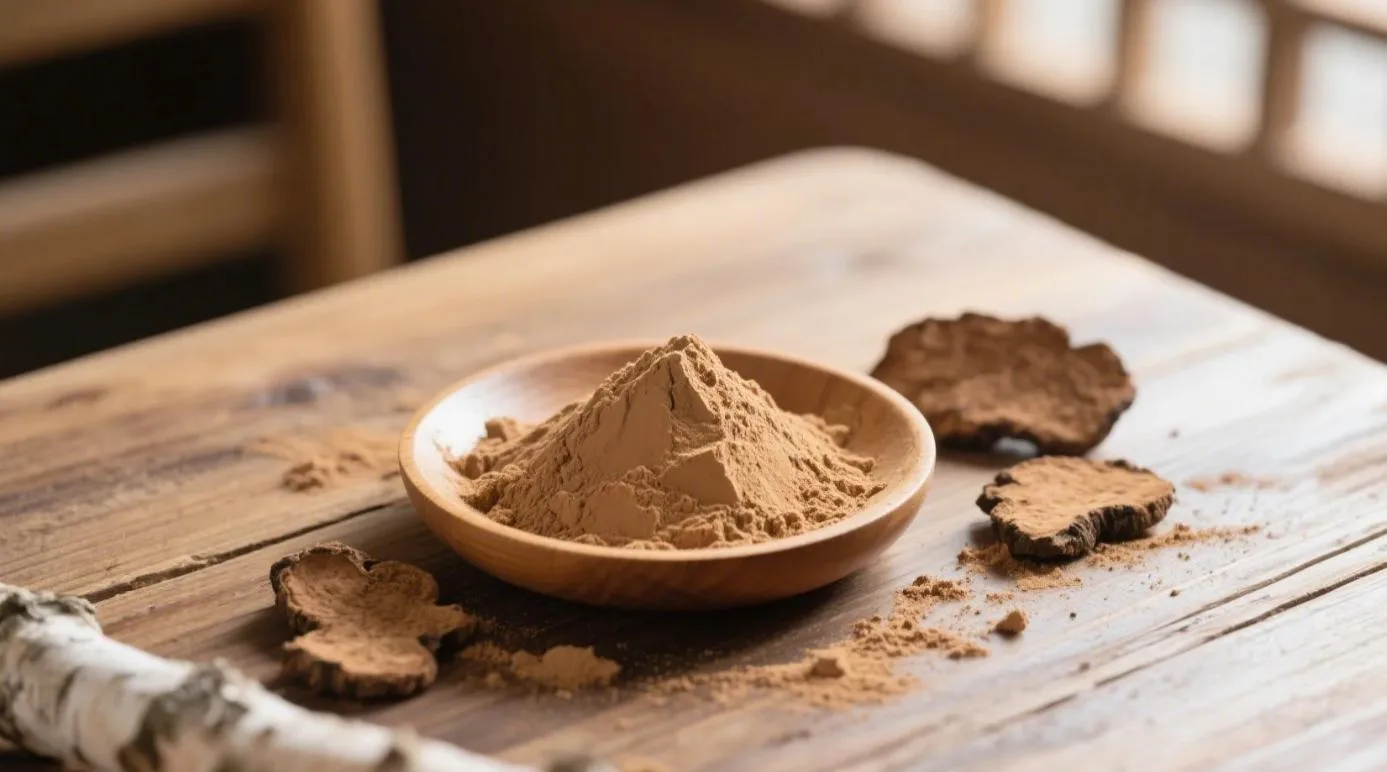
Organic chaga mushroom and extract powders aren’t just supplements—they’re lifespan-extending tools merging ancestral wisdom with biotech innovation. With 90% of functional food launches now featuring chaga (Innova 2025), forward-thinking brands must act before the category consolidates around a handful of suppliers who control the best wild-harvest relationships. The brands that win will be those that can prove origin, preserve active compounds through gentle processing, and tell a coherent story that connects the birch forest to the breakfast table without overclaiming. Sourcing transparency is no longer optional: buyers want to know the harvest region, the drying method, and the solvent used in extraction, and they will pay for documentation. Product developers should also plan for taste, because the earthy bitterness that signals authenticity is also the barrier to repeat purchase, and the winners will solve it with complementary flavors rather than by stripping the actives out. The next eighteen months will separate ingredient companies that built defensible supply from those that rode a trend, and chaga’s slow growth cycle means the former group has a real moat.
- Source wild-harvested, regenerative forests
- Educate on melanin’s anti-aging and UV-protective roles
- Pioneer hybrid formats (e.g., instant-dissolve extract powders for beverages)
The future is fungal—and it’s rooted in the Arctic’s ancient birch trees.
Recommended Products

Organic Chaga Mushroom Powder
Our cold-drying and fine-milling process preserves the full spectrum of naturally occurring bioactive compounds…


