Table of Contents
What is Organic pea starch powder?
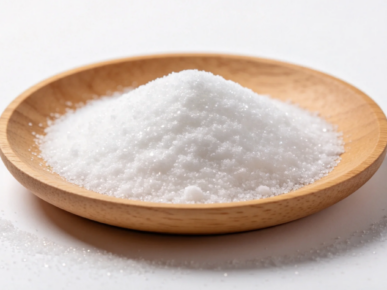
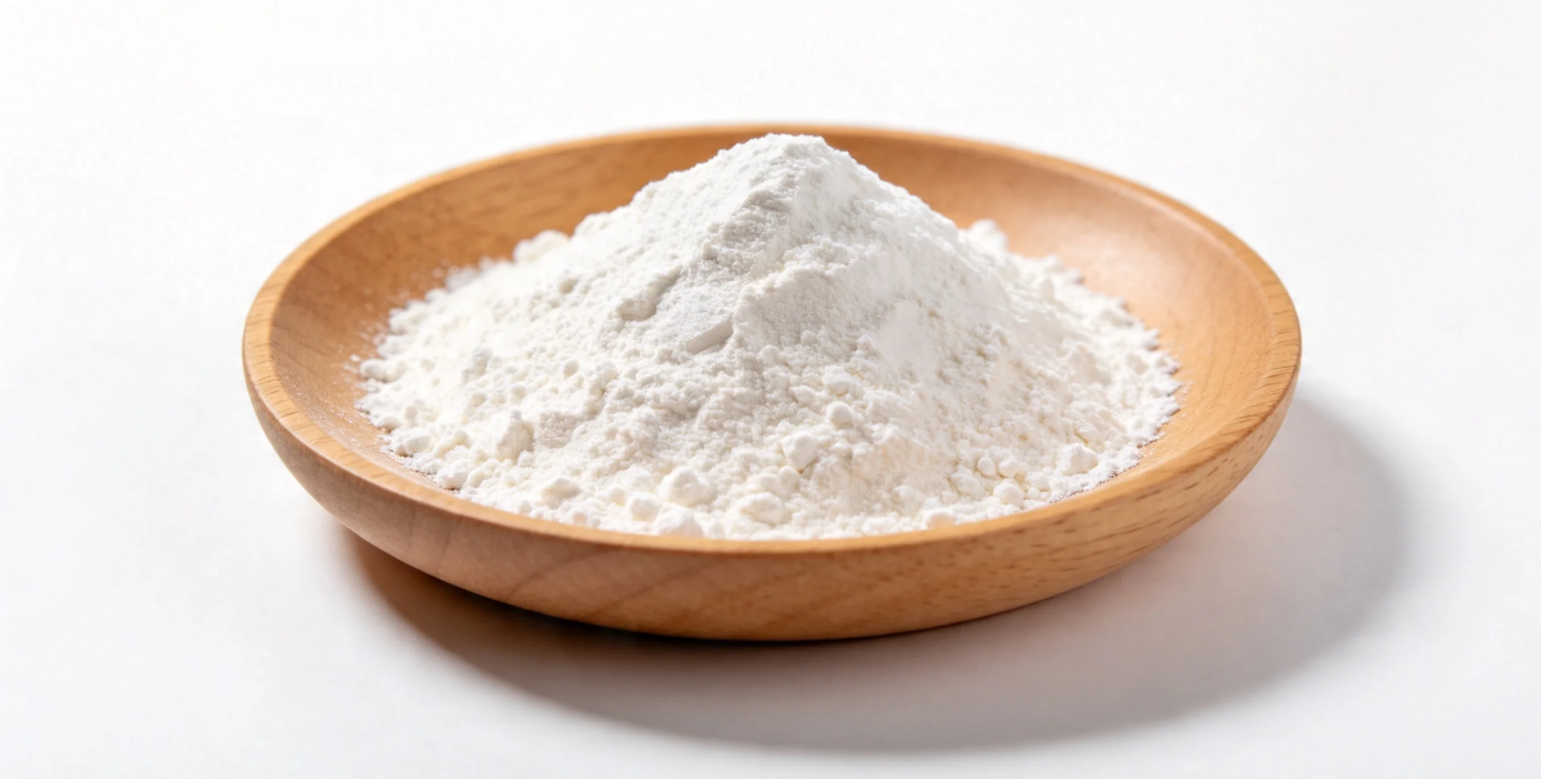
Organic Pea Starch Powder is a native high-amylose starch sourced from 100% organic yellow peas (Pisum sativum), designed to meet the growing demand for clean-label, grain-free, and plant-based functional ingredients in food manufacturing.
What Sets Pea Starch Apart:
Unlike corn starch or potato starch, pea starch offers two critical performance advantages that make it uniquely suited for modern clean-label formulations:
Superior Acid and Heat Stability:
Pea starch maintains viscosity and gel integrity in acidic environments and under high-temperature processing conditions — including pasteurization and canning — where conventional native corn or potato starches would break down. This makes it indispensable for products containing vinegar, citrus, or fermented ingredients, and for retort applications requiring extended heat exposure.
High Amylose Content (30-35%):
Pea starch is naturally high in amylose — the linear starch polymer that forms strong, elastic gels upon cooling. This high amylose content enables firm, sliceable gels and elastic textures in applications where modified starches or gelatin would traditionally be required. Critically, this performance is achieved with a clean ingredient declaration: “Organic Pea Starch.”
Neutral Flavor Profile:
Unlike pea protein, which carries a distinct beany flavor, pea starch is virtually flavorless. The starch extraction process removes the protein and lipid fractions responsible for flavor, ensuring that the finished product does not interfere with delicate flavor systems in confectionery, noodles, or bakery applications.
Key Applications:
Glass Noodles and Vermicelli: Pea starch creates transparent, elastic noodles that hold their shape during boiling — without breaking down or becoming mushy. The high amylose gel network maintains structural integrity in hot water, making it ideal for Asian-style glass noodles and rice vermicelli replacement formulations.
Confectionery (Gummies and Jellies): The firm, clean bite of pea starch gels makes it an excellent vegetarian and vegan alternative to gelatin in gummy and jelly formulations. No animal products required; clean-label claim maintained.
Meat and Plant-Based Analogs: As a high-strength binder, pea starch holds moisture and fat in vegetarian deli meats and plant-based meat analogues, improving sliceability and texture cohesion during cooking and slicing.
Extruded Snacks: Pea starch enhances expansion and crispness in extruded snack products while maintaining structural integrity — delivering the satisfying crunch consumers expect.
Gluten-Free Bakery: Added to gluten-free flour blends, pea starch provides the structural “body” typically contributed by gluten, improving crumb structure, moisture retention, and overall eating quality in gluten-free breads, muffins, and snack cakes.
Physical & Chemical Specifications
Product Specifications
| Parameter | Specification |
|---|---|
| Source | 100% Organic Non-GMO Yellow Peas (Pisum sativum) |
| Latin Name | Pisum sativum |
| Appearance | Fine white to off-white powder |
| Starch Content | >=98% |
| Amylose Content | 30-35% (high amylose) |
| Amylopectin Content | 65-70% |
| Moisture | <=13% |
| pH | 5.5-7.5 |
| Gelatinization Temperature | 70-80 degrees C (higher than potato/corn starch) |
| Flavor | Neutral (no beany flavor) |
| Solubility | Swells in hot water; forms gel on cooling |
| Shelf Life | 24 months |
| Recommended Storage | Cool, dry, shaded, airtight |
Gel Properties
| Property | Description |
|---|---|
| Gel Strength | High (due to high amylose content) |
| Gel Clarity | Translucent to semi-transparent |
| Texture | Firm, elastic, sliceable |
| Thermal Stability | Superior acid and heat resistance vs. corn/potato starch |
| Retrogradation | Moderate (amylose recrystallization on cooling) |
| Syneresis Resistance | Good (retains moisture under freeze-thaw) |
Dosage Reference
| Application | Recommended Usage Level |
|---|---|
| Thickening sauces and gravies | 3-8% (w/w) |
| Firm, sliceable gels (gummies, jellies) | 10-15% (w/w) |
| Glass noodles / vermicelli | 10-20% (w/w) |
| Plant-based meat analogues (binder) | 2-5% (w/w) |
| Extruded snacks | 5-15% (w/w) |
| Gluten-free bakery (structure) | 5-10% (w/w) |
| General thickening | 2-5% (w/w) |
Microbiological & Contaminant Standards
| Test | Standard | Method |
|---|---|---|
| Total Plate Count (TPC) | <10,000 CFU/g | ISO 4833 |
| Yeast & Mold | <100 CFU/g | ISO 21527 |
| Salmonella | Not detected / 25g | ISO 6579 |
| E. coli | Not detected / g | ISO 16649 |
| Lead (Pb) | <0.1 ppm | ICP-MS |
| Cadmium (Cd) | <0.05 ppm | ICP-MS |
| Arsenic (As) | <0.5 ppm | ICP-MS |
| Pesticide Residues | Not detected (organic compliance; 500+ screened) | GC-MS / LC-MS |
All batches tested at accredited third-party laboratories. Certificate of Analysis (COA) available upon request.
Certifications
| Certification | Status |
|---|---|
| USDA Organic / NOP | Certified |
| EU Organic (EC 834/2007) | Certified |
| Non-GMO Project Verified | Verified |
| Vegan | Certified |
| Gluten-Free | Certified |
| Grain-Free | Certified |
| Kosher | Available on request |
| Halal | Available on request |
| ISO 22000 | Compliant |
| GMP | Certified |
Applications
Application Matrix
| Application | Suitability | Notes |
|---|---|---|
| Glass noodles and vermicelli | Primary | Transparent, elastic, holds shape during boiling |
| Gummy and jelly confectionery | Primary | Firm vegetarian/vegan alternative to gelatin |
| Plant-based meat analogues | Primary | High-strength binder; holds moisture and fat; improves sliceability |
| Extruded snacks | Primary | Enhances expansion and crispness |
| Gluten-free bakery | Primary | Provides gluten-like structure in GF flour blends |
| Thickened sauces and gravies | Primary | 3-8% for smooth texture; stable in acidic sauces |
| Retort and canned products | Primary | Superior heat stability vs. corn/potato starch |
| Fermented food products | Primary | Acid and enzyme resistance |
| Vegan and vegetarian products | Primary | Clean-label; no animal-derived ingredients |
| Paleo-friendly formulations | Primary | Grain-free sourcing from legumes |
Key Functional Benefits by Application
| Application | Benefit | Mechanism |
|---|---|---|
| Glass Noodles | Transparent, elastic, boil-stable | High amylose gel network maintains structure in hot water |
| Gummies (Vegetarian) | Firm, clean bite; clean-label | High amylose forms firm gel without gelatin |
| Plant-Based Meat | Moisture/fat binding; sliceability | Starch gelatinization binds water and fat; improves texture cohesion |
| Extruded Snacks | Superior expansion; crisp texture | Amylose content controls expansion and crunch |
| Gluten-Free Bakery | Restores structure and crumb body | Replaces gluten’s viscoelastic network with starch gel matrix |
| Acidic Sauces (RTD) | Viscosity stability under pasteurization | Superior acid and heat resistance vs. native corn starch |
| Retort Products | Gel integrity after high-temperature processing | Pea starch resists breakdown at temperatures that degrade corn starch |
Gelatinization Best Practices
- Create a Slurry First: Always pre-mix the powder with room-temperature water before adding to hot liquids. Direct addition to boiling liquid causes lumping due to the higher gelatinization temperature.
- Heat to 75-80 degrees C: Pea starch requires slightly higher temperatures than corn or potato starch. Ensure the mixture reaches at least 75-80 degrees C for full gelatinization and maximum viscosity.
- Cool for Maximum Gel Strength: The firmest gels form as the product cools. For jellies or noodles, allow the product to set at room temperature or refrigerated conditions to complete the retrogradation process.
- Adjust Based on Desired Texture: Use 3-8% for smooth thickening (sauces); use 10-15% for firm, sliceable gels (gummies).
FAQ
Q: Why choose pea starch over corn starch?
A: Pea starch offers two critical performance advantages over native corn starch: superior acid stability and superior heat stability. If your product requires high-temperature pasteurization (canning, retort) or contains acidic ingredients such as vinegar or citrus juice, pea starch will maintain consistency and viscosity far better than native corn starch, which breaks down under these conditions. Pea starch also has a higher amylose content (30-35% vs. ~27% for corn), producing stronger, more elastic gels.
Q: Is organic pea starch considered “grain-free”?
A: Yes. Because it is derived from legumes (pulses, Fabaceae family) rather than cereal grains, pea starch is grain-free and ideal for paleo-friendly, grain-free, and lectin-conscious product lines. It provides the functional thickening and gelling performance of modified starches while carrying a clean “organic pea starch” declaration.
Q: Does it have a “beany” flavor like pea protein?
A: No. The starch extraction process removes the protein and lipid fractions that carry the characteristic beany flavor of whole peas. ORGANICWAY Organic Pea Starch has an extremely neutral flavor profile, ensuring it will not interfere with delicate flavor systems in confectionery, noodle, or bakery applications. It is virtually tasteless in finished products.
Q: How does high amylose content affect my product label?
A: High amylose is a natural characteristic of pea starch. This is a significant advantage for clean-label positioning: it allows you to achieve “modified starch performance” — firm gels, elastic textures, and heat stability — while declaring only “Organic Pea Starch” in your ingredient list. Consumers seeking clean, short, recognizable ingredient lists can be confident in the product’s simplicity, while manufacturers benefit from the functional performance previously requiring modified starches.
Q: How does pea starch perform in gluten-free bakery products?
A: In gluten-free flour blends, pea starch replaces the structural role that gluten normally plays in wheat-based products. It provides crumb structure, moisture retention, and improved eating quality in gluten-free breads, muffins, and snack cakes. The high amylose content creates a firmer crumb and better sliceability compared to other native starches. A typical usage level in gluten-free bakery is 5-10% of the flour blend.
Q: What makes pea starch suitable for vegetarian and vegan gummy formulations?
A: Pea starch’s high amylose content (30-35%) enables the formation of firm, elastic gels that closely mimic the texture of gelatin-based gummies — without any animal-derived ingredients. This makes it the clean-label, vegan-appropriate alternative for confectionery manufacturers seeking to eliminate gelatin while maintaining a firm, satisfying bite in their gummy products.
Q: How should pea starch be stored?
A: Store in a cool, dry, shaded location below 25 degrees C in airtight original packaging. Protect from moisture, strong odors, and direct sunlight. Under recommended storage conditions, shelf life is 24 months from production date. Pea starch absorbs moisture easily; ensure packaging is sealed after each use.
Q: What is the MOQ, and can I get samples for testing?
A: Free 1 kg samples are available via FEDEX, UPS, and EMS for formulation and sensory testing. Standard bulk MOQ is 25 kg. Standard lead time is 10-20 business days from Qingdao or Tianjin port. Payment via D/A, D/P, L/C, T/T, MoneyGram, Western Union, and credit card accepted.
Packaging & Storage
Packaging Specifications
| Parameter | Specification |
|---|---|
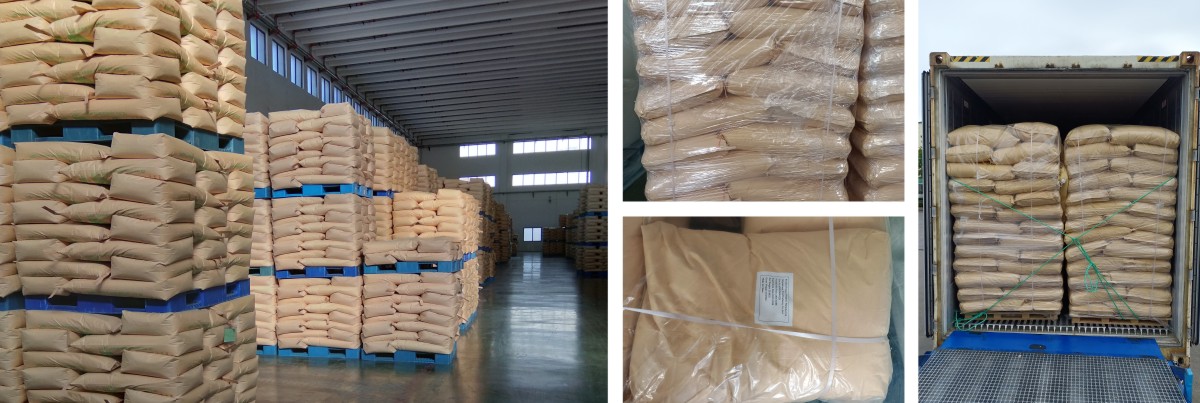
| Standard Unit | 25 kg multi-layer kraft paper bag |
| Bag Dimensions | 77 x 44 x 20 cm |
| Pallets | 40 bags per pallet |
| Sample Pack | 1 kg (free, FEDEX/UPS/EMS) |
| Custom Packaging | Available on request |
Storage Conditions
| Condition | Requirement |
|---|---|
| Temperature | Below 25 degrees C; cool and dry |
| Humidity | Below 50% RH |
| Light | Away from direct sunlight |
| Packaging | Airtight; moisture-proof |
| Odor | Store away from strong-smelling products (starch absorbs odors) |
| Shelf Life | 24 months from production date |
Pea starch absorbs moisture and odors easily. Reseal packaging tightly after each use. Protect from humidity and strong-smelling ingredients.
Related Articles
What is the difference between corn starch, potato starch and pea starch?
Starch is an important part of the food. Usually, when we chew…
How Can Organic Mung Bean Starch Powder Improve Your Food Formulations Naturally?
In today’s competitive food industry, manufacturers are under increasing pressure to deliver…
Selecting the Ideal Organic Potato Starch Powder for Your B2B Needs: A Strategic Guide for Businesses
In the competitive landscape of food manufacturing, pharmaceuticals, and industrial applications, sourcing…
How Organic Potato Starch Powder Enhances Texture and Stability in Processed Foods
In the modern food industry, consumers are increasingly looking for clean-label products…