Table of Contents
What is Fava Bean Protein Powder?
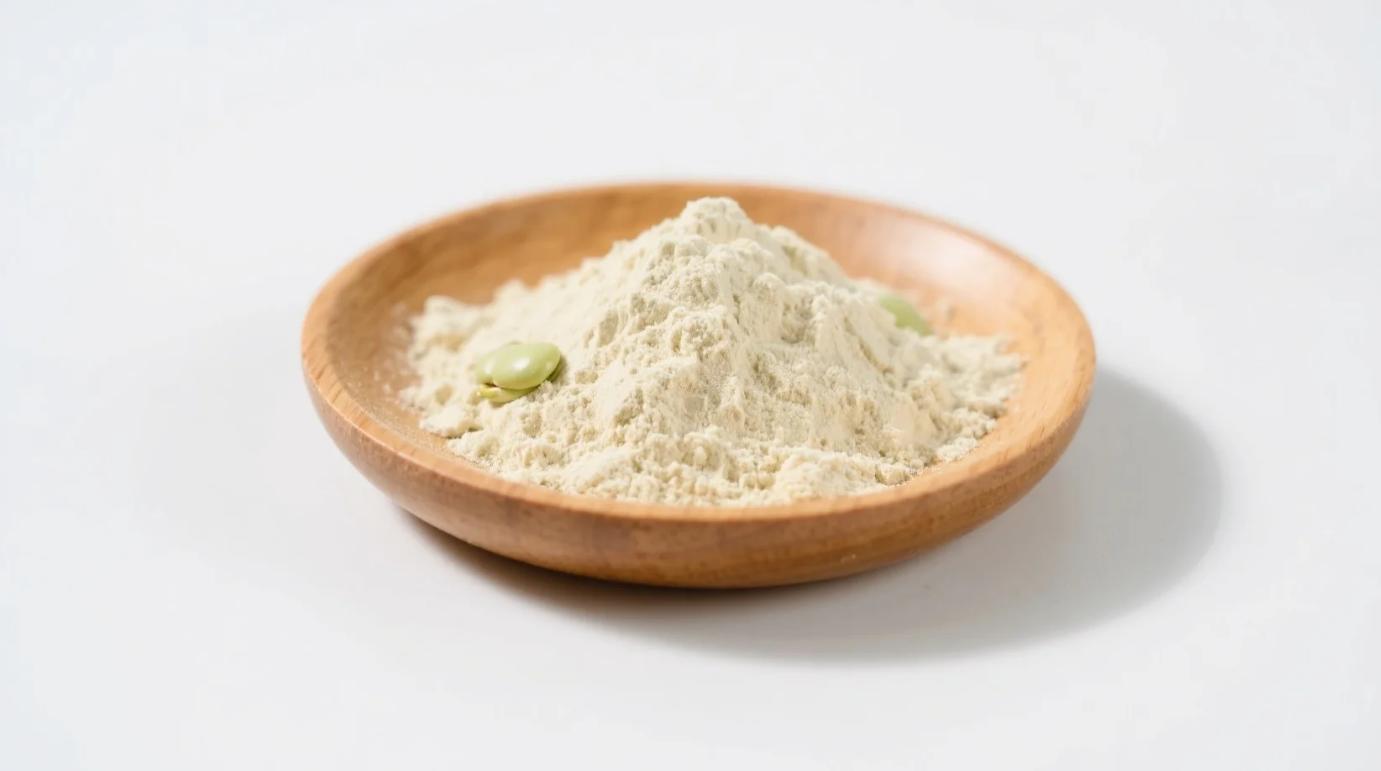
Fava bean protein is extracted from Vicia faba (broad bean), one of the oldest cultivated legumes, using an aqueous extraction and membrane filtration process — no hexane, no chemical solvents. The result is a premium protein isolate with 80–90% protein content on a dry basis, with a significantly more neutral flavor profile than competing plant proteins such as pea or soy.
Why Fava Bean Protein is Gaining Ground in Premium Formulations
The rising demand for hypoallergenic, neutral-flavor plant proteins has positioned fava bean as a preferred alternative to pea (beany off-notes), soy (allergen + GM concerns), and rice (low lysine). Key functional advantages include:
- Neutral flavor profile — the most organoleptically clean single-source plant protein available, reducing flavor-masking costs
- Exceptional emulsification — fava protein’s surface-active properties make it ideal for emulsion-based systems (mayonnaise, creamers, spreads)
- High lysine + leucine — supports muscle protein synthesis at levels comparable to pea protein
- Low vicine/convicine spec available — a “low vicine/convicine” variant (<0.5mg/g vicine) is available on request, addressing G6PD sensitivity concerns
- UHT-compatible — stable under ultra-high temperature processing for ready-to-drink beverages
- Big 9 Allergen-Free — inherently free from soy, dairy, gluten, and all major allergens
Production & Safety Compliance
- Incoming testing: pesticide residues, mycotoxins, vicine/convicine baseline
- Low-temperature aqueous extraction (≤45°C)
- Heat treatment step to reduce anti-nutritional factors (tannins, lectins, trypsin inhibitors)
- Membrane filtration → spray drying
- Third-party heavy metal testing (Pb, As, Cd, Hg; Prop 65 thresholds)
- Lot-specific COA + third-party lab report
Technical Specifications
Standard Grade Comparison
| Parameter | 80% Isolate | 90% Isolate | Test Method |
|---|---|---|---|
| Protein (dry basis) | ≥ 80.0% | ≥ 90.0% | Kjeldahl / Dumas |
| Moisture | ≤ 8.0% | ≤ 6.0% | AOAC 930.15 |
| Fat | ≤ 4.0% | ≤ 3.0% | Soxhlet |
| Ash | ≤ 6.5% | ≤ 5.5% | AOAC 942.05 |
| Fiber | ≤ 3.5% | ≤ 2.0% | AOAC 985.29 |
| Carbohydrates | ≤ 7.0% | ≤ 4.0% | By difference |
| Sodium | ≤ 300mg/100g | ≤ 200mg/100g | ICP-MS |
| Vicine | ≤ 0.5mg/g (upon request) | ≤ 0.3mg/g (upon request) | HPLC |
| Particle Size | 100–200 mesh | 100–200 mesh | Sieve analysis |
| Color | Light cream to off-white | Off-white to white | Visual |
| Odor | Neutral, mild | Neutral | Sensory |
| Solubility | ≥ 88% | ≥ 92% | NSI method |
Microbiological Specifications
| Parameter | Specification | Test Method |
|---|---|---|
| Total Plate Count | ≤ 10,000 CFU/g | ISO 4833 |
| Yeast & Mold | ≤ 100 CFU/g | ISO 21527 |
| Coliform | ≤ 10 CFU/g | ISO 4832 |
| E. coli | Negative/25g | ISO 16654 |
| Salmonella | Negative/25g | ISO 6579 |
Heavy Metals & Contaminants
| Parameter | Specification | Standard |
|---|---|---|
| Lead (Pb) | ≤ 0.5 mg/kg | Prop 65 / EU 2021/1323 |
| Arsenic (As) | ≤ 0.3 mg/kg | Prop 65 |
| Cadmium (Cd) | ≤ 0.1 mg/kg | EU Regulation |
| Mercury (Hg) | ≤ 0.05 mg/kg | Prop 65 |
| Vicine (Vicia faba specific) | ≤ 0.5 mg/g (upon request) | HPLC-UV |
| Convicine | ≤ 0.3 mg/g (upon request) | HPLC-UV |
| Trypsin Inhibitor | ≤ 4.0 TIA U/mg | AOAC |
| Tannins | ≤ 0.5% | Folin-Denis |
Certifications
| Certification | Issuing Body | Scope |
|---|---|---|
| Non-GMO Project Verified | Non-GMO Project | Raw material + finished product |
| Kosher | KSA / OU (lot-specific) | Processing facility |
| Halal | IFANCA / MUI (lot-specific) | Processing facility |
| Gluten-Free | GFCO (< 10 ppm gluten) | Finished product testing |
| FSSC 22000 | Bureau Veritas | Manufacturing facility |
Applications & Formulation Guidance
Primary Application Areas
| Application | Why Fava Works | Typical Addition |
|---|---|---|
| Plant-Based Meat Analogues | Neutral flavor, high emulsification, binds fat + water | 8–15% of blend |
| Plant-Based Dairy (Milk, Yogurt, Creamer) | Emulsification + foaming, clean label single ingredient | 2–5% of formula |
| Protein Bars & Bites | Neutral flavor, low moisture, high protein density | 10–20% of formula |
| Baked Goods (Protein Bread, Muffin) | Heat-stable, mild flavor, integrates with flour matrix | 3–8% of weight |
| Sports Nutrition Shakes | Neutral flavor, BCAA profile, fast dispersion | 20–30g/serving |
| Emulsion Systems (Mayo, Dressing) | Superior emulsification vs. pea, soy, or rice | 1–3% of formula |
| Pasta & Noodle Fortification | High protein enrichment, neutral color | 5–10% of flour |
| Ready-to-Drink (UHT) Beverages | UHT stability, clean flavor, low foaming | 2–4% of formula |
Formulation Notes
- Flavor pairing: Neutral base works with vanilla, caramel, cocoa; avoid strong acidic systems (pH <4.0) without stabilizer support
- Blending for complete EAA: Fava 80% + Sunflower 20% covers methionine gap; Fava + Pea (70:30) maximizes lysine
- G6PD sensitivity: Standard vicine levels are below WHO safety threshold for general population. For G6PD-deficient consumers, specify the “low vicine/convicine” variant
- Emulsification advantage: Fava protein shows 15–25% higher interfacial activity than pea protein isolate in O/W emulsions — ideal for clean-label dressings and creamers
FAQ
Q1: How does Fava Bean Protein flavor compare to Pea Protein?
A: Fava bean protein is significantly more neutral than pea protein. In independent sensory panels, fava bean isolate scores below threshold for “beany” and “grassy” descriptors at inclusion rates up to 20g/serving, whereas pea protein typically registers mild beany notes at the same inclusion level. This neutrality reduces or eliminates the need for flavor maskers, which is a meaningful cost and label advantage for clean-label brands.
Q2: Does your Fava Bean Protein contain anti-nutritional factors (ANFs) such as vicine, tannins, or lectins?
A: Our standard production process includes a dedicated heat-treatment step that substantially reduces vicine, convicine, tannins, lectins, and trypsin inhibitors to levels compliant with WHO/FAO safety standards for food-grade legume protein. For formulations targeting vulnerable populations (children, G6PD-deficient individuals), we offer a “low vicine/convicine” specification (≤0.5mg/g vicine, ≤0.3mg/g convicine) on request. All ANF levels are reported on lot-specific COAs.
Q3: What is the difference between your 80% and 90% Isolate grades?
A: The 90% grade undergoes additional membrane filtration passes to remove more residual carbohydrates, fiber, and ash. It has lower vicine/convicine baseline, lower sodium, and finer particle size distribution — making it preferred for clinical nutrition, clear beverages, and high-transparency labeling applications. The 80% grade is the standard for most food applications where cost efficiency and functionality are balanced.
Q4: Is Fava Bean Protein suitable for a Clean Label formulation strategy?
A: Yes — it is a single-ingredient product with a simple ingredient declaration (“Fava Bean Protein”). It contains no emulsifiers, no carriers, no flavor maskers, and no additives. Combined with its non-GMO, and allergen-free credentials, it aligns with clean-label positioning at every tier.
Q5: What is the minimum order quantity (MOQ) and lead time?
A: Standard MOQ is 500kg (20 × 25kg kraft bags per pallet). For the “low vicine/convicine” specification, MOQ is 1,000kg. Standard production lead time is 10–14 business days from confirmed PO and sample approval. Samples (500g) available within 3–5 business days with tracking. Private-label packaging available from 2,000kg.
Q6: How does Fava Bean Protein perform compared to Pea, Soy, and Hemp in emulsification?
A: Fava bean protein demonstrates superior interfacial properties in oil-in-water emulsions. Published research (Jarpar et al., 2020; Karaca et al., 2015) shows fava protein produces smaller droplet sizes and higher emulsion stability than pea, soy, or hemp at equivalent protein concentrations. For clean-label emulsified products (dressings, plant-based creamers, mayonnaise alternatives), this emulsification performance is a meaningful functional differentiator that can replace synthetic emulsifiers.
Packaging & Storage
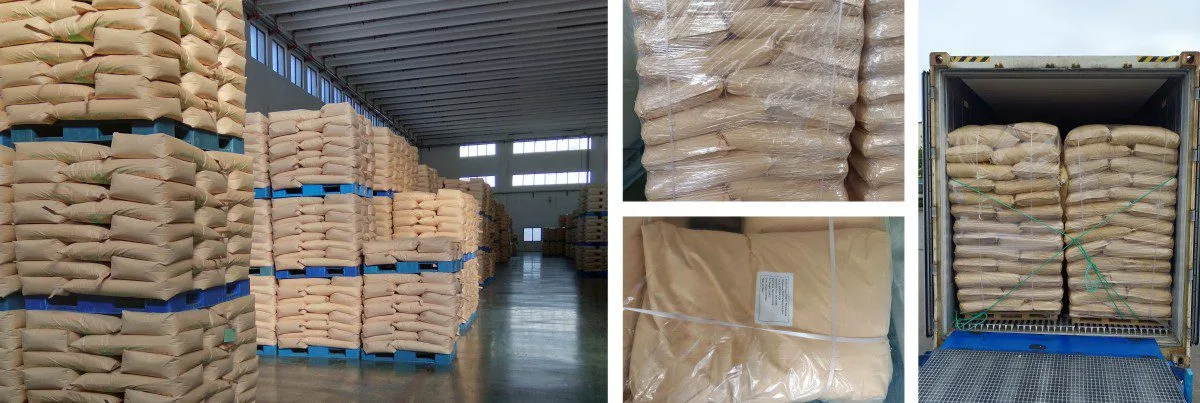
| Format | Net Weight | MOQ | Notes |
|---|---|---|---|
| Kraft paper bag (inner PE liner) | 25 kg | 500 kg | Standard B2B |
| White woven PP bag | 25 kg | 500 kg | Export |
| Fiber drum | 25 kg | 500 kg | Humid climates |
| IBC tote | 500 kg | 1 unit | Industrial |
| Private-label retail pack | 500g / 1kg | 2,000 kg | Amazon / retail |
Storage Conditions: ≤25°C, RH ≤60%, away from direct sunlight. Shelf life: 24 months in original sealed packaging. After opening: reseal immediately; use within 3 months.