Table of Contents
What is Organic Barley Grass Powder?
Barley grass (Hordeum vulgare L.) has been recognized as a nutritional powerhouse since ancient agricultural civilizations — harvested young before the grain head forms, it delivers an exceptionally dense concentration of vitamins, minerals, enzymes, and phytonutrients without the gluten concerns associated with mature barley grain.
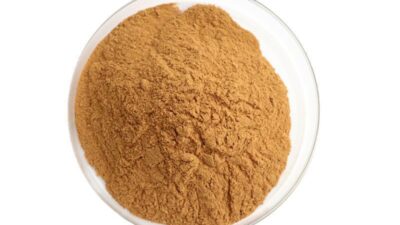
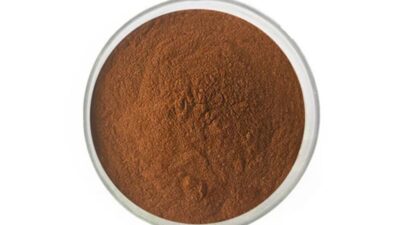
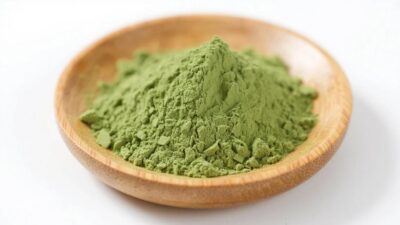
Organic Barley Grass Powder is produced by carefully drying freshly harvested young barley leaves at controlled temperatures, then precision-milling to a fine 80–100 mesh green powder. This whole-leaf process preserves the complete nutritional profile — dietary fiber, chlorophyll, SOD (superoxide dismutase), vitamins A/C/K, minerals iron/calcium/magnesium, and a broad spectrum of antioxidant flavonoids. The retained insoluble fiber makes this format ideal for fiber-enriched applications and textured food matrices.
Organic Barley Grass Juice Powder follows a different production path — fresh barley leaves are first cold-pressed to extract the nutrient-rich juice, which is then spray-dried to a fine bright-green powder. This juice extraction removes most insoluble fiber, concentrating the water-soluble nutrients: proteins, enzymes, chlorophyll, vitamins, and minerals. The result is a highly soluble powder (superior to whole-leaf powder) with ≥25% protein and ≥1.2% chlorophyll — making it the preferred choice for clear or powdered functional beverages, RTD drinks, and high-protein formulations.
Both formats carry confirmed Kosher and Halal certifications, enabling dual-certified finished products. They are vegan, naturally gluten-free (harvested before grain formation), Non-GMO Project verified, and produced under USDA/EU organic regulations. Third-party testing covers heavy metals, microbiology, and pesticide residues, with COA available upon request.
PHYSICAL & CHEMICAL PROPERTIES
Main Specifications
| Parameter | Barley Grass Powder | Barley Grass Juice Powder |
|---|---|---|
| Appearance | Fine green powder | Fine bright green powder |
| Source | Whole young barley leaves | Fresh barley grass juice |
| Mesh Size | 80–100 mesh | 80–100 mesh |
| Moisture | ≤ 7% | ≤ 6% |
| Ash Content | ≤ 10% | ≤ 8% |
| Chlorophyll | ≥ 0.8% | ≥ 1.2% |
| Protein (crude) | ≥ 20% | ≥ 25% |
| Dietary Fiber | Present (whole-leaf) | Low (fiber removed) |
| SOD Activity | Present | High |
| Solubility | Dispersible; low solubility | Highly soluble in water |
| pH Stability | Stable (4–8) | Stable (4–8) |
| Heavy Metals | Lead ≤ 1.0 ppm, Arsenic ≤ 0.5 ppm, Cadmium ≤ 0.3 ppm, Mercury ≤ 0.1 ppm | Same |
| Total Plate Count | ≤ 10,000 cfu/g | ≤ 10,000 cfu/g |
| Yeast & Mold | ≤ 100 cfu/g | ≤ 100 cfu/g |
| E. coli | Negative | Negative |
| Salmonella | Negative | Negative |
| Shelf Life | 24 months | 24 months |
| Storage | Cool, dry, dark; avoid sunlight | Same |
| Net Weight | 25 kg/drum or bag | 25 kg/drum or bag |
Barley Grass Powder vs Juice Powder — Format Selection Guide
| Dimension | Barley Grass Powder | Barley Grass Juice Powder |
|---|---|---|
| Process | Whole-leaf dried & milled | Juice-pressed & spray-dried |
| Fiber Content | High (whole-leaf retained) | Low (insoluble fiber removed) |
| Protein Concentration | ≥ 20% | ≥ 25% |
| Chlorophyll | ≥ 0.8% | ≥ 1.2% |
| SOD & Enzyme Activity | Present | Higher concentration |
| Solubility | Dispersible; not fully soluble | Highly soluble |
| Best Applications | Capsules, tablets, fiber-enriched foods, textured matrices | RTD beverages, powdered drink mixes, clear drinks, protein powders |
| Cost Position | Entry-to-mid | Mid-to-premium |
| Consumer Positioning | Whole-food, fiber, traditional superfood | Concentrated, potency, modern functional |
| Typical Serving | 3–10 g per serving | 2–5 g per serving |
| Compliance Note | Naturally gluten-free (pre-grain harvest) | Naturally gluten-free (pre-grain harvest) |
MICROBIOLOGICAL & CONTAMINANT STANDARDS
| Test | Limit |
|---|---|
| Total Plate Count | ≤ 10,000 cfu/g |
| Total Yeast & Mold | ≤ 100 cfu/g |
| E. coli | Negative |
| Salmonella | Negative |
| Lead | ≤ 1.0 ppm |
| Arsenic | ≤ 0.5 ppm |
| Cadmium | ≤ 0.3 ppm |
| Mercury | ≤ 0.1 ppm |
| Pesticide Residue | Compliant with USDA NOP & EU organic regulations |
| Gluten | < 20 ppm (naturally gluten-free; verified pre-grain harvest) |
Third-Party Testing: Both formats undergo rigorous third-party laboratory testing for heavy metals, microbiology, and pesticide residues. Certificates of Analysis (COA) are available upon request for each production batch.
CERTIFICATIONS
| Certification | Status | Notes |
|---|---|---|
| USDA Organic / NOP | √ Certified | Covers all production stages |
| EU Organic | √ Certified | Compliant with EU 2018/848 |
| Non-GMO Project | √ Verified | Verified inputs and process |
| Kosher | √ Certified | Confirmed |
| Halal | √ Certified | Confirmed |
| ISO 22000 | √ Compliant | Food safety management system |
| HACCP | √ Compliant | Hazard analysis critical control points |
| Vegan | √ Confirmed | No animal-derived inputs |
| Gluten-Free | √ Confirmed | Naturally gluten-free (harvested pre-grain); < 20 ppm verified |
APPLICATIONS
Recommended Use Levels
| Application | Format | Recommended Dose | Notes |
|---|---|---|---|
| Green Superfood Blends | Powder or Juice Powder | 3–10 g per serving | Pairs well with spirulina, chlorella, wheatgrass, and acai |
| Smoothies & Shakes | Powder or Juice Powder | 5–10 g per serving | Whole-leaf powder adds fiber; juice powder adds concentrated nutrition |
| RTD Functional Beverages | Juice Powder | 2–5 g per serving | High solubility; suitable for ready-to-drink green drinks |
| Powdered Drink Mixes | Juice Powder | 2–5 g per serving | Excellent solubility in cold water and warm water |
| Capsules & Tablets | Powder | 500 mg – 2 g per serving | Standard green superfood supplement format |
| Protein & Nutrition Powders | Powder or Juice Powder | 2–5 g per serving | Used in immune-health positioned sports nutrition lines |
| Energy Bars & Snacks | Powder | 3–8 g per serving | Whole-leaf fiber adds texture; natural green color |
| Alkaline & Chlorophyll Formulas | Powder or Juice Powder | 3–10 g per serving | Chlorophyll and alkaline minerals for alkaline-positioned formulations |
Formulation Notes
- Chlorophyll Color: Both formats impart a natural bright green color. Juice Powder produces a more vivid green in clear beverages; Whole-Leaf Powder produces a deeper, more opaque green.
- Flavor Profile: Mild, grassy, slightly sweet green flavor. Juice Powder is generally more concentrated in taste; both are compatible with fruit flavors (berry, citrus, tropical).
- pH Sensitivity: Best stability in pH 4–7 range. In high-acid formulations (pH < 4), chlorophyll may degrade slightly over time — consider packaging light protection.
- Heat Stability: Stable under standard pasteurization (≤85°C, 15–30 seconds). Avoid prolonged boiling.
- Moisture Sensitivity: Both powders are hygroscopic. Store sealed; use desiccant in open containers.
- Mixing Tip for Whole-Leaf Powder: Blend in a high-speed mixer or use pre-hydration (mix with small amount of water before adding to dry matrix) to minimize clumping.
- Gluten-Free Verification: Barley grass harvested before grain formation is naturally gluten-free, but cross-contamination during harvest and processing must be controlled.
FAQ
Q: What is the difference between Barley Grass Powder and Barley Grass Juice Powder?
Barley Grass Powder is whole-leaf dried and milled — retaining all dietary fiber, a broad nutrient spectrum, and a slightly textured profile. It is best suited for fiber-enriched applications such as capsules, tablets, energy bars, and textured functional foods. Barley Grass Juice Powder is juice-pressed and spray-dried — removing most insoluble fiber for superior solubility and concentrating protein (≥25%) and chlorophyll (≥1.2%). It is the preferred choice for RTD beverages, powdered drink mixes, and clear or semi-clear liquid formulations where maximum nutrient density per gram is required.
Q: Are both formats suitable for vegan and gluten-free products?
Yes. Both Organic Barley Grass Powder and Organic Barley Grass Juice Powder are 100% plant-based and certified vegan. They are also naturally gluten-free — barley grass is harvested before the grain head forms, eliminating gluten contamination from the grain itself. Both formats are tested to < 20 ppm gluten. For finished product gluten-free claims, verify with your regulatory requirements in the target market.
Q: What is the typical shelf life and storage requirement?
Both formats have a shelf life of 24 months from the manufacturing date when stored properly. Store in a cool (≤25°C), dry environment, away from direct sunlight and moisture. Keep in original sealed packaging. Due to the hygroscopic nature of fine green powders, we recommend using airtight containers with desiccant packs after opening. Avoid exposure to humidity, which may cause caking or microbial degradation.
Q: Do you provide Certificates of Analysis (COA) and heavy metal testing reports?
Yes. Both formats undergo rigorous third-party laboratory testing for heavy metals (lead, arsenic, cadmium, mercury), microbiology (total plate count, yeast & mold, E. coli, Salmonella), and pesticide residues. COA is available for each production batch upon request. Please contact ORGANICWAY sales to request batch-specific COA for your production run.
Q: Can these products be used in Kosher and Halal certified finished products?
Yes. Both Organic Barley Grass Powder and Organic Barley Grass Juice Powder carry confirmed Kosher and Halal certifications — enabling your finished product to carry both certifications from a single certified ingredient source.
Q: What is the minimum order quantity and lead time?
MOQ is 25 kg per format. Lead time is 10–20 business days from order confirmation. Free samples are available upon request, shipped via FedEx, UPS, or EMS. For mixed-format orders (both powder and juice powder), please contact sales to confirm availability and pricing.
Q: Are these products suitable for high-temperature food processing?
Both formats are heat-stable under standard food processing conditions — including pasteurization (HTST: ≤85°C for 15–30 seconds) and short-term baking applications. For applications involving prolonged boiling or sustained high temperatures (> 100°C for extended periods), some degradation of heat-sensitive nutrients (enzymes, certain vitamins) may occur. Chlorophyll is generally stable under normal pasteurization; extended heat exposure may cause chlorophyll to convert to pheophytin (brownish color change). COA reflects nutritional content at the time of production; formulators should account for potential minor losses in high-heat processing.
Q: How do these compare to wheatgrass and spirulina in formulation?
Barley grass, wheatgrass, and spirulina are all popular green superfood ingredients with overlapping nutritional positioning but distinct characteristics. Barley grass (this product) offers a broad micronutrient profile including vitamins A/C/K, iron, calcium, and chlorophyll — with the added option of whole-leaf (fiber) or juice (concentrated) formats. Wheatgrass is similarly nutrient-dense but has a distinct flavor and slightly different phytonutrient profile. Spirulina is a blue-green algae with exceptionally high protein (≥60%) and phycocyanin content. In formulation, barley grass and wheatgrass are often blended together in green superfood products; spirulina is typically used where maximum protein or phycocyanin content is the primary positioning.
PACKAGING & STORAGE
Packaging Options
| Package Size | Material | MOQ |
|---|---|---|
| 5 kg | Aluminum foil bag | 1 bag |
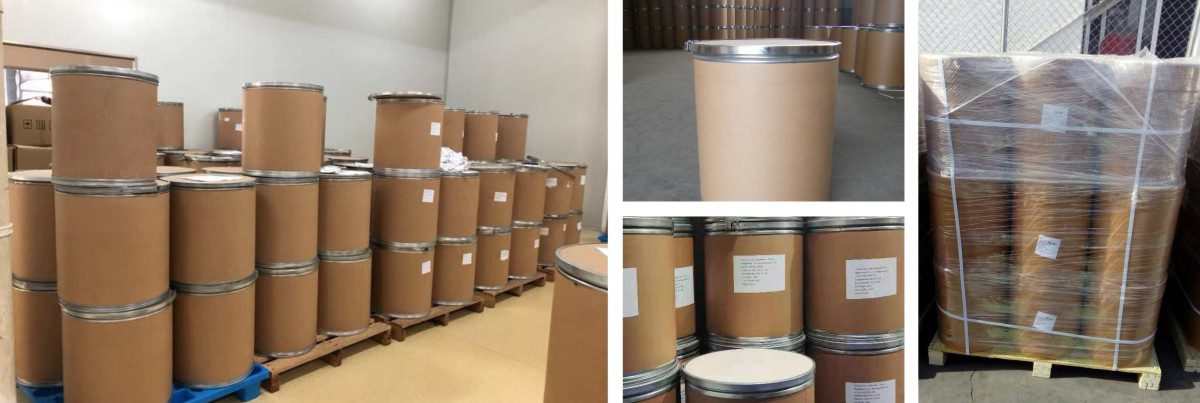
| 25 kg | Kraft paper drum / fiber drum | 1 drum |
| Custom | Request for custom packaging | Discuss with sales |
Storage Conditions
| Parameter | Condition |
|---|---|
| Temperature | ≤ 25°C (cool, dry) |
| Humidity | < 60% RH |
| Light | Dark storage; avoid direct sunlight |
| Oxygen | Keep packaging sealed; use desiccant after opening |
| Shelf Life | 24 months (properly stored) |