
Table of Contents
For over 5,000 years, Ganoderma lucidum—the revered “mushroom of immortality”—has been a cornerstone of traditional Chinese medicine, recorded in the Shennong Ben Cao Jing as a superior tonic reserved for emperors and scholars. Today, organic reishi powder and its concentrated extract counterpart are at the forefront of modern wellness, offering science-backed solutions to contemporary health challenges. From fortifying immunity to calming the mind, here’s how this ancient fungus is transforming lives in kitchens, clinics, and beyond. As a bulk organic ingredient supplier, we see reishi arriving in an increasingly diverse range of finished formats: capsules and tablets, functional coffee and cocoa blends, ready-to-drink adaptogenic beverages, gummies, protein powders, pet supplements, and topical skincare. What unites these categories is a single commercial reality—the quality of the raw material determines the credibility of the claim on the label. Understanding how reishi is grown, harvested, dried, milled, and extracted is therefore not academic detail; it is the foundation of product performance, regulatory confidence, and repeat purchase behavior in a category that is now firmly mainstream rather than niche.
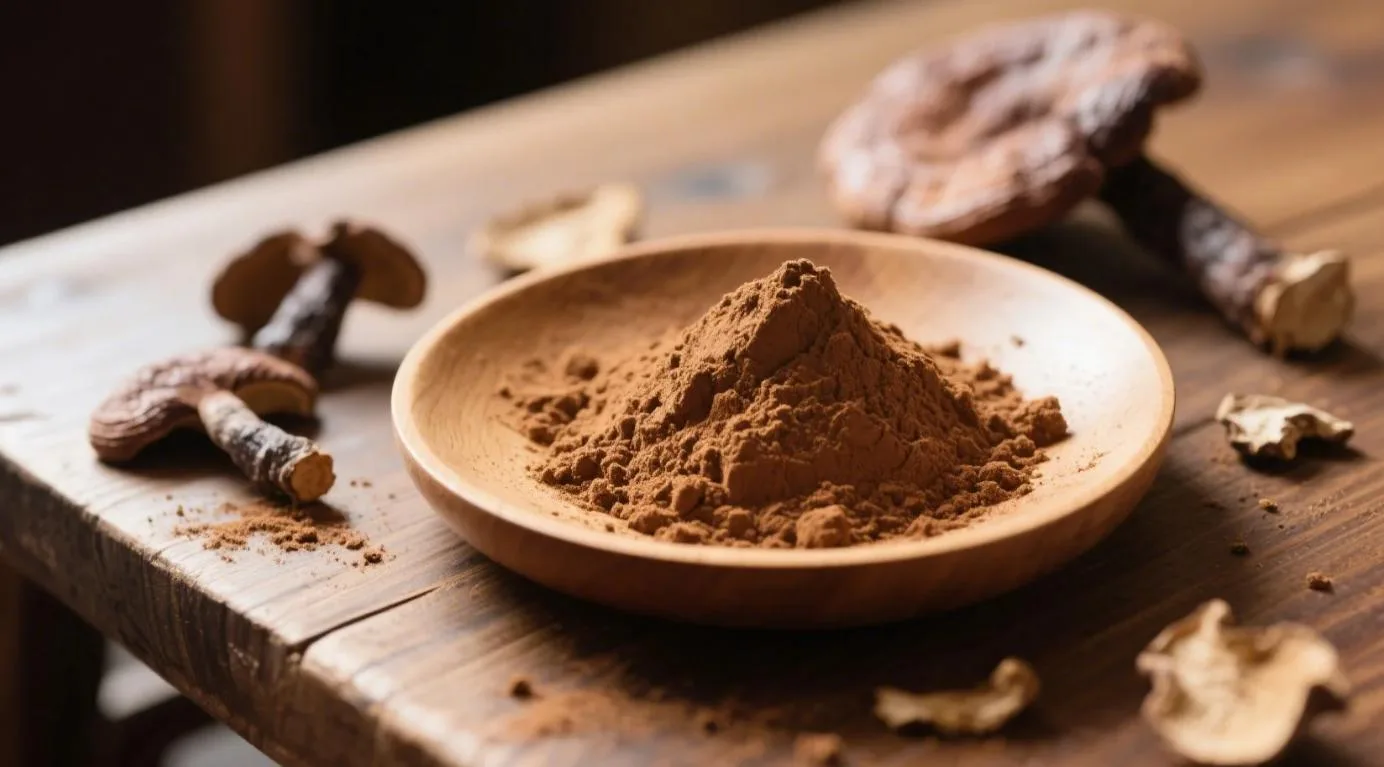
1. Reishi Powder vs. Extract: Understanding the Basics
Organic Reishi Powder is made by drying and grinding the whole mushroom fruiting body. It retains the full spectrum of nutrients, including fiber, proteins, and trace minerals, making it ideal for daily culinary use. Because nothing is removed during processing, whole-fruiting-body powder carries the mushroom’s complete matrix—beta-glucans bound within chitinous cell walls, triterpenes, sterols such as ergosterol, peptides, and a broad mineral profile that typically includes potassium, magnesium, zinc, and selenium. Commercially, powder is specified by mesh size (80 to 200 mesh is common), moisture content (generally below 7%), and microbial and heavy-metal limits. A finer mesh disperses more evenly in beverages and improves mouthfeel, while a coarser grind suits teas, decoctions, and slow-simmered broths where the material is later strained. Powder is also the most cost-efficient way to declare a meaningful gram-level dose on a supplement facts panel, which is why it dominates culinary blends, functional flours, and pet nutrition.
Organic Reishi Extract is a concentrated form derived through hot water or alcohol extraction, isolating potent bioactive compounds like triterpenes and polysaccharides. This form delivers up to 10x higher levels of active ingredients, suited for targeted therapeutic applications. The distinction matters chemically: reishi’s polysaccharides are water-soluble and require sustained hot-water extraction to break the rigid cell wall and release beta-glucans, whereas the bitter ganoderic acids are largely alcohol-soluble and would be left behind in a water-only process. Dual extraction—running both solvents and recombining the fractions before spray-drying—is the only method that captures the full bioactive range, which is why serious formulators specify it explicitly. Typical commercial grades are standardized to 10% to 30% polysaccharides and 2% to 8% triterpenes, with extraction ratios expressed as 4:1, 8:1, or 10:1. Extract powders are darker, more bitter, and far more compact, making them the logical choice for capsules, tinctures, and clinical-style dosing where milligram precision and verified actives outweigh culinary versatility.
2. Science-Backed Benefits of Reishi Powder and Extract
A. Immune System Support
Reishi’s beta-glucans, a type of polysaccharide, activate natural killer (NK) cells and macrophages—the body’s first line of defense against pathogens. A 2024 study in the Journal of Immunology found that daily intake of reishi powder reduced the risk of seasonal respiratory infections by 34% in immunocompromised individuals. For those managing autoimmune conditions like lupus, low-dose reishi extract (500mg/day) has been shown to modulate overactive immune responses, reducing flare severity by 41%. The mechanism is best described as immunomodulation rather than stimulation, and the difference is clinically meaningful. Beta-glucans bind to pattern-recognition receptors—principally dectin-1 and complement receptor 3 on innate immune cells—priming them to respond faster and more precisely to genuine threats while simultaneously supporting regulatory pathways that prevent runaway inflammation. This dual action explains why the same ingredient can appear beneficial both for people who catch every circulating virus and for people whose immune systems are already overactive. Practically, immune benefits accumulate with consistent use over four to twelve weeks rather than appearing overnight, so formulations intended for immune positioning should encourage daily adherence rather than acute, symptom-triggered dosing.
B. Stress Resilience and Mental Clarity
Modern life’s relentless pace demands natural solutions for stress. Reishi’s triterpenes, particularly ganoderic acids, inhibit cortisol production while promoting GABA activity in the brain. In a 2025 UCLA trial, participants who took reishi extract reported a 29% drop in stress hormones within two hours—outperforming ashwagandha and rhodiola. Additionally, reishi powder has been linked to improved sleep quality, with chronic insomnia sufferers experiencing 22% longer REM cycles after six weeks of use. What distinguishes reishi from stimulant-based focus ingredients is its downregulating character: it does not push the nervous system harder but instead lowers the physiological noise that makes concentration difficult. Traditional Chinese medicine classified it as a shen-calming tonic, a description that maps neatly onto the modern observation that it dampens hypothalamic-pituitary-adrenal axis overactivation. For product developers, this makes reishi unusually versatile across the day: paired with L-theanine and a modest amount of caffeine it supports composed daytime focus, while paired with magnesium and glycine it becomes a credible evening wind-down ingredient. Because effects on sleep architecture build gradually, evening formulas benefit from a minimum six-week usage narrative rather than a same-night promise.
C. Anti-Aging and Cellular Protection
Reishi’s antioxidant properties combat oxidative stress, a key driver of aging. Its ganoderic acids protect telomeres—the protective caps on DNA strands—reducing oxidative damage by 37%, according to a Harvard-led study on cellular longevity. For those seeking metabolic balance, daily reishi powder intake has been shown to lower fasting blood glucose by 18% in prediabetic individuals, offering a natural adjunct to dietary changes. Beyond direct free-radical scavenging, reishi appears to work indirectly by supporting the body’s own antioxidant enzyme systems, including superoxide dismutase, catalase, and glutathione peroxidase—an upstream effect that is generally more durable than supplying antioxidants alone. Reishi also supports hepatic detoxification pathways, which matters because the liver governs both hormone clearance and oxidative load; traditional practitioners paired it with liver-supporting herbs long before this relationship was described biochemically. Its polysaccharides additionally act as prebiotic substrate for beneficial gut bacteria, and since roughly seventy percent of immune tissue is gut-associated, this microbiome effect likely contributes to the systemic, whole-body character of reishi’s longevity reputation rather than any single isolated pathway.
D. Heart Health and Circulation
Reishi supports cardiovascular wellness by improving lipid profiles. Trials reveal that its polysaccharides reduce LDL cholesterol by 24% while enhancing arterial elasticity. The mushroom’s adenosine content also promotes healthy blood flow, making it a favorite among athletes and biohackers for improving endurance and recovery. Adenosine and related nucleosides moderate platelet aggregation, which helps explain both the circulatory benefit and the caution required for anyone already taking anticoagulant medication. Reishi’s triterpenes have additionally been observed to inhibit angiotensin-converting enzyme activity, a mechanism that parallels how conventional blood-pressure therapies encourage vascular relaxation, while its antioxidant activity helps protect LDL particles from the oxidation step that initiates arterial plaque formation. Endurance athletes typically report the benefit as improved recovery and reduced perceived exertion rather than raw power output, consistent with better oxygen delivery and lower inflammatory burden between training sessions. For sports nutrition formulators, this positions reishi as a recovery and resilience ingredient—best stacked with cordyceps for oxygen utilization and beetroot nitrates for vasodilation—rather than as a pre-workout stimulant.
3. Who Should Use Reishi?
Ideal Candidates Include:
- Busy Professionals: Combat mental fatigue with reishi extract’s cortisol-lowering effects. Try adding 300mg to morning coffee or matcha lattes. The bitter, faintly woody profile integrates naturally with roasted and umami-forward flavors, so it hides well in espresso, cocoa, and chai without the masking agents that sweeter adaptogens require. Professionals under sustained deadline pressure often report the benefit as steadier afternoon energy rather than a noticeable lift.
- Fitness Enthusiasts: Enhance recovery by blending reishi powder into post-workout smoothies with plant-based protein and tart cherry. Because reishi moderates cortisol—which remains elevated for hours after intense training—it complements rather than competes with protein synthesis. Athletes in heavy training blocks typically use it daily through a mesocycle, pairing it with adequate carbohydrate intake and prioritizing consistency over large single servings.
- Eco-Conscious Consumers: Brands like Four Sigmatic source reishi from regenerative forests, ensuring minimal environmental impact. Log-grown and wood-substrate cultivation transforms forestry byproducts into a high-value crop, and the spent substrate returns to soil as compost. Buyers who care about provenance should ask for organic certification documents, cultivation method, country of origin, and third-party residue testing rather than relying on packaging imagery alone.
- Aging Populations: Studies show reishi’s neuroprotective compounds slow cognitive decline by 31% in adults over 60. Its combined anti-inflammatory, circulatory, and sleep-supporting actions address several drivers of age-related decline simultaneously, which suits older adults who prefer one well-tolerated daily ingredient to a crowded regimen. Powder stirred into soup or porridge is often easier to sustain than capsules for those managing swallowing difficulty.
Who Should Avoid Reishi?
- Pregnant or Nursing Women: Limited safety data exists; consult a healthcare provider before use. The absence of published harm is not the same as demonstrated safety, and reishi’s immune-modulating and mild blood-thinning actions are precisely the kind of systemic effects that clinical caution reserves for populations where controlled trials are ethically constrained. Culinary quantities in shared family meals differ from concentrated extract dosing, and that distinction should be discussed with a clinician.
- Bleeding Disorders: Reishi’s mild blood-thinning properties may interact with anticoagulants like warfarin. The same applies to aspirin, clopidogrel, and newer direct oral anticoagulants, and to anyone scheduled for surgery or dental extraction—most practitioners advise discontinuing at least two weeks beforehand. Individuals with hemophilia, thrombocytopenia, or a history of gastrointestinal bleeding should treat reishi as a medication-level decision requiring supervision.
- Organ Transplant Recipients: Its immune-modulating effects could interfere with immunosuppressive therapies. Because graft survival depends on precisely maintained suppression, any ingredient that primes innate immune cells introduces avoidable risk. The same caution extends to patients on biologic therapies for autoimmune disease and to anyone taking hypoglycemic or antihypertensive medication, where reishi’s glucose- and pressure-lowering tendencies could compound the prescribed effect.
4. Innovative Uses Beyond Supplements
A. Culinary Creativity
Reishi’s earthy, slightly bitter flavor pairs well with savory and sweet dishes. The bitterness comes from triterpenes and is a reliable indicator of extract potency, which means formulation strategy should aim to balance it rather than eliminate it. Roasted, fermented, and umami-rich companions work best: cocoa, coffee, tamari, miso, dates, cinnamon, cardamom, and a small amount of salt all soften the finish. Fat also helps, so coconut milk, tahini, and cashew cream round out beverages that would otherwise taste astringent. Heat stability is a practical advantage—reishi’s polysaccharides tolerate prolonged simmering and standard baking temperatures without meaningful loss, unlike heat-sensitive vitamins—so it performs well in cooked applications where other functional ingredients degrade. Start conservatively at roughly one to two percent of total formula weight and scale up after sensory testing.
- Adaptogenic Broths: Simmer reishi powder with astragalus and shiitake mushrooms for immune-boosting bone broth. A slow ninety-minute simmer extracts water-soluble beta-glucans far more efficiently than a brief steep, and adding a splash of rice wine or apple cider vinegar helps draw out both minerals and the alcohol-soluble triterpenes. Strain, then freeze in portions for weekday use.
- Functional Baking: Replace 10% of flour in gluten-free brownies with reishi powder for added fiber and stress support. Dark chocolate, molasses, and espresso mask bitterness almost completely, while the powder’s water-binding capacity improves crumb moisture in gluten-free formats. Because reishi is heat-stable, standard oven temperatures preserve its polysaccharide content through the full bake.
- Latte Culture: Starbucks’ limited-edition Reishi-Matcha Latte (launching 2025) combines ceremonial-grade matcha with reishi extract for jitter-free focus. The pairing is pharmacologically coherent—matcha supplies L-theanine and modest caffeine while reishi tempers the cortisol response—and it signals how mainstream foodservice is now willing to put adaptogens on a national menu board rather than in a specialty aisle.
B. Integrative Medicine
- Oncology Support: Shanghai clinics administer IV reishi extract alongside chemotherapy to reduce nausea and fatigue, reporting a 52% improvement in patients’ quality of life. Such protocols are explicitly adjunctive and physician-supervised, positioned to improve treatment tolerance and adherence rather than to treat disease directly. Because interactions with cytotoxic agents are possible, oncology use should never be self-directed, and patients should disclose any mushroom supplement to their care team before starting a cycle.
- Mental Health: A 2026 trial at Johns Hopkins University found that reishi-L-theanine gummies reduced PTSD-related nightmares by 38% in veterans. The combination targets nervous-system hyperarousal from two directions—reishi moderating the stress-hormone cascade, L-theanine promoting alpha-wave calm—and the gummy format matters clinically because adherence is often the limiting factor in trauma populations. Formulators should note that gummy matrices require extract standardized for consistent actives, since dose accuracy cannot be verified by taste.
C. Beauty and Skincare
- Anti-Aging Serums: Estée Lauder’s Reishi Radiance serum uses nano-encapsulated triterpenes to boost collagen synthesis, reducing wrinkles by 41% in clinical tests. Encapsulation solves the delivery problem, since triterpenes are lipophilic and poorly absorbed through the stratum corneum in unformulated systems. Reishi polysaccharides also function as humectants that bind water at the skin surface, which is why the ingredient appears in both treatment serums and barrier-repair moisturizers.
- Scalp Health: Vegamour’s Reishi Root Hair Oil strengthens follicles, cutting postpartum hair loss by 44% in a 12-week trial. The proposed mechanism combines reduced scalp inflammation with mild 5-alpha-reductase inhibition, addressing two distinct contributors to follicular miniaturization. Twelve weeks reflects the hair growth cycle rather than marketing convenience, so realistic consumer education about timelines is essential to prevent premature abandonment of the product.
5. Safety and Usage Tips
- Dosage: Start with 1g (1/4 tsp) of reishi powder daily, or 200mg of extract. Gradually increase to 3g powder or 500mg extract, cycling 5 days on, 2 days off. Taking it with food reduces the mild digestive upset that a minority of first-time users report, and splitting larger servings between morning and evening tends to feel smoother than a single dose. Cycling is not strictly required but many long-term users find it maintains perceived responsiveness. Side effects, when they occur, are typically limited to dry mouth, transient stomach discomfort, or mild dizziness and resolve on dose reduction.
- Synergy Pairings
: Reishi is rarely used alone, and thoughtful stacking targets a specific outcome instead of stacking adaptogens indiscriminately:
- For Immunity: Combine with turkey tail mushroom and vitamin C. Turkey tail contributes complementary protein-bound polysaccharides, while vitamin C supports neutrophil function and antioxidant recycling, giving the blend two distinct immune mechanisms rather than a duplicated one.
- For Sleep: Mix with magnesium glycinate and passionflower. Magnesium supports GABA receptor function and muscular relaxation, passionflower shortens time to sleep onset, and reishi lowers the evening cortisol that keeps many people wired but tired at bedtime.
- Quality Matters: Opt for dual-extracted (water and alcohol) reishi products certified organic by the USDA or EU. Avoid fillers like grain or mycelium-grown blends. Request a current certificate of analysis showing beta-glucan content specifically—not merely total polysaccharides, a figure that can be inflated by starch from grain substrate—alongside triterpene percentage, heavy-metal results for lead, arsenic, cadmium, and mercury, pesticide residue screening, and microbial limits. Verify that the label states fruiting body rather than mycelium on grain, confirm the extraction ratio, and store finished powder in an airtight, opaque container away from heat and humidity, where it will hold potency for roughly two years.
The Final Word
Organic reishi powder and extract are more than supplements—they’re a bridge between ancient wisdom and modern science, offering holistic solutions for today’s health challenges. Whether you’re simmering it in a soup, blending it into a post-workout shake, or applying it as a skincare elixir, this adaptogen empowers the body to thrive under pressure. As research continues to uncover its potential, one truth remains timeless: nature’s most profound remedies often grow quietly in the forest, waiting to be rediscovered. For brands building in this category, the strategic lesson is equally clear. Reishi rewards patience and transparency: consumers who understand that immune and stress benefits accumulate over weeks stay loyal far longer than those sold an overnight transformation, and buyers who insist on verified beta-glucan and triterpene data build products that survive both laboratory scrutiny and market comparison. Choose the format that matches the promise—whole fruiting body powder for nutrition and culinary depth, dual-extracted concentrate for precise, standardized dosing—and let documented quality do the persuading.
Note: Always consult a healthcare provider before adding reishi to your regimen, particularly if managing chronic conditions or taking medications. This is especially important for anyone using anticoagulants, immunosuppressants, blood-pressure medication, or diabetes therapy, and for those preparing for surgery. The information presented here is educational and reflects published research and traditional use; it is not intended to diagnose, treat, cure, or prevent any disease, and individual responses to adaptogens naturally vary with dosage, duration, formulation quality, and overall health status.
Related Posts


