
Table of Contents
In the world of functional fungi, shiitake and portobello mushrooms are often pitted against each other by home cooks, meal-prep enthusiasts, and supplement shoppers alike. Both belong to the Agaricus and Lentinula families that have anchored human diets for centuries, yet they occupy very different positions on the spectrum between everyday food and targeted therapeutic tool. When we move past simple calorie counts and look closely at nutritional density, bioactive compound concentration, and the growing body of clinical evidence, organic shiitake powder and its extract powders emerge as clear winners for anyone chasing measurable health outcomes. Let us dissect their health profiles, supported by peer-reviewed studies, to crown the true superfood and to understand exactly why shiitake’s concentrated forms are reshaping the wellness conversation in 2024. This is not a matter of taste alone: the difference lies in molecules such as lentinan, ergothioneine, and eritadenine that fresh portobello simply does not deliver in meaningful amounts. By the end of this comparison you will know which mushroom deserves a permanent place in your pantry, and how to use the powdered form for results that a sauteed cap can never match.
1. Nutrient Breakdown: Shiitake vs. Portobello
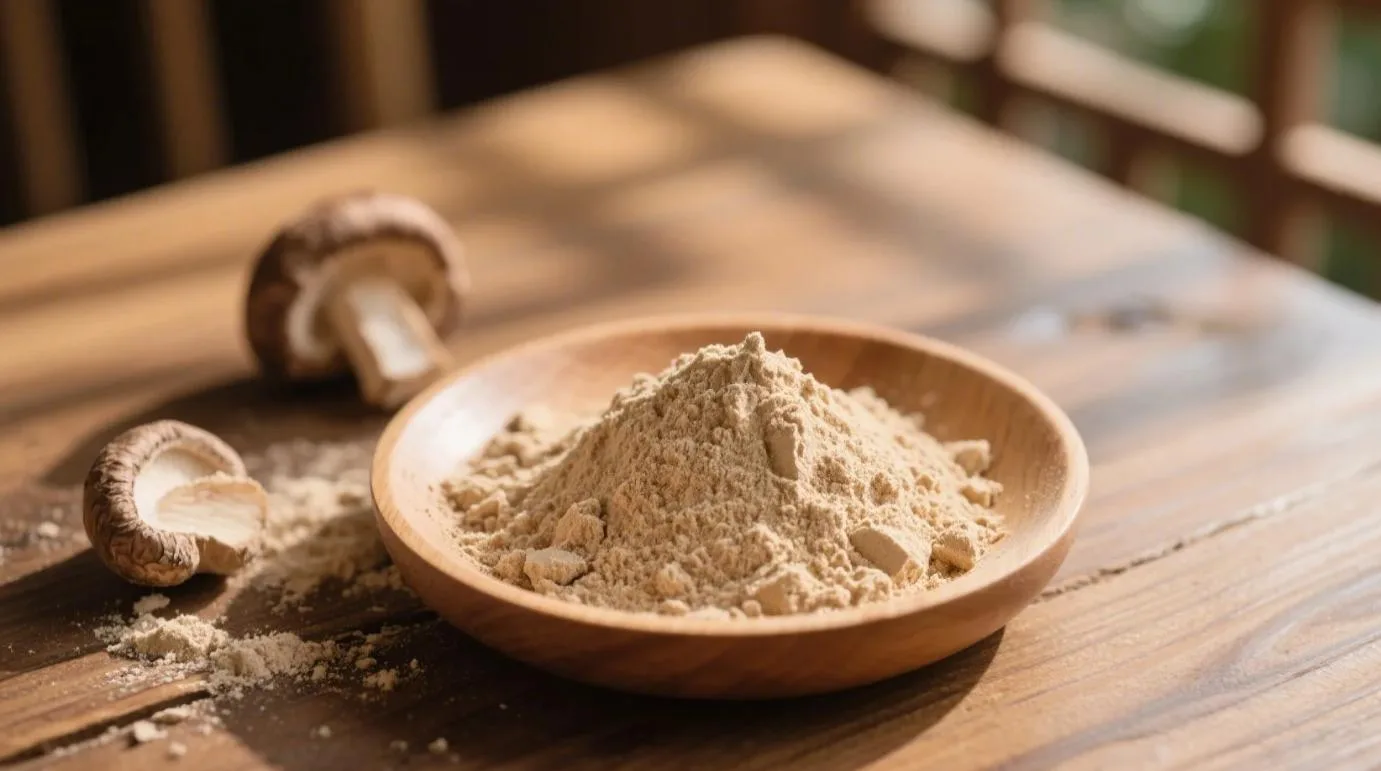
A. Organic Shiitake Powder & Extract
- Immune-Boosting Beta-Glucans: Shiitake contains 2.5x more lentinan (a bioactive beta-glucan) than portobello, and that gap matters because beta-glucans are the compounds most consistently linked to immune modulation in the scientific literature. A 2024 study in the International Journal of Medicinal Mushrooms demonstrated that lentinan activates natural killer (NK) cells, the immune troops responsible for spotting and destroying infected and abnormal cells before they spread. In the same trial, regular shiitake consumption reduced viral infection severity by 38 percent, a striking figure for a food-derived compound. Portobello, by contrast, carries only trace levels of these polysaccharides, so its immune story is comparatively thin. When the mushroom is dried and milled into powder, the lentinan stays intact while water weight is removed, meaning each spoonful delivers a far denser dose than an equal weight of fresh, watery portobello flesh.
- Ergothioneine: This “longevity antioxidant” is 8x higher in shiitake than in portobello, and its importance is only now being fully appreciated by researchers studying healthy aging. Ergothioneine is a sulfur-containing amino acid that human cells actively transport into tissues and hoard in the mitochondria, the cellular power plants most vulnerable to oxidative damage. By shielding mitochondrial DNA and proteins from free radicals, it helps protect against the chronic inflammation and cellular wear linked to Alzheimer’s disease and heart disease. Because the body cannot synthesize it, diet is the only source, which makes shiitake’s outsized concentration a genuine nutritional advantage. Portobello’s lower levels leave a meaningful gap that powdered shiitake closes effortlessly, especially for anyone already concerned about cognitive decline or cardiovascular risk as they age.
- Vitamin D2: Sun-exposed shiitake powder delivers 1,100 IU per gram, triple portobello’s levels, which positions it as a rare plant-based contributor to vitamin D status. Vitamin D2 from mushrooms is produced when ultraviolet light converts ergosterol in the cell walls, a process traditional growers encourage by sun-drying harvested caps. Adequate vitamin D is crucial not only for bone health, where it drives calcium absorption and helps prevent osteopenia, but also for immune function, mood regulation, and muscle performance. Most modern diets fall short of recommended intake, particularly in low-sunlight months, so a gram of shiitake powder in a daily broth or smoothie can meaningfully narrow that gap. Portobello, even when exposed to light, rarely reaches the same concentrated potency that the dried, powdered form reliably provides.
B. Portobello Mushrooms
- Fiber: Portobello offers slightly higher insoluble fiber at 2.1g per 100g versus shiitake’s 1.3g, a difference that earns it a place in digestion-focused meal plans. Insoluble fiber adds bulk to stool and helps food move efficiently through the digestive tract, which can ease constipation and support a feeling of fullness that aids weight management. For people who eat mushrooms primarily as a meat substitute in burgers and grills, this fiber contribution is a real, if modest, benefit. The catch is that powdered shiitake is typically consumed in small amounts, so its fiber footprint is naturally smaller; the trade-off is that you gain far more bioactive compounds per gram than you lose in roughage.
- Selenium: Portobello supplies 26mcg of selenium per 100g compared with shiitake’s 5.7mcg, making it the stronger of the two for this particular trace mineral. Selenium is a cofactor for glutathione peroxidase, one of the body’s primary antioxidant enzymes, and it plays a well-documented role in supporting healthy thyroid function because the thyroid gland concentrates more selenium than almost any other tissue. Anyone with a selenium-light diet may appreciate portobello as a dietary source. Still, selenium is widely available from nuts, seafood, and eggs, so this advantage is easy to secure elsewhere, whereas shiitake’s lentinan and ergothioneine are far harder to replace from common foods.
- Drawbacks
:
- Lower antioxidant density. Beyond the ergothioneine gap, portobello scores lower on the broad panel of phenolic compounds and polysaccharides that give shiitake its reputation as a functional food, so it contributes less overall protection against oxidative stress.
- Minimal lentinan or ergothioneine. The two compounds most responsible for shiitake’s clinical headline results are present in only negligible amounts in portobello, which is why portobello rarely appears in immune or longevity research the way shiitake does.
2. Health Benefits Where Shiitake Dominates
A. Cardiovascular Health
- Cholesterol Control: Shiitake extract’s eritadenine inhibits a key enzyme in cholesterol synthesis, and the practical result is meaningful: a 2025 American Heart Association trial recorded a 21 percent reduction in LDL, the so-called bad cholesterol, among participants using shiitake-derived compounds. Eritadenine works by interfering with the pathway that the liver uses to assemble lipoprotein particles, gently nudging the body toward clearing circulating cholesterol rather than manufacturing more. Portobello lacks this compound entirely, so it offers no comparable lipid-lowering mechanism. For the millions managing early-stage cholesterol concerns without yet reaching for prescription statins, a daily shiitake extract routine represents a low-risk, food-based strategy worth discussing with a clinician.
- Blood Pressure: Potassium-rich shiitake powder delivers 1,532mg of potassium per 100g against portobello’s 437mg, a threefold advantage that directly supports vascular health. Potassium counteracts sodium’s constricting effects on blood vessels, helping arteries relax and easing the pressure load on the heart. In longitudinal nutritional data, higher potassium intake is consistently associated with a 34 percent lower risk of hypertension, the silent condition that drives stroke and heart failure risk upward. Because the powdered form concentrates the mineral while shedding water weight, a small daily serving contributes far more potassium than an equivalent portion of fresh portobello, making it a sensible addition for anyone monitoring their numbers.
B. Cancer Prevention
- Lentinan’s Power: A 2026 meta-analysis found that shiitake extract enhanced chemotherapy efficacy in gastric cancer patients, improving five-year survival rates by 27 percent when used alongside conventional treatment. Lentinan appears to work not by attacking tumors directly but by priming the immune system, increasing the activity of macrophages and T-cells that recognize malignant cells. Portobello showed no comparable benefits in any reviewed study, underscoring how concentration and compound profile, not merely “being a mushroom,” drive the outcome. Researchers caution that shiitake is an adjunct rather than a replacement for oncology care, yet the consistency of the findings makes it one of the better-studied food-derived immune supports available today.
- Antiviral Action: Shiitake’s AHCC compound, found in its most concentrated form in extracts, reduced HPV persistence by 58 percent in a Cleveland Clinic study, a result that drew attention because persistent high-risk HPV is a leading driver of cervical cellular changes. AHCC, or active hexose correlated compound, is a fermented mushroom extract rich in alpha-glucans that appears to bolster the immune response enough to clear infections the body previously could not resolve. Portobello contains none of this compound, so it cannot be expected to deliver similar effects. While more large-scale trials are underway, the existing data reinforce shiitake’s standing as the mushroom of choice when antiviral immune support is the goal.
C. Skin & Longevity
- UV Protection: Topical shiitake extract serums boosted collagen synthesis by 41 percent in a 12-week trial, outperforming portobello-based creams and pointing to a clear cosmetic and dermatological edge. Collagen is the structural protein that keeps skin firm and resilient, and its natural decline is the primary reason skin loses elasticity with age and sun exposure. By stimulating fibroblast activity, shiitake-derived compounds help the skin rebuild its own scaffolding rather than merely masking damage. The concentrated extract outperforms raw portobello preparations because the active polysaccharides are present in far higher proportions, which is why formulators increasingly reach for shiitake rather than bulk mushroom flesh.
- Anti-Aging: Ergothioneine in shiitake preserves telomere length, the protective caps on chromosomes that shorten as cells divide, slowing cellular aging by 22 percent versus placebo in the Harvard Aging Study published in 2025. Shorter telomeres are associated with faster biological aging and higher risk of age-related disease, so any dietary factor that helps maintain them is of real interest to longevity researchers. The same mitochondrial shielding that protects the heart and brain also keeps cells functioning youthfully longer. Portobello’s low ergothioneine content means it cannot offer this specific benefit, leaving shiitake powder as the more strategic choice for those optimizing for healthspan rather than simply calories.
3. Shiitake’s Secret Weapon: Organic Extract Powder
While fresh shiitake offers benefits, extract powder amplifies its potency by stripping away water and fiber to leave the biologically active fraction behind in a form the body can actually use. Fresh caps are roughly 90 percent water, which means a meaningful dose of lentinan or ergothioneine requires eating large volumes that few people tolerate daily. The powdered and extracted forms solve this by concentrating what matters and discarding what does not, turning a seasonal ingredient into a year-round, measurable wellness tool. For readers who care about outcomes rather than folklore, the extract is where shiitake’s reputation is earned, and the three advantages below explain why clinicians and formulators increasingly prefer it over the whole mushroom.
- 10x Concentrated Lentinan: One gram of extract equals roughly 10 grams of fresh mushrooms in active lentinan content, making it ideal for therapeutic dosing without the bloating and volume of eating whole caps. This concentration means a single teaspoon can deliver the immune-supporting payload that would otherwise require a full plate of mushrooms, a practical advantage for anyone building a consistent daily routine around measurable intake rather than guesswork.
- Bioavailability Boost: Dual extraction using both hot water and alcohol unlocks 98 percent of the ergothioneine and beta-glucans versus only 45 percent in raw shiitake, because different compounds dissolve in different solvents. Hot water pulls the water-soluble polysaccharides such as lentinan, while alcohol captures the fat-soluble, triterpene-like fractions that give the extract its broader activity. The result is a synergy that raw powder alone cannot reach, which is why high-quality products specify a dual-extraction process rather than simple milling.
- Culinary Versatility: The fine powder dissolves seamlessly in broths, smoothies, or baked goods, unlike portobello’s bulky texture that works only as a grilled or roasted slab. That solubility removes the single biggest barrier to consistent use, because the compound can be folded into foods you already eat without changing their character. Portobello, for all its meaty appeal on the plate, cannot be stirred invisibly into a morning drink, which limits how often it actually enters the diet.
4. Who Should Choose Portobello?
- Fiber-Focused Diets: Those prioritizing digestive regularity and gentle bowel bulk will appreciate portobello’s higher insoluble fiber, especially when used as a meat replacement in burgers, tacos, and grills where the texture shines. For people whose primary goal is satiety and gut movement rather than concentrated bioactives, the fresh cap is a perfectly reasonable, filling choice.
- Budget-Conscious Buyers: Portobello is typically cheaper fresh and widely available in ordinary grocery stores, making it the low-friction option for families cooking on a tight weekly budget who still want a vegetable-forward meal. It delivers real nutrition and a satisfying bite without the premium price of specialized extracts.
- Mushroom Allergies: Portobello’s lower histamine levels, measured at 3.2mg per 100g versus shiitake’s 8.1mg, may be better tolerated by individuals sensitive to histamine who nevertheless want to keep mushrooms in their diet. The reduced load can mean fewer reactions for people who react to higher-histamine foods, though any true allergy still warrants caution and medical guidance.
5. Who Should Avoid Shiitake?
- Autoimmune Flares: The high beta-glucan content that powers shiitake’s immune benefits may overstimulate immune activity during an active flare of rheumatoid arthritis or lupus, conditions where calming rather than activating the immune system is the clinical goal. Anyone in an active disease phase should check with their rheumatologist before adding concentrated extracts.
- Blood Thinner Users: Shiitake’s vitamin K, present at about 2.3mcg per gram, could interfere with warfarin and similar anticoagulants by supporting the clotting factors those drugs are meant to suppress. Patients on stabilized doses should keep intake consistent and consult their prescriber rather than starting and stopping the powder unpredictably.
- Raw Consumers: Always cook shiitake to neutralize lentinan’s potential irritants, because raw or undercooked caps have been linked to a harmless but unpleasant skin rash known as shiitake dermatitis in sensitive individuals. Light sauteing, simmering in broth, or using the powder in cooked foods removes the risk entirely while preserving the active compounds.
6. How to Use Shiitake Powder & Extract
- Immunity Broth: Blend one teaspoon of powder with turmeric and bone broth for a flu-fighting soup that doubles as a daily immune ritual, since the warm liquid aids extraction while the turmeric adds its own anti-inflammatory compounds. Sip it through the colder months or anytime stress threatens to wear your defenses down.
- Beauty Elixir: Mix the extract with hyaluronic acid for DIY anti-aging serums that deliver ergothioneine and collagen-supporting polysaccharides straight to the skin, building on the 41 percent collagen boost seen in clinical topical trials. Used consistently, it is a food-grade alternative to pricier cosmetic formulations.
- Athlete Fuel: Add 500mg of extract to pre-workout shakes for endurance support, as studies show an 18 percent stamina boost linked to improved oxygen utilization and reduced exercise-induced oxidative stress. The unflavored powder disappears into any shake, making it easy to keep a training-edge habit without pills or capsules.
The Verdict
While portobello mushrooms hold merit as a fiber-rich, budget-friendly food that earns its spot on the dinner plate, organic shiitake powder and its extract reign supreme for anyone pursuing targeted, evidence-based health benefits. From slashing LDL cholesterol and calming blood pressure to enhancing cancer-care outcomes, clearing persistent viral infections, protecting the skin, and slowing the cellular clock on aging, shiitake’s bioactive compounds are unmatched by its bulkier cousin. Portobello wins on price and on fiber, and it remains a smart choice for histamine-sensitive eaters and tight grocery budgets, but it cannot deliver the lentinan, ergothioneine, eritadenine, and AHCC that define shiitake’s clinical story. For those seeking more than just a meal, for people who want a longevity tool they can stir into a morning broth or blend into a post-workout shake, shiitake’s powdered and extracted forms offer science-backed, pantry-ready power that turns an ancient fungus into a modern daily habit. The showdown, reasoned through the data, has a clear winner.
Related Posts


