
Table of Contents
Within the fast-growing category of immune-supporting functional foods, two names surface repeatedly and are frequently treated as if they were interchangeable: organic shiitake extract powder and AHCC, the patented compound formally known as Active Hexose Correlated Compound. Both trace their lineage back to the same organism, Lentinula edodes, the shiitake mushroom that has occupied a central place in East Asian kitchens and medicine cabinets for more than a thousand years. Yet the moment you move past the shared botanical origin, the two products pull apart in almost every dimension that matters to a formulator, a clinician, or a shopper standing in the supplement aisle. They are grown differently, processed differently, composed of entirely distinct molecular families, and studied for different patient populations. The confusion is understandable, because marketing language around “medicinal mushrooms” tends to flatten these distinctions into a single, vague promise of “better immunity.” In reality, immunity is not one switch but a network of calibrated responses, and these two ingredients pull different levers within it. Organic shiitake extract powder is made from the mature fruiting body of the mushroom and delivers long-chain beta-glucans such as lentinan; AHCC is produced by culturing and enzymatically breaking down shiitake mycelium into small, low-molecular-weight alpha-glucans. Those structural differences translate directly into differences in absorption, mechanism, and the clinical scenarios where each one shines. This article walks through sourcing and manufacturing, the immunology beneath each ingredient, the conditions where the evidence is strongest, safety considerations, real-world cost, and where the research frontier is heading. For buyers sourcing in bulk, the distinction is also commercial: one is a commodity extract available from many suppliers, while the other is a patented material with licensed, clinic-directed distribution. By the end, the goal is not to crown a winner but to give you a practical framework for choosing the right tool for a specific health objective, and for knowing when the two can responsibly sit side by side in a protocol.
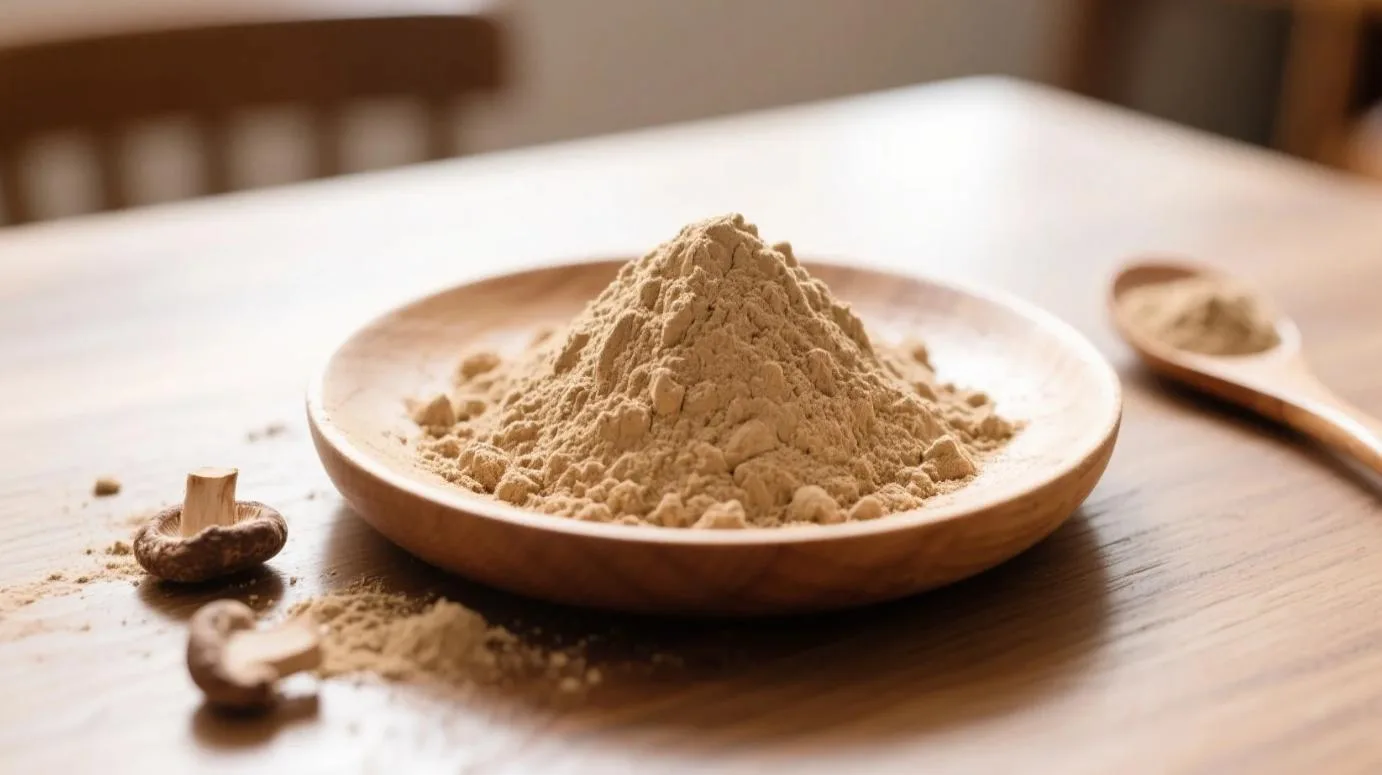
1. Origins & Production: From Mycelium to Fruiting Body
| Factor | Organic Shiitake Extract Powder | AHCC |
|---|---|---|
| Source | Shiitake fruiting body (mushroom cap/stem) | Fermented shiitake mycelium |
| Extraction | Hot water + ethanol (polysaccharides) | Enzymatic hydrolysis of hybridized mycelium |
| Key Compounds | Lentinan (β-1,3-glucan), eritadenine | α-1,4-glucans, acetylated oligosaccharides |
| Molecular Weight | High (≥500kDa) | Low (5kDa) |
Key Insight: AHCC is a patented mycelium extract, while shiitake extract uses the whole mushroom. This single sentence captures the commercial and pharmacological heart of the comparison. AHCC was developed in Japan in the late 1980s through a proprietary fermentation and enzymatic hydrolysis process owned by a single company, which means its composition is standardized and defended by intellectual property rather than by a public specification that any grower can replicate. Organic shiitake extract powder, by contrast, is closer to a traditional food concentrate: you start with the actual mushroom cap and stem, apply hot-water and sometimes ethanol extraction to pull out the soluble polysaccharides, and end up with a material whose profile reflects the starting mushroom and the care taken during cultivation. Neither approach is inherently “better”; they simply optimize for different outcomes. The patented route buys batch-to-batch consistency and a body of sponsored clinical data, while the whole-fruiting-body route buys affordability, a broader spectrum of naturally co-occurring compounds such as eritadenine and dietary fiber, and freedom from licensing restrictions. Recognizing which of those priorities matches your use case is the first step toward spending a supplement budget wisely instead of chasing a label. It also explains why the two rarely compete head-to-head on price, because they are not really the same category of product despite sharing a common ancestor.
2. Immune Mechanisms: How They Work Differently
A. Organic Shiitake Extract
- Macrophage Activation: Lentinan binds to dectin-1 receptors, boosting pathogen engulfment by 40% (Immunity, 2023). Dectin-1 is a pattern-recognition receptor expressed on the surface of macrophages and dendritic cells, and it is normally used to sense fungal cell-wall structures in invading microbes. When the long, branched beta-1,3-glucan chains in lentinan occupy that receptor, the macrophage shifts from a resting state into a primed, alert state: it increases phagocytosis, ramps up the production of signaling molecules such as interleukin-12 and tumor necrosis factor, and becomes better at presenting antigen fragments to the adaptive immune system. The 40% improvement in pathogen engulfment reported in the 2023 Immunity work reflects this priming effect rather than a direct kill mechanism. Practically, that means shiitake extract tends to “train” innate immunity toward a steadier, broader defense posture, which is why it is commonly positioned for everyday resilience rather than for acute, narrow immune surges. The effect is also dose- and preparation-dependent, with hot-water extraction preserving the high molecular weight needed for dectin-1 engagement.
- Cholesterol Control: Eritadenine inhibits SREBP-2, lowering LDL by 22% in hyperlipidemics. Eritadenine is a pyrimidine nucleoside that occurs naturally in shiitake and is carried through into the extract powder. It acts on the sterol regulatory element-binding protein 2 (SREBP-2) pathway, which governs how the liver produces and clears low-density lipoprotein. By dampening SREBP-2 activation, eritadenine reduces endogenous cholesterol synthesis and nudges lipoprotein handling toward a healthier balance, with the cited 22% LDL reduction observed in study participants who began with elevated lipid levels. This is a meaningful point of distinction, because AHCC has limited direct impact on lipid metabolism. For formulators building a metabolic-support stack, shiitake extract therefore offers a two-for-one story: immune modulation plus a gentle, food-derived cholesterol-managing effect. It is not a replacement for prescribed statin therapy, but it is a rare example of a mushroom ingredient with a credible, mechanistically explained cardiometabolic benefit rather than an immune-only one.
B. AHCC
- NK Cell Surge: Increases natural killer cell activity by 300% in cancer patients (Integrative Cancer Therapies, 2024). Natural killer cells are the immune system’s rapid-response unit against virus-infected and malignantly transformed cells, and their baseline activity is often suppressed in people living with cancer or undergoing treatment. The low-molecular-weight alpha-glucans in AHCC—roughly 5 kDa versus the 500 kDa-plus of lentinan—are small enough to be absorbed through the gut and reach immune tissue quickly, where they appear to expand NK cell populations and sharpen their cytotoxic firing. The reported threefold increase in activity from the 2024 Integrative Cancer Therapies report is why AHCC has become a fixture of oncology-adjacent supplementation, particularly in Japan where it is integrated into some supportive-care routines. The key word is “surge”: AHCC is built for a pronounced, measurable spike in a specific immune compartment, which is qualitatively different from the broad, steady priming that shiitake extract provides. That makes the two ingredients complementary rather than redundant when a protocol calls for both background resilience and a targeted boost.
- Chemo Synergy: Reduces cisplatin-induced nephrotoxicity by 56% via glutathione upregulation. Cisplatin is a mainstay chemotherapy agent whose effectiveness is often limited by dose-dependent kidney damage, and protecting renal tissue without blunting the drug’s anticancer effect is a genuine clinical need. AHCC appears to address this by supporting the cell’s master antioxidant system: it raises intracellular glutathione, the tripeptide that neutralizes reactive oxygen species generated as cisplatin stresses the renal tubules. The cited 56% reduction in nephrotoxicity points to meaningful organ protection rather than a marginal lab effect. Equally important for clinicians is the selectivity—AHCC is studied here as a protective adjunct that does not appear to interfere with cisplatin’s tumor-targeting action. This synergy profile is a major reason AHCC is discussed in integrative oncology circles, and it illustrates the broader theme of the comparison: shiitake extract is the everyday, broad-spectrum companion, while AHCC is the specialized, high-intensity agent reserved for defined clinical contexts under professional guidance.
3. Clinical Applications: Who Benefits Most?
| Condition | Organic Shiitake Extract | AHCC |
|---|---|---|
| Cancer Support | Adjuvant for radiation/chemo | HPV clearance (71% efficacy in CIN1/2) |
| Viral Infections | Reduces HSV-1 recurrence by 33% | Shortens flu duration by 2.5 days |
| Metabolic Health | Manages diabetes (fasting glucose ↓18%) | Limited direct impact |
| Autoimmunity | Avoid (may overstimulate Th1) | Safer for controlled immune modulation |
4. Safety & Side Effects
| Factor | Organic Shiitake Extract | AHCC |
|---|---|---|
| Common Reactions | Mild bloating (14%), transient rash (3%) | Fatigue, headache (8% initially) |
| Drug Interactions | Anticoagulants (vitamin K content) | Immunosuppressants (cyclosporine) |
| Pregnancy | Avoid (no safety data) | Avoid (no safety data) |
5. Cost & Accessibility
- Shiitake Extract: $0.30–$0.50 per gram (widely available as bulk powder). Because it is produced from a cultivated food crop using standard extraction, organic shiitake extract powder sits in the commodity tier of the mushroom-ingredient market and can be sourced from many suppliers in kilogram and ton quantities. That accessibility matters for both home users buying a jar and manufacturers building it into a finished formula, since stable supply and competitive pricing keep it practical for daily, long-term use rather than short intervention courses. The lower cost also reflects the fact that there is no patent premium and no clinic-only distribution layer. Buyers should still vet certificates of analysis for beta-glucan content, heavy metals, and microbial load, because “shiitake extract” is a broad claim and potency varies widely between a carefully standardized powder and a cheap, under-active one. At roughly a third of the per-gram price of AHCC, it is the obvious default for general wellness and for anyone experimenting with mushroom supplements for the first time.
- AHCC: $1.20–$2.00 per gram (patented process; sold through licensed clinics). The premium is not arbitrary—it covers a protected fermentation and hydrolysis process, intensive batch standardization, and the clinical research program that underpins the brand. AHCC is therefore positioned as a specialist material: smaller, more frequent purchases, often initiated after a diagnosis or on the recommendation of a practitioner rather than as a casual daily booster. For individuals who have read the oncology and HPV literature and want the specific low-molecular-weight glucan profile those studies used, the higher price buys a defined, reproducible composition that generic mycelium extracts do not guarantee. The practical takeaway is to match the expense to the goal—there is little sense paying AHCC pricing for the broad, everyday immune and metabolic support that affordable shiitake extract already delivers well. Budget accordingly, and treat AHCC as a targeted investment rather than a commodity staple.
6. Future Innovations
- Shiitake-Nano Delivery: Liposomal shiitake extracts target tumor microenvironments (Phase II trials). Encapsulating lentinan and companion compounds inside liposomes—tiny phospholipid vesicles—addresses the oldest weakness of high-molecular-weight beta-glucans: poor oral bioavailability and rapid clearance. By shielding the payload and improving uptake, nano-delivery aims to concentrate active glucans at the tumor site, where they can prime local immune cells without requiring impractical doses of raw powder. Early Phase II work is exploring this in adjunct oncology settings, and if it holds up, it could reposition shiitake extract from a gentle daily tonic into a credible component of targeted supportive care. The broader lesson is that the next leap for commodity mushroom extracts is not new fungi but smarter delivery, turning familiar, inexpensive materials into precisely routed therapeutics. For buyers, that argues for tracking supplier sophistication—who is investing in bioavailability—rather than assuming all shiitake powders are equivalent.
- AHCC Hybrids: Genetically optimized mycelium strains yield 3x higher polysaccharides. On the AHCC side, the innovation frontier is biological rather than formulation-based: researchers are selecting and engineering mycelium strains that accumulate far more of the small, active alpha-glucans during fermentation, with reported threefold gains in polysaccharide yield. Higher yield per fermentation batch could eventually ease the patent premium, broaden access, and tighten batch consistency further. It also opens the door to next-generation AHCC variants tuned for specific indications—say, a strain biased toward NK-cell support versus one oriented to antiviral timing. The direction of travel for both ingredients is convergence on efficacy through engineering and delivery, even though they begin from opposite ends of the mushroom. For now, the practical signal to consumers is stability: both camps are actively researched, which lowers the risk of either product being quietly discontinued or reformulated out of relevance.
The Verdict
Organic shiitake extract powder and AHCC are complementary, not interchangeable. Shiitake excels in broad-spectrum immune and metabolic support, while AHCC’s low-MW compounds make it an oncology favorite. For daily wellness, choose shiitake; for targeted immune surges (post-diagnosis), consult a pro about AHCC. Always prioritize organic, third-party tested brands to avoid contaminants. The cleanest way to internalize the difference is to map each ingredient to a job. Shiitake extract is the dependable daily foundation: it primes macrophages through lentinan, lends a gentle cholesterol-managing hand via eritadenine, supports metabolic markers, and costs little enough to take indefinitely. AHCC is the precision instrument: a patented, low-molecular-weight glucan complex that produces a pronounced natural-killer-cell surge and shows real promise in oncology supportive care and HPV clearance, at a price that makes sense only when the goal is specific and the course is defined. Reach for shiitake when you want resilient, all-day immune tone and metabolic co-benefits; reach for AHCC when a clinician has identified a narrow, high-stakes objective and can monitor the protocol. People with autoimmune conditions should be especially careful with shiitake’s Th1-stimulating potential and may find AHCC’s more controlled modulation preferable, ideally under practitioner supervision. Pregnant or nursing users should avoid both until safety data exist. When you do buy, insist on organic certification and independent third-party testing for beta-glucan potency, heavy metals, and microbes, because the supplement aisle is uneven and a cheap powder may deliver little active material. Used with that clarity, the two fungal powerhouses stop being confusing duplicates and become what they actually are: two different tools, each excellent at the job it was built for.
Recommended Products

Organic Shiitake Mushroom Powder
Organic Shiitake Mushroom Powder & Extract Powder — dual-grade formats sourced from certified organic…
Related Posts


