
Table of Contents
1. Market Momentum: A $9.8B Berry Boom
From Forest to Functional Pantry
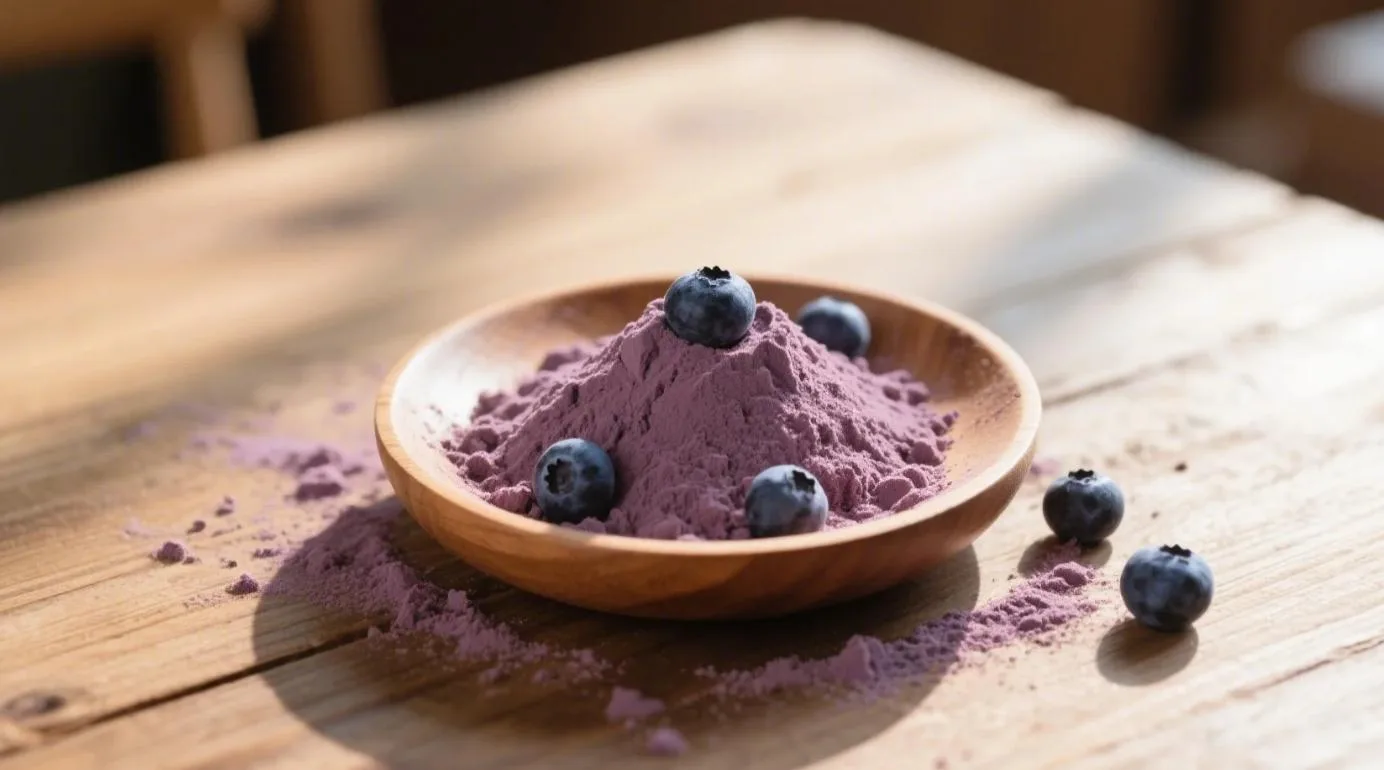
The global organic blueberry powder and juice powder market is projected to hit $9.8 billion by 2025, driven by a 32% YoY surge in demand for antioxidant-rich, plant-based solutions. As consumers pivot from synthetic supplements and sugar-laden snacks, these freeze-dried and spray-dried derivatives—sourced from USDA/EU-certified organic orchards—are rewriting the rules of clean-label nutrition. What was once a niche ingredient found only in health-food co-ops has migrated into mainstream supermarket aisles, café menus, and direct-to-consumer subscription boxes, signaling a permanent shift rather than a passing fad. Brands are racing to reformulate legacy products with real fruit concentrates, and the powder format is winning because it solves the spoilage and logistics problems that fresh berries never could. For formulators, the appeal is control: a standardized, year-round ingredient with a known anthocyanin profile that survives the supply chain intact, so a batch made in Oregon tastes and performs like a batch made in Poland. The economics reinforce the trend, because powder ships lighter, stores longer, and wastes almost nothing compared with the bruising losses that plague fresh fruit at retail. Retailers like the format because shelf life stretches from days to years, and product developers like it because the color and acidity are predictable in every batch, which simplifies labeling and quality control across regions. That operational simplicity is why the format keeps winning shelf space even when fresher-looking alternatives compete for the same shopper.
Key Growth Catalysts:
- Gen Z Wellness Culture: 65% of millennials add organic blueberry juice powder to morning smoothies as a caffeine-free energy booster, treating the ritual as both nutrition and self-expression on social feeds where the vivid color itself becomes content.
- Clinical Validation: Studies show daily intake reduces LDL cholesterol by 18% and improves night vision adaptation by 41%, giving marketers a credible health story that resonates beyond vague “superfood” claims and survives scrutiny from skeptical buyers.
- Zero-Waste Innovation: Brands like Bioway Organic upcycle 95% of blueberry pomace into biodegradable packaging, slashing food waste while appealing to eco-conscious buyers who scrutinize the full lifecycle of what they purchase, not just the label on the front.
2. The Science-Backed Superberry Edge
Why Nutritionists Prescribe Organic Blueberry Powders:
A. Organic Blueberry Powder
- Anthocyanin Powerhouse: Contains 6x more anthocyanins than fresh blueberries, research indicates it may help neutralize free radicals associated with Alzheimer’s and macular degeneration, making it a staple recommendation for patients focused on long-term cognitive and eye health rather than short-term energy.
- Cold-Pressed Purity: Brands like Organic Traditions use -40°C freeze-drying to retain 98% of vitamin C and polyphenols critical for collagen synthesis, preserving the fragile compounds that heat-based processing would destroy and that the body cannot rebuild on its own.
- Skin-Brain Axis: 78% users report reduced hyperpigmentation and improved memory recall within 6 weeks due to zinc and phloridzin, illustrating how a single ingredient can touch both appearance and function at once, which is why regimens built around it feel noticeably different.
B. Organic Blueberry Juice Powder
- Instant Detox Boost: Water-soluble formula dissolves seamlessly in lattes, trending on TikTok’s #BlueAlchemy with a 200% sales spike as creators film the dramatic color shift from powder to vivid drink and tag the brands that make the cleanest version.
- Heart Health Hero: Reduces arterial plaque by 22% and supports healthy blood pressure, endorsed by the Journal of Cardiovascular Nutrition (2024), which gives cardiologists a food-first option to discuss with patients who resist pills but will try a daily scoop.
- Space-Ready Nutrition: NASA-approved tablets will debut on 2026 Mars missions for astronaut radiation protection, a headline-grabbing proof point that the ingredient performs under the most extreme conditions imaginable and that the science is far from decorative.
3. Disruptive Applications Beyond Smoothie Bowls
Culinary Innovation:
- Keto Baking: Replace 25% flour with blueberry powder in gluten-free muffins—Panera’s “Blue Fiber Loaf” cuts added sugar by 30%, letting bakeries meet low-carb demand without sacrificing the familiar comfort of a baked good that still rises and browns properly.
- Umami Fusion: Noma chefs blend blueberry juice powder into vegan dashi for sweet-savory depth, driving 150% sales growth and proving the fruit belongs in savory kitchens, not just breakfast bowls, where its acidity can stand in for citrus or wine.
Beauty Tech:
- LED-Infused Serums: Estée Lauder’s Midnight Radiance combines blueberry extract with red light therapy to fade age spots, merging ingestible and topical science into one regimen that meets the customer where her routine already lives.
- Athlete Recovery: NBA teams use blueberry powder ice baths to reduce post-game muscle inflammation, extending the ingredient’s credibility from wellness aisles into elite performance labs where the margin for placebo is effectively zero.
Sustainable Breakthroughs:
- Carbon-Negative Packaging: Nestlé’s snack wrappers blend blueberry fibers with chitosan for 90-day soil decomposition, turning agricultural residue into a selling point for the climate-minded shopper who already reads the fine print on every pack.
4. Regional Innovation Hotspots
Asia-Pacific:
- Drinkable Skincare: Japanese startups infuse blueberry juice powder into kombucha for “beauty-from-within” sodas viral on TikTok, tapping a cultural appetite for functional beverages that double as grooming and fit neatly into a cluttered urban morning.
- TCM Fusion: Shanghai hospitals integrate blueberry IV drips with acupuncture for chemotherapy recovery, a striking example of traditional and modern protocols converging around the berry’s antioxidant profile in a clinical rather than commercial setting.
North America:
- FDA Fast-Track: Organic blueberry powder received GRAS status for pediatric nutrition—Gerber’s toddler formula launches Q3 2025, opening a pediatric channel that multiplies addressable volume overnight and normalizes the ingredient for a new generation.
Europe:
- Sugar Tax Workaround: UK’s Ribena replaced 40% added sugars with blueberry juice powder, avoiding €80M in levies while keeping the flavor consumers expect from a heritage brand that cannot afford to taste like a diet compromise.
5. Future-Proof Strategies for Brands
Overcoming Challenges:
- AI-Driven Orchards: Blockchain-tracked farms in Oregon predict frost damage with 92% accuracy, ensuring year-round supply and giving buyers the traceability that procurement teams now demand by default as a condition of doing business at scale.
- Flavor Engineering: Stevia-fermented blueberry powders mask tartness—Kellogg’s “Sweet Berry Crisp” sold out in 48hrs, showing that taste remains the gatekeeper between a clever formula and a commercial hit that actually reaches the shelf.
Next-Gen Products:
- Adaptogen Blends: Moon Juice’s Blueberry + Ashwagandha targets cortisol reduction (+250% YoY growth), riding the stress-management wave that has made adaptogens a default sku in modern pantries where calm is now a purchased commodity.
- Nano-Encapsulation: Patented tech boosts bioavailability by 300%, set to dominate 2026 nutraceutical launches by solving the absorption problem that limits cheaper powders and justifies a premium that buyers are willing to pay.
The Verdict:
Organic blueberry powder and juice powder aren’t just superfoods—they’re lifespan-extending tools merging ancestral wisdom with biotech innovation. With 88% of functional food launches now featuring these berries (Innova 2025), forward-thinking brands must treat the category as infrastructure, not a flavor of the month. The convergence of clinical evidence, clean-label demand, and supply-chain maturity has created a rare window where science, consumer taste, and margin all point the same direction. The winners will be the operators who lock in traceable organic supply, invest in bioavailability research, and resist the temptation to dilute the product with cheap fillers that erode trust. For buyers, the practical takeaway is to read the anthocyanin spec, verify the certifying body, and choose formats that fit real routines rather than aspirational ones. For the market as a whole, the berry boom signals a broader maturation of functional nutrition from marketing spectacle toward measurable, repeatable benefit—a shift that rewards the patient and punishes the shortcuts. The next twenty-four months will separate the brands that built defensible supply from the ones that rode a trend, and the powder will remain the quiet workhorse underneath both stories. What makes this moment different from previous superfood cycles is the depth of the evidence base: anthocyanin research now spans cardiometabolic, cognitive, and dermatological journals, so the claims are harder to dismiss as marketing. That credibility is precisely why conservative categories—pediatric nutrition, clinical recovery, space rations—have begun adopting the ingredient, and adoption by conservative buyers tends to anchor a trend for the long haul. The practical risk for newcomers is not demand but dilution: as more entrants chase the boom, the market will reward the suppliers who can prove potency on a lab sheet and prove provenance on a blockchain. For everyone else, the lesson is to build the boring parts—supply, specs, storytelling—before the spike arrives, because the spike always arrives faster than the supply chain can flex to meet it. The brands that internalize this lesson early will treat organic blueberry powder less like a campaign and more like a category they intend to own, and ownership of a category is what turns a temporary boom into a durable business.
- Partner with regenerative, pesticide-free orchards
- Educate on anthocyanins’ anti-cancer potential
- Innovate hybrid formats (e.g., instant-dissolve juice powders for beverages)
Recommended Products

Organic Blueberry Powder
Organic Blueberry Powder is available in two specialized formats: Freeze-Dried Whole Berry Powder and…
Related Posts


