
There are many ways to eat Goji berry, and choosing the right method depends largely on your personal constitution, daily routine, and the specific health goals you want to achieve. The most common and time-honored ways to enjoy this bright red superfruit include chewing the dried berries directly, soaking them in hot water to make a nourishing tea, infusing them in wine, cooking them into a warm breakfast porridge, and boiling them together with other ingredients to make a restorative soup. Each of these methods has its own advantages, and the same berry can be rotated through your weekly menu so that you never grow tired of it. Among all the options, chewing the dried berries directly is widely considered the most conducive to the complete absorption of nutrients, because the berries are consumed whole and none of their water-soluble vitamins or active compounds are lost to the liquid you might otherwise discard. However, when you eat them raw it is important to keep the dosage moderate, since overindulging can lead to a feeling of internal heat or digestive discomfort. For a healthy adult, taking about 20 grams per day — roughly a small handful — is the most appropriate amount to obtain the benefits without tipping into excessive nourishment. Spreading that amount across the day, rather than eating it all at once, helps the body assimilate the nutrients steadily and keeps blood sugar on an even keel.
If you prefer to use Goji to make tea or soup, the single most important rule is to eat the berries themselves and not discard them after the liquid has been strained. Many people make the mistake of treating the berry as a mere flavoring agent and throwing away the soaked fruit, but the majority of the valuable polysaccharides, carotenoids, and trace minerals remain locked inside the pulp even after brewing. People with a weak physique, those who catch colds easily, and anyone with generally poor resistance stand to gain the most from supplementing their body with Goji on a regular basis, yet the key to success is patience and consistency. You must persist for a long time and eat a little daily if you want to accumulate a measurable effect, because the berry works as a gentle tonic rather than a quick remedy. A practical routine is to keep a sealed jar of dried berries on the kitchen counter and add a spoonful to whichever meal is easiest — morning oats, an afternoon cup of tea, or an evening bowl of soup — so that the habit becomes effortless. Over weeks and months this quiet consistency is what finally translates into steadier energy, clearer skin, and a more resilient immune system.
Goji is warm in nature according to traditional dietary theory, and that characteristic means it is not suitable for everyone at every moment. People who are catching a cold, running a fever, suffering from an active inflammation, or experiencing diarrhea caused by spleen deficiency should pause their Goji intake until the acute condition has passed, because adding a warming food on top of an already heated or congested system can worsen the discomfort. In addition, Goji berry carries a notably high sugar content — about 19.3 grams of sugar per 100 grams of dried berry — which is a point that anyone managing blood glucose needs to take seriously. Diabetic patients should use it with caution, ideally consulting their healthcare provider about an appropriate portion, and should account for the berry’s natural sugars within their daily carbohydrate budget rather than treating it as a free food. It is also wise to choose unsweetened preparations and to avoid recipes that call for extra rock sugar or honey when the goal is blood-sugar control. Enjoyed mindfully and in the right season of health, however, Goji remains a safe and beneficial addition for the large majority of people.
Goji berry health recipe
1. Clear liver and improve eyesight: Goji chrysanthemum tea. This classic combination is the remedy most often recommended for people who spend long hours in front of a screen, because both ingredients share a traditional affinity for the liver and the eyes. The tea is light, mildly sweet, and soothing, making it an ideal afternoon drink that replaces sugary sodas or excessive coffee. Brewing it fresh each day takes less than five minutes, and the ritual of preparing it can itself become a small moment of calm in a busy schedule. For best results use dried Goji that is plump and deep red, and pair it with a high-quality white or yellow chrysanthemum rather than the decorative varieties sold only for ornament.
Composition: a small handful of Goji berry, a few dried chrysanthemums, and a moderate amount of rock sugar. The proportions can be adjusted to taste, but a good starting point is roughly one tablespoon of berries and five or six chrysanthemum flowers per cup of water. The rock sugar is optional and can be reduced or omitted entirely for those watching their sugar intake; a thin slice of fresh pear or a single jujube can lend gentle sweetness without a sharp glucose spike. Using filtered water rather than heavily chlorinated tap water will also give the tea a cleaner finish and let the floral notes of the chrysanthemum come through more clearly.
Preparation method: After washing the Goji berry and dried chrysanthemum, put them in a teapot together with the rock sugar, brew with boiling water, let it stand for a while until the rock sugar melts, and then drink it. Cover the pot with a lid while it steeps so that the volatile aromatic compounds stay in the liquid instead of escaping into the air. A steeping time of three to five minutes is usually enough; longer steeping can make the chrysanthemum taste faintly bitter. The same berries and flowers can be re-infused once or twice, though each subsequent cup will be lighter, and you should still eat the softened berries at the end to capture the fiber and remaining polysaccharides.
Efficacy: Disperse wind, clear heat, improve eyesight, suitable for dizziness, headache, blurred vision, and similar complaints, which can relieve visual fatigue. In practical terms, regular drinkers often report that their eyes feel less dry and less strained by the end of a long working day, and that mild tension headaches tied to screen time become less frequent. The tea is particularly welcome during dry winter months or in air-conditioned offices where the eyes are prone to irritation. While it is a supportive tonic rather than a substitute for an eye examination, it is a pleasant, caffeine-free way to give tired eyes a daily measure of care.
2. Nourishing essence and nourishing kidney: Goji longan ointment. This thick, dark, honey-like paste is a traditional preparation meant to be taken by the spoonful, and it keeps well in the refrigerator for several weeks, which makes it convenient for busy households. Longan, also called dragon-eye fruit, is prized in the same tradition for calming the spirit and supporting the heart, so the pairing with Goji creates a formula aimed at both body and mind. Because the ointment is concentrated, a little goes a long way, and it can be stirred into warm water, swirled through plain yogurt, or simply taken straight off the spoon.
Recipe: Goji berries and longan meat 200 grams each. Weigh the ingredients carefully rather than estimating, because the slow reduction that follows concentrates whatever ratio you begin with. Choose deseeded longan flesh for a smoother texture, and sort through the Goji first to remove any stems or grit. If you prefer a softer set, a tablespoon of water added during cooking will keep the paste spreadable; if you prefer a firmer, more candied result, let the moisture cook off a little longer before potting.
Preparation method: Wash the Goji berries, put them in a casserole with the longan meat, add an appropriate amount of water, and simmer over a low fire until it becomes a paste, turn off the heat, and put it in a porcelain pot. A heavy-bottomed casserole distributes the heat evenly and prevents scorching, which is the main risk during the final thickening stage when the mixture can stick within seconds. Stir frequently near the end, and judge doneness by whether a spoon dragged across the base leaves a clear trail that does not immediately flood back. Take 1–2 spoons each time and take it with boiling water, preferably in the morning and again in the early evening for a steady, gentle effect.
Efficacy: Replenishing liver and kidney, improving eyesight and intelligence, suitable for mental fatigue, forgetfulness, blurred vision, and weakness of the waist and knees caused by excessive thinking and kidney essence loss. In everyday language, this is the preparation to reach for during periods of intense study, demanding project work, or seasonal exhaustion when concentration slips and the lower back feels weary. It is a food-tonic, not a medicine, so it supports rather than replaces rest, good sleep, and a balanced diet — but taken consistently it can smooth the rough edges of a stressful stretch.
3. Nourish blood and calm the nerves: Goji red date porridge. A warm bowl of this porridge is the kind of breakfast that feels like care, and it is gentle enough for children, the elderly, and anyone recovering from illness. Red dates, or jujubes, are the traditional partner here because they are valued for building blood and soothing the temperament, while the japonica rice gives the dish a soft, easily digested base. Made the night before and reheated, it also solves the perennial problem of a healthy breakfast on a rushed morning.
Recipe: a small handful of Goji berry, 9 red dates, appropriate amount of japonica rice. The rice quantity sets the final thickness, so use roughly one part rice to eight parts water for a porridge that is loose enough to sip yet substantial enough to satisfy. Pit the red dates before cooking so no one bites into a hard stone, and tear them into pieces to help their sweetness disperse through the grain. The Goji is added toward the end of cooking so the berries stay plump and do not break down completely into the broth.
Preparation method: Wash the japonica rice, Goji berry, and red dates, put them in a casserole, pour clean water, and cook them. Bring the pot to a gentle boil first, then lower to a simmer and stir occasionally so the rice does not settle and catch on the bottom. A slow cooker works just as well and frees you from standing watch; set it on low overnight and the porridge will be ready at dawn. Toward the last ten minutes, stir in the Goji so it warms through without losing its texture. The finished porridge should be glossy, faintly sweet, and comforting from the first spoonful.
Efficacy: To calm the mind and settle the nerves, nourish blood and invigorate the kidneys, suitable for upset, insomnia, tinnitus and forgetfulness, and soreness in the waist and knees. People who sleep lightly or who lie awake with a racing mind often find that a warm bowl in the evening helps signal the body to slow down. The combination is mild enough for nightly use, and because it is genuinely food rather than a sedative, it carries none of the grogginess that stronger aids can leave behind. Over time it can become a small, reliable anchor in a calm bedtime routine.
4. Nourishing Yin and Eliminating Heat: Goji Ophiopogon Drink. Ophiopogon japonicus, known in Chinese as Mai Dong, is a slender root valued for moistening dryness and cooling subtle internal heat, which makes it the right counterbalance to Goji’s warming tendency in this pairing. The resulting drink is especially suited to dry climates, heated rooms, and the parched throat that follows too much talking or singing. It is light enough to sip throughout the day and can be kept in a thermos so the benefit follows you to work or travel.
Recipe: a small handful each of Goji berry and Ophiopogon japonicus, and appropriate amount of rock sugar. Source the Ophiopogon from a reputable supplier so you know it has been cleaned and is free of sand, and rinse it well because the thin roots can hold grit. As with the chrysanthemum tea, the rock sugar is adjustable; many people find the natural sweetness of the Goji sufficient and skip the added sugar altogether, which also keeps the drink friendly for those limiting carbohydrates.
Preparation method: After washing Goji berry and Ophiopogon japonicus, put them in a casserole with rock sugar. Add water to boil, turn to low heat and cook for 5 minutes, then turn off the heat, and drink after warming. Five minutes is enough to draw out the roots’ essence without over-extracting into bitterness, but you may steep a minute or two longer if you prefer a stronger cup. Strain the brittle Ophiopogon strands before drinking, or leave them in and simply avoid chewing them, and remember to eat the softened Goji berries so none of their goodness is wasted. Served just warm rather than scalding, the drink is kindest to an already tender throat.
Efficacy: nourishing yin and clearing away heat, suitable for symptoms such as fever and yin deficiency or yin deficiency and dryness of the lung, such as inner restlessness, dry mouth, dry throat, sore throat, dry cough and little sputum. In plain terms, this is the formula to keep nearby during long, dry winters, after bouts of illness that leave the lungs thin and reactive, or whenever the mouth and throat feel permanently parched despite drinking water. It will not replace medical care for a persistent cough, but as a daily moistening drink it takes the edge off comfortably and encouragingly.
Beyond these four classic recipes, the same berries slip easily into modern cooking: scatter them over oatmeal or granola, fold them into muffin or bread batter, blend a teaspoon of powder into a smoothie, or toss a handful into a savory grain bowl for a pop of color and gentle sweetness. The only real limits are portion and timing, and a little attention to those two points turns a humble dried fruit into a dependable part of everyday wellness.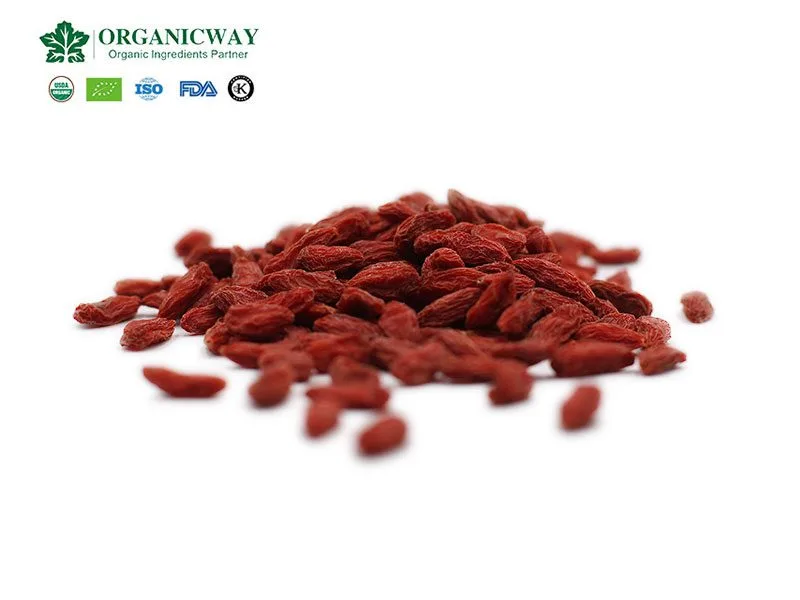
Now we provide our customers with fresh dried goji berry fruit and goji berry powder for this season. They all come from the vast land of Xinjiang and Qinghai, regions whose intense daylight, wide temperature swings, and clean high-altitude air give the berries their characteristic deep color, plump body, and concentrated sweetness. Every batch is grown under certified organic practices, which means no synthetic pesticides or fertilizers touch the plants, and the fruit is handled with care from field to drying rack to sealed package. We are also proud that our products are 100% organic and 100% nicotine-free, so you can share them with confidence with family, including older relatives and young children who appreciate a naturally sweet snack. Whether you prefer the whole dried berry for teas and porridge or the fine powder for smoothies, baking, and quick tonics, you are getting the same honest fruit, traceable to the ground it grew on and ready to become part of your own daily routine.
Related Posts


