Table of Contents
What is Organic Xylitol Powder?
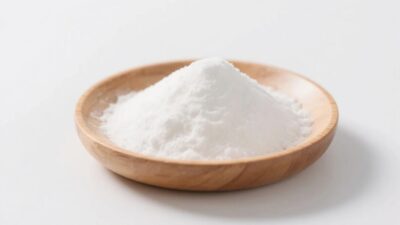
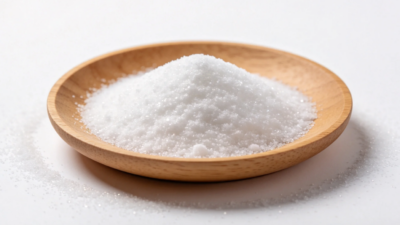
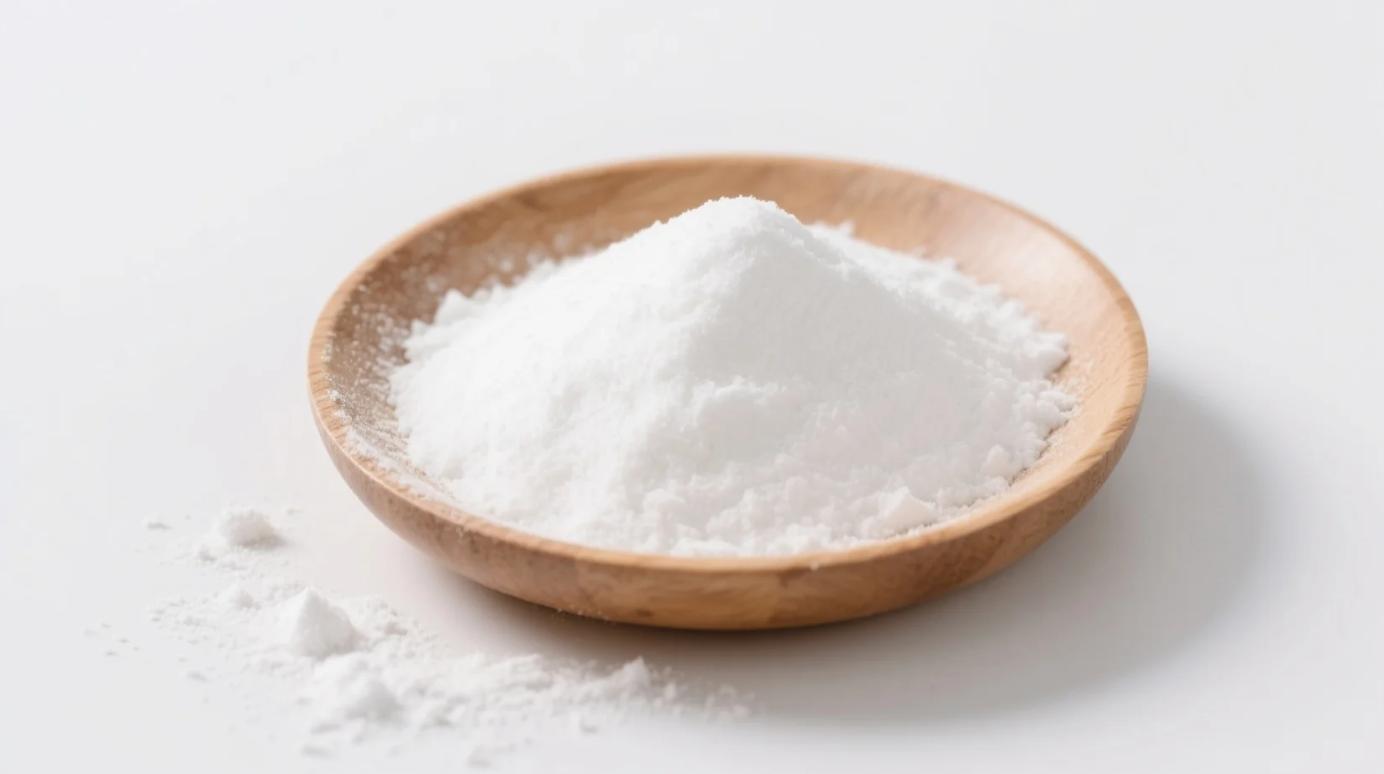
Organic Xylitol (Chemical Formula: C₅H₁₂O₅) is a five-carbon sugar alcohol (pentitol) produced through hydrogenation of xylose derived from certified organic birch wood or non-GMO corn cob hemicellulose. The hydrogenation process converts the aldehyde group of xylose to a primary alcohol, producing a crystalline, white, odorless sweetener with approximately 40% fewer calories than sucrose.
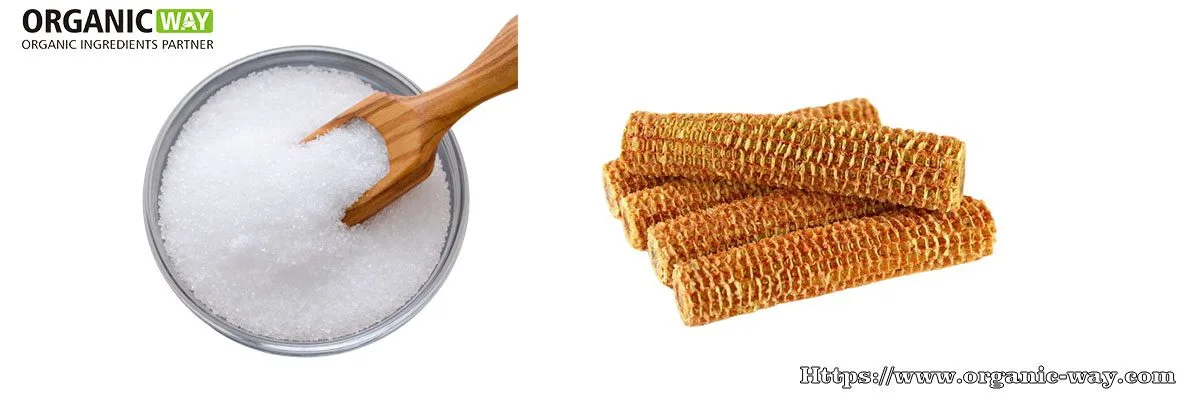
Dual Source: Birch vs. Corn — Both Are Identical
Organic xylitol on the market is sourced from two botanical origins: birch trees (Betula spp.) and corn cobs. From a chemical and functional standpoint, the end product is identical — both produce crystalline xylitol with the same molecular formula, purity profile, and functional performance. The source is relevant only for marketing positioning (e.g., “birch-sourced” may appeal to premium/natural brand narratives) and organic certification traceability. Formulators should not expect or require different dosage rates based on source.
Glycemic Index Profile
With a GI of 7 (vs. sucrose = 65), organic xylitol produces a negligible blood glucose response, making it suitable for diabetic and low-glycemic diet formulations. However, it is important to note: xylitol still metabolizes partially (approximately 50–60% via the pentose phosphate pathway) and contributes carbohydrates to the diet. It is not carbohydrate-free.
Dental Health: FDA-Approved Health Claim
Organic xylitol is one of the few sweeteners with an FDA-approved oral health claim. It reduces acid-producing bacteria in plaque, raises plaque pH to a non-cariogenic level, and may support natural tooth remineralization. This positions xylitol as the premier sweetener for sugar-free gum, mints, toothpaste, and mouthwash formulations in markets where dental health claims are permitted.
Prebiotic / Gut Health
Emerging research indicates xylitol acts as a prebiotic — selectively feeding beneficial bifidobacteria in the colon while not feeding opportunistic pathogens. At daily intakes of 10–30 g, bifidogenic effects have been documented in human clinical studies. This prebiotic potential is a growing differentiation point for functional food and supplement brands.
Important Safety Note
Xylitol is toxic to dogs. Even small amounts (as little as 0.1 g/kg body weight) can cause hypoglycemia in dogs; fatal doses have been reported. Any formulation intended for pet food or products with any pet exposure risk must carry a prominent xylitol warning. This is a regulatory requirement in the EU, US, and most major markets.
PHYSICAL & CHEMICAL PROPERTIES
Product Specifications
| Parameter | Specification | Test Method |
|---|---|---|
| Purity (Xylitol assay) | ≥ 99.7% | HPLC |
| Loss on Drying | ≤ 0.2% | Karl Fischer / oven method |
| Melting Point | 92–94°C (198–201°F) | DSC / capillary method |
| pH (20% aqueous solution) | 5.0 – 7.0 | Potentiometry |
| Reducing Sugars | ≤ 0.2% | Lane-Eynon method |
| Ash Content | ≤ 0.1% | Gravimetric at 800°C |
| Heavy Metals — Lead (Pb) | < 0.1 mg/kg | ICP-MS |
| Heavy Metals — Arsenic (As) | < 0.05 mg/kg | ICP-MS |
| Residual Solvents | < 10 ppm | Headspace GC |
| Specific Rotation [α]D20 | +5.0° to +8.0° (10% aqueous) | Polarimetry |
| Particle Size | 20–200 mesh (customizable) | Sieve analysis |
| Bulk Density | 0.70–0.90 g/mL | Tapped density |
| Solubility in Water | ~200 g/100 mL at 20°C (complete) | USP method |
| Color | White crystalline powder | Visual |
| Odor | Odorless | Sensory |
| Taste | Sweet, cooling sensation | Sensory |
| Caloric Value | 2.4 kcal/g (10.0 kJ/g) | Atwater factor |
| Glycemic Index (GI) | 7 (sucrose reference = 65) | Human GI testing |
| Sweetness Relative to Sucrose | ~100% (approx. 1:1 substitution) | Sensory panel |
| Dietary Suitability | Vegan, Kosher, Halal, Non-GMO | Third-party certification |
Why 1:1 Sweetness Ratio Is an Operational Advantage
Organic xylitol’s near-equal sweetness to sucrose (approximately 95–100% relative sweetness) is a significant practical advantage over other sugar alcohols and high-intensity sweeteners:
- No recipe reformulation required for sweetness — unlike erythritol (~70%), allulose (~65–70%), or stevia (200–400×) which require complex blending adjustments
- Simpler label — “Organic Xylitol” as the sole sweetener in a formulation, without needing blends or masking agents
- Consumer acceptance — taste profile closest to sugar; no aftertaste or cooling effect in most applications at standard use levels
- Note: In very high-concentration applications (>15% w/w), a mild cooling sensation becomes perceptible due to xylitol’s negative heat of solution
MICROBIOLOGICAL & CONTAMINANT STANDARDS
Microbiological Limits
| Test | Specification | Method |
|---|---|---|
| Total Plate Count (TPC) | < 100 CFU/g | ISO 4833 / USP <2020> |
| Yeast & Mold | < 10 CFU/g | ISO 7954 |
| E. coli | Negative / absent | ISO 16649 |
| Salmonella | Negative / absent | ISO 6579 |
Regulatory Approvals by Market
| Jurisdiction | Status | Reference |
|---|---|---|
| United States (FDA) | GRAS; E 967; permitted food additive | 21 CFR 172.395; GRAS Notice GRN 000765 |
| European Union | Permitted; E 967 | Reg (EU) 1333/2008 Annex II; Reg 231/2012 |
| China (GB) | Listed as “木糖醇” | GB 29921-2021; GB 2760-2014 |
| Japan (JSFA) | Listed as xylitol | JSFA Ninth Edition |
| Codex Alimentarius | Permitted as food additive | GSFA Table 3; INS 967 |
| Australia/New Zealand (FSANZ) | Permitted | Schedule 15 / Table 3 |
| Canada (Health Canada) | Approved | Marketing Authorization |
| South Korea (MFDS) | Approved | Food Additive Code |
Heat Stability
| Property | Performance | Implication |
|---|---|---|
| Heat stability | Stable up to 200°C | Suitable for baking without caramelization |
| pH stability | Stable across pH 3–9 | Compatible with acidic beverages and confections |
| Maillard browning | Does not brown | Not suitable for color/flavor development in baking; |
| consider combining with erythritol for partial browning |
CERTIFICATIONS
| Certification | Status | Issuing Body |
|---|---|---|
| USDA Organic (NOP) | Available | USDA-accredited certifier |
| EU Organic (2018/848) | Available | EU-accredited certifier |
| JAS Organic (Japan) | Available | MAFF-accredited certifier |
| Non-GMO Project Verified | Available | Non-GMO Project |
| Kosher | Available | OU / Star-K or equivalent |
| Halal | Available | HFA or equivalent |
| FSC-certified Birch Sourcing | Available | Forest Stewardship Council |
| Food Grade | Confirmed | Internal QC |
COA, Organic Transaction Certificate, and Non-GMO certificate provided per batch. All certificates issued against the specific production batch number.
APPLICATIONS & USAGE GUIDELINES
Recommended Application Sectors
| Application | Typical Dosage | Key Benefits | Notes |
|---|---|---|---|
| Sugar-Free Chewing Gum | 30–50% (w/w) of gum base | Dental health claim, sweetness, cooling | Primary application by volume globally |
| Sugar-Free Mints & Lozenges | 10–30% (w/w) | Dental health, clean label | Dissolve profile controlled by particle size |
| Chocolate & Confectionery | 10–30% (w/w) | 1:1 sweetness, clean label, lower calories | Combine with erythritol for texture control |
| Low-Carb / Keto Bakery | 10–25% (flour weight) | GI 7, clean label | Partial sugar replacement; adjust for texture |
| Protein / Meal Replacement Bars | 5–15% (w/w) | Sweetness, cooling, prebiotic | Combine with erythritol, allulose |
| Beverages (Cold RTD) | 5–15% (w/w) | Sweetness, GI 7 | ⚠️ Dissolution requires heating; use liquid format or pre-dissolve |
| Oral Care (Toothpaste, Mouthwash) | 5–20% (w/w) | Dental health, sweetness, flavor carrier | Primary functional ingredient |
| Pharmaceutical (Chewable Tablets) | 5–20% (w/w) | Sweetness, tabletting aid, safety profile | Non-cariogenic; preferred for pediatric formulations |
| Desktop Sweetener (Table Packets) | 100% (single ingredient) | 1:1 sugar replacement, clean label | No blending required |
| Frozen Desserts (Sorbets, Keto Ice Cream) | 8–15% (w/w) | Sweetness, lower freezing point depression | Combine with erythritol (0.5–2%) to prevent crystallization |
Crystallization Control: Key Formulation Rule
Xylitol has a tendency to crystallize from supersaturated aqueous solutions. In cold beverages and frozen desserts, this can cause a gritty texture. The solution:
| Solution | Method | Dosage of Anti-Crystallizer |
|---|---|---|
| Glycerin (vegetable-derived, organic-compatible) | Add to aqueous phase | 1–3% (w/w) |
| Erythritol | Blend with xylitol | 2–5% (w/w) |
| Organic glucose syrup | Add to liquid formulations | 3–5% (w/w) |
Combining with High-Intensity Sweeteners
For zero-calorie or very low-calorie formulations, xylitol blends effectively with:
| Blend Partner | Typical Ratio | Application | Benefit |
|---|---|---|---|
| Erythritol | Xylitol 70% / Erythritol 30% | Gum, mints, tabletop | Reduced cooling, cost optimization |
| Stevia (Reb A 95%+) | Xylitol 95% / Stevia 5% | Beverages, confectionery | Cost reduction, 0-calorie option |
| Monk fruit extract | Xylitol 97% / Monk 3% | Premium confectionery | All-natural, clean label, no aftertaste |
| Allulose | Xylitol 80% / Allulose 20% | Frozen desserts | Crystallization control + partial calorie reduction |
FAQ
Q1: What is the difference between birch-sourced and corn-sourced organic xylitol?
A: Functionally, there is no difference. Both birch and corn are starting materials for xylose, which is then hydrogenated to xylitol. The resulting crystalline xylitol molecule is chemically identical regardless of source. The distinction matters only for brand storytelling: “birch-sourced” evokes a premium, wild-harvested narrative, while “corn-cob sourced” emphasizes a byproduct-upcycling story. Both are valid organic certified sources.
Q2: Is organic xylitol safe for diabetics and people on keto diets?
A: Organic xylitol has a GI of 7 (vs. sucrose = 65) and provides only 2.4 kcal/g — approximately 40% fewer calories than sucrose. It produces a minimal blood glucose and insulin response. For most keto and diabetic dietary patterns, xylitol is one of the most well-tolerated sweeteners. However: (1) individual tolerance varies — some people experience digestive effects at >30 g/day; (2) it is not carbohydrate-free (4 kcal/g in some labeling conventions); (3) net carb calculation for keto should account for xylitol’s partial metabolism.
Q3: What documentation confirms organic and non-GMO status?
A: Request the following from your supplier per batch: Organic Transaction Certificate (USDA NOP and/or EU Organic), Non-GMO Project Verified certificate, batch-specific COA (including purity, moisture, heavy metals, microbial results), and any applicable FSC chain-of-custody certificate if birch sourcing is required for your brand positioning.
Q4: Is xylitol safe for pets, especially dogs?
A: ⚠️ No. Xylitol is highly toxic to dogs. Even small quantities can cause life-threatening hypoglycemia and hepatic failure. Any product formulation that may have even incidental contact with pets must carry a prominent xylitol warning label. This is a regulatory requirement in the EU, US, Canada, and Australia. If your formulation is intended for pet treats or households with pets, do not use xylitol — consider erythritol or allulose instead.
Q5: How should xylitol be handled in humid or tropical storage conditions?
A: Xylitol is hygroscopic above 60% relative humidity and may form clumps during storage or shipping in humid climates. Prevention: (1) use moisture-barrier packaging (PE inner liner + foil-overwrap); (2) store at ≤50% RH; (3) if clumping occurs, the product is still safe to use — grind to restore flowability. For liquid formulations in hot climates, pre-dissolve xylitol in heated water before adding to the batch.
Q6: Can organic xylitol achieve the same browning effect as sugar in baking?
A: No. Xylitol does not undergo Maillard browning reactions because it lacks a carbonyl group (the aldehyde that reacts with amino acids in Maillard chemistry). For baked goods requiring color and flavor development (crusts, cookies, breads), xylitol must be blended with ingredients that contribute browning: (1) erythritol + a small amount of glucose or fructose for Maillard effect; (2) allulose for mild browning; or (3) natural caramel color added post-baking.
Q7: What mesh sizes are available, and which should I choose?
A: Standard mesh is 20–200 mesh (75–850 μm). For specific applications:
Fine powder (100–200 mesh): Instant dissolution in beverages, tablets, fine confections
Coarse crystals (20–60 mesh): Texture in confectionery, visible crystals in tabletop sugar
Custom mesh: Available on request for pharmaceutical or specialized applications Discuss your particle size requirements with your supplier at the quotation stage.
Q8: What is the minimum order quantity and lead time?
A: Standard commercial MOQ is 500 kg (20 × 25 kg bags, one pallet). Sample/trial orders of 50 kg are available at a higher unit price. Standard lead time is 10–20 business days from confirmed purchase order. Custom mesh grading or specialized packaging may extend lead time by 5–7 business days.
PACKAGING & STORAGE
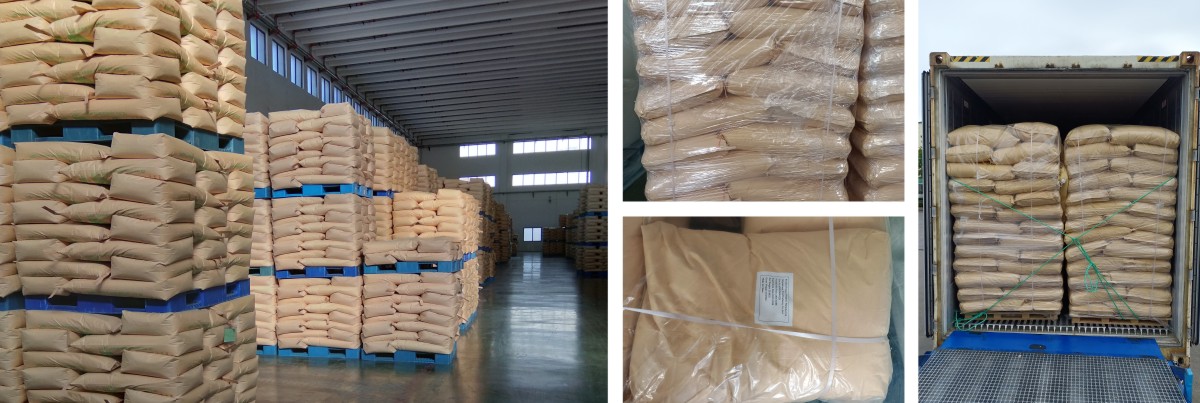
Packaging Options
| Package Size | Format | Packaging Material | MOQ |
|---|---|---|---|
| 1 kg | Powder | Aluminum foil pouch (food-grade) | Trial |
| 5 kg | Powder | Kraft paper bag + PE liner | Trial |
| 25 kg | Powder | Multi-wall kraft paper bag + PE liner + desiccant | Standard |
| 500 kg | Powder | Big bag (FIBC) / palletized | Commercial |
| Custom | Powder | Bulk / containerized | Commercial |
All packaging materials comply with EU 10/2011 and FDA 21 CFR food-contact regulations. Carbon-neutral shipping options available — contact sales for details. Custom labeling and COA customization available for contracted supply programs.
Storage Conditions
- Storage temperature: ≤ 25°C (cool, dry environment)
- Relative humidity: ≤ 60% RH (xylitol is hygroscopic above 60%)
- Avoid: Moisture, humidity, strong odors, direct sunlight
- Shelf life: 36 months from manufacturing date (sealed, unopened)
- Flowability: Good; may require desiccant packets in tropical conditions