Table of Contents
What’s organic rice protein peptide?
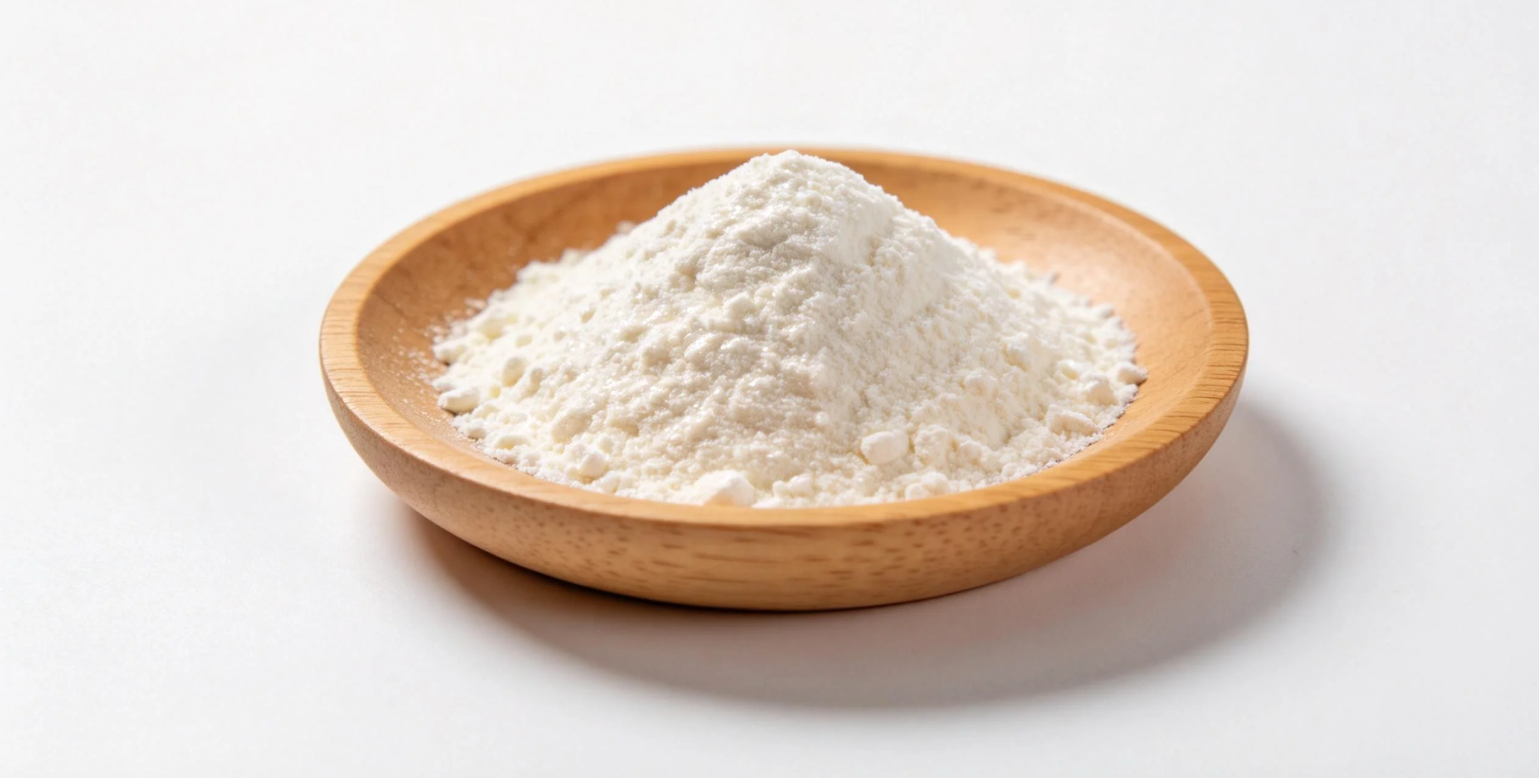
Organic Rice Protein Peptide is a bio-functional protein ingredient produced through controlled enzymatic hydrolysis of organic rice protein isolate. The result is a mixture of oligopeptides (short-chain peptides, typically 2–10 amino acid residues) and free amino acids, with molecular weights predominantly under 5,000 Daltons. This low molecular weight profile gives the product significantly enhanced bioavailability and physiological activity compared to non-hydrolyzed rice protein.
Raw Material Source
Our organic rice is cultivated in the black soil region of Northeastern China — specifically Liaoning and Heilongjiang provinces — where the large diurnal temperature variation promotes high protein accumulation in the grain. The region is recognized for its mineral-rich soil and clean agricultural environment, reducing the risk of heavy metal and pesticide contamination. All raw rice is organically certified under NOP (USDA) and EU Organic standards before processing.
Key Functional Characteristics
- Low Molecular Weight: ≤5,000 Da peptide profile; oligopeptide-dominant composition ensures high intestinal permeability and rapid absorption.
- High Protein Purity: ≥80% protein content on dry basis (nitrogen conversion factor NX6.25).
- Hypoallergenic: Rice is classified as a low-allergenicity protein source, making this product suitable for sensitive population groups.
- Clean Flavor Profile: Neutral to mildly sweet taste; no bitter aftertaste common in some hydrolyzed plant proteins.
- Excellent Processability: High water solubility; suitable for direct compression, granulation, and spray drying formulations.
- Traceability: Each batch tested for pesticide residues (NOP & EU standards), heavy metals (Pb < 0.3 mg/kg, As < 0.25 mg/kg, Cd < 0.3 mg/kg, Hg < 0.2 mg/kg), gluten (< 20 ppm), and microbiological safety (TPC < 10,000 cfu/g, E. coli negative, Salmonella negative).
Applications
- Sports nutrition powders and RTD beverages
- Clinical nutrition and medical food formulations
- Functional food bars and snacks
- Vegetarian and vegan protein products
- Bakery and confectionery applications
- Dietary supplement capsule and tablet formulations
Why Organic Rice Protein Peptide Over Whey or Soy?
Rice protein peptide provides a viable alternative for formulators seeking to avoid the allergens (whey) or GM concerns (conventional soy) associated with more mainstream protein sources. The product’s neutral flavor profile and low allergenicity make it particularly suitable for pediatric nutrition, senior nutrition, and clinical enteral feeding applications where ingredient simplicity is critical.
TECHNICAL SPECIFICATIONS
Physical / Chemical Specification
| Parameter | Specification | Test Method |
|---|---|---|
| Product Name | Organic Rice Protein Peptide | Visual |
| Plant Origin | Oryza sativa (Rice) | Botanical ID |
| Country of Origin | China (Northeast: Liaoning / Heilongjiang) | Supply chain record |
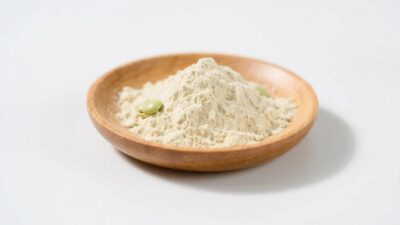
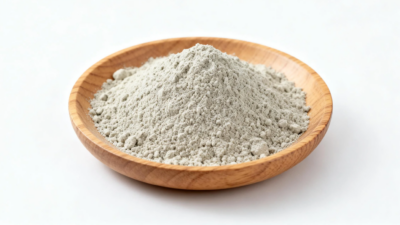
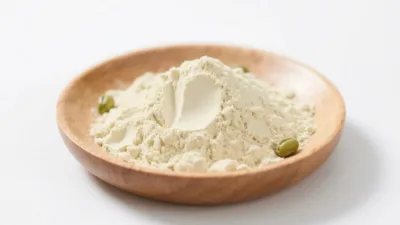
| Appearance | Fine powder | Visual |
| Color | Beige to light beige | Colorimetric |
| Taste & Odor | Characteristic, neutral | Organoleptic |
| Protein (dry basis, NX6.25) | ≥ 80% | AOAC 991.20 / 992.15 |
| Peptide Content (HPLC) | ≥ 20% of total protein | HPLC-SEC |
| Molecular Weight | ≤ 5,000 Da (primary fraction) | HPLC-SEC / MALDI-TOF |
| Moisture | ≤ 5.0% | AOAC 925.10 |
| Fat | ≤ 7.0% | AOAC 963.15 / 2003.05 |
| Ash | ≤ 5.0% | AOAC 942.05 |
| pH (10% solution) | ≥ 6.5 | AOAC 981.12 |
| Total Carbohydrate | ≤ 18% | Calculated |
| Dietary Fiber | ≤ 1.5% | AOAC 985.29 |
| Bulk Density | 0.35 – 0.55 g/mL | Loose-packed |
| Particle Size | 80 mesh (≤ 180 µm) pass ≥ 95% | Sieve analysis |
| Water Solubility Index | ≥ 85% at 25°C, pH 7.0 | In-house method |
| Pesticide Residue | Complies with NOP & EU organic standard | GC-MS / LC-MS-MS |
| Melamine | Not detected (ND) | LC-MS/MS |
| Gluten | < 20 ppm | ELISA R5 Mendez |
| Non-GMO | Verified | Non-GMO Project testing |
| Glyphosate | Not detected | LC-MS/MS |
Microbiological Specification
| Parameter | Specification | Test Method |
|---|---|---|
| Total Plate Count (TPC) | < 10,000 cfu/g | AOAC 990.12 |
| Mould & Yeast | < 100 cfu/g | AOAC 997.02 |
| Coliforms | < 100 cfu/g | ISO 4832 |
| E. coli | Negative / < 10 cfu/g | ISO 16649-2 |
| Staphylococcus spp. | Negative | ISO 6888-1 |
| Salmonella spp. | Negative (in 25g) | ISO 6579-1 |
| Enterobacteriaceae | < 100 cfu/g | ISO 21528-2 |
Heavy Metal & Contaminant Specification
| Parameter | Specification | Limit |
|---|---|---|
| Lead (Pb) | < 0.3 mg/kg | EFSA / FDA RL |
| Arsenic (As) | < 0.25 mg/kg | EFSA |
| Cadmium (Cd) | < 0.3 mg/kg | EFSA |
| Mercury (Hg) | < 0.2 mg/kg | FDA RL |
| Aflatoxin B1 | < 2 µg/kg | EU Reg 165/2010 |
| Total Aflatoxins | < 4 µg/kg | EU Reg 165/2010 |
| Arsenic speciation | Total As < 0.25 mg/kg; inorganic As monitored | HPLC-ICP-MS |
| Dioxins & DL-PCBs | < EU limits | GC-HRMS |
CERTIFICATION CHECKLIST
| Certification | Issuing Body |
|---|---|
| USDA Organic | USDA AMS NOP |
| EU Organic | Authorized Organic Certifier |
| Non-GMO Project Verified | Non-GMO Project |
| Kosher | OU / Star-K / CRC |
| Halal | MUI / IFIC / HFC |
| FSSC 22000 / ISO 22000 | Accredited CB |
| Gluten-Free | GFCO / AACC |
| Vegan Society / Vegan.org | Vegan Awareness Foundation |
| GMP (Good Manufacturing Practice) | National/International |
⚠️ Critical Note: The source page states “Complies with NOP & EU organic standard” in the specification table but does NOT display actual organic certification numbers or logos. Buyers must request copies of valid organic certificates and verify that the certificate scope covers rice protein peptide processing, not just raw rice cultivation.
APPLICATION GUIDE
Application Segments & Usage Levels
| Application | Recommended Usage Level | Key Benefits | Formulation Notes |
|---|---|---|---|
| Sports Nutrition Powders | 15–30% w/w | High solubility, neutral taste, fast-absorbing peptides | Combine with BCAA or leucine for complete amino acid profile |
| RTD Protein Beverages | 2–5% w/w | High solubility at low pH, clean label | pH stable 4.0–8.0; avoid high-temperature pasteurization above 85°C |
| Medical / Clinical Nutrition | 10–25% w/w | Hypoallergenic, easy to digest, low residue | Suitable for enteral feeding formulas; verify osmolarity |
| Functional Food Bars | 10–20% w/w | Neutral flavor, good binding properties | Pair with binders; low moisture to prevent texture issues |
| Vegan / Plant-Based Meat Analogs | 5–15% w/w | Complementary to pea/sorghum protein | Lysine-limiting — supplement with 10–15% pea protein isolate |
| Bakery & Confectionery | 3–10% w/w | Neutral taste, protein enrichment | Monitor pH impact on leavening; reduce water content in dough |
| Capsule / Tablet Supplements | 20–80% w/w | High protein density, compressible | Fine powder (< 80 mesh) required for uniform fill |
| Pet Food / Animal Nutrition | 5–15% w/w | Hypoallergenic, highly digestible | Species-specific palatability testing recommended |
Formulation & Stability Data
Solubility Profile
| Condition | Result | Test Method |
|---|---|---|
| Water solubility at 25°C, pH 7 | ≥ 85% | In-house method |
| Water solubility at 40°C, pH 7 | ≥ 88% | In-house method |
| Acid solubility at pH 3.0 | ~40–55% | Acid buffer dissolution |
| Milk solubility (pH 6.5) | ≥ 80% | Simulated milk medium |
Formulation Tip: For acidic RTD beverages (pH < 4.0), consider microencapsulation or buffering with sodium citrate to maintain peptide solubility and color stability.
FAQ
Q1: What is the difference between Rice Protein Peptide and Rice Protein Powder?
Rice Protein Peptide is produced by enzymatic hydrolysis of rice protein isolate, breaking the protein into small peptide chains (predominantly ≤ 5,000 Da) and free amino acids. This gives it superior solubility, faster absorption, and higher physiological activity than non-hydrolyzed rice protein powder. Rice protein powder contains intact protein molecules, which have larger molecular weights and may require longer digestion time before amino acids become available for absorption.
Q2: Is this product certified organic? Which standards?
Our Organic Rice Protein Peptide is produced from rice certified under USDA NOP (National Organic Program) and EU Organic standards. Batch-specific organic certificates and transaction certificates (TCT) are available upon request. Please verify the organic certification scope with your supplier before purchase.
Q3: What is the protein content, and how is it measured?
The protein content is ≥ 80% on a dry basis, measured using the Kjeldahl method with a nitrogen-to-protein conversion factor of NX6.25 (AOAC 991.20 / 992.15). The peptide-specific content (HPLC) is ≥ 20% of total protein. These parameters are verified on every production batch, and the results appear on the Certificate of Analysis (COA).
Q4: What is the molecular weight distribution of the peptides?
The peptide profile is predominantly distributed below 5,000 Daltons:
Free amino acids: ~5%
Dipeptides/Tripeptides (150–450 Da): ~15%
Oligopeptides (450–2,000 Da): ~35%
Low-MW peptides (2,000–5,000 Da): ~30%
Higher-MW fragments (5,000–10,000 Da): ~15%
A batch-specific HPLC-SEC report can be provided upon request.
Q5: Does rice protein peptide contain allergens?
Rice is classified as a low-allergenicity protein source by Codex Alimentarius and the US FDA. However, this product is manufactured in a facility that may also process other allergens. A full allergen statement and cross-contamination risk assessment should be requested from the supplier. Gluten content is verified at < 20 ppm ( ELISA R5 Mendez method), qualifying this product as gluten-free under Codex Alimentarius thresholds.
Q6: How does rice protein peptide perform in acidic beverages (pH < 4.0)?
Rice Protein Peptide has moderate solubility at low pH (~40–55% at pH 3.0). For highly acidic RTD beverages (pH < 4.0), we recommend: (a) buffering with 0.1–0.3% sodium citrate, (b) adding post-pasteurization rather than pre-addition, or (c) using microencapsulated peptide powder for improved suspension and stability. The neutral flavor profile is a significant advantage in flavored acidic beverages.
Q7: What heavy metal and contaminant testing is performed?
Every production batch is tested for:
Lead (Pb) < 0.3 mg/kg
Arsenic (As) < 0.25 mg/kg (total; inorganic As monitored separately)
Cadmium (Cd) < 0.3 mg/kg
Mercury (Hg) < 0.2 mg/kg
Aflatoxin B1 < 2 µg/kg; Total aflatoxins < 4 µg/kg
Pesticide residues (full panel per NOP & EU organic standards)
Melamine: Not detected
Full test reports (COA and supporting lab reports) are available per batch or per quarter upon request.
Packing & Storage
Standard Packaging
| Format | Details |
|---|---|
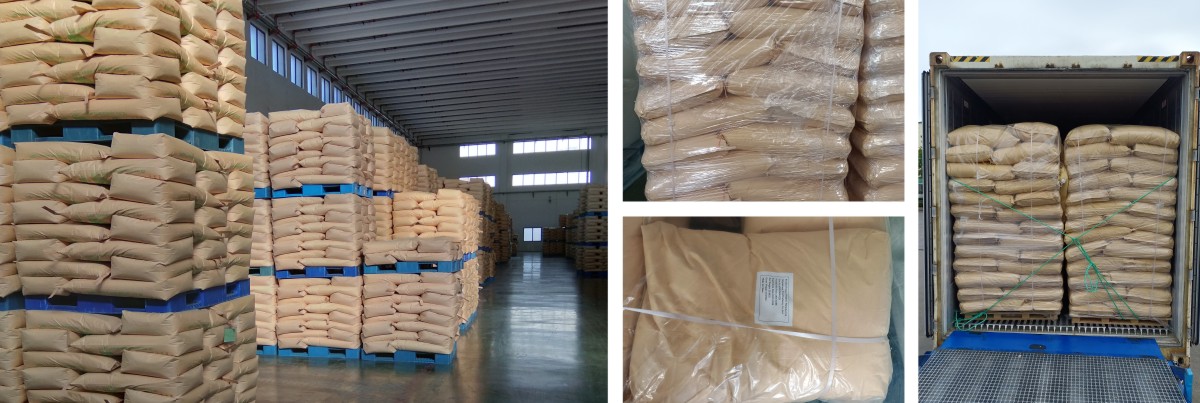
| Inner bag | Multi-layer kraft paper bag with food-grade PE inner liner |
| Outer bag | Corrugated carton (for 20kg bag) |
| Net weight | 20 kg/bag |
| Custom packaging | Available: 1kg, 5kg, 10kg, 25kg bags; fiber drums with liner |
Storage Conditions
| Parameter | Specification |
|---|---|
| Temperature | Cool and ventilated, ≤ 25°C recommended |
| Relative Humidity | < 60% RH |
| Storage location | Dry, clean, odor-free warehouse |
| Avoid | Direct sunlight, moisture, pest infestation |
| Shelf life | 24 months from manufacturing date (unopened, sealed) |
| Post-opening | Seal immediately after each use; use within 30 days |