
Table of Contents
Sauces, dressings, and condiments rely heavily on sugar to balance acidity, saltiness, and spice. From ketchup and barbecue sauce to salad dressings and marinades, sugar plays a critical role in flavor harmony, viscosity, and consumer acceptance. However, growing demand for reduced-sugar and clean-label products is forcing manufacturers to rethink traditional formulations.
Organic allulose syrup offers a highly functional and flexible solution for sugar reduction in sauces and condiments. By delivering sugar-like sweetness with fewer calories, it allows brands to maintain flavor balance and texture without relying on refined sugars or artificial sweeteners.
The Role of Sugar in Sauces and Condiments
In savory and semi-sweet formulations, sugar contributes to:
- Sweetness and flavor rounding
- Acid and salt balance
- Viscosity and mouthfeel
- Color development during heating
- Consumer familiarity and acceptance
Removing sugar often results in products that taste overly sour, sharp, or unbalanced—problems that are difficult to correct with high-intensity sweeteners alone.
Why Organic Allulose Syrup Works in Sauces and Dressings
Organic allulose is a rare sugar with approximately 70% of the sweetness of sucrose. In syrup form, it integrates smoothly into liquid and semi-viscous systems.
Key advantages include:
- Clean, sugar-like sweetness without bitterness
- Excellent solubility across a wide pH range
- No cooling effect or lingering aftertaste
- Consistent performance under heat processing
These properties make organic allulose syrup ideal for both cold-processed and heat-treated sauces.
Applications Across Sauce and Condiment Categories
1. Tomato-Based Sauces (Ketchup, Pasta Sauces)
Balances acidity and enhances flavor roundness while supporting sugar reduction.
2. Salad Dressings and Vinaigrettes
Improves mouthfeel and sweetness control without overpowering herbs or spices.
3. Barbecue and Cooking Sauces
Supports caramelized flavor notes and texture stability during heating.
4. Marinades and Glazes
Enhances sweetness perception and helps achieve uniform coating and flavor distribution.
How To Using Organic Allulose Syrup in Sauces & Condiments
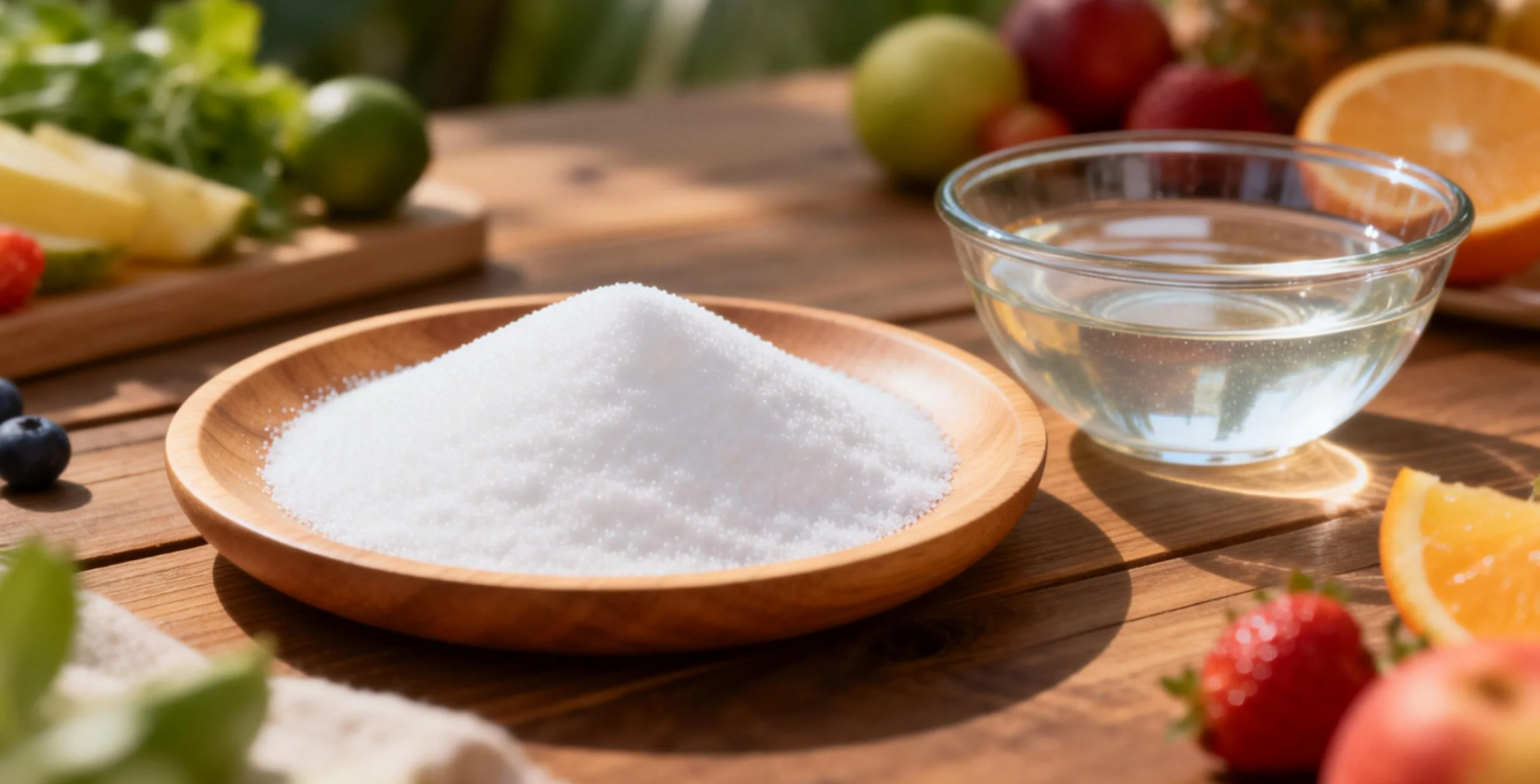
How To Using Organic Allulose Syrup in Sauces & Condiments
Step 1: Define Flavor Balance Goals
Identify whether sugar is mainly used for sweetness, acid masking, viscosity, or color development.
Step 2: Start With Partial Sugar Replacement
Replace 20–50% of traditional sugars with organic allulose syrup and evaluate sweetness and flavor harmony.
Step 3: Adjust Acids and Salts
Organic allulose syrup can enhance sweetness perception, so slight reductions in acid or salt levels may be possible.
Step 4: Validate Heat Stability
Test performance during cooking, pasteurization, or retort processes to ensure consistent flavor and texture.
Step 5: Conduct Shelf-Life and Sensory Testing
Monitor flavor stability, viscosity, and color over the intended shelf life.
Clean Label and Market Advantages
Organic allulose syrup aligns well with current market trends by supporting:
- Clean-label ingredient declarations
- Organic-certified product development
- Reduced-sugar or no-added-sugar positioning (subject to regulations)
- Premium and better-for-you brand narratives
This makes it particularly attractive for natural, organic, and specialty sauce brands.
FAQ: Organic Allulose Syrup in Sauces, Dressings & Condiments
Does organic allulose syrup work in savory products?
Yes. It delivers subtle, clean sweetness that balances acidity and salt without making products taste overly sweet.
Can it replace high-fructose corn syrup or sugar syrups?
In many formulations, organic allulose syrup can partially replace these syrups while maintaining flavor and texture.
Is it stable under heat processing?
Yes. Organic allulose syrup performs well under typical sauce cooking and pasteurization conditions.
Will it affect viscosity?
It contributes mild body and mouthfeel. Minor adjustments to thickeners may be required depending on the formulation.
Is organic allulose syrup suitable for organic products?
Yes, when sourced and processed according to organic standards.
Conclusion
For manufacturers of sauces, dressings, and condiments, organic allulose syrup provides a practical pathway to sugar reduction without sacrificing flavor balance or texture. Its clean sweetness, functional performance, and compatibility with clean-label goals make it a valuable ingredient for modern savory formulations.
As consumer demand for healthier condiments grows, organic allulose syrup enables brands to innovate while preserving the taste profiles consumers expect.