Table of Contents
What is Organic Sorbitol Powder?
Organic Sorbitol occupies a dual functional role in formulation science — it functions simultaneously as a reduced-calorie sweetener, a humectant, and a texturizing agent. As a sugar alcohol, sorbitol provides approximately 60% of sucrose’s sweetness while delivering only 2.6 kcal/g compared to sugar’s 4 kcal/g, making it a practical tool for calorie reduction in sugar-free and low-calorie product positioning. Its glycemic index of 9 means it produces a minimal blood glucose response, a property that supports diabetic-friendly and low-GI labeling claims.
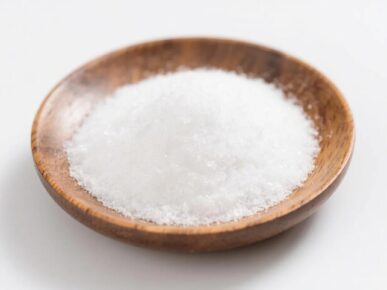
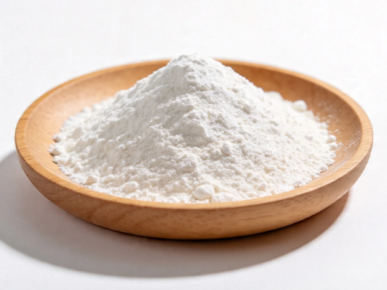
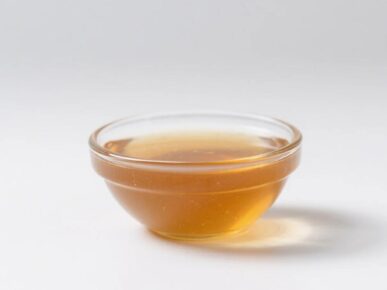
ORGANICWAY supplies Organic Sorbitol in two physical formats. Organic Sorbitol Powder is a white crystalline product derived from organic fruits and starch, with a purity of ≥98% on a dry basis, moisture content of ≤0.5%, and a free-flowing crystalline structure that makes it suitable for dry-mix applications, tablet and capsule formulations, and powdered supplement sachets. Organic Sorbitol Syrup is produced via hydrogenation of glucose followed by refining, presenting as a light-colored liquid with a dry matter content of 69–71%, D-sorbitol content of ≥50% on a dry basis, and a viscosity suitable for pump and spray applications. The syrup format contains a broader compositional profile than the powder — including total sugars of 4–8% and a moisture content of 29–31% — which affects its sweetness intensity and application suitability compared to the crystalline powder.
The practical choice between formats depends on processing method. Powder is the standard choice for compressed tablets, chewable supplements, dry beverage sachets, and baked goods, where its crystalline purity, low moisture content, and free-flowing properties enable accurate dosing and clean-label dry ingredient declarations. Syrup is designed for liquid applications: coating solutions for confectionery, humectant systems in bakery fillings and glazes, syrup-based beverages, and personal care formulations where a pourable liquid phase is required. Both formats share identical certifications (USDA/EU organic, Non-GMO, Kosher, Halal available, FSSC 22000) and identical functional properties in terms of glycemic response, humectancy, and non-cariogenicity.
PHYSICAL & CHEMICAL SPECIFICATIONS
Product Specifications
| Parameter | Sorbitol Powder | Sorbitol Syrup |
|---|---|---|
| Appearance | White crystalline powder | Light colored syrup |
| Source | Organic fruits / starch | Glucose (hydrogenation) |
| D-Sorbitol Content | ≥98% (dry basis) | ≥50% (dry basis) |
| Moisture | ≤0.5% | 29–31% |
| Dry Matter | ~99.5% | 69–71% |
| Sweetness | ~60% of sucrose | Lower (diluted) |
| Total Sugars | — | 4.0–8.0% |
| Reducing Sugars | — | ≤0.15% |
| Ash | ≤0.1% | ≤0.10% |
| pH (1:1 solution) | — | 5.0–7.5 |
| Refractive Index (20°C) | — | 1.4575–1.4620 |
| Specific Gravity (20°C) | — | 1.285–1.315 g/mL |
| Electrical Resistivity | — | ≤10 µS/cm |
| Nickel | — | ≤1.0 mg/kg |
| Heavy Metals (Pb) | — | ≤1.0 mg/kg |
| Arsenic (As₂O₃) | — | ≤1.0 mg/kg |
| Packaging | 25 kg kraft bags | 275 kg drums / 25 kg bags |
| Shelf Life | 24 months | 24 months |
Application Matrix
| Application | Powder | Syrup | Notes |
|---|---|---|---|
| Compressed tablets | Recommended | Not suitable | Crystalline purity required |
| Chewable supplements | Recommended | Available | Sweetness and mouthfeel |
| Powdered beverage sachets | Recommended | Not suitable | Dry-phase ingredient |
| Confectionery coatings | Available | Recommended | Syrup enables smooth coating |
| Bakery fillings and glazes | Available | Recommended | Humectant + pourability |
| Syrup-based beverages | Not suitable | Recommended | Liquid phase required |
| Personal care / toothpaste | Recommended | Recommended | Humectant properties |
| Frozen desserts | Available | Recommended | Freeze-thaw stability (syrup: -18°C, 48h no crystallization) |
MICROBIOLOGICAL & CONTAMINANT STANDARDS
| Test | Powder | Syrup |
|---|---|---|
| Total Plate Count | Reported on CofA | ≤100 cfu/g |
| Yeast & Mold | Reported on CofA | Reported on CofA |
| E. coli | Reported on CofA | Negative / g |
| Salmonella | Reported on CofA | Negative / 25g |
| Heavy Metals (Pb) | Reported on CofA | ≤1.0 mg/kg |
| Arsenic | Reported on CofA | ≤1.0 mg/kg |
| Nickel | — | ≤1.0 mg/kg |
| Residues | Below EU ML / USDA-NOP limits | Below EU ML limits |
| Gluten | <20 ppm | <20 ppm |
All batches tested and released against specifications. CofA available with every shipment.
CERTIFICATIONS
| Certification | Powder | Syrup |
|---|---|---|
| USDA Organic | Yes | Inquired |
| EU Organic | Yes | Inquired |
| Non-GMO Project Verified | Yes | Inquired |
| Kosher | Yes | Inquired |
| Halal | Yes | Inquired |
| FSSC 22000 | Yes | Yes |
| Vegan | Yes | Yes |
| Gluten-Free | Yes | Yes |
APPLICATIONS & FORMULATION TIPS
Key Functional Benefits
Organic Sorbitol’s three primary functional roles in formulations are calorie reduction, humectancy, and texture modification. As a sweetener, sorbitol at 60% sucrose sweetness reduces caloric density from 4 kcal/g to approximately 2.6 kcal/g, enabling “reduced calorie” and “sugar-free” label claims in confectionery, baked goods, and beverages. As a humectant, sorbitol’s hydroxyl groups bind water molecules, reducing water activity in bakery products (extending freshness and shelf life), maintaining moisture in fillings and glazes, and preventing crystallization in frozen desserts. The syrup’s freeze-thaw stability — no crystallization at -18°C for 48 hours — is particularly valuable in frozen confectionery applications. As a texturizer, sorbitol contributes body and mouthfeel in sugar-free gum and confectionery, reducing the astringency and cooling sensation often associated with high-intensity sweeteners.
Formulation Guidance
Sorbitol’s laxative threshold of approximately 20 g/day for adults should be incorporated into serving size calculations for any product intended for repeated consumption. The powder’s extremely low moisture content (≤0.5%) means it behaves as a dry excipient in tablet and capsule formulations, improving flow and compressibility. The syrup’s refractive index of 1.4575–1.4620 is useful for inline concentration monitoring in syrup preparation processes. For confectionery coating applications, the syrup’s viscosity and specific gravity parameters should be entered into coating pan calculations to ensure proper coverage and drying times.
FAQ
Q: How does sorbitol compare to xylitol?
A: Sorbitol delivers approximately 60% of sucrose’s sweetness compared to xylitol’s near-100% equivalence, making xylitol a more direct sugar replacement in sweet applications. Both are non-cariogenic and low-GI. The key practical difference is laxative tolerance: sorbitol’s laxative threshold is approximately 20 g/day for most adults, while xylitol’s is considerably higher (around 50–70 g/day in divided doses). This makes sorbitol more suitable for single-serving applications with controlled dosing (tablets, small confectionery pieces) and less suitable for freely-consumed products where total intake is unpredictable. In humectant and moisture-retention applications, the two behave comparably.
Q: Is sorbitol safe for diabetic or low-carb diets?
A: With a glycemic index of 9, sorbitol produces a minimal blood glucose response and is generally considered suitable for diabetic-friendly and low-GI product formulations. However, sorbitol is metabolized as a carbohydrate and contributes calories (2.6 kcal/g), so it cannot be excluded from total carbohydrate counts in the same way as non-metabolized fibers. “Sugar-free” labeling is permissible where sorbitol replaces sucrose, but “low-carb” or “net carb” claims require careful regulatory review depending on the target market. Consultation with local regulatory guidance is recommended before making carb-restriction claims.
Q: Can sorbitol replace glycerin in cosmetics and personal care products?
A: Yes. Sorbitol and glycerin share comparable humectant mechanisms — both attract and retain water molecules in the dermal layer — but sorbitol provides a cleaner ingredient label from a consumer perspective, as it is naturally derived from organic fruits and starch and carries organic and Non-GMO credentials that glycerin typically cannot match. In toothpaste and mouthwash formulations, sorbitol’s non-cariogenic property adds a functional advantage that glycerin does not provide.
Q: What is the difference in sorbitol content between the powder and syrup?
A: The powder delivers ≥98% pure D-sorbitol on a dry basis, making it essentially a sorbitol-only ingredient suitable for applications requiring precise sorbitol dosing and low moisture. The syrup delivers ≥50% D-sorbitol on a dry basis, with the remaining composition consisting of water (29–31%), other sugars (4–8% total), and trace minerals. For this reason, the powder is the preferred format for tablet, capsule, and dry supplement formulations, while the syrup is designed for liquid-phase applications where the broader compositional profile is acceptable or even advantageous (e.g., humectant systems, confectionery coatings, syrups).
Q: What is the shelf life and recommended storage condition?
A: Both formats have a shelf life of 24 months from the date of manufacture when stored in sealed original packaging. Sorbitol Powder should be stored in a cool (≤25°C), dry location away from direct sunlight and moisture; its ≤0.5% moisture content makes it hygroscopic, and exposure to humidity may cause caking. Sorbitol Syrup should be stored at 10–25°C; it is freeze-thaw stable (no crystallization at -18°C for 48 hours per batch specification), but extended storage at elevated temperatures should be avoided to prevent viscosity changes. Both formats should be kept away from strong odors to prevent flavor absorption.
Q: What is the minimum order quantity and lead time?
A: 1 kg free sample with full CofA is available for qualifying buyers (FEDEX/UPS/EMS). Commercial orders start at 25 kg. Private label orders require 100 kg minimum. Lead time: 10–20 working days from order confirmation. Standard packaging: 25 kg kraft paper bags (powder), 275 kg drums or 25 kg bags (syrup). Custom packaging is available for large orders. Available incoterms: DAP, DDP, FOB, CIF. Acceptable payment terms: T/T, L/C, D/P, D/A.
PACKAGING & STORAGE
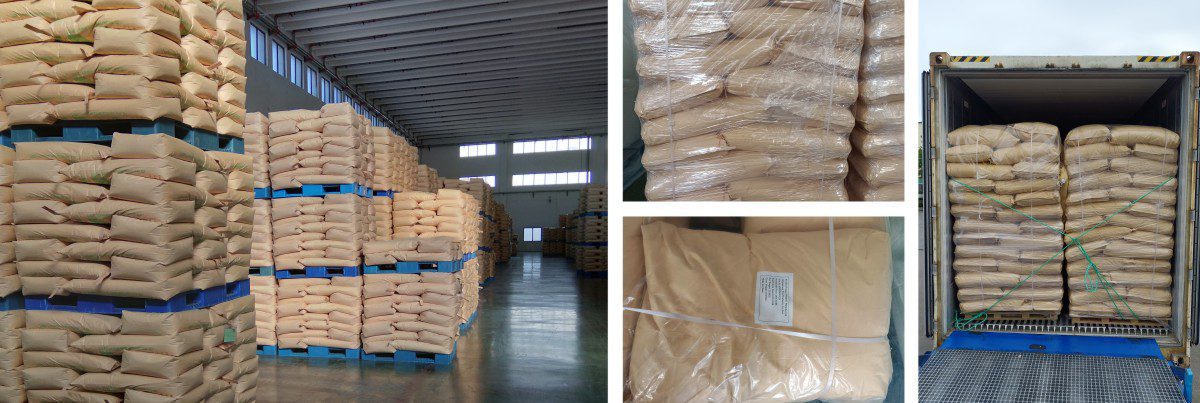
Packaging
| Format | Standard Packaging | Custom Options |
|---|---|---|
| Sorbitol Powder | 25 kg kraft paper bags | 5 / 10 / 20 kg bags; fiber drums; IBC super sacks |
| Sorbitol Syrup | 275 kg steel drums; 25 kg bags | Custom drum sizes; branded packaging for private label |
Storage Conditions
| Parameter | Powder | Syrup |
|---|---|---|
| Temperature | ≤25°C (cool, dry) | 10–25°C |
| Humidity | <60% RH; avoid moisture | <65% RH |
| Light | Avoid direct sunlight | Avoid direct sunlight |
| Odor | Store away from strong odors | Store away from strong odors |
| Shelf Life (sealed) | 24 months | 24 months |
| Freeze-Thaw Stability | — | Stable at -18°C, 48h |
Related Articles
Organic Allulose Powder in Keto and Low-Carb Diet Applications
In recent years, keto and low-carb diets have reshaped the global food…
What Makes Organic Prune Powder a Natural Solution for Digestive Health?
Digestive health is a growing priority for consumers, and manufacturers are seeking…
Is Organic Allulose Good or Bad for You? The Surprising Truth About Powder vs. Syrup
Allulose—the rare sugar that tastes like sucrose but dodges calories—is flooding health…
Erythritol is a new choice for diabetic patients and people who lose weight!
Erythritol is produced by the hydrolysis of aldehydes or ketones in various…