Table of Contents
What is Organic Isomalto Oligosaccharide?
Organic Isomalto Oligosaccharide, commonly referred to as IMO, occupies a distinctive position in the functional carbohydrate category because it simultaneously functions as a prebiotic fiber, a low-glycemic sweetener, and a texture-modifying ingredient. Unlike isolated fibers that serve a single functional purpose, IMO’s molecular structure — a mixture of alpha-(1→6) and alpha-(1→4) linked glucose oligomers — allows it to resist digestion in the small intestine, reach the colon intact, and undergo selective fermentation by beneficial gut microbiota including bifidobacteria and lactobacillus species. This prebiotic mechanism generates short-chain fatty acids such as acetate, propionate, and butyrate, which support colonic health, mucosal integrity, and systemic inflammatory balance.
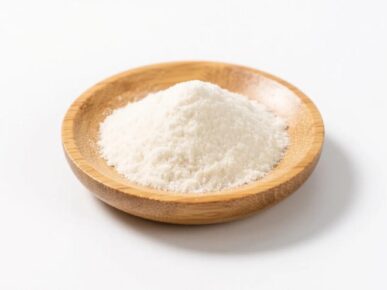
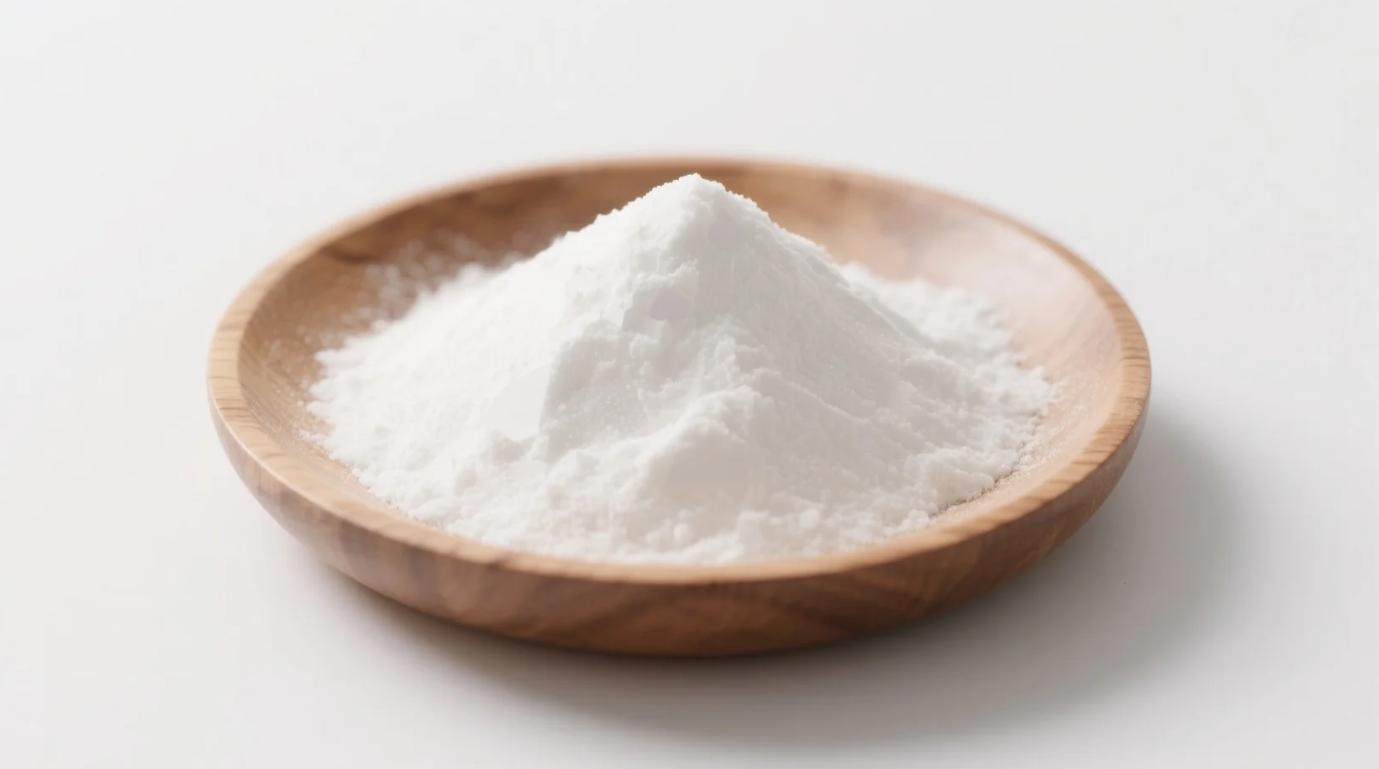
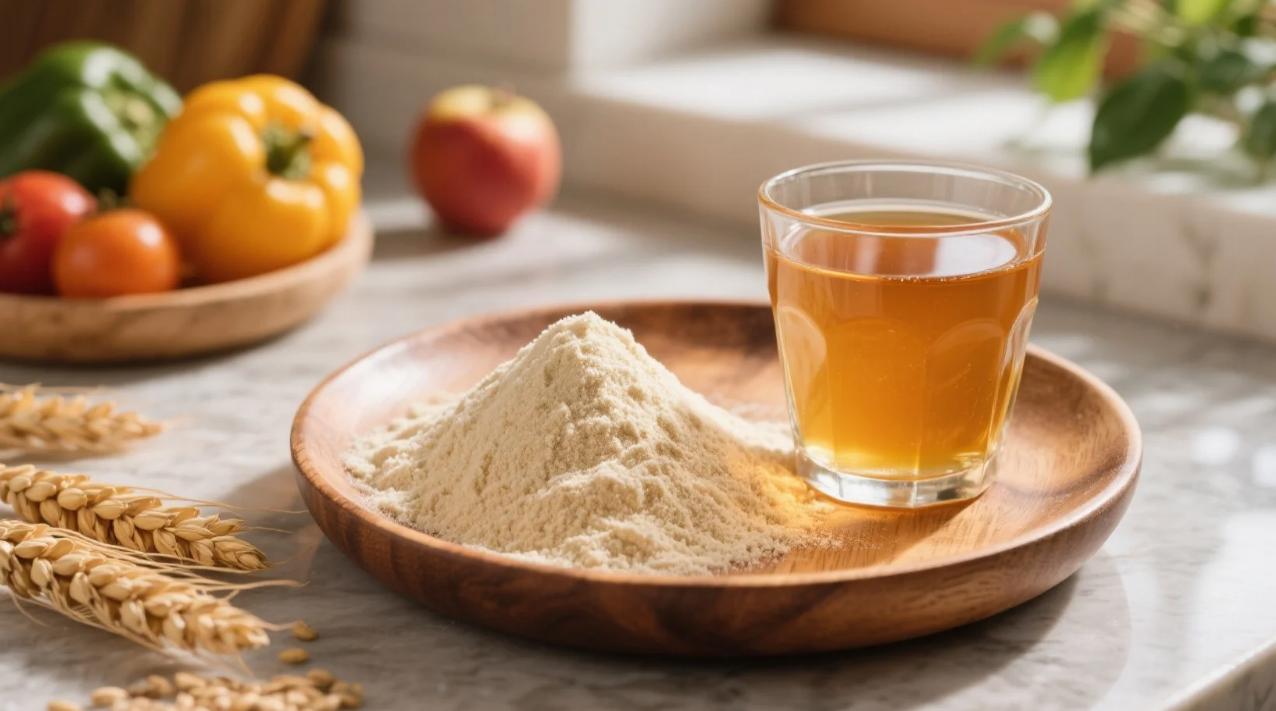
ORGANICWAY supplies IMO in two physical formats designed for different application contexts. IMO Powder is produced via enzymatic hydrolysis followed by spray drying, resulting in a free-flowing white powder with ≥90% dietary fiber content on a dry basis, solubility in both cold and hot water, and a particle size of 80–120 mesh (customized options available down to 200 mesh). IMO Syrup is the concentrated enzymatic hydrolysate, presenting as a pourable liquid with ≥85% fiber content on a dry basis, a viscosity of 2,000–4,000 cP, and a moisture content of 25–30%, making it a direct drop-in replacement for traditional syrups in beverage and confectionery formulations.
The two formats serve different product categories not because of compositional differences but because of physical form and processing behavior. IMO Powder is the preferred choice for dry-mix applications — powdered beverage sachets, protein supplements, capsules, baked goods, and granola bars — where its free-flowing nature and cold-water solubility simplify manufacturing. IMO Syrup is engineered for liquid applications: ready-to-drink beverages, yogurt, dairy alternatives, confectionery coatings, and sports nutrition shots, where its pourable viscosity and neutral-to-slightly-sweet profile allow it to replace conventional syrups on a near one-to-one basis without reformulating texture.
Choosing between them is not a compromise — it is a formulation decision driven by your processing method and target consumer experience. Both formats share identical prebiotic fiber content (on a dry basis), identical glycemic response characteristics (GI ≤45), and identical organic and non-GMO credentials.
PHYSICAL & CHEMICAL SPECIFICATIONS
Product Specifications
| Parameter | IMO Powder | IMO Syrup |
|---|---|---|
| Appearance | White free-flowing powder | Clear to light yellow liquid |
| Source | Organic tapioca / corn starch | Organic tapioca / corn starch |
| Processing | Enzymatic hydrolysis + spray drying | Enzymatic hydrolysis + concentration |
| IMO Content | ≥90% dietary fiber (dry basis) | ≥85% dietary fiber (dry basis) |
| Moisture | ≤5% | 25–30% |
| Sweetness | 45–50% of sucrose | 50–55% of sucrose |
| Solubility | Fully soluble in water | Ready-to-use liquid |
| Particle Size | 80–120 mesh (200 mesh available) | N/A |
| Viscosity (10% solution, 25°C) | N/A | 2,000–4,000 cP |
| pH (10% solution) | 4.0–6.0 | 4.0–6.0 |
| Bulk Density | 0.50–0.70 g/mL | N/A |
| Packaging | 25 kg kraft paper bags | 20 kg HDPE drums or IBC totes |
| Shelf Life | 24 months | 12 months |
Application Matrix
| Application Category | IMO Powder | IMO Syrup | Notes |
|---|---|---|---|
| Powdered beverage sachets | Recommended | Less suitable | Cold-water solubility advantage |
| Protein and fiber supplements | Recommended | Available | Neutral flavor supports capsules |
| Granola bars and baked goods | Recommended | Available | Moisture retention improves shelf life |
| Ready-to-drink beverages | Available | Recommended | Liquid form simplifies mixing |
| Yogurt and dairy alternatives | Available | Recommended | Syrup disperses without clumping |
| Confectionery and chocolate | Available | Recommended | Syrup enables smooth coating |
| Sports nutrition shots | Available | Recommended | Accurate dosing via liquid |
| Tablet and capsule excipients | Recommended | Not suitable | Free-flowing powder required |
MICROBIOLOGICAL & CONTAMINANT STANDARDS
All batches are tested and released against the following specifications. CofA is available with every shipment.
| Test | Specification | Method |
|---|---|---|
| Total Plate Count | ≤10,000 cfu/g | ISO 4833 |
| Yeast & Mold | ≤100 cfu/g | ISO 21527 |
| E. coli | Negative / 1g | ISO 16649 |
| Salmonella | Negative / 25g | ISO 6579 |
| Staphylococcus aureus | ≤100 cfu/g | ISO 6888 |
| Total Ash | ≤1.0% | AOAC 942.05 |
| Heavy Metals (Pb) | ≤1.0 mg/kg | ICP-OES |
| Heavy Metals (As) | ≤0.5 mg/kg | ICP-OES |
| Heavy Metals (Cd) | ≤0.1 mg/kg | ICP-OES |
| Heavy Metals (Hg) | ≤0.1 mg/kg | ICP-OES |
| Pesticide Residues | Below EU ML / USDA-NOP limits | GC-MS / LC-MS |
| Mycotoxins (AFB1, total) | ≤4 µg/kg / ≤10 µg/kg | LC-MS/MS |
| Gluten | <20 ppm | ELISA |
CERTIFICATIONS
| Certification | IMO Powder | IMO Syrup |
|---|---|---|
| USDA Organic | Yes | Yes |
| EU Organic | Yes | Yes |
| Non-GMO Project Verified | Yes | Yes |
| Kosher | Yes | Yes |
| Halal | In progress | In progress |
| FSSC 22000 | Yes | Yes |
| Vegan | Yes | Yes |
| Gluten-Free | Yes | Yes |
| FSSC 22000 | Yes | Yes |
APPLICATIONS & FORMULATION TIPS
Key Functional Benefits
Organic IMO delivers three functional claims simultaneously — prebiotic fiber, low-GI carbohydrate, and reduced-calorie sweetness — making it particularly valuable in formulations where clean-label positioning and functional differentiation are both priorities. The 321% DV fiber content per 100 g in the powder format means that a 10 g serving delivers approximately 32% of the daily fiber recommendation, supporting “high fiber” label claims at typical use levels of 5–10% in finished products. The low glycemic index (≤45) is clinically relevant for blood sugar management products and resonates with diabetic-conscious and ketosis-aware consumer segments. The moderate sweetness profile (45–55% of sucrose) allows partial sugar replacement without artificial sweetener inclusion, supporting “no artificial sweeteners” label claims.
Formulation Guidance
When replacing sucrose or high-DE syrups with IMO, formulators should account for three behavioral differences. First, IMO provides approximately half the sweetness of sucrose by weight, so flavor systems may need recalibration. Blending IMO with high-intensity sweeteners such as allulose, stevia, or monk fruit is a common and effective strategy — ORGANICWAY offers pre-blended IMO + Allulose and IMO + Stevia options to reduce formulation complexity. Second, IMO contributes viscosity and body in liquid systems, particularly relevant in yogurt and dairy alternatives where it replaces the mouthfeel contribution of removed sugars. The syrup format’s viscosity range of 2,000–4,000 cP should be factored into dosing calculations for beverage applications. Third, IMO’s Maillard reactivity is lower than that of sucrose, meaning it contributes less browning in baked goods — this is typically an advantage in applications where color control is important and a disadvantage in applications relying on crust color as a sensory cue.
For prebiotic efficacy, a minimum effective dose of 3–5 g per serving is generally recommended, though the full tolerance ceiling for IMO is significantly higher than for FOS or inulin, making it suitable for high-fiber positioning up to 10–15 g per serving with minimal gastrointestinal discomfort in most healthy adults.
FAQ
Q: How does IMO compare to FOS or inulin as a prebiotic?
A: IMO, FOS, and inulin all function as prebiotic fibers by selectively promoting the growth of bifidobacteria and lactobacillus in the colon. The key practical difference is digestive tolerance: FOS and inulin are fermentable FODMAP carbohydrates that commonly cause bloating and gas at doses above 5–10 g per day, which can limit compliance in finished product applications. IMO exhibits substantially higher digestive tolerance, with most adults tolerating 10–15 g per serving without discomfort, making it more suitable for high-fiber positioning and daily-use functional food applications. Additionally, IMO’s sweetness profile (~50% of sucrose) is more versatile than inulin’s slightly bitter aftertaste, reducing the need for flavor masking in sweetener applications.
Q: Is IMO suitable for ketogenic or low-carb diets?
A: IMO’s classification varies by regulatory jurisdiction. In most markets, IMO is categorized as a soluble dietary fiber and is excluded from net carbohydrate calculations, enabling “0 net carbs” or “low net carb” labeling. In the United States, FDA allows the exclusion of IMO from total carbohydrate counts on Nutrition Facts panels when labeled as “isomaltooligosaccharide” or “soluble corn fiber.” In the European Union, EFSA recognizes IMO as a dietary fiber. Formulators should verify local labeling regulations for their target market and consult regulatory counsel for keto-specific claims, as the ketogenic diet itself is not a regulated claim in most jurisdictions.
Q: Can IMO withstand heat processing such as baking or pasteurization?
A: Yes. Organic IMO demonstrates good thermal stability across common food processing conditions including baking (up to approximately 200°C), pasteurization, UHT treatment, and extrusion. The prebiotic fiber content and molecular structure remain intact under these conditions, and the glycemic index and fermentability profile are preserved. Formulators using IMO in baked goods should note that IMO’s lower Maillard reactivity compared to sucrose means that crust browning may be reduced unless supplemented with alternative browning agents or natural colorants.
Q: What customization options are available for large orders?
A: ORGANICWAY offers three categories of customization for commercial IMO orders. First, blend formulations: IMO can be pre-blended with allulose for enhanced sweetness, with stevia for zero-calorie intensity, or with other functional fibers to create synergistic prebiotic blends. Second, flavor-infused syrups: IMO Syrup is available in organic vanilla, chocolate, and citrus-infused variants for direct use in beverage and confectionery applications without additional flavoring steps. Third, particle size customization: IMO Powder is available in standard 80–120 mesh for general use, or down to 200 mesh for improved dispersibility in fine-powder applications such as sachets and effervescent tablets. Minimum order quantities apply for customization; contact sales for a tailored quotation.
Q: Is IMO safe for children or during pregnancy?
A: IMO is generally recognized as safe for consumption by the general population, including children and pregnant women, when consumed at typical dietary levels as a food ingredient. It is non-allergenic (derived from tapioca or corn, which are not among the major eight allergen groups), non-cariogenic, and non-GMO verified. However, as with any concentrated fiber source, introduction should be gradual to allow the gut microbiota to adapt, particularly for young children and individuals with sensitive digestive systems. For therapeutic or high-dose prebiotic use cases, consultation with a healthcare professional is recommended.
Q: What is the difference between IMO Powder and IMO Syrup beyond physical form?
A: The compositional difference is minimal on a dry-basis comparison: IMO Powder delivers ≥90% dietary fiber and IMO Syrup delivers ≥85% dietary fiber on a dry basis. The practical choice between them is driven by manufacturing process and application type. Powder is the standard choice for dry-mix products, powdered supplements, capsule formulations, and baked goods where a solid ingredient is required. Syrup is the standard choice for liquid products, ready-to-drink beverages, yogurt, confectionery coatings, and applications where the ingredient must be pumpable and meterable as a liquid. Syrup’s shelf life of 12 months is shorter than powder’s 24 months due to the higher moisture content; formulations with long shelf-life requirements in liquid format should account for this.
Q: How should IMO be stored and what is the minimum order quantity?
A: IMO Powder should be stored in a cool (≤25°C), dry location away from direct sunlight and strong odors, in its original sealed packaging. IMO Syrup should be stored at 10–25°C to prevent viscosity changes and fermentation risk; exposure to extreme heat or freezing should be avoided. Shelf life is 24 months for powder and 12 months for syrup from the date of manufacture, in sealed original packaging. IMO is hygroscopic; once opened, powders should be used within 6 months and syrups within 3 months under proper storage conditions. Minimum order: 1 kg free sample (FEDEX/UPS/EMS) for qualifying buyers. Commercial orders start at 25 kg. Private label orders require 100 kg minimum. Lead time: 10–20 working days from order confirmation. Packaging: 25 kg kraft paper bags (powder), 20 kg HDPE drums or IBC totes (syrup). Available incoterms: DAP, DDP, FOB, CIF. Acceptable payment terms: T/T, L/C, D/P, D/A.
PACKAGING & STORAGE
Packaging
| Format | Standard Packaging | Custom Options |
|---|---|---|
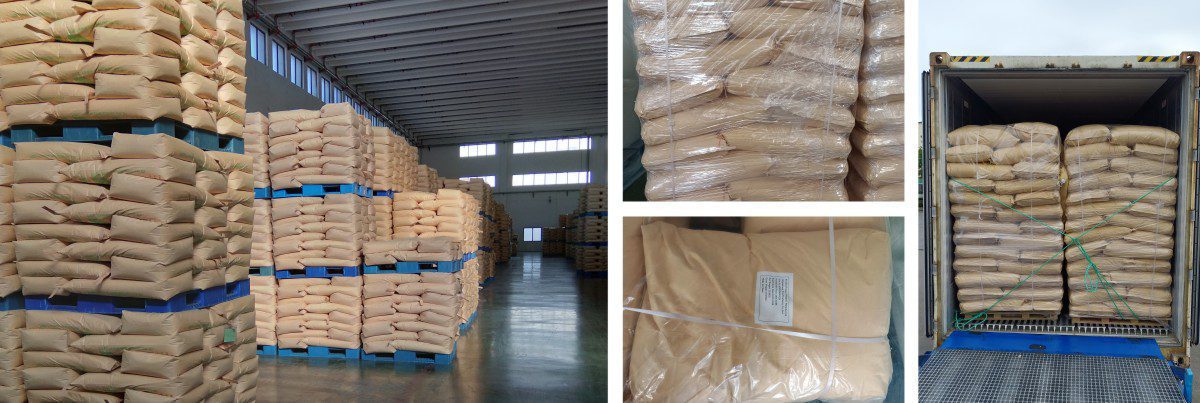
| IMO Powder | 25 kg kraft paper bags with PE liner | 5 kg / 10 kg / 20 kg bags; fiber drums; IBC super sacks |
| IMO Syrup | 20 kg HDPE drums; 1,000 kg IBC totes | Custom drum sizes; branded packaging for private label |
Storage Conditions
| Parameter | IMO Powder | IMO Syrup |
|---|---|---|
| Temperature | ≤25°C (cool, dry) | 10–25°C |
| Humidity | <60% RH | <65% RH |
| Light | Avoid direct sunlight | Avoid direct sunlight |
| Odor | Store away from strong odors | Store away from strong odors |
| Shelf Life (sealed) | 24 months | 12 months |
| Shelf Life (opened) | Use within 6 months | Use within 3 months |
Related Articles
Does Isomalto Oligosaccharide Raise Blood Sugar? Understanding IMO and Glycemic Impact
In today’s health-conscious world, ingredients like organic Isomalto Oligosaccharide powder and organic…