Table of Contents
What is Black Currant Powder?
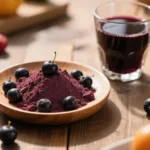
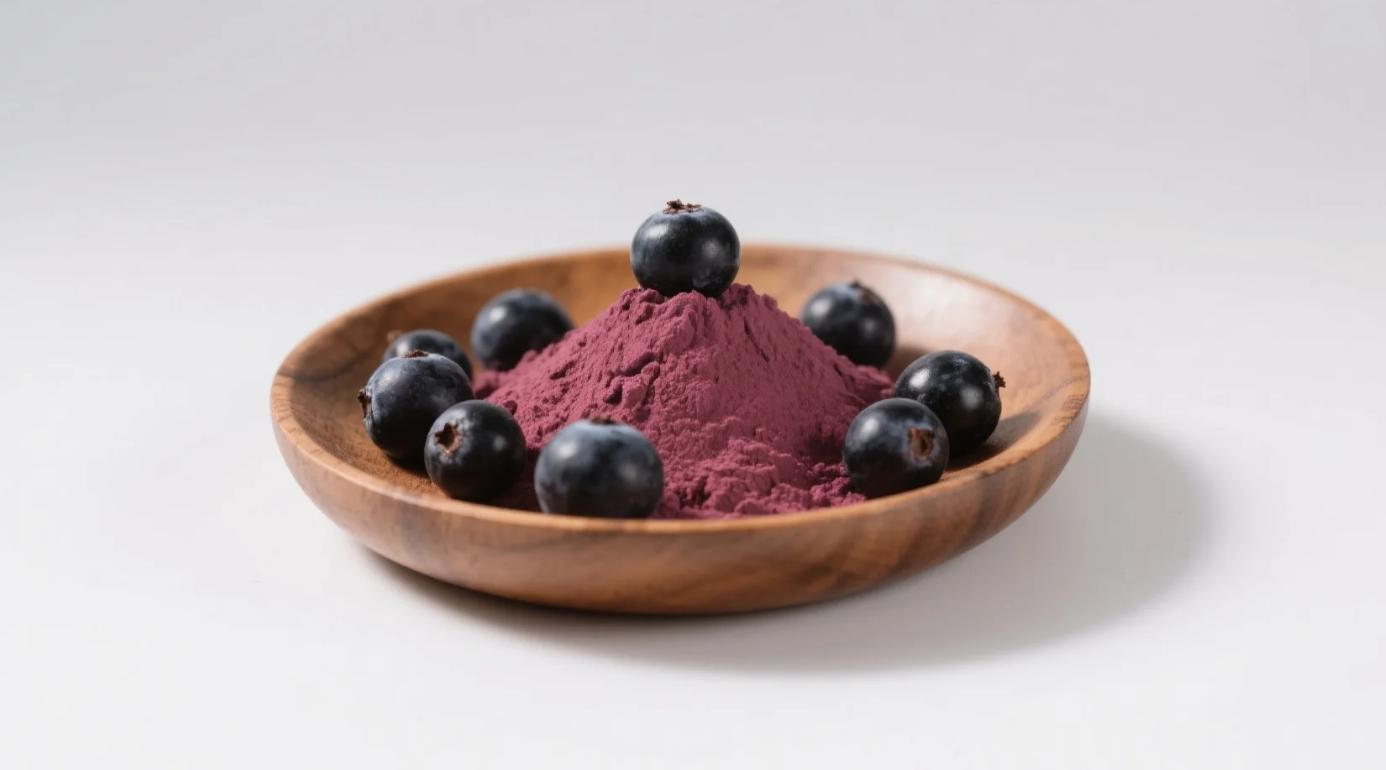
Black Currant Powder is supplied in two specifications — whole fruit powder and juice powder — both derived from 100% black currants (Ribes nigrum) through processing. Black currant is one of the most nutrient-dense berry species available: it contains naturally high levels of anthocyanins (the pigments responsible for its deep purple-to-black color), vitamin C at concentrations approximately twice that of oranges by weight, and in the whole fruit form, a substantial dietary fiber content that supports prebiotic positioning. Understanding the functional consequence of choosing between the two specifications is essential for correct application.
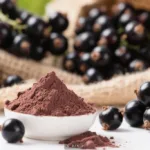
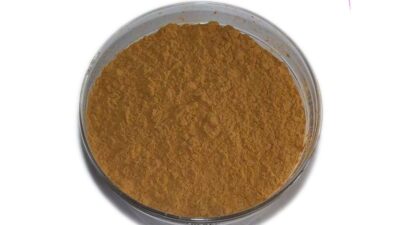
Black Currant Powder (Whole Fruit) is produced through gentle drying — either air-drying or freeze-drying — followed by fine milling of the complete black currant fruit. This process preserves the entire fruit matrix: the skin (where anthocyanins are most concentrated), the pulp, the seeds, and the fiber. The result is a deep purple-to-black powder with a distinctive tart-sweet black currant flavor and a slightly fibrous texture. The dietary fiber content is the defining nutritional characteristic of the whole fruit specification: approximately 50g per 100g of powder, contributing 179% of the Daily Value per serving. This makes it the specification of choice for applications where fiber enrichment is a primary positioning objective — high-fiber bakery, nutrition bars, smoothie bowls, and fiber-fortified supplements. The slightly fibrous texture is perceptible in liquid applications and should be accounted for in formulation design; high-shear mixing improves dispersion.
Black Currant Juice Powder is produced by concentrating pure black currant juice — concentrating both the sweetness and the acidity, as well as the anthocyanins — followed by spray drying or freeze drying. The spray-drying process typically requires a small quantity of maltodextrin (fully disclosed on COA and label) as a carrier to ensure free-flowing, non-caking powder. The freeze-drying option, when specified, delivers a higher-quality product with no carrier required but at a higher cost. The defining advantage of the juice specification is its superior solubility: it dissolves rapidly in both hot and cold liquids, producing a near-instant, highly soluble powder with intense anthocyanin concentration and an authentically tart-sweet black currant flavor. The concentrated anthocyanin profile makes it the preferred choice for applications where antioxidant potency and visual color impact are the primary objectives — clear RTD beverages, protein powder fortification, functional drink mixes, and confectionery coloring and flavoring.
Both specifications benefit from the well-documented health properties of black currant anthocyanins. The anthocyanins in black currant — primarily delphinidin-3-rutinoside, delphinidin-3-glucoside, cyanidin-3-rutinoside, and cyanidin-3-glucoside — have been shown in research to support eye health by increasing ocular blood flow, reducing eye fatigue under sustained near-work conditions, and supporting dark adaptation. Vitamin C content — approximately twice the concentration found in oranges by weight — provides immune support and collagen synthesis benefits alongside the anthocyanin profile. The deep purple-to-black color of both specifications is a visual indicator of anthocyanin density and functions as a natural food coloring in purple-to-black confectionery and beverage applications.
Applications span five core categories:
(1) Nutrition and dietary supplements — eye health formulations, immune support blends, and antioxidant supplements in capsule, tablet, and powder formats;
(2) Functional foods and beverages — smoothie mixes, protein powders, functional juices, yogurt, ice cream, and baked goods where the distinctive tart-sweet flavor and nutritional density add premium positioning;
(3) Confectionery — natural flavoring and coloring for candies, gummies, and chocolate;
(4) Custom fortified blends — whole fruit powder blended with hibiscus or elderberry for functional tea applications, or juice powder fortified with zinc or probiotics for immune-support positioning;
(5) Natural food coloring — both specifications provide deep purple-to-black natural color derived entirely from the fruit itself.
Certifications: Non-GMO Project Verified · Vegan · Gluten-Free
Physical & Chemical Specifications
Product Specifications
| Parameter | Black Currant Powder (Whole Fruit) | Black Currant Juice Powder |
|---|---|---|
| Source | 100% Whole Black Currants (Ribes nigrum) | 100% Black Currant Juice |
| Processing | Gentle drying (air-dry or freeze-dry) + fine milling | Concentration + spray drying or freeze drying |
| Appearance | Deep purple to black powder | Deep purple to black uniform powder |
| Flavor | Distinctive tart-sweet, authentic black currant | Concentrated tart-sweet, intense black currant |
| Texture | Fine powder with slight fibrous quality | Fine powder, highly soluble |
| Dietary Fiber | ~50g/100g (179% DV per 100g) | Minimal (fiber removed during juicing) |
| Anthocyanins | Naturally high (varies with crop) | Higher concentration (often standardized to extract ratio) |
| Vitamin C | Naturally high (approximately 2x orange by weight) | Highly concentrated |
| Moisture | <= 8% | <= 6% |
| Solubility | Low to moderate (high-shear mixing recommended) | High (near-instant dissolution) |
| Carrier | None (100% pure) | Organic maltodextrin may be used in spray-dried version (fully disclosed); none in freeze-dried version |
| Shelf Life | 18-24 months | 18-24 months |
Berry Comparison: Black Currant vs. Common Berry Powders
| Parameter | Black Currant (Whole) | Black Currant (Juice) | Blueberry | Acai | Tart Cherry |
|---|---|---|---|---|---|
| Anthocyanin Density | Very high | Very high (concentrated) | Moderate | Very high | Moderate |
| Vitamin C | Very high (2x orange) | Very highly concentrated | Moderate | Low | Low |
| Fiber Content | ~50g/100g (very high) | Minimal | Moderate | Low | Low |
| Antioxidant Capacity (ORAC) | Very high | Very high | High | Very high | Moderate |
| Flavor Profile | Tart-sweet, distinctive | Intense tart-sweet | Mild sweet | Mild sweet-berry | Tart |
| Color | Deep purple-black | Deep purple-black (vivid) | Blue-purple | Deep purple | Red-purple |
| Solubility (Juice) | — | Near-instant | Moderate | Moderate | Moderate |
| Best For | Fiber-enriched, whole food | Clear beverages, potency | General berries | Antioxidant blends | Sports nutrition |
Dosage Reference
| Application | Suggested Usage Level |
|---|---|
| RTD Beverages / Drink Mixes | 1-5% (Juice Powder recommended) |
| Protein Powders | 2-8% |
| Smoothies / Smoothie Bowls | 5-15% |
| Bakery (High Fiber Breads, Cookies) | 3-10% (Whole Fruit recommended) |
| Nutrition Bars | 3-8% |
| Capsules / Tablets | 20-50% |
| Confectionery (Gummies, Chocolate) | 1-5% |
| Yogurt / Ice Cream | 2-5% |
| Natural Colorant | 0.5-3% |
Microbiological & Contaminant Standards
| Test Item | Specification |
|---|---|
| Total Plate Count (TPC) | <= 100,000 cfu/g |
| Yeast & Mould | <= 100 cfu/g |
| E. coli | Negative |
| Salmonella | Negative |
| Heavy Metals (Lead) | <= 0.1 mg/kg |
| Heavy Metals (Arsenic) | <= 0.1 mg/kg |
| Heavy Metals (Cadmium) | <= 0.1 mg/kg |
| Heavy Metals (Mercury) | <= 0.05 mg/kg |
| Pesticide Residues | Below EU/USDA limits |
| Anthocyanin Identity | Confirmed (HPLC profile) |
Certifications
| Certification | Status |
|---|---|
| Non-GMO Project Verified | Available |
| Vegan | Available |
| Gluten-Free | Available |
| Kosher | Available on request |
| Halal | Available on request |
| ISO 22000 | Available |
Applications & Formulation Guidelines
Application Matrix
| Category | Applications | Recommended Spec | Formulation Notes |
|---|---|---|---|
| Eye Health Supplements | Capsules, tablets, softgels for ocular blood flow and dark adaptation | Both | Anthocyanin-delivered benefits; vitamin C synergy |
| Immune Support Formulas | Elderberry-style immune blends, vitamin C supplements | Juice Powder | Concentrated vitamin C and anthocyanins; near-instant solubility |
| Antioxidant Blends | Superfood powders, daily wellness formulas | Both | High ORAC value; tart-sweet flavor adds authenticity |
| Smoothie Bowls | Acai-bowl style preparations, frozen fruit bowls | Whole Fruit Powder | Fiber adds texture; authentic tart-sweet flavor |
| Protein Powders | Berry protein, plant-based protein fortification | Juice Powder | Instant dissolution; intense flavor without grit |
| RTD Beverages | Functional berry waters, prebiotic drinks | Juice Powder | Near-instant solubility; no haze in clear formats |
| Bakery & Snacks | High-fiber breads, cookies, nutrition bars | Whole Fruit Powder | ~50g fiber/100g enables “high fiber” claims; tart flavor authenticates berry |
| Confectionery | Gummies, fruit chews, chocolate coatings | Both | Natural purple coloring; distinctive tart-sweet flavor differentiates from generic berry |
| Yogurt & Ice Cream | Fruit-flavored dairy and plant-based frozen desserts | Both | Flavor and color; whole fruit adds visual fruit pieces |
| Natural Colorant | Purple-to-black food coloring for confectionery and beverages | Juice Powder (most vivid) | Anthocyanin-derived; pH-sensitive (redder at low pH, bluer at neutral pH) |
Key Functional Benefits
| Benefit | Mechanism |
|---|---|
| Very High Anthocyanin Density | Black currant is among the highest-anthocyanin berry species. Anthocyanins — primarily delphinidin-3-rutinoside and cyanidin-3-glucoside — support ocular blood flow, reduce eye fatigue under sustained near-work conditions, and support dark adaptation. Juice Powder concentrates anthocyanins further. |
| Very High Vitamin C | Black currant contains approximately twice the vitamin C of oranges by weight. Vitamin C supports immune function and collagen synthesis. The combination with anthocyanins provides synergistic antioxidant support. |
| Very High Dietary Fiber (~50g/100g) | Whole Fruit Powder’s ~50g fiber per 100g is among the highest of any fruit powder. This enables “high fiber” nutrition claims at low usage levels and supports prebiotic positioning. |
| Distinctive Tart-Sweet Flavor | Black currant’s flavor profile — sharp tartness balanced with sweetness — is immediately recognizable and authentically differentiates products from generic berry positioning. This distinctiveness is a genuine sensory asset in premium berry formulations. |
| Deep Purple-Black Natural Color | Anthocyanin density produces an intense deep purple-to-black color. This functions as a natural food colorant in confectionery and beverage applications, with color shifting from redder at low pH to bluer at neutral pH. |
| Prebiotic Fiber Positioning | The high fiber content of Whole Fruit Powder (~50g/100g) supports prebiotic gut health positioning, particularly valuable in combination with the anthocyanin and vitamin C immune-support profile. |
Synergy Tips
- With Elderberry or Hibiscus: The tart-sweet black currant flavor and deep purple color complement elderberry’s immune positioning and hibiscus’s tart berry-tea notes, creating complex berry-functional beverage profiles.
- With Blueberry or Acai: Black currant’s more intense, distinctive tartness adds flavor complexity to milder blueberry or acai blends, creating premium multi-berry antioxidant formulations.
- With Lutein or Zeaxanthin (Eye Health): Black currant anthocyanins work synergistically with carotenoid eye-health ingredients (lutein, zeaxanthin) in eye supplement formulations — anthocyanins support blood flow while carotenoids protect retinal tissue.
- With Zinc or Probiotics (Immune): Juice Powder can be fortified with zinc gluconate or probiotic strains (Lactobacillus, Bifidobacterium) for multi-mechanism immune-support formulations. The near-instant solubility of Juice Powder is compatible with probiotic stability requirements.
- For pH-Sensitive Coloring Applications: Anthocyanins shift color with pH — redder at acidic pH (2.5-4.0), purple at moderate pH (4.0-6.0), and bluer at near-neutral pH (6.0-7.0). Account for this in formulation design for color consistency.
FAQ
Q: What is the main application difference between the two specifications?
A: The choice between the two specifications is driven by three primary factors: (1) Fiber content — Whole Fruit Powder retains ~50g/100g dietary fiber and is the choice for fiber-enriched and whole-food positioning; Juice Powder removes most fiber during juicing and is the choice for maximum anthocyanin concentration and solubility. (2) Solubility — Whole Fruit Powder has low-to-moderate solubility with a slightly fibrous texture, suitable for solid and semi-solid applications; Juice Powder dissolves near-instantly in both hot and cold liquids, suitable for clear beverages and instant mixes. (3) Flavor intensity — Juice Powder’s concentration process intensifies the tart-sweet black currant flavor, while Whole Fruit Powder provides authentic fruit character with a more moderate flavor profile.
Q: Are both specifications suitable for vegan and gluten-free products?
A: Yes. Both specifications are made from 100% black currants — no animal-derived ingredients are used in production and no gluten-containing grains are present. Both carry Vegan and Gluten-Free certifications and are suitable for inclusion in products carrying these label claims.
Q: What is the shelf life and storage recommendation?
A: Both specifications have a shelf life of 18-24 months from production date when stored correctly. Store in a cool, dry place away from direct sunlight, in sealed original packaging. Moisture is the primary stability concern for fruit powders — once opened, reseal tightly after each use. Anthocyanins are light-sensitive; prolonged exposure to direct light will degrade color intensity over time. Lower storage temperatures (below 20 degrees C) are recommended for applications where maintaining the deepest possible purple-black color is important.
Q: Do the anthocyanins require special handling to maintain potency?
A: Anthocyanins are susceptible to degradation from heat, light, and pH extremes. For maximum anthocyanin retention: (1) Store sealed and away from direct sunlight; (2) Add the powder late in the production process where heat is applied — below 40 degrees C where possible; (3) Account for pH in your formulation — anthocyanins are most stable in slightly acidic conditions (pH 2.5-4.0) and shift toward blue at near-neutral pH. In cold-applied formats (RTD beverages, protein shakes, gummies mixed at ambient temperature), anthocyanin retention is significantly higher.
Q: What does the “high fiber” claim mean in practice, and what usage level supports it?
A: Whole Fruit Powder contains approximately 50g dietary fiber per 100g — 179% of the Daily Value per 100g serving. Under FDA labeling rules, “high fiber” requires >= 20% DV per serving (>= 3g/serving for a standard serving). At approximately 5-6% Whole Fruit Powder in a finished product, you reach the “high fiber” threshold per serving — a meaningful claim for nutrition bars, bakery products, and fiber-fortified supplements. The Juice Powder specification is not suitable for fiber claims as the fiber has been removed during juicing.
Q: What flavor combinations work best with black currant?
A: Black currant’s distinctive tart-sweet profile pairs effectively with several complementary flavors: (1) Honey or agave — sweetness rounds the sharp tartness into a balanced berry profile ideal for functional beverages and nutrition bars; (2) Elderberry — the two berries share immune-positioning territory while black currant’s intensity adds depth to elderberry’s milder profile; (3) Cream or vanilla — in dairy and frozen dessert applications, the tartness cuts through the richness, creating a complex berry-luxe flavor; (4) Lemon or lime — adding acid amplifies the fresh-tart berry character for sparkling beverages and confectionery.
Q: Can this be used as a natural food colorant?
A: Yes — both specifications provide anthocyanin-derived natural purple-to-black coloring. Juice Powder produces the most vivid and consistent color due to its standardized anthocyanin concentration; Whole Fruit Powder provides a more moderate, natural fruit-derived color. Color behavior is pH-dependent: redder at low pH (2.5-4.0), purple at moderate pH (4.0-6.0), and bluer at near-neutral pH (6.0-7.0). This should be accounted for in formulation design for consistent color outcomes.
Q: What are the MOQ and shipping options?
A: Sample: 1 kg free of charge (FedEx / UPS / EMS). Standard batch: 25 kg per carton. Lead time: 10-20 business days. Shipping from Qingdao or Tianjin ports, China. Payment terms: D/A, D/P, L/C, and T/T accepted. Custom fortified blends (flavored blends with hibiscus or elderberry; fortified juice powder with zinc or probiotics) available on request.
Packaging & Storage
Packaging Specifications
| Package Type | Net Weight | Material |
|---|---|---|
| Aluminum Foil Bag | 1 kg / 5 kg | Multi-layer aluminum foil with food-grade PE liner |
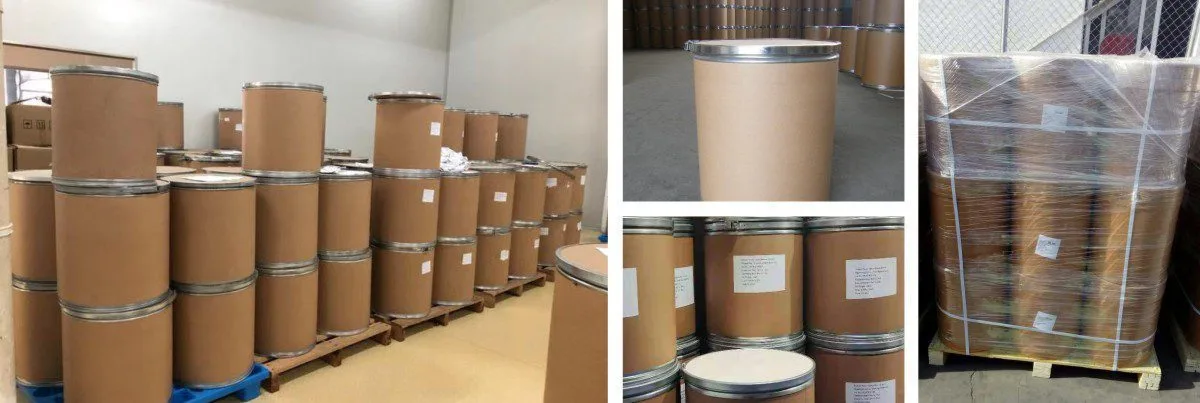
| Fiber Drum | 25 kg | High-density fiber drum with sealed liner |
| Custom Packaging | Available on request | Private label and retail sizes |
Storage Conditions
| Parameter | Requirement |
|---|---|
| Temperature | Below 25 degrees C (below 20 degrees C recommended for maximum anthocyanin color retention) |
| Humidity | Below 50% relative humidity |
| Light | Away from direct sunlight — anthocyanins are light-sensitive |
| Packaging | Keep sealed in original packaging; reseal tightly after each use |
| Shelf Life | 18-24 months (from production date, sealed) |