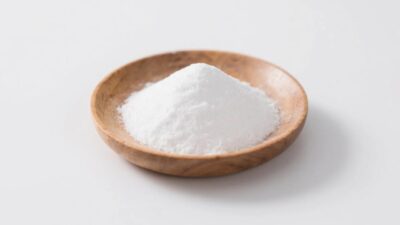

What is Organic Crystalline Fructose?
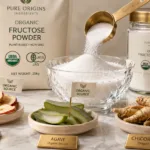
Organic Crystalline Fructose (also labeled Crystalline Fruit Sugar or D-Fructose) is a highly refined monosaccharide sweetener produced by ORGANICWAY through enzymatic hydrolysis of organic starch or fruit-derived substrates, followed by crystallization and precision sieving to achieve pharmaceutical-grade purity specifications.
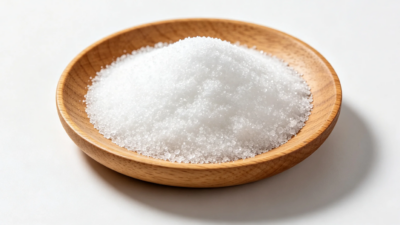
Unlike high-fructose syrups (HFCS), crystalline fructose is supplied as a solid free-flowing powder with moisture content below 0.3%, ensuring maximum formulation flexibility, shelf stability, and ease of handling in dry-blend manufacturing environments. As a single-molecule sweetener (C₆H₁₂O₆), it offers precise dose-response predictability and consistent sweetness contribution across production batches.
Sweetness & Glycemic Profile
The defining functional advantage of crystalline fructose over sucrose is its sweetness potency and glycemic response:
- Sweetness Intensity: 1.2–1.8x sweeter than sucrose by weight, depending on concentration and matrix. At typical usage levels (10–30% of total sweetener), the potency advantage is most pronounced, allowing formulators to reduce total sweetener mass by 20–40% compared to sucrose-only formulations.
- Glycemic Index (GI = 19): Fructose is metabolized primarily in the liver via the hepatic portal system rather than causing rapid blood glucose spikes. This gives crystalline fructose an exceptionally low GI — approximately 4x lower than sucrose (GI = 65) — making it a preferred carbohydrate source for low-GI certified products and metabolic-health product line formulations.
- Caloric Content: 4 kcal/g — metabolically equivalent to sucrose on a direct caloric basis. The calorie reduction advantage in finished products derives from using less fructose by weight to achieve equivalent sweetness.
Production & Quality Standards
Organic crystalline fructose is manufactured under FSSC 22000 food safety management. Every batch undergoes:
- Purity assay by HPLC (≥99.5% fructose)
- Moisture content (Karl Fischer titration, limit ≤0.3%)
- Particle size distribution (80–120 mesh; other grades available)
- Heavy metal screening: Lead <0.1 mg/kg, Arsenic <0.05 mg/kg
- Microbiological testing: TPC ≤1,000 CFU/g, Salmonella negative
- Multi-residue pesticide screen per EU organic regulations
Certifications Available
USDA Organic, EU Organic (EC 834/2007), JAS Organic, Non-GMO Project Verified, FDA GRAS affirmation, EFSA pre-market approval, Kosher, Halal.
Minimum Order Quantity
Sample quantities and small-batch orders available for product development. Commercial volumes in 25 kg bags or 500 kg supersacks. Contact sales for quotation and lead time.
PHYSICAL & CHEMICAL PROPERTIES
Product Specifications
| Parameter | Specification | Notes |
|---|---|---|
| Chemical Name | D-(-)-Fructose; D-Fructose | Monosaccharide |
| CAS Number | 57-48-7 | — |
| Molecular Formula | C₆H₁₂O₆ | — |
| Molecular Weight | 180.16 g/mol | — |
| Appearance | White, free-flowing crystalline powder | Visual |
| Purity (Fructose, dw) | ≥99.5% | HPLC assay |
| Moisture Content | ≤0.3% | Karl Fischer titration |
| Ash Content | ≤0.05% | Gravimetric |
| pH (10% solution) | 5.0–7.0 | Potentiometric |
| Solubility in Water | Fully soluble at 20°C | ~400 g/L |
| Bulk Density | 0.60–0.75 g/mL | Tapped |
| Particle Size | 80–120 mesh (125–180 µm) | Standard grade |
| Melting Point | 103–106°C (decomposes) | — |
| Specific Rotation [α]₂₀ᴰ | −92° (c = 2, H₂O) | Polarimetry |
| Color (ICUMSA) | ≤ 45 IU | White crystal standard |
| Odor | Odorless, characteristic sweet taste | Organoleptic |
| Shelf Life | 36 months from manufacturing date | Stored as directed |
Sweetness Conversion Guide
| Sweetener | Relative Sweetness (vs sucrose = 1.0) | Notes |
|---|---|---|
| Sucrose | 1.0 | Reference |
| Glucose | 0.7 | Less sweet |
| Organic Crystalline Fructose | 1.2–1.8 | Concentration-dependent |
| High Fructose Corn Syrup 55 | 1.1–1.2 | Based on fructose content |
| Maltodextrin | 0.1–0.2 | Very low sweetness |
Formulation Note: Sweetness potency of fructose increases non-linearly with concentration. In aqueous solutions above 10% w/w, perceived sweetness approaches 1.8x sucrose. Conduct sensory trials at target formulation concentration.
MICROBIOLOGICAL & CONTAMINANT STANDARDS
Microbiological Limits
| Test | Specification | Method |
|---|---|---|
| Total Plate Count (TPC) | ≤1,000 CFU/g | ISO 4833 |
| Yeast & Mold | ≤100 CFU/g | ISO 21527 |
| E. coli | Negative (<3 MPN/g) | ISO 16649 |
| Salmonella spp. | Negative / 25g | ISO 6579 |
| Coliforms | Negative / 1g | ISO 4831 |
Heavy Metal Limits
| Metal | Specification | Method |
|---|---|---|
| Lead (Pb) | ≤0.1 mg/kg | ICP-OES / AOAC 2015.01 |
| Arsenic (As) | ≤0.05 mg/kg | ICP-OES / AOAC 2015.01 |
| Cadmium (Cd) | ≤0.2 mg/kg | ICP-OES / AOAC 2015.01 |
| Mercury (Hg) | ≤0.05 mg/kg | ICP-OES / AOAC 2015.01 |
Regulatory & Purity Standards
- FCC (Food Chemicals Codex): Compliant with FCC 11th Edition fructose monograph
- EU Regulation (EC) 834/2007: Compliant for organic labeling
- FDA 21 CFR 184.1: D-Fructose GRAS affirmed
- EFSA Scientific Opinion: Fructose pre-market safety assessment (EFSA Journal 2011)
- Codex Alimentarius (CXS 212-1999): Standard for sugars
- Pesticide Residues: Compliant with EU 396/2005 MRLs for organic crops; batch-level multi-residue screen available on request
CERTIFICATIONS
| Certification | Status | Issuing Body |
|---|---|---|
| USDA Organic | Available | USDA-accredited certifier |
| EU Organic (EC 834/2007) | Available | EU-authorized certifier |
| Non-GMO Project Verified | Available | Non-GMO Project |
| FDA GRAS (21 CFR 184.1) | Available | Self-affirmed / FDA no-objection |
| EFSA Pre-Market Approval | Available | EFSA |
| Kosher | Available | Orthodox Union (OU) or equivalent |
| Halal | Available | IFANCA or equivalent |
COA (Certificate of Analysis), TDS (Technical Data Sheet), SDS (Safety Data Sheet), and Organic Transaction Certificate provided per batch. All certificates issued against the specific production batch, not generic spec sheets.
APPLICATIONS & USAGE GUIDELINES
Recommended Application Sectors
| Application | Typical Dosage | Key Benefits |
|---|---|---|
| Carbonated & Non-Carbonated Beverages | 3–12% | Sweetness boost, low GI, rapid dissolution |
| Sports & Energy Drinks | 5–15% | Carbohydrate source, low GI |
| RTD Tea & Functional Waters | 3–10% | Clean taste, heat stability |
| Baked Goods & Biscuits | 5–15% | Humectancy, Maillard browning, reduced calorie |
| Low-Sugar / No-Sugar Confectionery | 10–30% | Sweetness, texture, clean label |
| Dairy & Plant-Based Yogurts | 3–8% | Sweetness, flavor enhancement |
| Ice Cream & Frozen Desserts | 3–10% | Lower freezing point, sweetness, texture |
| Protein Powders & Supplements | 5–15% | Sweetness, dissolution, low GI |
| Jams, Preserves & Fruit Spreads | 10–25% | Sweetness, natural fruit flavor enhancement |
| Cereals & Breakfast Products | 3–10% | Sweetness, reduced calorie claims |
Glycemic & Low-Calorie Positioning Guide
| Claim / Positioning | Fructose Contribution Required | Notes |
|---|---|---|
| “Low GI” (≤GI 55) | Use fructose as primary sweetener (>30% of total) | Per Glycemic Index Foundation standards |
| “Reduced Calorie” | Replace sucrose at 0.5–0.7 ratio by weight | Calorie reduction proportional to replacement rate |
| “No Added Sugar” | Combine with non-caloric sweeteners | Fructose is a sugar — not suitable for “no sugar” claims |
| “Sugar-Free” | Not applicable | Fructose is a monosaccharide sugar; cannot be used |
| “Clean Label” | Label as “Organic Fructose” or “Organic Fruit Sugar” | No E-numbers, single ingredient |
Formulation Notes
- Fructose is highly hygroscopic — protect from moisture during storage and processing. Use desiccants in packaging; monitor water activity in finished products.
- In baked goods, fructose promotes Maillard browning at lower oven temperatures — reduce oven temperature by 5–10°C to avoid over-browning.
- Fructose has a lower freezing point than sucrose — in ice cream, reduce total sugar or adjust overrun to compensate for texture differences.
- When blending with high-intensity sweeteners (stevia, monk fruit), fructose improves the taste profile by masking aftertaste bitterness.
- pH sensitivity: Fructose is stable across a wide pH range (3–9). It can participate in Maillard reactions in alkaline environments — factor this into color development in baked goods.
FAQ
Q1: What is the difference between crystalline fructose and fructose syrup?
A: Crystalline fructose is a solid, free-flowing powder with ≥99.5% purity and moisture below 0.3%. Fructose syrups are liquid formulations with varying fructose concentrations (typically 42–55% in HFCS-42/55, or 77–90% in high-purity fructose liquid). Crystalline fructose offers superior handling in dry-blend manufacturing, predictable dosing in powder formats (protein supplements, dry beverage mixes), and avoids the logistics and preservation requirements of liquid ingredients. It is the preferred format for baked goods, confectionery, and powdered supplement applications.
Q2: Is organic crystalline fructose suitable for keto or low-carb diets?
A: Crystalline fructose has a GI of 19 and is metabolized differently from glucose — it does not cause rapid blood sugar spikes. However, it still contributes carbohydrates and calories (4 kcal/g). On a strict ketogenic diet targeting net carb intake below 20g/day, even small amounts of fructose can impact ketosis. For low-GI or reduced-calorie positioning — rather than strict keto — organic crystalline fructose is well-suited. Always advise consumers to check the full nutritional profile of the finished product and consult region-specific labeling regulations for “keto” or “low-carb” claims.
Q3: Can I replace sucrose 1:1 with crystalline fructose in my formulations?
A: No — direct 1:1 weight replacement by sucrose is not recommended. Crystalline fructose is 1.2–1.8x sweeter than sucrose by weight. Replace sucrose at a rate of approximately 50–70% by weight to achieve equivalent sweetness at typical concentration levels. For example, if a formulation calls for 100g sucrose, use 50–70g crystalline fructose. Always conduct sensory testing at your target concentration, as texture, browning behavior, and humectancy differ from sucrose.
Q4: Does crystalline fructose crystallize or precipitate in cold beverages?
A: No. Organic crystalline fructose has a solubility of approximately 400 g/L at 20°C — significantly higher than sucrose — and remains in solution at cold temperatures. It is an excellent choice for cold brew beverages, iced teas, sports drinks, and refrigerated dairy products where crystallization or precipitation is undesirable.
Q5: What source materials do you offer for organic crystalline fructose?
A: We currently offer organic crystalline fructose derived from organic apples, organic agave, and organic chicory root — all certified organic and non-GMO. Source material availability may vary by production run. Please specify your preferred source material at time of order. All three sources produce chemically identical D-fructose molecules with the same functional profile; the source is primarily relevant for marketing and clean-label narrative positioning.
Q6: How does crystalline fructose affect blood glucose compared to other sweeteners?
A: Crystalline fructose has a GI of 19, compared to sucrose (GI 65), glucose (GI 100), maltodextrin (GI 85–110), and conventional corn syrup (GI 60–70). Fructose is metabolized primarily in the liver and does not directly elevate blood glucose or trigger an insulin response at typical consumption levels. This makes it particularly suitable for formulations targeting diabetic-friendly, low-GI, or glycemic management positioning. Note: Very high fructose consumption (>50g/day) may affect liver metabolism — inform consumers of this for products with high fructose dosage.
Q7: What is the shelf life, and how should I store crystalline fructose?
A: Organic crystalline fructose has a shelf life of 36 months from the manufacturing date when stored in unopened, sealed original packaging under cool (≤25°C), dry conditions, away from strong odors and moisture sources. Once opened, use within 6 months or reseal immediately with a desiccant liner. Do not expose to humidity — fructose is hygroscopic and will clump or liquefy if moisture ingress occurs.
Q8: What is the minimum order quantity and lead time for commercial orders?
A: Sample quantities are available for product development and specification verification. For commercial volumes, our standard format is 25 kg multi-ply kraft paper bags with PE liner, or 500 kg supersacks for large-scale production. Standard lead time is 14–21 days from confirmed purchase order. For ISO tank or bulk liquid shipments of high-purity fructose syrup variants, lead time is 21–28 days. Contact [email protected] with your required specifications, volume, destination, and certification requirements for a confirmed quotation.
PACKAGING & STORAGE
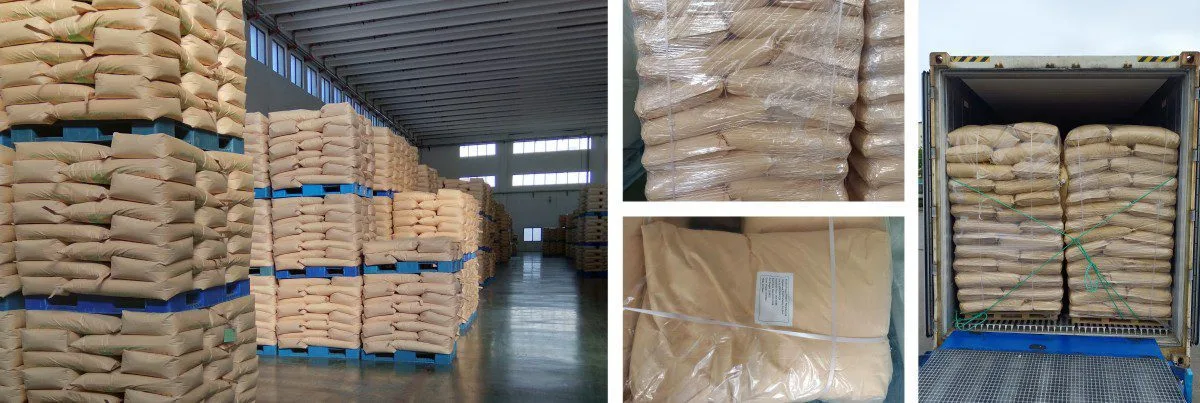
Packaging Options
| Package Size | Packaging Material | MOQ | Notes |
|---|---|---|---|
| 1 kg | Aluminum foil pouch | Trial | Small-scale trials |
| 5 kg | Aluminum foil pouch | Trial | Product development |
| 20 kg | Kraft paper bag + PE liner | Standard | Food-grade sealed bag |
| 25 kg | Kraft paper bag + PE liner | Standard | Most common B2B format |
| 500 kg | Supersack (FIBC) | Commercial | Large-volume production |
| Custom | Bulk bag or dedicated container | Commercial | Private label / contract supply |
All packaging is food-grade, moisture-resistant, and suitable for international shipping. Custom labeling, private label printing, and COA customization available for contracted supply programs.
Storage Conditions
- Storage temperature: ≤25°C (cool, dry environment)
- Relative humidity: ≤55% RH
- Avoid: Moisture, humidity, strong odors, direct sunlight
- Shelf life: 36 months from manufacturing date (sealed, unopened)
- Opened packaging: Reseal immediately; use desiccants; consume within 6 months