
Table of Contents
The global demand for plant-based proteins continues to reshape food formulation priorities. Among the ingredients gaining serious traction in R&D departments and procurement offices alike, organic hemp hearts stand out as one of the most nutritionally complete and commercially versatile plant proteins available today.
Often referred to as hemp seed hearts or hulled hemp seeds, these are the soft inner cores of the organic cannabis sativa plant, extracted by gently removing the outer shell. The result is a creamy, mild-flavored ingredient prized by food manufacturers for its exceptional protein density, balanced fatty acid profile, and clean-label appeal.
For B2B decision-makers, the case is compelling: hemp hearts deliver a rare combination of nutritional superiority, processing flexibility, and consumer-facing health claims that few plant proteins can match. This guide provides the technical foundation you need to evaluate hemp hearts as a reformulation or new-product ingredient, covering nutritional science, product form selection, regulatory compliance, and production realities.
What Are Organic Hemp Hearts? Definitions and Key Characteristics
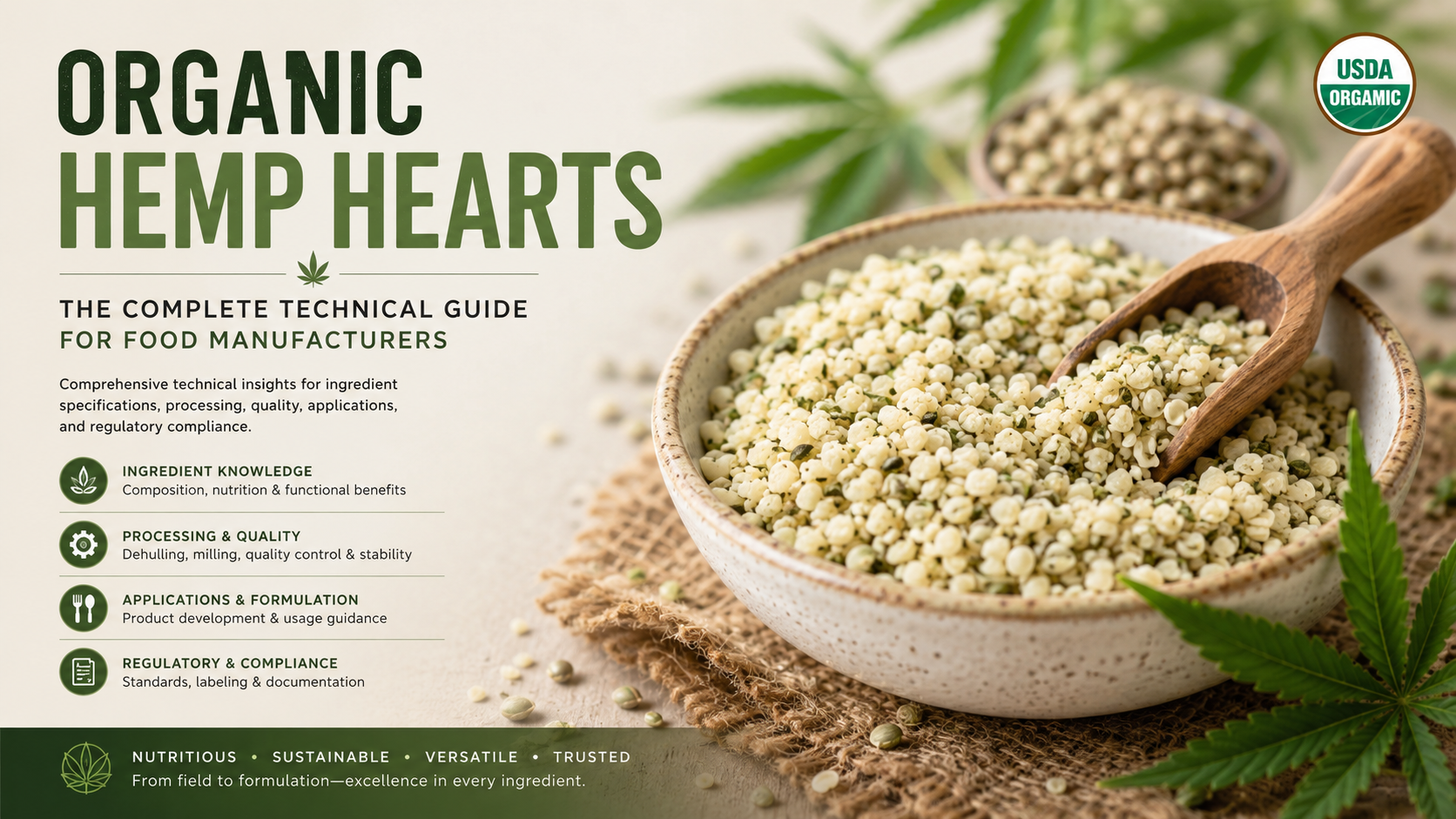
Organic hemp hearts are the edible interior of the hemp seed, harvested from cannabis sativa plants cultivated under certified organic conditions. The outer hull is mechanically removed, leaving only the tender, pale green kernel. This distinction matters for product developers: hulled hemp hearts have a softer texture and milder, nutty flavor compared to whole hemp seeds, making them easier to incorporate into a wider range of formulations.
Key characteristics relevant to food manufacturers include:
- Clean ingredient positioning: Free from synthetic pesticides, herbicides, and genetic modification by definition of the organic certification process
- Neutral flavor profile: A subtle, mild nutty taste that integrates well into both sweet and savory applications without overpowering other ingredients
- Soft texture: Unlike crunchy whole seeds, hemp hearts blend smoothly and contribute a creamy mouthfeel in beverages and spreads
- No psychoactive compounds: Hemp hearts contain negligible levels of tetrahydrocannabinol (THC), well below regulatory thresholds, and carry no risk of psychotropic effects
- Broad dietary compatibility: Suitable for vegan, vegetarian, gluten-free, keto, and allergen-conscious formulations, reaching a wide consumer base
Nutritional Profile: Complete Breakdown per 30g Serving
Understanding exact nutritional content is essential for formulation accuracy and label claim substantiation. The following table represents typical values for certified organic hemp hearts, measured per a standard 30g serving (approximately 2 to 3 tablespoons, or one typical scoop).
Table 1: Nutritional Profile of Organic Hemp Hearts (per 30g serving)
| Nutrient | Amount | % Daily Value (approx.) |
|---|---|---|
| Calories | 166 kcal | 8% |
| Total Fat | 14.5 g | 19% |
| — Saturated Fat | 1.4 g | 7% |
| — Monounsaturated Fat | 1.7 g | — |
| — Polyunsaturated Fat | 11.4 g | — |
| — Omega-3 (ALA) | 2.6 g | — |
| — Omega-6 (LA + GLA) | 8.8 g | — |
| Total Carbohydrates | 2.6 g | 1% |
| — Dietary Fiber | 1.2 g | 4% |
| — Sugars | 0.5 g | — |
| Protein | 11.3 g | 23% |
| Vitamin E | 0.9 mg | 6% |
| Magnesium | 140 mg | 33% |
| Phosphorus | 330 mg | 33% |
| Iron | 2.4 mg | 13% |
| Zinc | 1.9 mg | 17% |
| Potassium | 260 mg | 6% |
A few data points warrant deeper explanation for product developers and nutrition labelers. Protein accounts for over 25% of total calories in hemp hearts, a figure that substantially exceeds comparable plant seeds such as chia seeds (16%) and flaxseeds (18%). This makes hemp hearts one of the most protein-dense whole-plant ingredients available. The fat fraction is dominated by polyunsaturated fatty acids, with an omega-6 to omega-3 ratio of approximately 3:1 widely regarded as optimal for human nutrition. Additionally, hemp hearts contain gamma-linolenic acid (GLA), an anti-inflammatory omega-6 fatty acid relatively rare in the plant kingdom.
Amino Acid Profile and Protein Quality: PDCAAS and DIAAS
Beyond total protein quantity, the amino acid profile and digestibility-corrected score determine a protein’s functional and nutritional value for food formulations. Hemp hearts deliver a genuinely complete amino acid profile, meaning they contain all nine essential amino acids in proportions relevant to human dietary needs.
Table 2: Amino Acid Profile of Organic Hemp Hearts (per 30g serving)
| Amino Acid | Content (g) | Category |
|---|---|---|
| Histidine | 0.6 | Essential |
| Isoleucine | 0.9 | Essential (BCAA) |
| Leucine | 1.7 | Essential (BCAA) |
| Valine | 1.2 | Essential (BCAA) |
| Lysine | 1.0 | Essential |
| Methionine | 0.6 | Essential |
| Phenylalanine | 1.1 | Essential |
| Threonine | 0.9 | Essential |
| Tryptophan | 0.3 | Essential |
| Arginine | 2.4 | Conditionally Essential |
| Glutamic Acid | 4.5 | Non-Essential |
| Cysteine | 0.5 | Conditionally Essential |
Two proteins deserve particular attention. Hemp hearts are exceptionally rich in edestin, a storage protein also found in human blood plasma, and albumin, a readily digestible protein abundant in egg whites and blood serum. The co-occurrence of these two proteins contributes to hemp’s favorable digestibility profile, which ranks superior to many whole grains, nuts, and legumes.
Regarding scoring systems, hemp protein does not yet have a universally standardized PDCAAS (Protein Digestibility-Corrected Amino Acid Score) value formally established by FAO/WHO, but independent analyses and published studies estimate its score in the 0.46 to 0.60 range. While this is lower than whey or soy isolates (scored at 1.0), it is comparable to other whole-plant proteins and, importantly, reflects the quality of a whole, unprocessed ingredient rather than an isolated fraction. Hemp protein digestibility is measurably superior to many cereals, nuts, and beans in practice, and its value lies in its completeness and synergy with other whole-food ingredients rather than standing alone as a protein supplement.
Health Benefits: What the Research Shows
The nutritional composition of hemp hearts translates into measurable health outcomes that food manufacturers can leverage for substantiated label claims.
Protein Content and Muscle Support
With 11.3 grams of complete protein per 30 grams, hemp hearts deliver a protein density that supports muscle maintenance, satiety, and recovery nutrition. For brands developing sports beverages, protein bars, or meal-replacement products, hemp hearts provide a plant-based protein source with an amino acid profile suitable for active consumers, including athletes and those following high-protein plant-based diets.
Cardiovascular Health
The cardiovascular case for hemp hearts is supported by both human clinical data and mechanistic studies. Hemp hearts are exceptionally rich in arginine, an amino acid that serves as a precursor to nitric oxide, a molecule that dilates blood vessels and lowers blood pressure. A large-scale study involving over 13,000 participants demonstrated that increased arginine intake correlates with reduced C-reactive protein (CRP) levels, a key inflammatory marker associated with cardiovascular disease risk. Animal studies have further shown that hemp seed and hemp seed oil supplementation reduces blood pressure, decreases thrombosis formation, and supports post-cardiac recovery.
Anti-Inflammatory Properties
Chronic inflammation underpins many modern metabolic diseases. Hemp hearts contain both omega-3 alpha-linolenic acid (ALA) and cannabinoids such as gamma-linolenic acid (GLA), compounds that have demonstrated anti-inflammatory activity in clinical research. The 3:1 omega-6 to omega-3 ratio in hemp hearts aligns closely with modern nutritional recommendations for managing systemic inflammation through dietary intervention.
Skin Health
For the dermatology-adjacent functional food and supplement market, hemp hearts offer a differentiated story. Clinical research on eczema (atopic dermatitis) patients has shown that hemp seed oil supplementation improves essential fatty acid levels in the skin, reduces transepidermal water loss, and alleviates symptoms of dryness and itching. This positions hemp hearts as a functional ingredient for beauty-from-within or nutricosmetic product lines.
Digestive Health
The dietary fiber content of hemp hearts, combined with their prebiotic potential, supports gastrointestinal health. Fiber promotes regular bowel movements, feeds beneficial gut microbiota, and contributes to a healthy gut barrier.
Weight Management
The combination of high-quality protein, dietary fiber, and healthy fats in hemp hearts promotes satiety, making them a practical ingredient for weight management and meal-replacement formulations. The complete amino acid profile ensures that satiety signals are supported by adequate essential amino acid intake, addressing a common shortcoming of many plant-based weight management products.
Product Forms: Comparing Hemp Hearts, Protein Powder, Seed Oil, and Hemp Meal
For B2B procurement and product development teams, selecting the appropriate hemp product form is a foundational decision. Each form offers distinct nutritional characteristics, functional properties, and application ranges.
Table 3: Hemp Product Forms Comparison
| Parameter | Hemp Hearts | Hemp Protein Powder | Hemp Seed Oil | Hemp Meal |
|---|---|---|---|---|
| Protein Content (per 100g) | 33-36 g | 44-50 g | <1 g | 33-36 g |
| Fat Content (per 100g) | 48-50 g | 10-12 g | 99+ g | 10-12 g |
| Fiber Content (per 100g) | 4 g | 20-25 g | 0 g | 35-40 g |
| Calories (per 100g) | 553 kcal | 337 kcal | 884 kcal | 337 kcal |
| Primary Use Cases | Smoothies, yogurt, granola bars, salads, baking, snacks | Protein supplements, bars, meat alternatives, baked goods | Dressings, supplements, capsule fill, topical | Animal feed, extruded products, fiber-fortified foods |
| Flavor Profile | Mild, nutty, slightly sweet | Earthy, nutty, more pronounced | Nutty, grassy | Neutral to bitter |
| Textural Role | Creamy, soft | Fibrous, binding | Smooth, non-greasy | Coarse, structural |
| Shelf Life | 12-18 months (cool, dry) | 12-24 months | 12-18 months (dark bottle) | 6-12 months |
| Price Positioning | Mid-range | Higher | Variable | Lower |
Hemp hearts represent the most versatile form for food manufacturers entering the hemp ingredients space. Their balanced macronutrient profile, neutral flavor, and soft texture make them suitable for direct incorporation into consumer-facing products without requiring extensive reformulation. Hemp protein powder, while higher in protein per gram, carries a more assertive flavor and darker color that can limit application in light-colored products. Hemp seed oil excels in cold-use applications such as dressings and supplements but is unsuitable for cooking or high-temperature processing due to its polyunsaturated fat content.
Certifications and Regulatory Compliance
For international B2B buyers, understanding certification requirements is as critical as understanding nutritional content. Organic hemp hearts sold into regulated markets must meet specific standards.
USDA Organic (NOP 7 CFR Part 205)
The United States Department of Agriculture National Organic Program requires that organic hemp hearts be produced without synthetic fertilizers, pesticides, herbicides, or genetically modified organisms. The entire supply chain, from seed to final packaged product, must be audited and certified by a USDA-accredited certifying agent. For food manufacturers, purchasing USDA Organic certified hemp hearts enables the use of the USDA Organic seal on finished products and supports premium pricing strategies in the North American market.
EU Organic (EC 834/2007 and Implementing Regulations)
The European Union organic certification framework operates under Council Regulation (EC) 834/2007, which establishes principles for organic production and labeling. EU Organic certification requires compliance with strict input restrictions, environmental protection requirements, and annual on-site inspections. Imported organic products must be accompanied by a Certificate of Inspection (COI) issued by the relevant control authority.
Non-GMO Project Verified
Although hemp is not a genetically modified crop by convention, industrial hemp production can be subject to inadvertent GMO contamination risks in the supply chain. Non-GMO Project Verified status provides an additional layer of assurance for brands making non-GMO claims and is particularly relevant for the North American retail market.
THC Limits
Regulatory thresholds for THC content vary by jurisdiction. In the United States, industrial hemp is legally defined as cannabis with a dry-weight THC concentration below 0.3%, established under the 2018 Farm Bill. The European Union sets a similar threshold at 0.2% THC. ORGANICWAY Food Ingredients Inc. ensures all organic hemp hearts meet or exceed compliance with both US and EU THC limits. Third-party laboratory testing for each batch is available upon request, including Certificates of Analysis (COA) documenting THC levels, microbial safety, heavy metal screening, and pesticide residue panels.
Food Safety Standards
ORGANICWAY operates under HACCP (Hazard Analysis Critical Control Points) protocols and can provide documentation required for food safety compliance across major export markets. All shipments include full traceability from seed lot to delivery, with COA documentation for every batch.
Sourcing Guide: Matching Product Form to Application
Selecting the right hemp ingredient requires aligning nutritional goals, processing requirements, and target consumer preferences. The following framework guides procurement and product development decisions.
For ready-to-eat food applications such as granola bars, cereals, yogurt toppings, and snack mixes, hemp hearts are the recommended starting point. Their mild flavor, soft texture, and clean-label appeal integrate seamlessly into finished products without requiring flavor masking or extensive sensory reformulation.
For protein-fortification applications such as plant-based protein powders, meat analogs, and high-protein snack bars, hemp protein powder delivers the highest protein density and provides functional binding properties. Blending hemp protein powder with complementary plant proteins such as pea or rice protein can achieve a more complete amino acid profile closer to whey benchmarks.
For fat-soluble nutrient delivery in applications such as salad dressings, functional beverages, and supplement softgels, hemp seed oil offers the most concentrated source of omega-3, omega-6, and GLA fatty acids. Note that hemp seed oil is sensitive to heat, light, and air exposure, and should be cold-pressed and stored in opaque, airtight packaging to preserve fatty acid integrity.
For fiber-fortification applications targeting digestive health or low-carb/high-fiber product positioning, hemp meal provides the highest dietary fiber content. Hemp meal is the byproduct of cold-pressing hemp seeds for oil extraction and retains most of the seed’s fiber fraction along with moderate protein levels.
For companies entering the hemp ingredient market for the first time, requesting samples of multiple product forms for internal sensory and formulation testing is strongly recommended. ORGANICWAY provides complimentary technical samples and formulation support for qualified B2B partners.
HACCP and Large-Scale Production Considerations
Transitioning from sample-scale testing to commercial production involves additional operational and safety considerations.
Supply Chain Controls
Organic hemp hearts require a fully traceable organic supply chain. ORGANICWAY maintains relationships with certified organic contract farmers and operates processing facilities designed to prevent cross-contamination with non-organic products. Key control points include seed sourcing verification, organic certification audits, and lot-specific COA documentation.
Storage and Shelf Life
Hemp hearts are sensitive to oxidation due to their high polyunsaturated fat content. Optimal storage conditions are cool (below 15 degrees Celsius), dry, and dark, in airtight packaging. Under these conditions, hemp hearts maintain nutritional integrity for 12 to 18 months. Exposure to heat, light, or oxygen accelerates rancidity, which compromises both flavor and nutritional quality. For large-scale operations, consider nitrogen flushing during packaging to extend shelf life.
Microbiological Safety
As with all seed and nut products, hemp hearts require microbiological monitoring. Critical parameters include total plate count, yeast and mold, E. coli, salmonella, and aflatoxin screening. ORGANICWAY’s standard COA includes microbiological results, and enhanced testing protocols are available for markets with stricter requirements such as Japan and Australia.
Heavy Metals
Hemp plants are known bioaccumulators and can absorb cadmium and lead from soil. Certified organic soils and regular testing of growing regions are essential for maintaining compliance with international heavy metal limits. ORGANICWAY conducts annual heavy metal testing across all growing regions and provides results in every batch COA.
Allergen Labeling
While hemp is not a “Big 8” allergen in the United States or EU, it is considered an emerging allergen in some jurisdictions. Industry best practice is to declare hemp in allergen statements on finished product labels and to conduct allergen cross-contact risk assessments in co-manufacturing environments.
Scaling Production and Lead Times
Organic hemp hearts are a seasonal agricultural product with primary harvest cycles in late summer to early autumn in the Northern Hemisphere. Commercial-scale procurement typically requires 4 to 8 weeks of lead time for processing and certification documentation. Planning procurement against annual volume forecasts and establishing framework agreements helps ensure supply continuity and price stability throughout the year.
Sustainability Profile
Environmental considerations increasingly influence procurement decisions in the global food ingredients market. Hemp hearts carry a favorable sustainability profile across multiple dimensions.
Hemp is a notably water-efficient crop, requiring substantially less irrigation than conventional protein crops such as soybeans or almonds. The hemp plant reaches maturity in 90 to 120 days, enabling efficient land use with rapid crop cycling. Its deep root system helps prevent soil erosion and contributes to soil health improvement. Hemp also has natural pest resistance, reducing the need for organic-approved pest management interventions. Together, these characteristics support regenerative agricultural practices and align with brands pursuing sustainability certifications such as B Corp or Science Based Targets.
The historical use of hemp seed oil as a food and medicinal ingredient in China dates back at least 3,000 years, according to documented pharmacopeia references. This long history of safe human consumption provides both cultural credibility and an extensive body of traditional use data that complements modern scientific research.
Frequently Asked Questions
Are organic hemp hearts safe for consumption on a daily basis?
Yes. Extensive historical consumption data and modern clinical research confirm that daily consumption of organic hemp hearts is safe for the general population. Regulatory bodies in both the United States and European Union have established that hemp-derived food ingredients meeting THC limits (below 0.3% in the US, below 0.2% in the EU) pose no safety risk to consumers, including pregnant and breastfeeding individuals.
Will hemp hearts cause a positive drug test?
No. Hemp hearts contain only trace, non-psychoactive levels of THC that are far below any threshold that could cause a positive result on standard drug screening tests. Third-party batch testing confirms THC levels remain well within regulatory safety margins. However, for brands serving environments with zero-tolerance drug testing policies, providing COA documentation for each lot is recommended.
What is the difference between hemp hearts and CBD?
Hemp hearts and CBD (cannabidiol) are derived from the same plant family but are fundamentally different compounds. Hemp hearts are the shelled seed kernels, which contain no CBD and only trace THC. CBD is a cannabinoid compound found primarily in the flowers, leaves, and stems of the hemp plant. Hemp hearts will not deliver CBD’s effects and do not interact with the endocannabinoid system in the same way.
How do hemp hearts compare to other plant-based protein sources?
Hemp hearts deliver a complete amino acid profile, which distinguishes them from many other plant protein sources such as grains or nuts that are individually low in one or more essential amino acids. While hemp hearts have a lower total protein percentage than soy or pea protein isolates, their advantage lies in the quality of the protein (edestin and albumin content), the favorable fatty acid ratio, and the minimal processing required to produce a consumer-ready ingredient.
Can hemp hearts be used in high-temperature food processing?
Hemp hearts can be incorporated into baked goods and extruded products, but excessive heat may degrade the sensitive polyunsaturated fatty acids and affect flavor. For applications requiring high-temperature processing, hemp protein powder or hemp meal may be more appropriate. Cold-use applications such as granolas, snack mixes, smoothies, and topping formulations preserve the full nutritional integrity of hemp hearts.
What certifications should I request from a hemp heart supplier?
At minimum, request USDA Organic certification, NON-GMO Project Verified status (for North American markets), a current Certificate of Analysis including THC content testing, microbiological screening, heavy metal panel results, and pesticide residue testing. For EU-bound products, ensure EU Organic certification and a Certificate of Inspection for each shipment.
What is the minimum order quantity for commercial procurement?
Order quantities vary by supplier and product form. ORGANICWAY Food Ingredients Inc. works with B2B partners across flexible MOQ arrangements ranging from pilot-scale quantities for new product development to full-container loads for established commercial supply. Inquire directly for a tailored quotation based on your volume requirements, certification needs, and delivery schedule.
Partnering with ORGANICWAY for Your Hemp Ingredient Supply
Organic hemp hearts represent a compelling opportunity for food manufacturers and brand owners looking to capitalize on the growing consumer demand for clean-label, nutritionally superior plant-based ingredients. From their complete protein profile and anti-inflammatory fatty acid ratio to their versatility across food and beverage applications, hemp hearts offer a rare combination of science-backed health benefits and commercial practicality.
ORGANICWAY Food Ingredients Inc. is a professionally managed organic food ingredient supplier based in Xi’an, China, with established export relationships across North America, Europe, and Asia-Pacific. The company supplies certified organic hemp hearts and related hemp ingredient forms to food manufacturers, brand owners, and ingredient distributors worldwide.
For product samples, technical specifications, or pricing information, contact us!