
Table of Contents
Organic sunflower seed protein powder has become one of the fastest-growing ingredients in the plant-based nutrition space. Marketed as allergen-free, sustainable, and nutrient-dense, it attracts vegans, athletes, and health-conscious consumers alike. But how much of the hype is supported by evidence, and what should you actually know before adding it to your daily routine?
This guide cuts through the marketing language to deliver a balanced, evidence-based overview of organic sunflower protein powder — including its genuine benefits, its real limitations, and practical guidance for safe, effective use.
What Is Organic Sunflower Protein Powder?
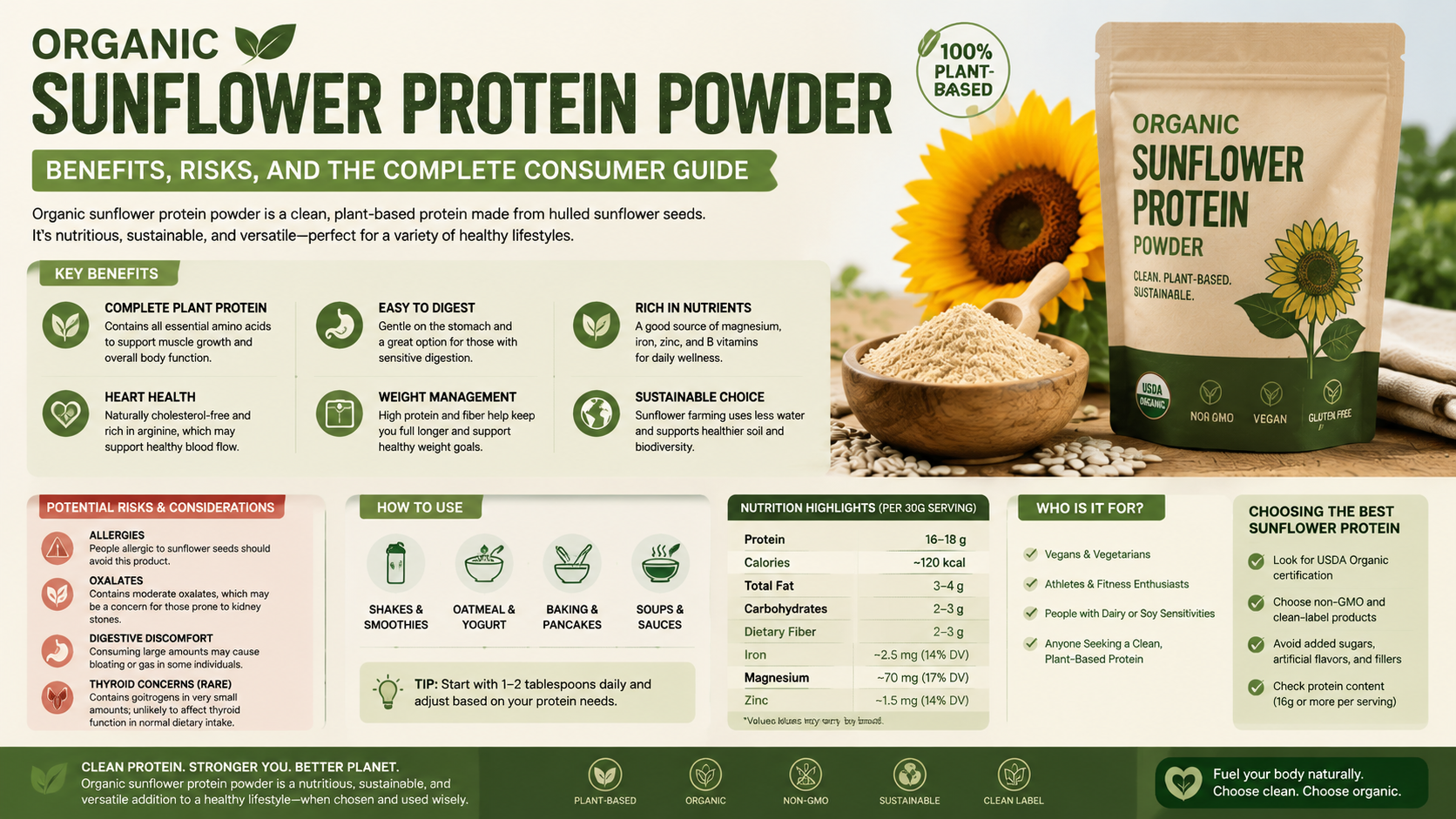
Organic sunflower protein powder is a plant-based protein supplement derived from organic sunflower seeds. After the seeds are cold-pressed to extract sunflower oil, the remaining meal is processed to concentrate or isolate the protein content. The result is a powder that typically contains 50–60% protein by weight.
The “organic” designation means the sunflowers were grown without synthetic pesticides, herbicides, fertilizers, or genetically modified organisms, and that the processing adheres to certified organic standards (such as USDA Organic or EU Organic).
The “upcycled” label that some brands use refers to this origin story: the protein is extracted from what would otherwise be an oil industry byproduct, making it a zero-waste ingredient.
Nutritional Profile: What’s Actually in It?
A typical 30g serving of organic sunflower protein powder provides:
| Nutrient | Approximate Amount | Notes |
|---|---|---|
| Protein | 15–18g | Concentrate: ~50%; Isolate: ~60%+ |
| Dietary Fiber | 6–8g | Supports digestive health |
| Vitamin E (Alpha-Tocopherol) | 5–7mg | Natural antioxidant from sunflower seeds |
| Phytosterols | 200–300mg | May support healthy cholesterol levels |
| Magnesium | 30–40mg | Supports muscle and nerve function |
| Selenium | 15–20mcg | Supports immune function |
| Iron | 3–5mg | Enhanced absorption with vitamin C |
| Potassium | 300–450mg | Consider for kidney-related concerns |
Compared to whole sunflower seeds (which contain about 21g of protein per 100g), the concentrated powder form delivers a significantly higher protein density, rivaling other plant protein powders on the market.
The Benefits: Where Sunflower Protein genuinely Performs
1. Allergen-Free by Nature
This is sunflower protein’s most significant differentiator. Unlike soy, dairy, egg, and nut-based proteins, organic sunflower protein powder is naturally free from the most common food allergens:
- Dairy-free — suitable for vegans and those with lactose intolerance
- Soy-free — avoids phytoestrogen concerns and soy allergy triggers
- Gluten-free — safe for individuals with celiac disease or gluten sensitivity
- Nut-free — no tree nuts or peanuts
For consumers managing multiple food allergies or sensitivities, finding a protein powder that checks all these boxes is rare. Sunflower protein fills this gap effectively.
2. Strong Amino Acid Profile for a Plant Protein
Sunflower protein contains all nine essential amino acids. While it is not a “perfect” protein in the sense that whey is, its amino acid profile has notable strengths:
- High in methionine — a sulfur-containing amino acid that supports liver function and collagen synthesis. Sunflower protein is approximately 28% higher in methionine than pea protein.
- Rich in BCAAs — branched-chain amino acids (leucine, isoleucine, valine) that play a central role in muscle protein synthesis.
- Good digestibility — properly processed sunflower protein concentrate or isolate achieves high bioavailability, particularly when produced using enzymatic treatment methods.
3. Additional Nutrients Beyond Protein
Sunflower protein powder delivers more than just protein. It contains meaningful amounts of vitamin E (a fat-soluble antioxidant), phytosterols (plant compounds associated with healthy cholesterol management), dietary fiber (supporting gut health), and trace minerals including selenium and magnesium.
4. Neutral Flavor Profile
Compared to some plant proteins that carry strong, distinctive flavors (pea protein’s legume taste, hemp’s earthy intensity), sunflower protein has a relatively mild, slightly earthy flavor. This makes it more versatile in smoothies, baked goods, and savory recipes where you don’t want the protein powder to dominate the taste.
5. Sustainability Credentials
Sunflower protein carries genuine environmental advantages:
- It is an upcycled ingredient, derived from the meal left after oil extraction, meaning no additional farmland is dedicated solely to protein production
- Sunflower cultivation generally requires less water and fewer inputs than resource-intensive crops like almonds
- Certified organic production eliminates synthetic pesticides and fertilizers from the growing process
For environmentally conscious consumers, these are meaningful differentiators over animal-based proteins and some competing plant proteins.
The Limitations: What You Need to Know
Transparency matters. Here are the genuine limitations of organic sunflower protein powder, presented without marketing spin.
1. Low in Lysine
Lysine is sunflower protein’s limiting amino acid. While the powder contains all nine essential amino acids, the quantity of lysine is lower than what the body optimally needs for protein synthesis.
Practical impact: If sunflower protein is your only protein source, you may not get enough lysine over time.
Simple solution: Pair sunflower protein with lysine-rich foods throughout the day — beans, lentils, chickpeas, quinoa, or tofu. You don’t need to eat complementary proteins at the same meal; variety across your daily diet is sufficient.
2. Phytic Acid Content
Sunflower seeds contain phytic acid, a naturally occurring compound that can bind to minerals (iron, zinc, calcium) and reduce their absorption by the body. This is common to many plant-based foods and is not unique to sunflower protein.
Mitigation strategies:
- Choose protein powder produced using enzymatic processing, which reduces phytic acid levels
- Pair with vitamin C-rich foods (citrus, bell peppers, berries) to enhance iron absorption
- Avoid using sunflower protein as your sole mineral source
3. Fiber Content May Cause Digestive Adjustment
With 6–8g of fiber per serving, sunflower protein powder is higher in fiber than many protein supplements. For individuals not accustomed to high-fiber diets, this can cause temporary bloating, gas, or mild digestive discomfort during the first few days of use.
Recommendation: Start with a half serving (10–15g) per day and gradually increase to a full serving over the course of a week while ensuring adequate hydration.
4. Heavy Metal Considerations
Sunflowers are classified as “hyperaccumulators,” meaning they can absorb heavy metals (particularly cadmium and lead) from soil more readily than some other crops. This is a legitimate concern.
Risk mitigation:
- Choose certified organic sunflower protein, which is grown in regulated soils and tested for heavy metal content
- Look for third-party testing certifications (NSF, USP, or similar) on the product label
- Request a Certificate of Analysis (CoA) from the supplier if purchasing in bulk
5. Flavor and Texture
While milder than many plant proteins, sunflower protein concentrate can still exhibit a slightly earthy or bitter aftertaste, particularly at higher concentrations. Texture-wise, some products may feel slightly gritty in water if not blended thoroughly.
Tips: Use a high-speed blender, mix with flavorful ingredients (frozen fruit, cocoa powder, cinnamon), or incorporate into baked goods where texture is less noticeable.
6. Not a Complete Substitute for Varied Diet
No single protein powder should replace a nutritionally diverse diet. Sunflower protein is a strong supplement, but relying on it exclusively — without consuming a variety of whole food protein sources — may result in nutritional gaps over time.
How to Use It: Practical Guide
Daily Dosage
| Purpose | Suggested Intake | Timing |
|---|---|---|
| General wellness | 15–25g (½–1 scoop) per day | Any time, with a meal or as a snack |
| Active individuals / fitness | 20–30g (1–1.5 scoops) per day | Pre- or post-workout (within 60 minutes) |
| Meal supplement | 20–25g with fruits, healthy fats, and vegetables | Breakfast or as a meal replacement component |
A maximum daily intake of approximately 25–30g is generally recommended to avoid potential issues with mineral absorption from elevated phytic acid intake.
Preparation Methods
Smoothies and Shakes: Add 1–2 scoops to a blender with your choice of liquid (plant milk, water, juice), fruits, and vegetables. Sunflower protein dissolves well in both cold and room-temperature liquids.
Baking: Substitute up to 25% of flour with sunflower protein powder in recipes for pancakes, muffins, cookies, and breads. This adds protein without significantly altering texture. Note that baking above 175°C (350°F) may degrade some heat-sensitive nutrients.
Cooking: Stir into soups, stews, or sauces as a thickening agent. Whisk into plant-based milk for a protein-fortified beverage. Add to oatmeal or yogurt bowls.
Energy Balls and Snacks: Combine with oats, nut butter, and a natural sweetener, then roll into no-bake protein balls.
Flavor Pairing Suggestions
| Flavor Direction | Ingredients to Combine |
|---|---|
| Tropical | Frozen mango, pineapple, coconut milk |
| Chocolate | Cocoa powder, banana, almond butter |
| Berry | Mixed berries, spinach, almond milk |
| Savory | Vegetable broth, herbs, garlic (for cooking) |
| Spiced | Cinnamon, nutmeg, vanilla, oat milk |
Consumer Buying Guide: How to Choose a Quality Product
Not all sunflower protein powders are equal. Here’s what to look for:
| Quality Indicator | What to Check |
|---|---|
| Organic Certification | USDA Organic, EU Organic, or equivalent. Ensures pesticide-free cultivation. |
| Processing Method | Cold-pressed and enzymatically treated. Avoid products that don’t specify processing. |
| Third-Party Testing | NSF, USP, or Informed Sport certification. Confirms purity and safety. |
| Protein Content | 50%+ for concentrate, 60%+ for isolate. Check the nutrition panel. |
| Ingredient List | Should list organic sunflower protein (or organic sunflower seed protein) as the primary ingredient. Avoid products with long lists of additives, fillers, or “natural flavors.” |
| Color and Smell | Pale gold color with a mild, nutty aroma. Grayish color or chemical odors suggest poor quality or oxidation. |
| Solubility | Quality powder should dissolve within 10–15 seconds when shaken in cold water. |
Who Should Use Sunflower Protein Powder?
Well-suited for:
- Vegans and vegetarians seeking an allergen-free protein source
- Individuals with soy, dairy, gluten, or nut allergies
- Athletes and active individuals wanting a plant-based protein option
- Consumers prioritizing sustainability and upcycled ingredients
- Anyone adding protein to smoothies, baked goods, or meals
Use with caution or consult a healthcare provider:
- Individuals with known sunflower seed allergies (rare but possible)
- People with kidney conditions (due to potassium and protein intake considerations)
- Those on low-FODMAP diets (moderate FODMAP content)
- Anyone concerned about heavy metal exposure (choose certified organic, third-party tested products)
Final Verdict
Organic sunflower protein powder is a legitimate, well-positioned addition to the plant-based protein landscape. Its standout advantages — allergen-free by nature, sustainable origin, solid amino acid profile, and mild flavor — make it a practical choice for a wide range of consumers.
Its limitations — low lysine, phytic acid content, potential for digestive adjustment, and heavy metal considerations — are real but manageable with informed usage practices. The key is to use it as part of a varied, balanced diet rather than as a standalone nutritional solution.
If you’re a food manufacturer or product developer looking to formulate with organic sunflower protein, connect with a certified supplier to discuss technical specifications, samples, and bulk pricing options.
Looking for High-Quality Organic Ingredients? Contact Us Today
Work with a certified supplier offering bulk supply, customization, and global delivery.
Recommended Products

Organic Sunflower Seed Protein Powder
With its neutral-to-mildly-nutty flavor and excellent emulsification properties, sunflower seed protein is the clean-label…
Related Posts


