
Table of Contents
Organic Hemp Hearts Sorting & Moisture: A Buyer’s Guide to Specs
Hemp hearts are the soft interior of the hemp seed, and that softness is exactly what makes them vulnerable. A poorly sorted lot carries hull fragments and immature seeds; a lot dried too slowly develops off-flavours within weeks. The specification sheet rarely mentions either. This guide covers what actually determines quality in hemp hearts and what to request from a supplier.
What Are Hemp Hearts?
Hemp hearts are the dehulled hemp seed kernel – the edible interior with the hard outer shell removed. They are soft, high in oil, and perishable compared with most nuts and seeds.
- Shell/hull content: should be minimal, as hull fragments affect texture and appearance
- Immature and damaged seeds: removed during sorting, but tolerance varies by supplier
- Oil content: typically 30-35%, which drives both nutrition and perishability
- Moisture: the critical control point for shelf life
Key Specifications
Request the following panel, with tolerances stated as ranges rather than typical values.
- Purity: 99.0-99.9% hemp hearts by weight
- Hull fragments: max 0.5-1.0%
- Moisture: max 8.0% – the single most important shelf-life figure
- Oil content: 30-35%
- Protein: 30-33%
- Free fatty acids: max 2.0% for cold-pressed grade material
- Organic certification: USDA Organic or EU Organic with transaction certificate
Free fatty acid value is the early-warning indicator. A rising FFA means the oil is breaking down, usually from excessive moisture during storage or slow drying after cleaning.
Functional Benefits
Well-sorted, correctly dried hemp hearts have a mild, nutty flavour and a soft texture that works in both sweet and savoury applications. They hydrate quickly in cereal and yoghurt, blend smoothly into smoothies and dressings, and can be milled into flour without grittiness.
Their high oil content means they carry flavour and mouthfeel in formulations where a low-fat seed would not. From a labelling standpoint, hemp hearts read as a whole food, which supports clean-label positioning.
Applications in Food, Beverage & Supplements
Retail packed hemp hearts are the largest application, sold as a ready-to-eat seed for cereal, yoghurt and salads. In food service, they are used in bakery – bread, granola and energy bars – where the oil contributes tenderness.
In beverages, milled or partially defatted hemp hearts give body to plant-based milks and smoothies. In supplements, whole and milled hearts appear in powders, bars and snack formats where the whole-food positioning supports the claim.
How to Formulate / Use
Control moisture from the moment the bag is opened. Hemp hearts at 8% moisture are stable; at 10% they support mould growth and flavour degradation. Store in a cool, dry area away from direct light, and keep packaging sealed between uses. For high-oil products like these, nitrogen-flushed or vacuum packaging materially extends shelf life.
In formulation, account for the oil content. Hemp hearts at 32% oil contribute fat to the formula – in a bar or baked good, that fat can replace part of the added oil or butter. In a dry blend, the oil content limits inclusion rate before the product turns rancid or greasy.
Sourcing & B2B
Qualify suppliers on the sorting and drying process, not just the finished specification. Ask how the seed is cleaned – optical sorting, gravity table, or both – and how quickly it is dried after dehulling. A processor who dries within hours of dehulling will hold FFA far better than one who batches the material.
Request FFA and moisture data across at least five recent lots, and check that both hold within a tight band. For retail formats, ask for a shelf-life study on the actual packaging rather than a generic claim. Organic certification should cover the specific processing step, with a transaction certificate for the lot.
Frequently Asked Questions
Q: How long do hemp hearts keep?
A: Typically 6-12 months when correctly dried and packaged. Rising free fatty acids are the first sign of degradation.
Q: Why do my hemp hearts taste bitter?
A: Usually hull fragments or immature seeds that survived sorting, or oil breakdown from moisture during storage.
Q: What moisture should I specify?
A: Max 8.0%. Anything above 10% supports mould and accelerates rancidity.
Q: Are hemp hearts the same as shelled hemp seeds?
A: Yes – the terms are used interchangeably. Both refer to the dehulled kernel.
Recommended Products
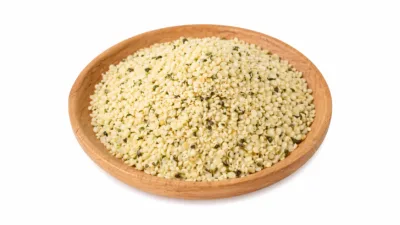
Organic Hemp Hearts
Our cold-shelling and triple-sorting process achieves 99.9% purity for a soft, buttery, nut-free texture.
Related Posts


