
Table of Contents
In today’s fast-paced world, maintaining sharp cognitive function and mental clarity is more important than ever. Organic Lion’s Mane powder (also known as Lion’s Mane Mushroom Powder or Hericium Erinaceus Powder) is gaining attention as a natural supplement that supports brain health. But how exactly can this ancient medicinal mushroom help your mind? Lion’s Mane is easy to recognise in the wild: a shaggy white fruiting body made of cascading spines that grows on hardwood logs and dead trunks across East Asia, Europe and North America. Long before anyone measured its chemistry, it was valued in traditional Chinese and Japanese practice as a tonic for the stomach and, more broadly, for vitality and longevity. Buddhist monks reportedly brewed it as a tea to steady attention during long meditation sessions, which is a striking historical parallel to the way it is used today. What has changed is the evidence base. Over the past three decades researchers have isolated the specific molecules responsible for the mushroom’s effect on nervous tissue, mapped how they behave in the body, and run small human trials on memory, mood and mild cognitive impairment. The result is a supplement that sits in an unusual position: genuinely traditional, increasingly well characterised, and still under active investigation. This guide walks through what the mushroom actually does, how powder differs from extract, how much to take, and how to judge quality — because with mushrooms more than almost any other supplement category, sourcing determines whether you get a functional ingredient or an expensive filler.
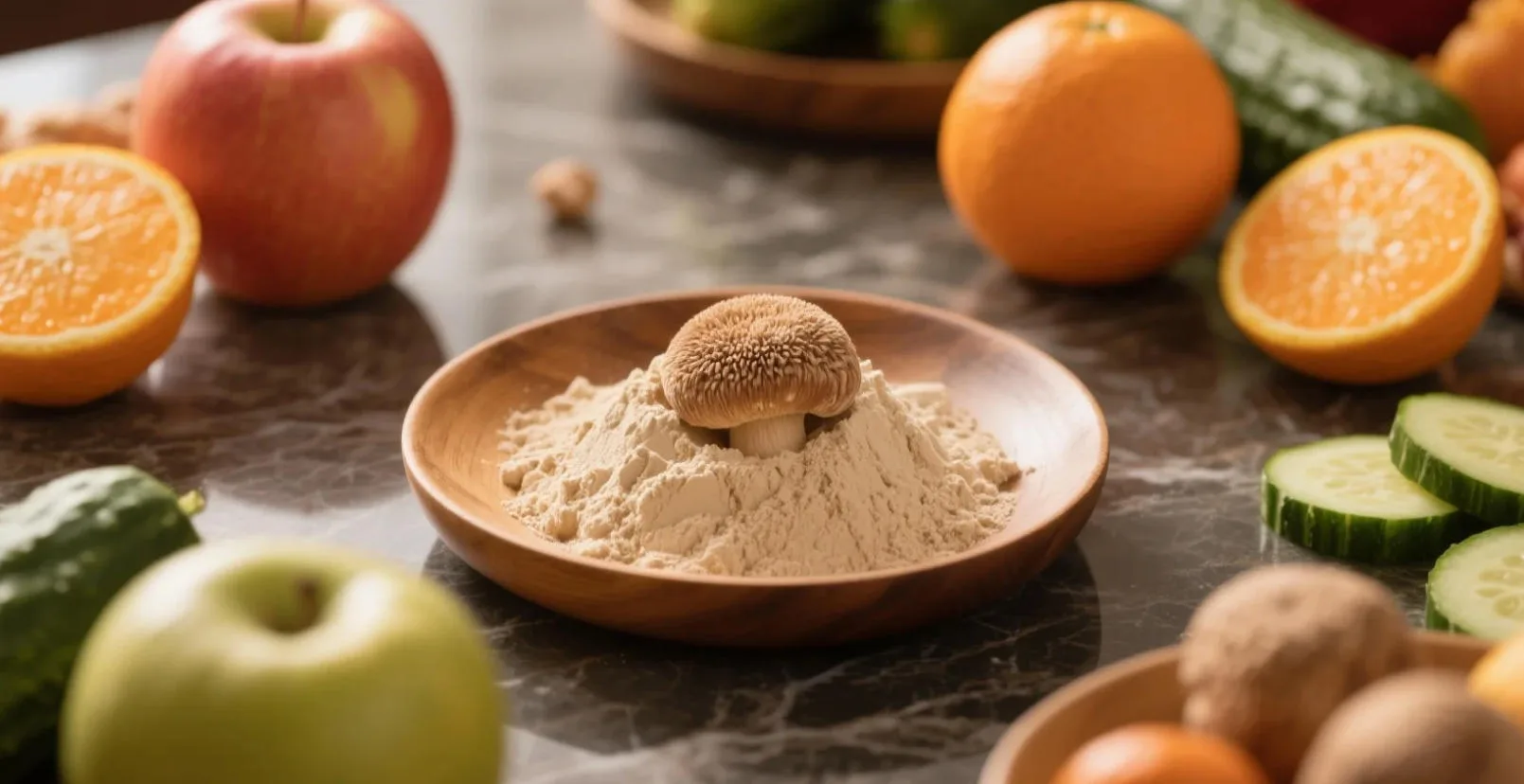
1. Supports Nerve Growth and Cognitive Function
Research has shown that compounds in Lion’s Mane mushroom extract powder stimulate the production of Nerve Growth Factor (NGF), which is essential for the growth and maintenance of neurons. By encouraging healthy nerve regeneration, organic Lion’s Mane powder may help improve memory, focus, and overall cognitive function. The chemistry behind this is reasonably well defined. Two families of compounds do most of the work: hericenones, found in the fruiting body, and erinacines, concentrated in the mycelium. Both are small, fat-soluble aromatic molecules, which matters because size and lipid solubility determine whether a compound can cross the blood-brain barrier. Most large proteins cannot; NGF itself, injected into the bloodstream, never reaches the brain in meaningful amounts. Hericenones and erinacines take the opposite approach. Rather than supplying NGF from outside, they appear to signal the brain’s own astrocytes to synthesise more of it locally. NGF belongs to the neurotrophin family, the maintenance crew of the nervous system. It keeps existing neurons alive, supports the myelin sheath that insulates axons and allows fast signal transmission, and encourages the branching of dendrites that underlies learning. In practical terms, more neurotrophic support means better structural plasticity — the physical substrate of forming and consolidating memory. Animal work has shown improved maze performance and faster peripheral nerve regeneration after injury, and a frequently cited Japanese trial in adults with mild cognitive impairment found measurable improvement on cognitive scales after sixteen weeks of daily supplementation, with scores drifting back down once supplementation stopped. That last detail is instructive: benefits appear to depend on continued intake rather than accumulating permanently.
2. Enhances Mental Clarity and Focus
For those who struggle with mental fatigue or concentration, organic Lion’s Mane powder can be a natural ally. Its bioactive compounds help support brain function, leading to enhanced clarity, attention, and productivity throughout the day. The subjective experience people describe is worth unpacking, because it differs sharply from stimulants. Caffeine works by blocking adenosine receptors, producing an acute lift that arrives within thirty minutes and fades with a corresponding dip. Lion’s Mane produces nothing comparable. There is no rush, no elevated heart rate, and nothing that would register as a dose. Instead, regular users typically report that after two to four weeks the background static lifts: word recall comes faster, holding several threads of a complex task in mind feels less effortful, and the mid-afternoon slump becomes shallower. Several mechanisms plausibly contribute. Beyond neurotrophic signalling, the mushroom contains polysaccharides and phenolic compounds that moderate neuroinflammation, and chronic low-grade inflammation in neural tissue is now recognised as a driver of the fog that accompanies poor sleep, stress and illness. Improved cerebral microcirculation and antioxidant protection of mitochondria in energy-hungry neurons may also play a role. Because it does not act on the same pathways as caffeine, many people pair the two deliberately: caffeine for immediate alertness, Lion’s Mane as the slower foundation underneath. If you work in a role that demands sustained deep concentration — coding, writing, research, study — that combination tends to be more useful than escalating stimulant doses, which eventually cost you sleep and therefore cognition.
3. Natural Mood Support
Besides cognitive benefits, Lion’s Mane mushroom powder may also help reduce mild symptoms of anxiety and depression. By supporting brain health, it helps maintain a balanced mood and emotional well-being naturally. The most frequently discussed human data here comes from a small Japanese study in which women experiencing menopause-related complaints consumed cookies containing Lion’s Mane for four weeks and reported lower scores for irritation and anxiety than a control group. The sample was small and the design modest, so it should be read as suggestive rather than conclusive, but it aligns with what animal models show. Two mechanisms are usually proposed. The first is hippocampal neurogenesis: the hippocampus is one of the few brain regions that generates new neurons in adulthood, this process is measurably suppressed by chronic stress, and neurotrophic signalling supports it. Since impaired hippocampal plasticity is a recognised feature of depressive states, anything that supports that plasticity is mechanistically interesting. The second is the gut-brain axis. Lion’s Mane polysaccharides act partly as prebiotic fibre, feeding beneficial gut bacteria that produce short-chain fatty acids and influence vagal signalling, immune tone and neurotransmitter precursor availability. Two important caveats belong here. First, effects described in the literature are modest and relate to mild, subclinical symptoms; a functional mushroom is not a treatment for clinical depression or an anxiety disorder. Second, if you take prescribed psychiatric medication, discuss any new supplement with your prescriber first. Used sensibly, Lion’s Mane is best understood as one input among sleep, exercise, daylight and social connection — supportive, not substitutive.
4. Easy to Incorporate into Your Daily Routine
Whether you prefer organic Lion’s Mane powder or the more concentrated organic Lion’s Mane extract powder, both can be easily added to smoothies, teas, coffee, or even baked goods. This makes it simple to enjoy the brain-boosting benefits daily. Understanding the difference between the two formats helps you dose sensibly. Whole fruiting body powder is simply dried, milled mushroom: the full matrix of fibre, protein, minerals and bioactives, typically taken at one to three grams per day, roughly half to one and a half teaspoons. Extract powder concentrates the active fraction by pulling compounds out of the tough chitin cell wall, so a smaller serving of 500 milligrams to one gram delivers comparable or greater activity. Dual extraction — hot water followed by alcohol — matters because the two solvent systems capture different chemistry: water pulls the beta-glucan polysaccharides, alcohol pulls the fat-soluble hericenones and erinacines. A water-only extract standardised solely for polysaccharides may be missing the very molecules associated with neurotrophic activity. On taste, Lion’s Mane is mild and pleasantly savoury with a faint nutty, seafood-like note, so it disappears into coffee, cocoa, oat porridge, soups and broths, and stands up to baking temperatures in muffins or pancakes. Timing is flexible; morning suits most people, though it is not stimulating and will not disturb sleep. Consistency is what actually matters. Because the mechanism is gradual, give any routine at least four to eight weeks of uninterrupted daily use before judging it, and keep a brief note of sleep, focus and mood so you are comparing observations rather than impressions.
5. Why Choose Organic?
Choosing organic ensures that your Lion’s Mane supplement is free from harmful pesticides and additives, maintaining its full spectrum of bioactive compounds. Organic Lion’s Mane mushroom powder is a clean, natural way to support your brain and overall health. This is not a marketing preference — it reflects how fungi actually work. Mushrooms are efficient bioaccumulators. Their mycelium behaves like a dense filtration network threaded through its growing medium, absorbing minerals and, indiscriminately, whatever contaminants are present. Heavy metals such as cadmium, lead, arsenic and mercury concentrate in fungal tissue at levels well above those in the substrate, so a mushroom grown on contaminated sawdust or near industrial runoff will faithfully deliver that burden to the consumer. Certified organic cultivation controls the substrate and the surrounding inputs, which is precisely the leverage point. Substrate also determines potency, and this is where buyers are most often misled. Reputable Lion’s Mane is grown on hardwood — oak, beech or supplemented hardwood sawdust — and harvested as a mature fruiting body. A significant share of cheap product on the market is instead mycelium grown on sterilised grain and milled together with that grain, sold as mushroom powder. The result is largely starch: a starch content above about five percent, or a beta-glucan level in single digits, indicates grain filler rather than mushroom. Ask suppliers for a current certificate of analysis showing beta-glucan content measured specifically (not crude polysaccharide, which counts starch), heavy metal results, microbiological testing and pesticide screening, plus confirmation that the material is fruiting body. A supplier who cannot produce these documents is telling you something useful.
Conclusion:
If you are looking for a natural way to enhance memory, focus, and cognitive function, organic Lion’s Mane powder or Lion’s Mane mushroom extract powder is a smart choice. By supporting nerve growth and mental clarity, this remarkable mushroom can help you achieve a sharper, healthier mind—naturally. Set expectations correctly and you are unlikely to be disappointed. This is not a compound that rewrites your cognition in an afternoon; it is a gentle, cumulative input that supports the structural maintenance of nervous tissue and tends to show up as steadier attention, easier recall and a less brittle mood over weeks rather than hours. That gradual profile is arguably its main advantage, since it carries none of the tolerance, dependence or sleep disruption that come with pushing stimulants harder. Three things determine whether you actually see a benefit. Take a genuine fruiting body product with verified beta-glucan content and clean contaminant testing. Take it every day at a meaningful dose — one to three grams of powder, or 500 milligrams to a gram of a properly dual-extracted concentrate. And give it a fair trial of eight to twelve weeks while keeping the rest of your routine reasonably stable, so you can tell what is doing the work. Anyone who is pregnant or breastfeeding, has a known mushroom allergy, takes anticoagulants, or is managing a diagnosed condition should check with a clinician before starting. For most healthy adults, though, a well-sourced organic Lion’s Mane powder is one of the more defensible additions to a long-term brain health routine.