
Table of Contents
Onion powder is a kitchen staple found in home pantries, restaurant spice racks, and industrial food formulations around the world, but as health-conscious consumers increasingly scrutinize the fine print on the foods they buy, a critical question arises: Is that jar of onion powder truly pure—or is it quietly hiding additives you never agreed to eat?
In an era when phrases like “natural flavor” and “spice blend” can mask a long list of processing aids, it pays to understand exactly what you are shaking over your dinner.
Let’s peel back the layers of processing methods, certifications, and marketing claims to reveal what’s really inside organic onion powder, how it differs from the conventional alternative on the shelf, and why “organic” carries genuine legal weight for purity.
By the end you will know how to read a label like a chemist, how the powder is made, and how to choose a product that delivers nothing but clean, concentrated onion flavor.
Is Onion Powder Just Onion?
Yes—if it’s organic. The short answer to the question in this heading is reassuring for shoppers who choose certified products: a properly certified organic onion powder contains nothing but onion.
The longer answer requires us to separate two very different supply chains. Conventional and organic powders may look identical in the jar, yet they are governed by entirely different rulebooks, and those rules determine whether what you taste is pure allium or a cocktail of anti-caking agents, preservatives, and filler starches.
Below we contrast the two so you can see precisely where the divergence happens and why the organic label is the more trustworthy promise of purity.
- Conventional Onion Powder: Often contains anti-caking agents like silicon dioxide (labeled as “added to prevent clumping”) or preservatives. In practice, conventional onion powder is frequently more than just dehydrated onion. Because finely milled vegetable powders readily absorb moisture from the air and form stubborn clumps, many manufacturers add free-flow agents such as silicon dioxide (often listed plainly as “added to prevent clumping”) or calcium silicate. Others introduce preservatives, anti-caking blends, or inexpensive filler starches to bulk out the product and keep production costs down. None of these additions are required to be spelled out in consumer-friendly language, and the result is a seasoning whose true composition can be surprisingly opaque even when the front label looks wholesome.
- Organic Onion Powder: By USDA standards, certified organic onion powder must be 100% onion—no additives, fillers, or synthetic chemicals allowed. This single-ingredient rule is enforced by the USDA National Organic Program. A product labeled as certified organic onion powder must be made from 100% organic onions with no additives, fillers, anti-caking agents, or synthetic chemicals permitted at any stage of production. The moment a processor stirs in silicon dioxide or a preservative, the product forfeits its organic claim. That strict legal boundary is what makes the organic label a reliable proxy for purity: if it says organic, the regulation says onion, and nothing else may be added.
How Organic Onion Powder Is Made
- Farm to Dehydrator: Organic onions are grown without synthetic pesticides, then washed and sliced. It begins on the farm, where organic onions are cultivated in soil managed without synthetic pesticides, herbicides, or chemical fertilizers, then harvested at peak maturity when their sulfur compounds—the source of both pungency and health benefits—are most concentrated. After harvest the bulbs are washed to remove field dirt, trimmed, and mechanically sliced into uniform pieces that will dry evenly. Because the raw material is already clean by organic standards, there is no need for chemical rinses later in the process, which is the first reason the finished powder stays pure from field to jar.
- Low-Temp Drying: Gently dehydrated at ≤104°F (40°C) to preserve enzymes and nutrients. The sliced onions are then gently dehydrated at low temperature, typically at or below 104°F (40°C). This low-heat step is deliberate rather than accidental. High-temperature drying is faster and cheaper, but it scorches delicate compounds and drives off the volatile oils that give onion its aroma and much of its nutrition. By keeping the drying environment cool, producers preserve heat-sensitive enzymes, retain more of the antioxidant quercetin, and protect the allicin precursors that give onion its characteristic bite, yielding a powder nutritionally closer to the fresh bulb.
- Stone-Ground: Pulverized into fine powder, no additives. Once the onion slices are brittle and moisture-free, they are pulverized—often between stone grinding surfaces—into a fine, free-flowing powder. No additives are introduced at this stage; the natural structure of the dried onion simply breaks down into particles small enough to dissolve seamlessly into soups, rubs, and doughs. Stone grinding in particular generates less heat than high-speed steel milling, further protecting volatile flavor compounds. The output is a single-ingredient flour of onion with nothing added to change its behavior in your recipes.
- Third-Party Tested: Verified for heavy metals, microbes, and pesticide residues. Before the powder is packed, reputable organic suppliers send batches to independent laboratories for third-party verification. These tests screen for heavy metals such as lead and arsenic, check for microbial contamination including Salmonella and E. coli, and confirm the absence of synthetic pesticide residues. A certificate of analysis accompanies trustworthy lots, giving buyers documentary proof that the product meets both organic standards and food-safety thresholds. This testing step is what converts a marketing promise into a verifiable fact you can trust.
Why “Organic” Guarantees Purity
| Factor | Conventional Onion Powder | Organic Onion Powder |
|---|---|---|
| Additives | Anti-caking agents such as silicon dioxide and calcium silicate, plus preservatives and filler starches, are common in conventional blends. | 100% onion by law, with no exceptions or loopholes permitted at any stage of production. |
| Pesticides | Synthetic residues such as chlorpropham and other post-harvest chemicals are common and rarely disclosed in plain language. | Zero synthetic pesticides or herbicides permitted anywhere in the supply chain. |
| Nutrition | High-heat commercial processing degrades allicin and volatile oils, lowering the health value of the powder. | Higher retained allicin and quercetin deliver stronger antimicrobial and antioxidant effects. |
| Transparency | Often vague “spices” or “natural flavor” labeling that hides the true contents from buyers. | Full, single-ingredient disclosure with no hidden components or mystery additives. |
5 Benefits of 100% Organic Onion Powder
- Immune Support: Allicin and quercetin fight infections and reduce inflammation. These two compounds are the headline actives in onion. Allicin, released when onion cells are broken, exhibits broad antimicrobial activity, while quercetin is a flavonoid antioxidant that helps calm inflammatory pathways. Regular use of a pure organic powder gives your body a steady, low-dose supply of both without the sugar and sodium found in many processed foods, making it an easy daily ally for year-round immune resilience.
- Gut Health: Prebiotic fibers feed probiotics, easing bloating and IBS. Onion powder retains the gentle prebiotic fibers of the whole bulb, particularly inulin-type fructans that nourish beneficial gut bacteria such as Bifidobacteria. A thriving microbiome supports steadier digestion, may ease occasional bloating, and can be a helpful dietary add-on for people managing irritable bowel symptoms under guidance from a clinician. Because the organic version skips additives, you get the fiber without irritants.
- Convenience: 1 tsp = 1 medium onion—no tears, no chopping. For busy cooks, organic onion powder is a genuine time-saver: roughly one teaspoon reconstitutes to the flavor of one medium onion, with none of the crying, peeling, or sticky cutting boards. It stores flat, travels well, and dissolves into sauces in seconds, which is why it has become a backbone ingredient for meal-preppers, camping cooks, and anyone who wants real onion flavor on demand without the prep work.
- Low FODMAP Option: Fructans (high-FODMAP carbs) are reduced during dehydration. Fresh onions are high in fructans, a class of carbohydrates that trigger bloating in people with FODMAP sensitivity. The controlled dehydration and aging used for organic powder measurably reduces these fructans, so many sensitive individuals tolerate the powdered form better than raw onion. It is not a free pass for everyone, but it widens the circle of people who can enjoy onion flavor comfortably.
- Versatility: Adds umami to rubs, soups, and even smoothies. Beyond the obvious soups and stews, organic onion powder builds savory umami in dry rubs for grilled meats, seasons roasted vegetables, and deepens salad dressings and dips. Its concentrated profile means a little goes a long way across your entire recipe repertoire.
Who Should Choose Organic Onion Powder?
- Clean Label Advocates: Avoid hidden additives like maltodextrin. Shoppers committed to recognizable ingredients reach for organic powder precisely because it eliminates the silent fillers. Conventional blends sometimes lean on bulking agents such as maltodextrin, a highly processed starch that adds empty carbs and can spike blood sugar. Choosing certified organic keeps your pantry free of these hidden additives and lets you season with confidence that the label means what it says.
- Allergy-Prone Individuals: No cross-contamination with gluten or soy. Dedicated organic processing lines reduce the risk that onion powder has been exposed to common allergens. Because the product is a single ingredient, there is no concealed soy lecithin, wheat-based anti-caking blend, or shared-equipment contamination lurking in the mix. For people managing gluten or soy allergies, that simplicity is not a luxury—it is a safety requirement met by the organic standard.
- Preppers & Campers: Lightweight, shelf-stable flavor for long-term storage. Emergency preppers and backcountry campers prize organic onion powder for its absurdly long shelf life and tiny weight footprint. A small jar replaces dozens of fresh onions in a go-bag or survival cache, needs no refrigeration, and reconstitutes with nothing but water or heat. When the power is out or the trail is long, that concentrated, additive-free flavor can turn plain rice or beans into a meal worth eating.
- Eco-Warriors: Organic farming reduces water pollution and soil erosion. Choosing organic is also a vote for cleaner agriculture. Organic onion cultivation prohibits synthetic pesticides and fertilizers that routinely wash into rivers and aquifers, and it emphasizes cover cropping and soil-building practices that curb erosion. Buying certified organic powder therefore supports a supply chain with a lighter environmental footprint, aligning your seasoning choice with broader ecological values.
How to Use Organic Onion Powder
- Caramelized Flavor Hack: Sauté 1 tsp in oil before adding veggies for depth. To unlock a surprisingly sweet, almost caramelized note, bloom one teaspoon of organic onion powder in warm oil or butter for thirty seconds before adding other ingredients. The gentle toasting develops Maillard-type complexity that tastes like hours of slow cooking, giving weeknight pan sauces, scrambled eggs, and sautéed greens an instant savory backbone without any added sugar.
- Marinades: Mix with garlic powder, paprika, and olive oil for grilled meats. A reliable all-purpose marinade starts with equal parts organic onion and garlic powder, a spoon of smoked paprika, black pepper, and enough olive oil to form a paste. Coat chicken, lamb, or firm vegetables and rest for at least thirty minutes before grilling. The powder adheres evenly, penetrates quickly, and leaves a flavorful crust that tastes far more elaborate than the effort involved.
- Dressings: Whisk into vegan mayo or yogurt dips. Organic onion powder dissolves smoothly into creamy bases, making it ideal for plant-based and dairy dressings alike. Whisk a teaspoon into vegan mayonnaise with lemon juice and herbs for a sandwich spread, or fold it into thick yogurt with cucumber and dill for a quick raita-style dip. Because it is already dehydrated, it will not water down the texture the way fresh onion sometimes can.
- Baking Secret: Add to bread or cracker dough for savory twists. Savory bakers stir organic onion powder directly into bread, cracker, and biscuit doughs for a cheesy, umami depth that needs no extra salt. Try a teaspoon per loaf of no-knead bread or folded into soft pretzel dough; the heat of baking mellows the raw edge and leaves a warm, rounded onion note that turns ordinary bakes into something memorable with a single pantry staple.
FAQ: Debunking Myths
Q: Does dehydration destroy nutrients?
A: Minimal loss! Organic low-temp drying retains 90% of antioxidants vs. fresh. Dehydration sounds drastic, but nutrient loss is far smaller than most people assume—especially when the process is done slowly at low temperature. Organic low-temperature drying typically retains around 90% of the original antioxidants such as quercetin compared with the fresh bulb, while concentrating flavor and shelf-stable convenience in the process. Some heat-sensitive vitamin C is reduced, but the core phytonutrients that make onion valuable largely survive, making the powder a genuinely nutritious pantry option.
Q: Can I make it at home?
A: Yes, but DIY dehydration risks mold or uneven texture without commercial-grade tools. Home ovens and basic dehydrators can absolutely turn onions into powder, and many enthusiasts enjoy the project. The catch is control: household equipment rarely holds the consistent low temperature and airflow needed to drive moisture below safe thresholds, which invites mold, clumping, or uneven texture. Without commercial-grade testing for microbes and moisture, homemade powder also lacks the safety verification a certified supplier provides, so it is best treated as a small-batch treat rather than a pantry staple.
Q: Why does some powder taste bitter?
A: Non-organic onions may absorb soil toxins; organic ensures clean, sweet flavor. A bitter or metallic taste in onion powder often traces back to how the raw onions were grown and handled. Conventionally grown bulbs can carry residues from soil treatments and post-harvest chemicals that survive milling and read as off-flavors on the palate. Organic onions, grown without those synthetic inputs and verified by testing, deliver the clean, sweet, rounded allium flavor consumers expect, which is one more reason the organic label correlates with a better-tasting result.
Q: Shelf life?
A: 3–4 years in airtight glass jars (vs. 1–2 years for conventional). Stored cool, dark, and dry in airtight glass jars, certified organic onion powder stays flavorful for roughly three to four years, thanks to its low moisture content and absence of oils that go rancid. Conventional powders often list shorter one-to-two-year windows, partly because additives and cheaper processing accelerate staleness. For longest life, keep the jar sealed away from heat and light, and avoid dipping a wet spoon that could introduce moisture and clumping.
The Verdict
True organic onion powder is 100% onion—nothing more, nothing less.It’s the purest way to add bold flavor and nutrients to dishes while dodging the additives lurking in conventional options.
When you choose certified organic, you are not paying for a marketing word; you are buying a legally enforced standard that forbids fillers, synthetic chemicals, and hidden processing aids.
For home cooks, preppers, and clean-label advocates alike, that certainty makes the organic jar the smarter, safer, better-tasting default in the spice aisle.
Ready to Upgrade Your Pantry?
Ditch the mystery ingredients and embrace certified organic onion powder—where simplicity meets flavor, and every sprinkle honors nature’s integrity.
Swapping your current seasoning for a single-ingredient organic version is one of the easiest upgrades you can make: no recipe changes, no extra cost per use, just cleaner labeling and richer taste.
Start by replacing the powder in your favorite rub or soup, then expand from there as you notice the difference in both flavor and peace of mind.
No additives, no compromises—just onion, amplified.
Onions are a kitchen staple, adding depth and flavor to countless dishes. But when fresh onions aren’t practical—because they spoil, because you forgot to buy them, or because the last thing you want after a long day is to stand at the counter weeping over a cutting board—can organic onion powder step in without compromising taste or nutrition?
The short answer is yes, and often it does so with surprising elegance. Fresh onions and onion powder are not rivals so much as partners: each earns its place depending on the dish, the cook, and the moment.
In this guide we chop through the myths and reveal why this pantry hero might just outshine its fresh counterpart for everyday cooking, meal prep, and even long-term food storage.
We compare the two head-to-head on nutrition, convenience, and flavor, explain when fresh still wins, and show you exactly how to swap one for the other so you never lose the savory backbone that makes a recipe sing.
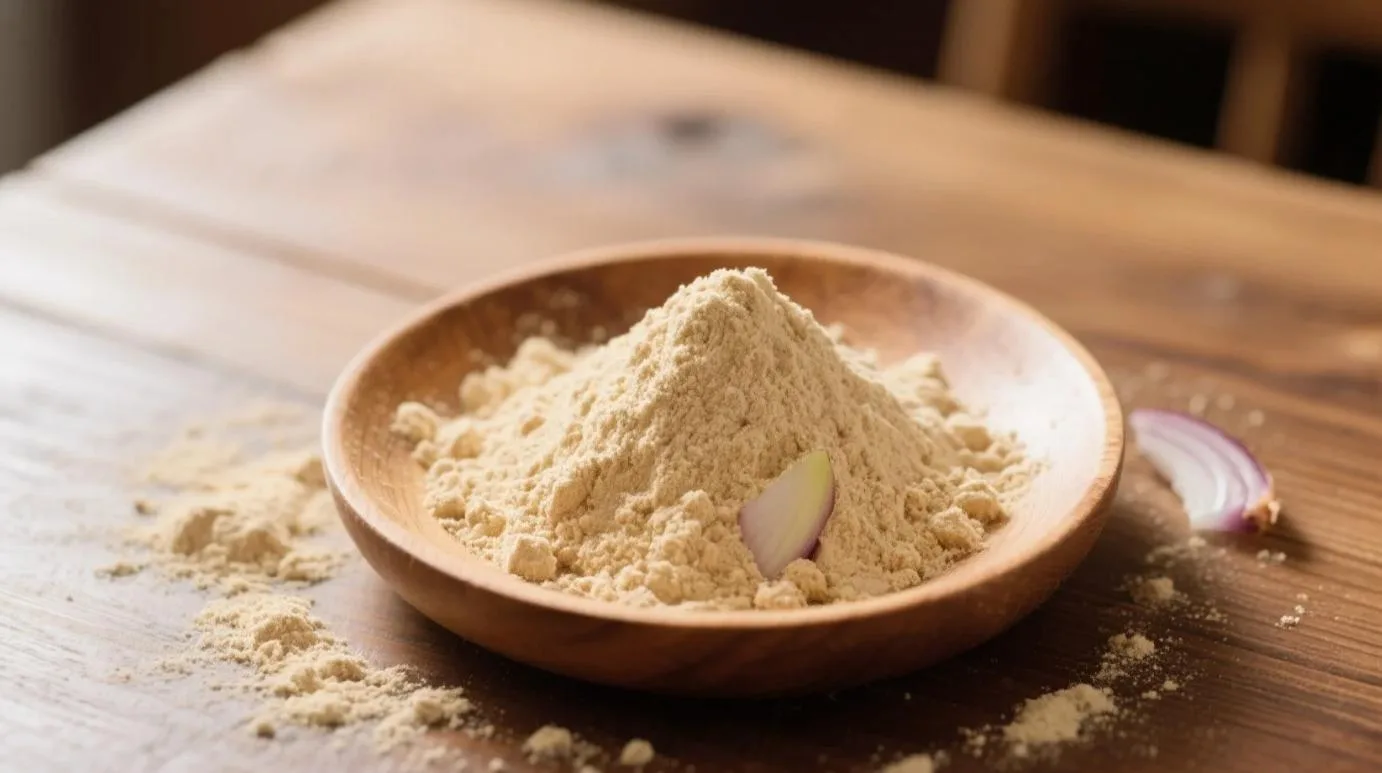
Nutrition Showdown: Fresh Onions vs. Organic Onion Powder
| Factor | Fresh Onions | Organic Onion Powder |
|---|---|---|
| Nutrient Retention | High (when raw) — fresh onions deliver a broad spectrum of vitamin C, folate, and dietary fiber, though water-soluble vitamins begin to degrade the moment the bulb is cut and exposed to air, light, and warmth. | Retains 90% of vitamins/minerals* — gentle low-temperature dehydration locks in quercetin, sulfur compounds, and trace minerals, giving dependable nutrition gram for gram even many months after the jar is opened. |
| Shelf Life | 2–3 weeks (cool storage) — whole bulbs keep in a cool, dark pantry, but cut onions spoil within days and readily sprout, soften, or mold once humidity rises. | 1–2 years (airtight container) — sealed away from heat and moisture, the powder stays potent and free-flowing, making it ideal for bulk buying, camping, and emergency food storage. |
| Convenience | Requires peeling, chopping, tears — every recipe adds prep time, knife work, and eye irritation, plus sticky residue left on boards, knives, and hands. | Ready to use, no prep needed — a single measured spoon delivers consistent onion flavor with zero waste, no refrigeration, and no cleanup, even at the busiest dinner rush. |
| Flavor Intensity | Mild to sharp (raw) — flavor swings from sweet when caramelized to pungent and sharp when raw, and it varies noticeably by variety, harvest, and season. | Concentrated, caramelized notes — dehydration concentrates natural sugars and sulfur oils, producing a rounded, savory depth that mimics onions slow-cooked for an hour. |
| Versatility | Limited by texture — fresh onion adds welcome bite but can overpower delicate sauces or introduce unwanted moisture into doughs and dry rubs. | Blends seamlessly into any dish — it disperses evenly through broths, marinades, doughs, and dressings without changing texture or demanding last-minute prep. |
*When processed via low-temperature dehydration, organic onion powder preserves antioxidants like quercetin and sulfur compounds. This gentle method matters: high-heat drying can scorch volatile oils and slash nutrient levels, whereas slow dehydration at controlled temperatures keeps the beneficial plant compounds intact.
The result is a shelf-stable ingredient that still carries the polyphenols and organosulfur molecules linked to the onion’s well-known health benefits, making the powder far more than a simple flavoring.
Why Organic Onion Powder Wins in 4 Key Areas
- No More Waste: Fresh onions often spoil before use, especially when a recipe calls for only half a bulb and the rest languishes in the crisper. A jar of organic onion powder ensures every sprinkle counts, reducing food waste and the quiet guilt of tossing slimy leftovers. Because the powder is measured by the spoonful, you buy less, use what you need, and never watch good food rot—an easy win for both your budget and the planet.
- Consistent Flavor: Say goodbye to variability! Powder offers reliable taste, whether you’re making soups, marinades, or spice blends, because each batch is milled from the same carefully sourced bulbs rather than random grocery-bin specimens. That consistency lets home cooks and professional kitchens scale recipes with confidence, knowing today’s chili will taste exactly like last month’s, with no bitter surprises from an under-ripe or sprouting onion.
- Digestive Comfort: The dehydration process breaks down FODMAPs, the fermentable carbohydrates that make raw onions troublesome for sensitive stomachs, making the powder gentler on digestion than raw onions. Many people who bloat or react to fresh alliums find they can enjoy onion powder comfortably, regaining the flavor they missed without the gastrointestinal fallout that raw onions can trigger in conditions like IBS.
- Nutrient Density: Gram for gram, organic onion powder packs more antioxidants (like quercetin) than fresh onions due to concentration—you are essentially getting the essence of several bulbs in a single teaspoon. Stripping away the water weight leaves the bioactive compounds behind, so a small serving contributes meaningful polyphenols and sulfur nutrients without the volume, making it a smart boost for dressings, broths, and everyday seasoning.
But Wait—Is It Really as Healthy?
Critics argue that fresh is always best, but science tells a different story: dehydration is a traditional preservation method that, when done well, protects far more nutrition than people assume.
The compounds that earn onions their health reputation—quercetin, organosulfur molecules, and various vitamins—are remarkably stable through careful drying, and many survive in forms the body can readily use.
Below are the three reasons the powder holds its own against the raw bulb, and in some kitchens even pulls ahead.
- Quercetin Boost: Studies show dehydrated onions retain this anti-inflammatory compound, linked to heart health and immunity, because quercetin is concentrated as moisture leaves the bulb. Far from vanishing in processing, it becomes more abundant per gram, so a measured pinch of powder can deliver the same flavonoid punch you might expect from a much larger portion of fresh onion.
- Sulfur Saviors: Organic onion powder preserves allicin precursors, the organosulfur compounds that combat bacteria and support detoxification pathways in the body. These molecules are the source of onion’s characteristic bite and much of its therapeutic reputation, and gentle dehydration keeps them available so your seasoning doubles as a quietly functional ingredient.
- No Additives: Unlike some commercial powders, which lean on anti-caking agents, fillers, or even salt and sugar to improve flow and shelf life, certified organic onion powder contains no anti-caking agents or preservatives. What you shake from the jar is simply dried, milled organic onion—nothing hidden, nothing synthetic, exactly the clean label today’s shoppers demand.
When Fresh Onions Are Better
- Crunch Factor: Salads, sandwiches, or salsas need fresh onions for texture, the crisp snap and juicy bite that powder simply cannot replicate no matter how skillfully it is used. When a dish is built around that raw contrast—think a bright pico de gallo or a layered burger—only the fresh bulb delivers the experience diners expect.
- Raw Benefits: Enzymes in raw onions, including those that aid digestion and are partially diminished during dehydration, remain fully active only when the onion is uncooked. If your goal is maximum raw-enzyme intake or a sharp, live flavor accent, fresh sliced onion is the right tool; powder excels at cooked and seasoned applications instead.
How to Use Organic Onion Powder Like a Pro
- 1 tsp powder ≈ ½ medium fresh onion (adjust to taste)—a reliable rule of thumb that keeps conversions simple whether you are rescuing a recipe that forgot the produce run or deliberately choosing the pantry version for speed and storage.
- Soups/Stews: Add early to meld flavors, letting the powder dissolve into the broth so its savory base develops fully as the pot simmers, the same way a soffritto would if you had the time to build one from scratch.
- Spice Rubs: Mix with garlic powder, paprika, and cumin for meats/veggies, building a balanced dry rub that adheres evenly and caramelizes beautifully under heat without the burning risk that fresh minced onion can bring.
- Baking: Fold into breads or crackers for savory depth, from onion rye to cheese straws, where the evenly distributed powder seasons every crumb instead of leaving uneven raw flecks that can taste harsh.
- Emergency Hack: Revive powder with a splash of water for a quick “onion paste” that stands in for cooked, softened onion in stir-fries, sandwich spreads, or last-minute sauces when you have no fresh bulb on hand.
Why “Organic” Matters
Conventional onions often top the EWG’s “Dirty Dozen” list for pesticide residue, because their thin skins and layered flesh absorb and hold agricultural chemicals through storage and transport. Organic onion powder guarantees:
✓ No synthetic pesticides or GMOs — the bulbs are grown to certified organic standards, so nothing synthetic reaches your plate or your pantry.
✓ Richer soil nutrients (enhanced mineral content) drawn from healthy, living soil that regenerative organic farms work to protect year after year.
✓ Eco-friendly farming (healthier planet, healthier you) that protects pollinators, waterways, and the farmworkers who tend the crop, so your seasoning supports a food system you can feel good about.
The Verdict
While fresh onions win for crunch and raw applications, organic onion powder is the unsung hero of consistent flavor, convenience, and concentrated nutrition.
It’s not a replacement—it’s an upgrade for busy, health-conscious cooks who want the soul of onion without the tears, prep, or spoilage.
Keep both in the kitchen: reach for fresh when texture and raw bite matter, and reach for powder when you need reliable savory depth on demand. Together they cover every recipe, every schedule, and every pantry, proving that the best onion is the one you actually have on hand and know how to use well.
Ready to Simplify Your Cooking?
Stock your pantry with certified organic onion powder—the fuss-free way to savor onions’ benefits without the tears or waste.
Sprinkle, stir, and savor the magic of onions, simplified, knowing each spoonful carries real nutrition, clean organic credentials, and a flavor that stays dependable from the first jar to the last.
Whether you are a weeknight home cook, a meal-prepper, or running a busy professional kitchen, this one ingredient quietly removes a dozen small friction points from your day.
Try it today and taste the difference pure, organic flavor makes! Make the swap in your next soup, rub, or loaf, and discover why so many cooks keep a jar within arm’s reach—because great onion flavor should never depend on a trip to the store, a sharp knife, or a strong constitution against crying.
Recommended Products

Organic Onion Powder
Organic Onion Powder—crafted from certified organic Allium cepa (yellow storage onion, high-solids variety)—is low-temperature…
Related Posts


