
Table of Contents
Open three supplier datasheets for the same material and you may find it listed three different ways: hulled hemp seeds, shelled hemp seeds, and hemp hearts. Buyers reasonably assume these are three products. In almost every case they are the same one. That single confusion causes real procurement problems — mismatched quotes, specification sheets that do not correspond to the sample received, and occasionally a shipment of the wrong physical form entirely.
This guide separates the terminology from the material. It explains what each term actually describes, why the industry uses them interchangeably, what physical form you should expect under each name, and how to write a purchase order that leaves no room for interpretation.
The Terminology Problem
Hemp seed has a hard outer shell, botanically called the hull or pericarp. Removing it leaves the soft inner kernel, which the trade calls a hemp heart. The process of removal is described with two different verbs depending on who is writing: hulling or shelling. Both describe the same mechanical operation.
The confusion has a second layer. Because “shelled” contains the word “shell,” some buyers read it as “still in the shell” — the opposite of what it means. We have seen purchase orders specify “shelled hemp seeds, unhulled” which is a contradiction in terms. It is worth resolving before the RFQ stage rather than after.
A practical rule for procurement teams: if a datasheet says hulled, shelled, hearts, or kernels, ask for a photograph of the sample alongside a stated thousand-seed weight. The photo settles the question faster than any specification line.
Hulled vs Shelled: What Each Term Actually Means
Hulled hemp seeds are seeds from which the outer hull has been removed. The term comes from grain processing, where hulling is the standard verb for removing an outer covering — the same operation as hulling oats or barley. In hemp, hulling yields the pale green-cream kernel.
Shelled hemp seeds describes exactly the same product. “Shelling” is the more common verb in North American consumer markets and in sunflower and pumpkin seed processing, and it migrated into hemp trade language from there. The US Department of Agriculture and most European organic certifiers accept both terms on phytosanitary and organic transaction certificates.
Hemp hearts is the commercial name for the finished product, used primarily in retail packaging and ingredient declarations. It is not a distinct specification — it is the marketing and labeling name for hulled or shelled seed.
The one term that does describe a different product is unhulled hemp seed (also sold as whole hemp seed). This retains the hard shell, is higher in fibre and lower in digestible protein, and is used mainly for sowing, bird feed, and cold-pressing into oil where the hull is filtered out afterward. If your application needs the kernel, unhulled material is the wrong purchase.
What You Actually Receive: Product Forms Compared
Four physical forms circulate in the B2B market. Buyers should specify which one is being quoted, because price and application differ substantially.
Whole (unhulled) hemp seed. Dark brown to grey, hard shell intact, thousand-seed weight typically 15–25 g depending on variety and growing conditions. Sold for sowing, dehulling operations, or oil pressing. Not suitable for direct food inclusion where a soft texture is required.
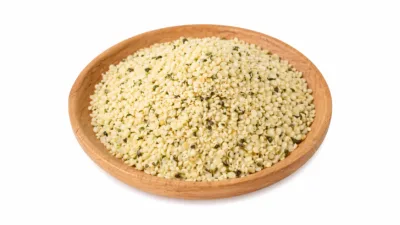
Hulled / shelled hemp hearts. Pale green to cream, soft, roughly 3–4 mm, thousand-seed weight around 4–6 g. This is the food-grade material used in bars, granola, yogurt topping, bakery inclusions, and protein blends. The majority of organic hemp moving through B2B channels is this form.
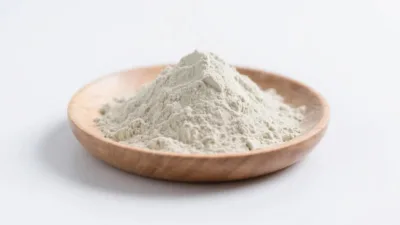
Hemp protein powder. Produced by cold-pressing oil from hulled seed and milling the resulting cake. Typically 45–55% protein, darker green, with a characteristic flavour. A separate product line from hearts; see our organic hemp protein powder specification for grade detail.
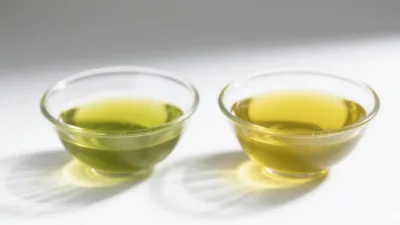
Hemp seed oil. Cold-pressed from whole or hulled seed, then filtered. The hull contributes colour and some minor constituents but the oil itself is a distinct product with its own specification. Details are on the organic hemp seed oil page.
Specifications to Write Into the Purchase Order
A purchase order that says only “hulled hemp seeds, organic” leaves too much undefined. The following parameters are what actually determine whether a shipment is acceptable, and each should carry a stated method and acceptance range.
Moisture content. Specify 6.0% maximum, measured by oven drying at 105 °C to constant weight. Hemp hearts are high in polyunsaturated fat and moisture above this threshold accelerates rancidity. Some suppliers quote 8%; that is acceptable for immediate processing but not for storage beyond a few weeks.
Foreign matter. 0.1% maximum, with hull fragments counted separately. Hull fragment content is the single best indicator of dehulling efficiency, and it is the parameter most often left undefined. Ask for a stated limit — 0.5% is typical for standard grade, 0.2% for premium.
Peroxide value. 5 meq O₂/kg maximum at time of shipment, with a stated maximum remaining shelf life. Because hulled seed has no protective shell, oxidative deterioration begins immediately after processing. A certificate of analysis dated more than 60 days before shipment should prompt a fresh test.
Free fatty acid content. 2% maximum as oleic acid. Values above this indicate either poor storage or seed that was already degraded before processing.
Microbiological limits. Total aerobic count under 10⁵ CFU/g, yeast and mould under 10³ CFU/g, absence of Salmonella in 25 g, E. coli under 10 CFU/g. Hemp is a raw agricultural product and is not typically subjected to a pathogen kill step, so these limits depend on supplier hygiene rather than processing.
Heavy metals. Lead under 0.5 mg/kg, cadmium under 0.3 mg/kg, mercury under 0.1 mg/kg, arsenic under 0.2 mg/kg. Hemp is a known cadmium accumulator and this is the parameter most likely to fail in material from certain soil types. Test every lot rather than relying on annual surveillance.
Particle size and integrity. For hearts, specify that the product be free-flowing with less than 5% fines passing a 1 mm screen. Excessive fines indicate rough handling and reduce visual quality in retail-facing applications.
How the Hull Is Removed: Processing Methods Compared
Dehulling method affects yield, hull fragment content, and to some extent oxidative stability. Three approaches dominate.
Mechanical impact dehulling. Seed is fed between rotating plates or rollers set to a gap slightly smaller than the seed diameter, cracking the hull. The mixture is then separated by aspiration and screening. Yield of intact hearts is typically 45–55% by weight. This is the most common method and the least expensive. Hull fragment content is higher than with other methods.
Cold dehulling with pre-conditioning. Seed is tempered to a controlled moisture level before cracking, which makes the hull more brittle and the kernel more pliable. Intact heart yield improves to 55–62% and fragment content drops. The added conditioning step raises cost but produces material better suited to retail packaging.
Air-classification after milling. Used when producing protein powder rather than whole hearts. The material is milled and separated by air classification into protein-rich and fibre-rich fractions. Not applicable if you need whole hearts.
For buyers, the practical question is not which method is used but what the resulting fragment content is. Ask for it directly and require it on the COA.
Organic Certification and the Hull Question
Organic certification applies to the agricultural production of the seed, not to the dehulling operation as such — but the dehulling facility must still hold organic handling certification if the material is to retain its status.
Three documents should accompany every organic shipment. An organic transaction certificate naming the specific lot and quantity, issued under a recognized certification program (EU 2018/848, USDA NOP, or a recognized equivalent). A certificate of organic operation for the dehulling facility, not only for the farm. And a statement of no prohibited substances used in the dehulling or storage stages, including any anti-caking or flow agents, which are not permitted in organic handling.
A common failure point: the farm is certified and the certificate is supplied, but the dehulling contractor is not. Material processed in a non-certified facility cannot be sold as organic regardless of the seed’s origin. Verify the facility, not just the field.
Our own organic hemp hearts documentation package includes all three document types as standard.
MOQ, Packaging, Shelf Life, and Logistics
Hulled hemp hearts are a low-density, oxidation-sensitive material and logistics planning matters more than for stable powders.
MOQ. Typical minimum order quantities from Chinese and European processors are 500 kg for standard grades. Smaller trial quantities of 25–100 kg are usually available at a significant premium. If a supplier quotes below 200 kg at standard pricing, confirm the material is current production and not residual stock.
Packaging. Food-grade kraft paper bags with a polyethylene liner, 20–25 kg net, are standard. Nitrogen-flushed vacuum bags are available and roughly double shelf life but add cost. For retail-bound material, ask whether the supplier offers private-label packing.
Shelf life. 12 months from production in unopened bags at below 25 °C, or 18 months if nitrogen-flushed and cold-stored. Once opened, hearts should be used within 4–6 weeks or refrigerated.
Logistics. Hulled hearts ship as general cargo, not refrigerated, but avoid containers that will sit on a dock in direct sun. Summer shipments through tropical transshipment ports are the main source of elevated peroxide values on arrival. Request a pre-shipment COA and consider a third-party inspection for the first order.
A Five-Dimension Supplier Evaluation Framework
Price alone is a poor selection criterion for this material. We assess suppliers across five dimensions, and buyers can apply the same structure.
One: dehulling capability. Does the supplier operate its own dehulling line or buy hearts from a third party? Direct operators control fragment content and freshness. Traders introduce a delay between processing and shipment that shows up in peroxide values.
Two: organic chain integrity. Are both farm and facility certified, and can the supplier produce a transaction certificate that reconciles with the lot quantity? Ask for one from a previous shipment as a sample.
Three: analytical consistency. Request COAs for three consecutive lots. Variation in cadmium or peroxide value across lots indicates the supplier is blending sources rather than controlling them.
Four: response to specification. Send your own specification sheet and ask for a written confirmation against every line. Suppliers who reply with a generic datasheet rather than a point-by-point confirmation are unlikely to meet a tight spec.
Five: commercial stability. For a material sourced seasonally, ask how inventory is carried between harvests. A supplier unable to explain its carry-over position is likely to be short in the off-season.
Sample Request and Pilot Testing
Never approve a supplier on documentation alone. A 500 g sample, evaluated against the specification, settles more questions than a full document package.
On receipt, photograph the sample next to a ruler and record thousand-seed weight. Visually assess colour uniformity and hull fragment content. Measure moisture with a moisture analyser if available. If the material will be used in a product where appearance matters, run a small trial inclusion and assess after two weeks of storage, since colour and flavour deterioration is the most common complaint.
Request that the sample be drawn from the same lot that will supply your order. Suppliers who sample from retained reference stock rather than current production are a recurring source of mismatch between sample and delivery.
Contaminant Risk in Hulled vs Unhulled Material
Removing the hull removes a substantial fraction of several contaminants. This is a meaningful advantage of hulled material that is rarely stated explicitly.
Heavy metals, particularly cadmium, accumulate disproportionately in the hull and in the outer layers of the seed. Hulled hearts typically test at 40–60% of the cadmium concentration of whole seed from the same lot. Where a specification is tight against the EU limit, hulling provides margin that whole seed may not.
Pesticide residues likewise concentrate in the outer layers. Organic material is not treated, but drift from neighbouring conventional fields remains a risk, and hulling reduces it.
Microbiological load, by contrast, is not necessarily lower in hulled material. Dehulling introduces additional handling and equipment contact, and the soft kernel supports microbial growth more readily than a dry intact hull. The pathogen risk profile is different rather than simply better, which is why microbiological limits need to be specified for hulled hearts specifically rather than inherited from whole seed.
Applications: Where the Distinction Matters
In most applications, hulled and shelled are interchangeable by definition, because they are the same material. The distinction that matters in practice is hulled versus unhulled.
Bars and granola. Hulled hearts only. Unhulled seed is too hard and produces an unpleasant texture.
Beverages and plant milks. Hulled hearts, finely milled. The hull contributes a grey colour and an astringent note that is difficult to mask.
Bakery inclusions. Hulled hearts, with fragment content under 0.5% so that the inclusion reads as whole kernels rather than crumb.
Protein powder production. Hulled hearts as the input. Pressing unhulled seed produces oil with higher colour bodies and a protein cake with elevated fibre, which complicates the milling step.
Oil pressing. Either form, but the economics differ. Whole seed gives lower oil yield per unit of processed material and requires filtration; hulled seed gives cleaner oil and a food-grade cake but costs more per kilogram.
Price Drivers and Market Outlook
Hulled hemp heart pricing is driven by four factors, in roughly this order of influence.
Raw seed price and availability, which in turn depends on the previous season’s harvest in Canada, China, and increasingly in Eastern Europe. Canadian organic hemp has historically set the reference price; Chinese organic volume has grown and now competes directly in Asian and European markets.
Dehulling yield. Because only 45–62% of input weight becomes hearts, small differences in yield translate into large differences in cost per kilogram of finished material. A supplier with 60% yield can price competitively at a seed cost that would be unworkable at 48%.
Certification status. Organic commands a premium typically in the 20–35% range over conventional, reflecting both the cost of certified production and tighter supply.
Seasonality. Prices soften in the months following harvest and firm through the year as carry-over inventory depletes. Buyers with annual volume should consider forward contracts placed at harvest rather than spot purchases mid-year.
A Sourcing Checklist for Your Next Hemp Seed Inquiry
Before sending an RFQ, confirm the following. Each item corresponds to a failure mode we have seen in practice.
State the physical form explicitly as hulled or shelled hearts, and state separately that the material must be free of intact hulls. Do not rely on the term alone, because the two terms are synonyms and neither excludes hull fragments.
Attach your own specification sheet with moisture, fragment content, peroxide value, microbiological limits, and heavy metals, each with a stated method and limit. Ask for written confirmation line by line.
Request the organic transaction certificate and the facility certificate together, and confirm the facility name matches the one that will process your order.
Ask for COAs from three consecutive lots, and compare cadmium and peroxide values across them.
Request a sample drawn from current production, with the lot number stated so it can be reconciled with your eventual order.
Confirm MOQ, packaging format, and whether nitrogen flushing is available. Establish the shelf life you will receive at delivery rather than at production.
Frequently Asked Questions
Are hulled and shelled hemp seeds the same thing? Yes. Both describe hemp seed with the hard outer hull removed, leaving the soft kernel. The terms come from different processing traditions and are used interchangeably across the industry.
Are hemp hearts the same as hulled hemp seeds? Yes. Hemp hearts is the commercial and labeling name for the same product. There is no specification difference.
Is shelled hemp seed still in the shell? No. This is a common misreading. Shelled means the shell has been removed, not that it is present.
Which is healthier, hulled or unhulled? They serve different purposes. Hulled hearts are higher in digestible protein and lower in fibre and cadmium. Unhulled seed is higher in fibre and provides the complete fatty acid profile, but the hull is not digestible and the material is not suited to most food applications.
How do I verify what I am receiving? Ask for a photograph of the sample beside a ruler, the thousand-seed weight, and the hull fragment content on the COA. Those three data points distinguish the forms unambiguously.
Does dehulling affect organic status? It does not, provided the dehulling facility itself holds organic handling certification and the material is documented with a transaction certificate. Processing in a non-certified facility breaks the chain regardless of the seed’s origin.
Key Takeaways for Procurement Teams
Hulled and shelled hemp seeds are the same product under two names, and hemp hearts is the commercial name for that same product. The distinction that actually carries commercial weight is hulled versus unhulled, and that is the one to specify clearly.
Because the terminology does not distinguish the material, the purchase order must. Moisture, hull fragment content, peroxide value, and cadmium are the four parameters that determine acceptability, and none of them is implied by the product name.
Finally, verify the facility, not only the farm. The most common organic compliance failure in this category is certified seed processed in an uncertified dehulling operation, and it is invisible on the farm certificate alone.
n
Recommended Products
Organic Hemp Protein Powder
Produced using cold-press mechanical separation and fine-mesh classification, our hemp protein retains maximum nutritional…
Organic Hemp Seed Oil
Organic Hemp Seed Oil is an oil naturally balanced in fatty acids, delivering the…
Organic Hemp Hearts
Our cold-shelling and triple-sorting process achieves 99.9% purity for a soft, buttery, nut-free texture.
Related Posts


