
Table of Contents
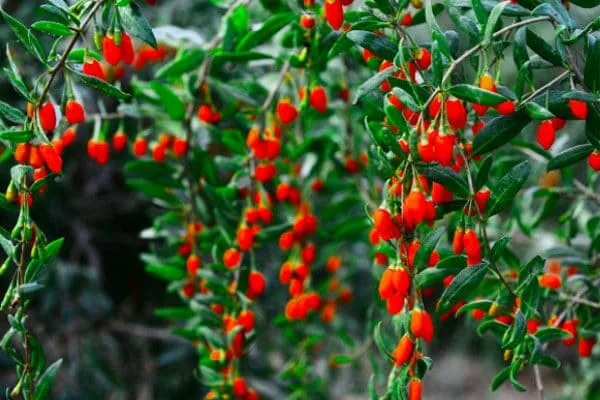
1. In 2019, the origin of organic goji berries was affected by natural disasters:
From March to May, the goji berry production area suffered an unprecedented drought that stretched the limits of a crop many growers assumed was nearly indestructible. Goji (Lycium barbarum) is famously tolerant of poor soils, salinity, and temperature swings, which is exactly why it became a dependable cash crop across the arid valleys of Ningxia and Qinghai, but tolerance is not immunity. When rainfall all but stopped during the critical bud-break and flowering window, the plants could not sustain a normal fruit set even on deep, well-established root systems. Even though the requirements for the growth environment of goji berries are relatively low compared with most fruit crops, long-term drought has also affected the flowering period of some goji berries, delaying bloom by weeks and thinning the canopy of flowers that would normally become the summer harvest. Growers who had planned irrigation around historical rainfall found their wells dropping faster than recharge could replace them, and in several counties water had to be rationed between drinking supply and orchard use, which forced painful choices about which blocks to sacrifice. The flowering disruption mattered because goji sets fruit on new growth produced in the same season, so a weak spring directly translated into a smaller summer crop rather than a delay that could be made up later. Field scouts reported uneven bud emergence even within a single orchard, leaving managers unable to predict yield until the fruit was actually on the bush. The downstream effect was a smaller-than-expected fresh and dried volume entering the supply chain at a time when global demand for organic goji was still climbing. Processors who had promised retailers a steady monthly flow found themselves allocating scarce lots across many customers instead of filling any single order completely, and that allocation logic itself became a source of friction as buyers competed for the same limited tonnes. The drought also raised the cost of everything that followed the orchard, because lower yields meant fixed packing and certification costs were spread over fewer sellable kilos, nudging unit economics upward even before the storms arrived. For the smallholder who depends on goji as a single annual income, a weak flowering season is not an abstract statistic but a direct cut to household cash flow, and the ripple moved through the local economy of the growing valleys just as surely as it moved through export ledgers. The 2019 spring was, in hindsight, the first of two shocks that defined the crop year.
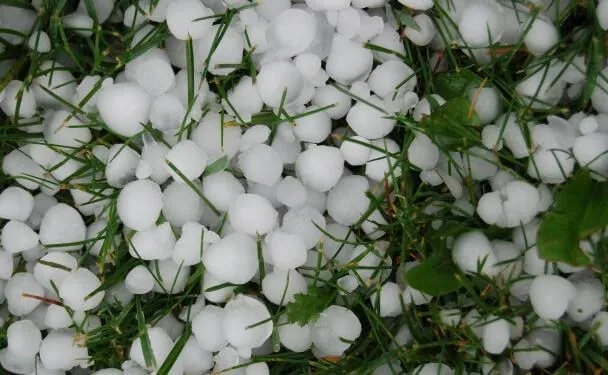
From July to August, goji berries began to mature, and unfortunately, many farms suffered from different levels of hail that arrived just as the first berries were ripening on the branch. Hail is especially cruel to goji because the fruit hangs in loose clusters close to the canopy and has thin skin that splits on impact, and a storm that lasts only minutes can bruise and tear berries that took months to grow. Many well-grown blueberries have not been picked, and have fallen to decay, turning them into fertilizers for the new year, a loss that stung doubly because the same storms also damaged goji rows in adjacent blocks. Some growers described hail stones large enough to strip leaves and snap young shoots, setting back not only the current crop but the wood that would carry next year’s fruit. Where netting or hail cloth had been installed, damage was limited, but netting is expensive and was never standard practice across the smallholder plots that make up much of the region’s acreage, so protection was uneven and the storms exposed the gap in infrastructure. The fallen, split, and decaying fruit could not be salvaged for drying because the broken skins invited fermentation and mold within hours in the summer heat, so the only realistic use was to leave it as organic matter for the soil. For processors who had booked volume against these orchards, the storms meant shortfall against contract, and for international buyers the news translated into tighter availability and firmer pricing heading into the buying season. The combination of a weak spring flower set and a damaging summer storm compressed the 2019 crop far below the multi-year average.
2. Influenced by the detection of nicotine:
Many goji berries can be exported normally under previous testing standards, but under the new standards, these goji berries are difficult to monitor through nicotine, a residue concern that caught both growers and traders off guard. The issue arose because goji is sometimes grown near or rotated with crops that have different chemical profiles, and because trace alkaloids can appear from environmental carryover that older screening methods did not flag. Under the previous testing regime, shipments that passed routine pesticide panels moved freely, but the updated methodology introduced a nicotine-specific marker that required re-sampling, re-testing, and in some cases rejections at the border that had nothing to do with the grower’s own spraying program. For organic producers this was doubly frustrating, since the organic claim already prohibited synthetic nicotine use, yet the new standard treated the molecule as a universal screen rather than a farming-practice question, so compliant organic lots could still be held while laboratories confirmed origin. The administrative burden slowed the whole pipeline: containers waited at ports, certificates of analysis had to be re-issued, and buyers grew cautious about committing to volumes they could not be certain would clear. The lesson the industry took from the episode was that residue rules can shift faster than orchard practices, and that supply security now depends as much on documentation and testing partnerships as on the size of the harvest. Exporters who invested in in-house screening and close relationships with accredited labs weathered the change better than those who relied on spot checks at the last moment. The episode also accelerated a quiet consolidation in the trade, because only the better-capitalized operations could absorb the cost of repeated testing and the working-capital hit of containers sitting in hold, and some smaller traders simply stepped back from export until the rules settled. For buyers, the practical takeaway was to ask not just whether a lot was organic but whether the supplier could prove it against the current standard on demand, since a certificate dated before the rule change was no longer enough. That raised the bar for documentation across the board and made transparency a competitive advantage rather than a bureaucratic chore. The nicotine question eventually became a routine part of the dossier rather than a crisis, but the months it took to get there were months of reduced flow and cautious ordering that compounded the physical shortfall from the weather.
3. Many customers order in advance:
Affected by many factors, many of the products of reliable goji berry factories have been ordered in advance. goji berries available to potential customers are much smaller than in the same period last year, because the drought, the hail, and the tighter residue testing together removed a meaningful share of supply while demand kept rising across food, beverage, and supplement categories. Buyers who had previously ordered quarter to quarter began placing forward contracts to lock in both price and volume, and several factories reported their booked capacity was spoken for well ahead of the harvest window. That shift from spot buying to pre-booking is normal when a commodity tightens, but it left late arrivals with fewer options and longer lead times, and it pushed spot prices up for the open market. For a brand planning a seasonal launch, the practical advice became simple: secure organic goji supply early, verify the certificate of analysis, and build buffer stock rather than assume shelves would be replenished on demand. The factories that communicated clearly about what they could guarantee gained the most loyalty, because transparency about shortfall is worth more than a promise that cannot be kept. Reliable supply, not the lowest headline price, became the deciding factor for serious buyers during a constrained year, and the suppliers who earned that trust in a difficult season were the ones best positioned to keep the business when volumes recovered. The 2019 experience has since become a reference point that buyers cite whenever they weigh the risk of a single-origin ingredient against the stability of a diversified sourcing plan.
We have some organic goji berries that can be ordered, if you want, please send us a message now. If you are planning production for the coming season, reaching out early gives you the best chance of securing the grade, moisture level, and packaging format you need before the available balance is committed to other customers. Our team can confirm current stock, share the latest certificate of analysis, and advise on the format, whole berry or broken grade, that fits your application, so you are not left scrambling when the open market thins out. Supply years like 2019 are a reminder that the berries on the shelf today were decided months ago, and the customers who plan ahead are the ones who keep their products on the shelf.
Recommended Products

Organic Goji Powder
Organic Goji — certified organic Lycium barbarum — offered in three complementary formats.


