Table of Contents
What is organic konjac flour?
Organic Konjac Flour (Glucomannan) is a premium, high-purity dietary fiber derived from the tubers of the Amorphophallus konjac plant. It is renowned for its extraordinary water-binding capacity and its ability to form highly viscous solutions at low concentrations. As a zero-calorie, keto-friendly, and gluten-free ingredient, it is the gold standard for clean-label thickening, gelling, and texture modification in the global food and nutraceutical industries.
Why choose Organic Konjac Flour for your next formulation?
Our Organic Konjac Flour is more than just a thickener; it is a functional powerhouse. It contains over 90% Glucomannan, a soluble polysaccharide that can absorb up to 50 times its weight in water. Unlike synthetic stabilizers, our konjac flour is processed through traditional mechanical milling and modern ethanol purification, ensuring that no chemical residues remain. For manufacturers, this means a clean-label ingredient that delivers superior “mouthfeel” while simultaneously boosting the nutritional profile of the finished product with healthy prebiotic fiber.
What technical standards does our Konjac product meet?
We maintain rigorous control over viscosity and purity to ensure consistent performance in industrial lines.
| Attribute | Specification Details |
|---|---|
| Common Names | Konjac Gum, Glucomannan Powder, Konjac Glucomannan (KGM) |
| Source | 100% Organic Konjac Tubers (Amorphophallus konjac) |
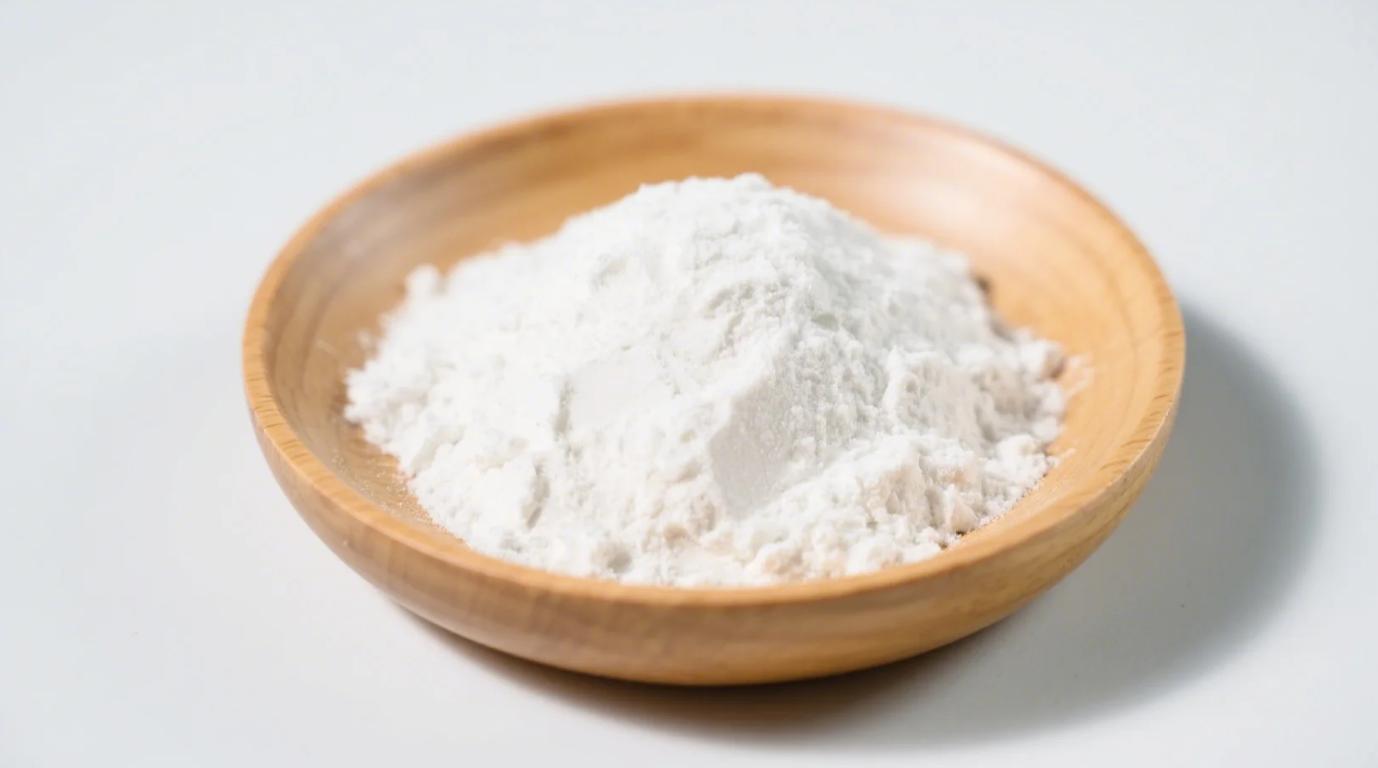
| Appearance | Fine, off-white to cream-colored powder |
| Glucomannan Content | ≥ 90% (Dry Basis) |
| Viscosity (1% Sol.) | 25,000 – 36,000 mPa.s (Customizable grades available) |
| Particle Size | 120 – 200 Mesh |
| pH Level | 5.0 – 7.0 |
| Moisture Content | ≤ 10% |
| Dietary Suitability | Vegan, Gluten-Free, Keto-Friendly, Non-GMO, Organic Certified |
Which applications benefit most from this super-fiber?
The versatility of Organic Konjac Powder allows it to excel across diverse categories:
- Plant-Based Meat Alternatives: It creates the “bite” and succulence in vegan sausages, burgers, and seafood alternatives by mimicking the texture of animal fat.
- Shirataki Noodles & Pasta: As the primary ingredient in zero-calorie noodles, it provides a unique, chewy texture that remains stable during boiling.
- Bakery & Gluten-Free Goods: It acts as a powerful binder in gluten-free recipes, improving crumb structure and moisture retention.
- Nutraceuticals & Weight Management: Widely used in capsules and meal replacement shakes to promote satiety and support digestive health.
- Dairy & Frozen Desserts: It prevents ice crystal formation and adds a creamy, rich mouthfeel to low-fat ice creams and yogurts.
How does it behave in different processing environments?
Understanding the “personality” of Konjac is key to a successful formulation:
- High Cold Viscosity: It begins to hydrate and thicken as soon as it hits water. High-speed shear is recommended to prevent “fish eyes” (clumping).
- Synergy with Other Gums: When combined with Xanthan Gum or Carrageenan, Konjac creates a synergistic gel that is much stronger than either ingredient used alone.
- Heat Stability: It is highly heat-stable, maintaining its viscosity even during pasteurization or UHT treatment.
- Reversible vs. Irreversible Gels: At neutral pH, Konjac forms a heat-reversible gel. However, when the pH is raised (e.g., using calcium hydroxide), it forms a heat-stable, irreversible gel—perfect for noodles and jelly.
FAQs
Q: How does Konjac Flour compare to Xanthan Gum in terms of usage levels?
A: Konjac is significantly more efficient. In many applications, you can achieve the same viscosity as Xanthan Gum using 20-30% less material, which can offer a cost-in-use advantage despite a higher price per kilogram.
Q: Is “Konjac Flour” the same as “Konjac Extract”?
A: In the trade, “Flour” often refers to the mechanically milled tuber, while “Extract” or “Purified Gum” refers to material that has been washed with ethanol to reach 90%+ Glucomannan levels. We provide the purified organic grade for maximum clarity and zero “fishy” odor.
Q: How do I calculate “Net Carbs” for Konjac-based products?
A: Glucomannan is a 100% soluble fiber. Because the human body lacks the enzymes to break down its β-1,4 linkages, it contributes zero net carbs and negligible calories (~0.2 kcal/g in some jurisdictions), making it the ultimate keto ingredient.
Q: Are there any labeling precautions for Konjac?
A: Because of its extreme water-binding capacity, products containing high levels of Konjac (like jelly snacks) should include a warning regarding choking risks for children or individuals with swallowing difficulties. In formulations like noodles or beverages, this is generally not a concern.
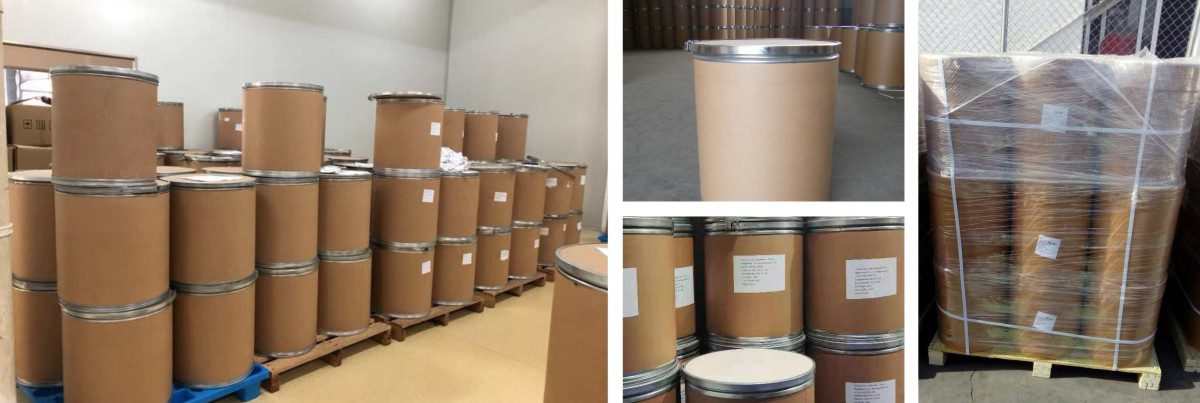
Packing
Related Articles
How Organic Konjac Flour Supports Gut Health and Promotes Better Digestion
Organic konjac flour, also known as konjac glucomannan or organic konjac powder, is a natural dietary fiber extracted…
Read More →
Top 7 Health Benefits of Organic Konjac Flour: A Natural Solution for Weight Management
Organic konjac flour, also known as konjac glucomannan or organic konjac powder, is a natural, plant-based dietary fiber…
Read More →
What Is Organic Konjac Flour and Why Is It Gaining Popularity in the Health Food Industry?
Organic konjac flour, also known as konjac glucomannan or organic konjac powder, is a natural, plant-based fiber derived…
Read More →