What is konjac flour?
Konjac Flour occupies a singular position in the functional ingredient landscape because its fundamental mechanism — extreme water binding combined with human indigestibility — creates simultaneously zero-calorie bulk, exceptional texture modification, and prebiotic fiber functionality. Glucomannan, the primary polysaccharide in konjac flour (>=90% on dry basis), is a linear chain of mannose and glucose units linked by beta-1,4 glycosidic bonds. Humans lack the beta-glucosidase enzyme needed to cleave these bonds in the small intestine, which means glucomannan passes undigested to the colon where it functions as a prebiotic fiber — fermented by Bacteroides and other commensal bacteria to produce short-chain fatty acids including acetate, propionate, and butyrate that support gut barrier integrity and metabolic health.
ORGANICWAY’s Konjac Flour is purified through traditional mechanical grinding followed by ethanol washing to achieve >=90% glucomannan purity without chemical residues. This purification step is critical: unpurified konjac powder may carry a characteristic “fishy” odor and off-notes that limit its use in premium food applications; the ethanol-purified grade delivers maximum clarification and neutral flavor. The 25,000-36,000 mPa.s viscosity at 1% concentration makes it one of the most efficient thickeners available — a little goes a long way, and in many applications it achieves equivalent viscosity at 20-30% lower usage levels than xanthan gum, providing cost-in-use advantages despite a higher per-unit price.
The ingredient’s behavior in formulation is multifaceted: in plant-based meat analogs (vegan sausages, burgers, and seafood alternatives), konjac provides the characteristic “bite” and juiciness that mimics animal fat texture — a function that makes it indispensable in premium clean-label plant-based products. In shirataki noodles and konjac-based pasta, it creates the unique chewy texture that differentiates these zero-calorie alternatives from conventional pasta while maintaining integrity during boiling. In gluten-free baking, its strong water-binding improves crumb structure and moisture retention, complementing rice flour and starch systems. In frozen desserts and dairy alternatives, it prevents ice crystal formation and adds a creamy, full-fat mouthfeel in reduced-fat formulations. In weight management supplements and meal replacement shakes, the 50x water-absorption capacity promotes satiety and supports digestive regularity.
The ingredient requires careful handling during mixing: konjac hydrates rapidly on contact with water and can form lumps (“fish-eye” phenomenon) if not properly dispersed. Best practice is to use high-shear mixing or pre-dispersal in a non-aqueous carrier (such as dry ingredients or oil) before adding water. At neutral pH, konjac forms heat-reversible gels; at elevated pH (e.g., with calcium hydroxide), it forms heat-stable irreversible gels suitable for noodles and jelly applications.
PHYSICAL & CHEMICAL SPECIFICATIONS
Product Specifications
| Parameter | Value |
|---|---|
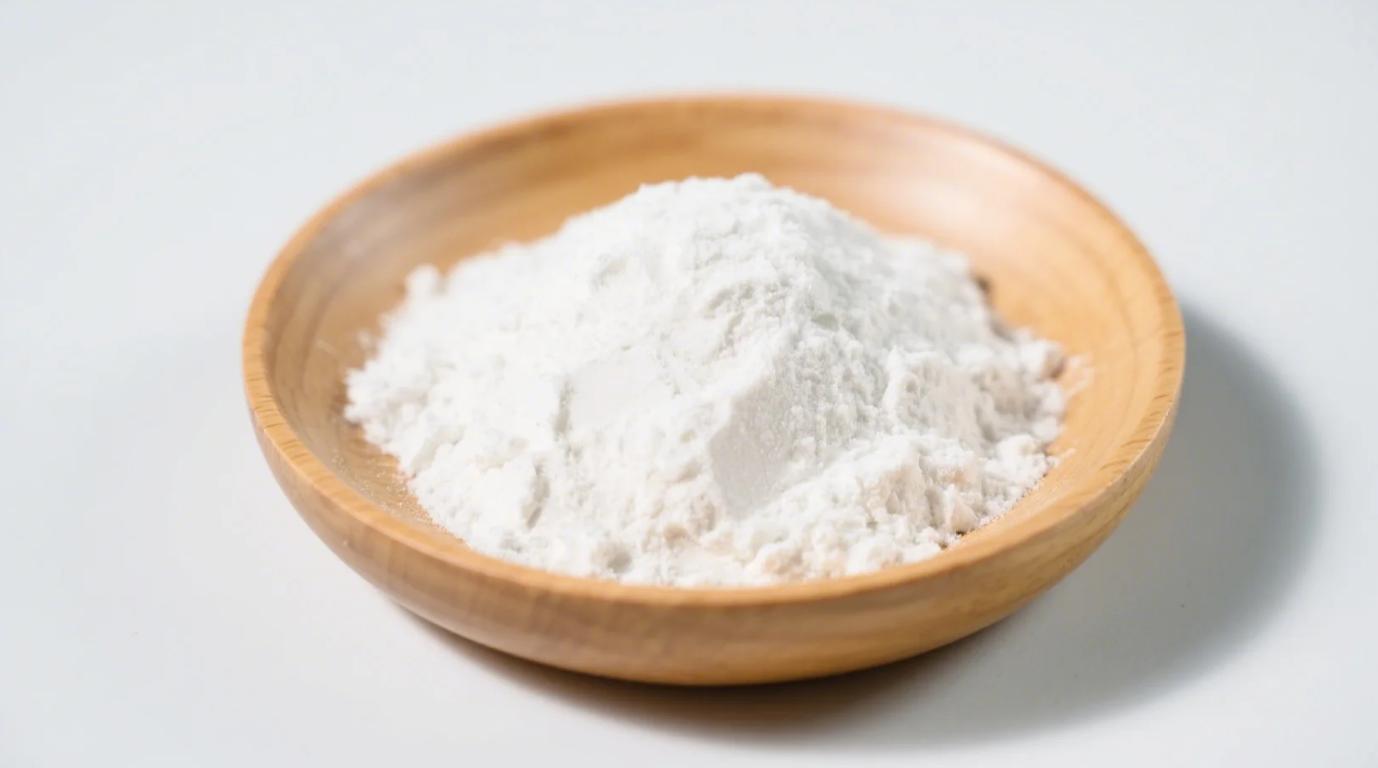
| Appearance | Fine off-white to light cream powder |
| Source | Konjac tuber (Amorphophallus konjac) |
| Processing | Traditional mechanical grinding + ethanol purification; no chemical residues |
| Glucomannan Content | >=90% (dry basis) |
| Viscosity (1% solution) | 25,000-36,000 mPa.s (custom grades available) |
| Particle Size | 120-200 mesh |
| pH | 5.0-7.0 |
| Moisture | <=10% |
| Gel Properties | Thermally reversible at neutral pH; irreversible with Ca(OH)2 at elevated pH |
| Caloric Value | ~0.2 kcal/g (near-zero; human-indigestible beta-1,4 bonds) |
| Net Carbohydrates | Zero (100% soluble fiber; human-indigestible) |
| Packaging | 25 kg multi-layer kraft paper bags |
| Shelf Life | 24 months |
Application Matrix
| Application | Suitability | Notes |
|---|---|---|
| Plant-based meat analogs | Excellent | Provides “bite” and juiciness; mimics fat texture |
| Shirataki noodles and pasta | Excellent | Unique chewy texture; stable during boiling |
| Gluten-free baking | Excellent | Strong binder; improves crumb and moisture retention |
| Frozen desserts and dairy alternatives | Excellent | Prevents ice crystals; adds creamy mouthfeel |
| Weight management supplements | Excellent | 50x water absorption; promotes satiety |
| Thickener for sauces and dressings | Excellent | High viscosity at low use levels |
| Jelly and confectionery | Good | Irreversible gel with Ca(OH)2; choking warning required |
MICROBIOLOGICAL & CONTAMINANT STANDARDS
| Test | Specification |
|---|---|
| Total Plate Count | <=10,000 cfu/g |
| Yeast & Mold | <=100 cfu/g |
| E. coli | Negative |
| Salmonella | Negative |
| Heavy Metals (Pb) | <0.5 mg/kg |
| Arsenic (As) | <0.5 mg/kg |
| Gluten | <20 ppm (certified gluten-free) |
All batches tested and released against specifications. CofA available with every shipment.
CERTIFICATIONS
| Certification | Status |
|---|---|
| Non-GMO Project Verified | Yes |
| Vegan | Yes |
| Gluten-Free | Yes |
| Keto-Friendly | Yes |
APPLICATIONS & FORMULATION TIPS
Key Functional Benefits
Konjac Flour’s most significant functional advantages are its exceptional water-absorption capacity, zero net carbohydrate contribution, and versatile gel and texture properties. The 50x water-absorption capacity means that at typical use levels of 0.5-2%, konjac can transform liquid systems into high-viscosity gels or thickened solutions with minimal ingredient mass — a property that enables both calorie reduction and cost efficiency in many applications. The zero net carbohydrate contribution — glucomannan is 100% soluble fiber that humans cannot digest due to the absence of beta-glucosidase — makes konjac the ultimate clean-label ingredient for ketogenic, low-carb, and blood-sugar-management formulations, delivering bulk and texture without impacting glycemic response or net carb counts.
In plant-based meat applications, konjac’s ability to mimic the textural properties of animal fat is unmatched by other plant-based ingredients: it provides the characteristic “bite,” moisture retention, and juiciness that consumers expect from conventional meat products. In shirataki noodle applications, konjac provides the unique elastic, chewy texture that differentiates these products from conventional pasta while maintaining zero-calorie positioning. The synergy with other hydrocolloids — particularly xanthan gum and carrageenan — creates composite gel networks significantly stronger than either ingredient alone, enabling precise texture engineering across a wide range of food systems.
Formulation Guidance
When incorporating konjac flour, dispersion technique is critical to avoid lumping: konjac hydrates almost instantly on water contact and can form “fish-eye” lumps that resist dissolution. Best practice is to dry-blend konjac with other dry ingredients or disperse it in a non-aqueous carrier (such as oil) before adding water, or use high-shear mixing equipment during hydration. In plant-based meat formulations, typical usage is 0.5-1.5% to achieve optimal bite and texture without excessive gumminess. In shirataki noodle production, konjac is typically combined with tofu or other protein sources and extruded or molded before cooking. For gluten-free baking, combine with xanthan gum at 0.3-0.5% each for synergistic effects. Note: products containing high konjac concentrations (particularly jelly snacks) should include choking hazard warnings for children and individuals with swallowing difficulties.
FAQ
Q: How does konjac flour compare to xanthan gum in usage levels?
A: Konjac is significantly more efficient than xanthan gum in many applications. At equivalent viscosity targets, konjac typically achieves the same thickening effect using 20-30% less material by weight. While konjac flour has a higher per-unit price, the lower usage rate often results in a cost-in-use advantage. Additionally, konjac contributes zero net carbohydrates versus xanthan gum’s moderate caloric contribution, making it preferable for ketogenic and low-carb formulations. In practice, many formulators use a combination of konjac and xanthan gum to achieve optimal texture at minimum cost.
Q: Is konjac flour the same as “konjac extract” or “purified konjac gum”?
A: In trade terminology, “konjac flour” typically refers to mechanically ground konjac tuber, while “konjac extract” or “purified konjac gum” refers to ethanol-washed material achieving 90%+ glucomannan purity with reduced “fishy” odor. ORGANICWAY supplies the purified grade — our ethanol purification process removes odor compounds and impurities while achieving maximum glucomannan content, ensuring clean flavor and maximum functionality in premium food applications.
Q: How do you calculate net carbohydrates for konjac-containing products?
A: Glucomannan is 100% soluble dietary fiber that humans cannot digest — our bodies lack the beta-glucosidase enzyme needed to cleave its beta-1,4 glycosidic bonds. This means glucomannan contributes zero net carbohydrates and approximately 0.2 kcal/g (in jurisdictions that assign a caloric value to indigestible fiber). For nutrition labeling purposes, glucomannan fiber can typically be subtracted from total carbohydrate counts in most regulatory frameworks, making konjac the ultimate ingredient for zero-carb and ketogenic formulations. Always confirm net carb calculation methodology with your local regulatory requirements.
Q: Are there any labeling considerations for konjac-containing products?
A: Yes. Due to konjac’s exceptional water-binding capacity, products containing high concentrations of konjac — particularly jelly snacks — should include choking hazard warnings for children and individuals with swallowing difficulties. This is a regulatory requirement in many markets including the EU. For noodle, beverage, and sauce applications where konjac is dispersed throughout the matrix, choking warnings are typically not required. Always verify labeling requirements with your regulatory team for your target market.
Q: How does konjac behave in acidic or high-temperature processing conditions?
A: Konjac demonstrates good thermal stability: it maintains viscosity through pasteurization and UHT (ultra-high temperature) processing at typical use levels. In acidic environments (pH below 4), viscosity may decrease somewhat due to partial hydrolysis, but functionality is generally retained. For applications requiring heat-stable irreversible gels (such as noodles or jelly products), konjac forms stable gels with calcium hydroxide (Ca(OH)2) or other alkaline reagents — this is the mechanism used in traditional shirataki noodle and konjac jelly production. At neutral pH, konjac forms thermally reversible gels that melt upon heating and re-gel upon cooling.
Q: What is the minimum order quantity and lead time?
A: 1 kg free sample with full CofA is available for qualifying buyers (FEDEX/UPS/EMS). Commercial orders start at 25 kg (packaged in 25 kg multi-layer kraft paper bags). Private label orders require 100 kg minimum with full packaging customization. Lead time: 10-20 working days from order confirmation. Available incoterms: DAP, DDP, FOB Qingdao or Tianjin. Acceptable payment terms: T/T, L/C, D/P, D/A, MoneyGram, Western Union, Credit Card.
PACKAGING & STORAGE
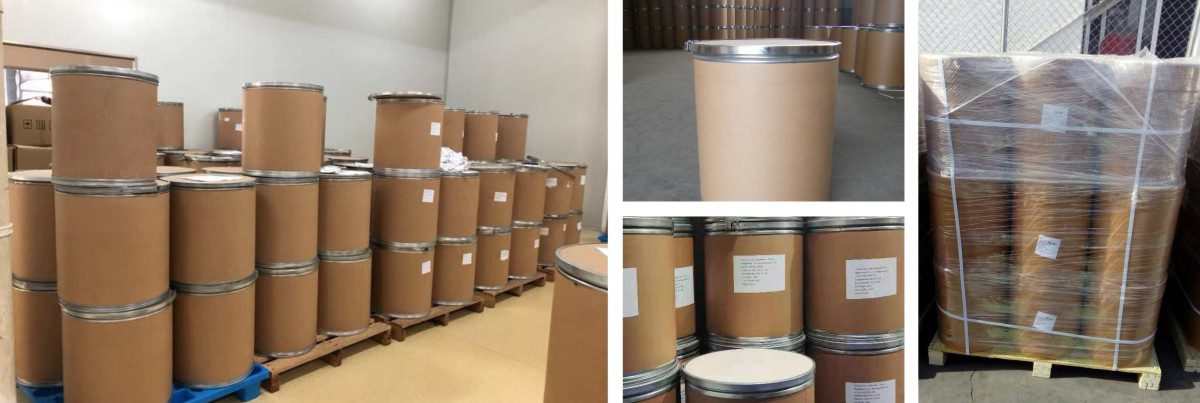
Packaging
| Format | Standard Packaging | Custom Options |
|---|---|---|
| Konjac Flour | 25 kg multi-layer kraft paper bags; 40 bags/pallet | 5 / 10 / 20 kg bags; fiber drums; branded packaging for private label |
Storage Conditions
| Parameter | Value |
|---|---|
| Temperature | Cool and dry; below 25 C preferred |
| Humidity | <60% RH |
| Light | Store away from direct sunlight |
| Odor | Store away from strong odors; konjac can absorb ambient odors |
| Shelf Life (sealed) | 24 months |
| Opened Packaging | Use within 6 months; reseal tightly after each use; avoid moisture ingress |