Table of Contents
What is Organic Chickpea Protein?
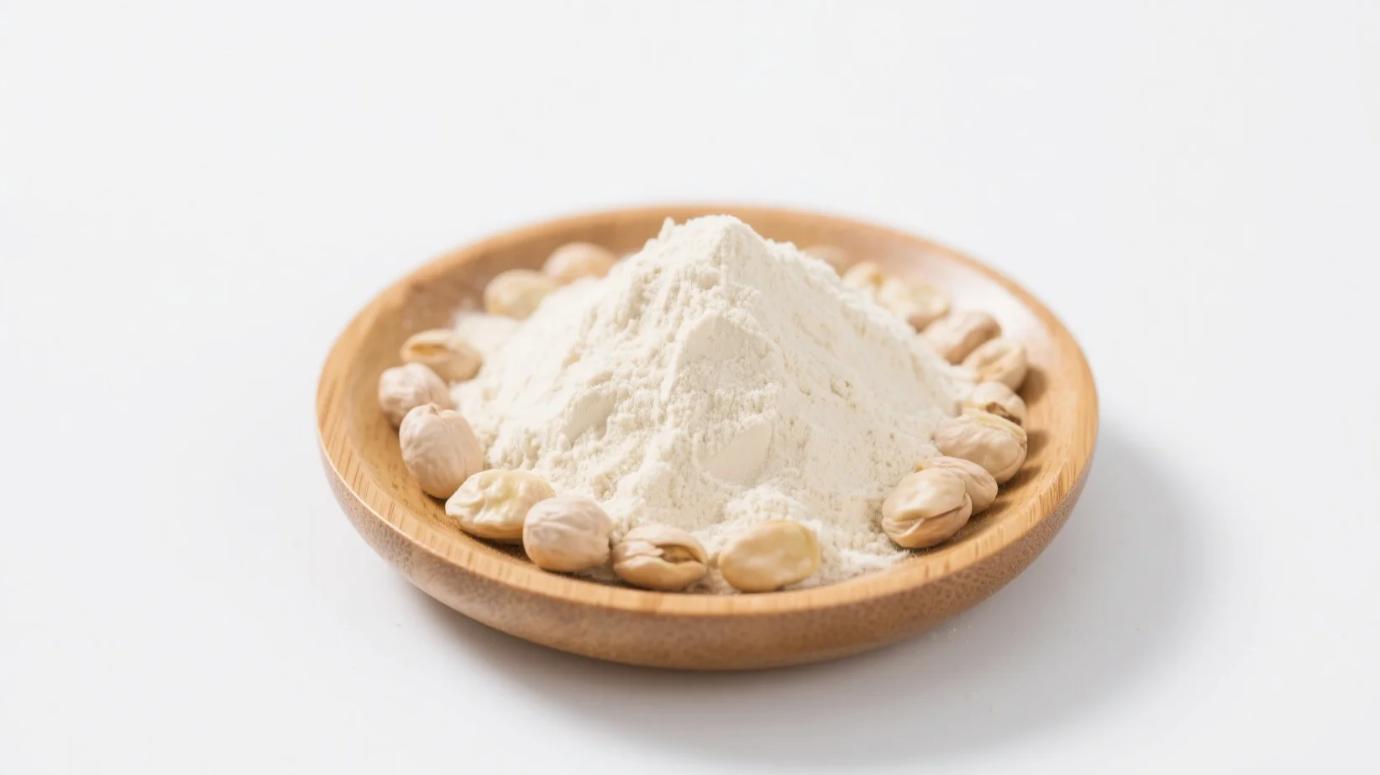
Organic chickpea protein (also known as organic garbanzo bean protein) is extracted from Cicer arietinum through an aqueous process that removes bitter tannins and anti-nutritional factors while preserving the protein fraction. The result is a light-colored, mild-flavored protein powder with ≥80% protein content on a dry basis — making it one of the cleanest-tasting and most visually neutral plant protein bases available.
Why Chickpea Protein Stands Out in the Plant Protein Market
While pea and soy proteins dominate the sports nutrition market, chickpea protein offers a distinct set of advantages that make it uniquely suited for food-first applications:
- Mild, slightly nutty flavor — less beany than pea, less earthy than soy; requires minimal flavor masking, reducing formulation cost
- Light cream color — does not darken batters or doughs; ideal for white bread, crackers, and confectionery applications where color is critical
- High natural fat content (5–8%) — contributes to moisture retention and mouthfeel in baked goods; eliminates the need for added oils in some formulations
- Exceptional emulsification — chickpea protein stabilizes oil-in-water emulsions, making it suitable for spreads and plant-based cream cheese alternatives
- High dietary fiber (8–12%) — fiber is co-extracted, supporting digestive health claims and reducing net carbs in finished products
- Isoflavone content — chickpeas contain naturally occurring isoflavones (biochanin A, formononetin), adding an antioxidant dimension not found in pea or rice proteins
Production & Quality Assurance
- Certified organic farm sourcing (USDA NOP / EU 834/2007)
- Incoming screening: pesticide residues, mycotoxins, heavy metals
- Aqueous extraction at controlled temperature (≤45°C)
- Centrifugal separation and membrane filtration
- Heat-treatment step to reduce trypsin inhibitors and tannins
- Spray-drying under controlled inlet temperature
- Lot-specific COA with protein, moisture, microbiology, and heavy metals
- Third-party verification (SGS / Eurofins) available on request
Technical Specifications
Grade Comparison — Two Product Grades
⚠️ Important clarification for buyers: The page referenced “55–60% protein” in the FAQ and “≥80% protein” in the specs table simultaneously. This reflects two distinct product grades:
| Parameter | ≥55% Concentrate | ≥80% Concentrate | Test Method |
|---|---|---|---|
| Protein (dry basis) | ≥ 55.0% | ≥ 80.0% | Kjeldahl / Dumas |
| Moisture | ≤ 8.0% | ≤ 8.0% | AOAC 930.15 |
| Fat | ≤ 10.0% | ≤ 6.0% | Soxhlet |
| Ash | ≤ 7.0% | ≤ 6.0% | AOAC 942.05 |
| Fiber (dietary) | 10–15% | 8–12% | AOAC 985.29 |
| Carbohydrates | ≤ 20.0% | ≤ 5.0% | By difference |
| Sodium | ≤ 200mg/100g | ≤ 100mg/100g | ICP-MS |
| pH (10% solution) | 6.0–7.5 | 6.0–7.5 | pH meter |
| Particle Size | 100–200 mesh | 100–200 mesh | Sieve analysis |
| Color | Light cream | Light cream to off-white | Visual |
| Odor | Mild, nutty | Mild, nutty | Sensory |
| Solubility | ≥ 70% | ≥ 80% | NSI method |
Recommended grade selection:
- ≥80% grade: Sports nutrition, protein bars, snacks, plant-based dairy alternatives
- ≥55% grade: Bakery premixes, fiber-enriched applications, cost-sensitive applications
Microbiological Specifications
| Parameter | Specification | Test Method |
|---|---|---|
| Total Plate Count | ≤ 10,000 CFU/g | ISO 4833 |
| Yeast & Mold | ≤ 100 CFU/g | ISO 21527 |
| Coliform | ≤ 10 CFU/g | ISO 4832 |
| E. coli | Negative/25g | ISO 16654 |
| Salmonella | Negative/25g | ISO 6579 |
Heavy Metals & Contaminants
| Parameter | Specification | Standard |
|---|---|---|
| Lead (Pb) | ≤ 0.5 mg/kg | Prop 65 / EU 2021/1323 |
| Arsenic (As) | ≤ 0.3 mg/kg | Prop 65 |
| Cadmium (Cd) | ≤ 0.1 mg/kg | EU Regulation |
| Mercury (Hg) | ≤ 0.05 mg/kg | Prop 65 |
| Trypsin Inhibitor | ≤ 4.0 TIA U/mg | AOAC |
| Pesticide Residues | ND (per EC 396/2005) | Multi-residue GC-MS/MS |
Certifications
| Certification | Issuing Body | Scope |
|---|---|---|
| USDA Organic | USDA NOP (via accredited certifier) | Production + processing |
| EU Organic | EU Reg. (EC) No 834/2007 | Import + sale in EU |
| Non-GMO Project Verified | Non-GMO Project | Raw material + finished product |
| Kosher | KSA / OU (lot-specific) | Processing facility |
| Halal | IFANCA / MUI (lot-specific) | Processing facility |
| FSSC 22000 | Bureau Veritas | Manufacturing facility |
All certificates available upon request with lot-specific COAs.
Applications & Formulation Guidance
Primary Application Areas
| Application | Why Chickpea Works | Typical Addition |
|---|---|---|
| Plant-Based Bakery (bread, crackers, cookies) | Light color, mild flavor, fat + fiber co-benefits, no dough darkening | 5–15% of flour weight |
| Protein Snacks (energy balls, protein chips) | Mild taste, good binding, high fiber | 10–20% of formula |
| Plant-Based Spreads & Cream Cheese | Emulsification, fat content, neutral flavor | 3–8% of formula |
| Sports Nutrition Shakes & Bars | Good BCAA profile, allergen-free, UHT-compatible (85% grade) | 15–25g/serving |
| Plant-Based Meat Analogues | Binding properties, fiber content, mild flavor | 5–12% of blend |
| Pasta & Noodle Fortification | High protein + fiber enrichment, color-friendly | 5–10% of flour |
| Gluten-Free Flour Blends | Protein + fiber boost, replaces soy in GF formulations | 10–20% of blend |
| Baby Food & Toddler Snacks | Hypoallergenic, familiar food base, high iron | Per regulatory limit |
Formulation Notes
GF formulations: Chickpea protein replaces soy as the primary protein source in gluten-free bread premixes without triggering the top allergen
Flavor pairing: Natural affinity with tahini, roasted nut, cumin, and coriander notes; pairs well with cocoa and caramel
Color stability: Does not brown in bakery applications (unlike soy); ideal for light-colored crackers, pretzels, and bread
Fat interaction: The natural fat content (5–8%) in the ≥80% concentrate reduces the need for added oil in bar applications
Blending: Chickpea + rice (70:30) creates balanced EAA; chickpea + hemp (80:20) adds omega-3 and improves methionine
FAQs
Q1: Your page lists both 55–60% and ≥80% protein — which grade should I choose?
A: Both grades are legitimate and reflect different extraction depths. The ≥55% concentrate retains more dietary fiber (10–15%) and natural fat, making it ideal for bakery applications and fiber-enriched snacks where the extra macronutrients are a formulation benefit. The ≥80% concentrate is a purer protein fraction with lower carbs and fat — preferred for sports nutrition, protein bars, and applications where a clean protein label declaration is commercially important. Tell us your application and we’ll recommend the right grade.
Q2: How does Organic Chickpea Protein compare to Soy and Pea Protein?
A: Chickpea protein sits between pea and soy in terms of protein quality (PDCAAS ~0.76–0.81) and has distinct functional advantages over both. vs. Soy: chickpea is completely free from the soy allergen and soy isoflavone regulatory complexity, and has a milder flavor. vs. Pea: chickpea has a milder, less beany flavor and a lighter color that doesn’t darken baked goods. Chickpea’s natural fat (5–8%) and fiber (8–12%) content are also higher than pea or soy isolates, which is beneficial for certain food applications.
Q3: Is Chickpea Protein a complete protein?
A: Chickpea protein provides all 9 essential amino acids, but methionine (1.2g/100g) is the limiting amino acid — consistent with most legumes. For sports nutrition formulations targeting maximum muscle protein synthesis, we recommend blending chickpea protein with a complementary protein such as organic rice protein (70:30 ratio), organic sunflower protein, or organic hemp protein to achieve a complete EAA profile. The 70:30 chickpea:rice blend has a combined PDCAAS of approximately 0.86–0.89.
Q4: Does chickpea protein trigger food allergen declarations?
A: No. Chickpeas (Cicer arietinum) are not among the Big 9 major food allergens (milk, eggs, fish, shellfish, tree nuts, peanuts, wheat, soybeans, sesame). Chickpea protein is inherently allergen-free (except for legume-cross-reactivity for individuals with peanut allergy — advise your regulatory team). It is also naturally gluten-free, making it the preferred alternative to soy in gluten-free product formulations.
Q5: What certifications support regulatory compliance for export to the EU and USA?
A: Our Organic Chickpea Protein carries: USDA NOP Organic and EU Organic (EU Reg. 834/2007) for organic claims; Non-GMO Project Verified for non-GMO labeling; Kosher (KSA/OU) and Halal (IFANCA/MUI) for religious compliance; FSSC 22000 (Bureau Veritas) for food safety. All certificates are lot-specific with certificate numbers and validity dates. Third-party Prop 65 heavy metal testing (SGS/Eurofins) is available for all US-market shipments.
Q6: What is the minimum order quantity (MOQ) and lead time?
A: Standard MOQ is 500kg (20–25 × 25kg kraft bags per pallet). For custom specifications (specific mesh size, protein grade confirmation, fiber enrichment), MOQ is 1,000kg. Standard production lead time is 10–14 business days from confirmed PO and sample approval. Samples (500g) available within 3–5 business days with courier tracking. Private-label packaging available from 2,000kg.
Packing & Storage
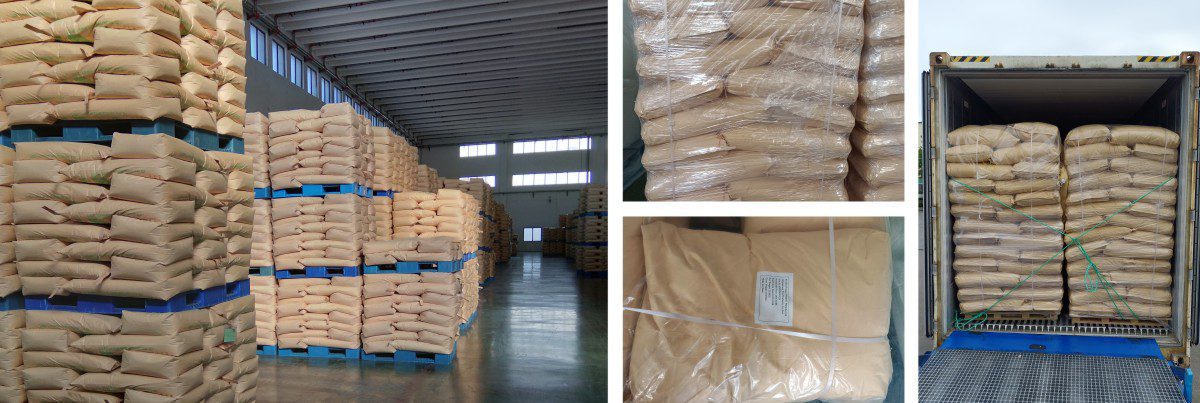
| Format | Net Weight | MOQ | Notes |
|---|---|---|---|
| Kraft paper bag (inner PE liner) | 25 kg | 500 kg | Standard B2B |
| White woven PP bag | 25 kg | 500 kg | Export |
| Fiber drum | 25 kg | 500 kg | Humid climates |
| Private-label retail | 500g / 1kg / 5kg | 2,000 kg | Amazon / retail |
Storage Conditions: ≤25°C, RH ≤60%, away from direct sunlight. Shelf life: 24 months in original sealed packaging. After opening: reseal immediately; use within 3 months. Avoid strong-odor environments (chickpea protein can absorb ambient odors).
Related Articles
Searching for a Sustainable, Allergen-Friendly Protein? Is Organic Chickpea Protein Powder Your Next Must-Have?
The demand for plant-based proteins continues to soar, but not all options are created equal. Many come with…
Read More →
Is Sunflower Protein a Complete Protein? Unpacking This Plant-Based Powerhouse
As the demand for plant-based protein continues to grow, organic sunflower seed protein powder is emerging as an…
Read More →
Are Chickpeas a Good Source of Protein? Absolutely!
In the world of plant-based nutrition, chickpeas often steal the spotlight for their versatility and deliciousness. From creamy…
Read More →